There’s a moment of pleasant confusion that many first-time visitors to Japan experience, a quiet cultural glitch that happens sometime before 11 a.m. You find yourself in a dimly lit, time-burnished café—what the Japanese call a kissaten—seeking a simple caffeine fix to start your day. You order a single coffee, which arrives in a delicate porcelain cup, brewed with a care that feels almost ceremonial. And then, the rest of it arrives. A thick, perfectly toasted slice of milk bread, glistening with melted butter. A hard-boiled egg, still warm. A small pot of yogurt or a tiny, crisp salad. You didn’t order this. You look at the menu again, scan for hidden set-meal prices, and brace for the misunderstanding. But there is no misunderstanding. This is mōningu sābisu, or ‘Morning Service,’ a tradition where the price of your drink includes a complimentary breakfast. It’s not a BOGO deal, a happy hour special, or a marketing gimmick. It’s a deeply ingrained cultural institution, a ritual of hospitality that says more about Japan than a thousand guidebooks ever could. To understand Morning Service is to understand the subtle economics of Japanese community, the value placed on routine, and the quiet generosity that underpins daily life. It’s a paradox on a plate: a free meal that creates immense value, turning a simple transaction into a lasting relationship.
For those intrigued by Japan’s unique hospitality ritual, a closer look at the kissaten breakfast tradition unveils further layers of cultural nuance.
The Anatomy of a Morning Set

Before exploring the reasons, it’s crucial to understand the essence. Morning Service isn’t a one-size-fits-all routine; it’s a reflection of regional pride and the unique flair of each kissaten owner. However, it operates on a simple and elegant principle: the price is tied to your drink. The food is essentially a complimentary bonus. This small act elevates buying coffee from a simple transaction to an experience of being warmly welcomed.
The Foundational Formula
The classic and most common form of Morning Service embodies satisfying simplicity. It serves as the standard by which all others are judged and is most famously linked to the city of Nagoya in Aichi Prefecture, the tradition’s undisputed heartland. When you order a coffee, usually priced between 400 and 600 yen, you receive what is known as the ‘Regular Morning.’
This fundamental set almost always includes:
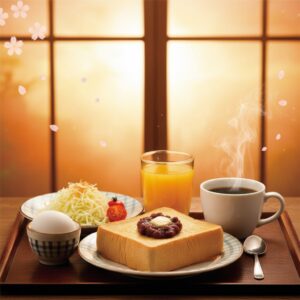
Thick-cut Toast: This isn’t just any slice of bread. It’s a thick slab of shokupan, Japanese milk bread, celebrated for its soft, fluffy, and subtly sweet taste. Typically at least an inch thick, it’s toasted to a golden-brown crust while staying pillowy inside. It comes pre-buttered, the warm bread already soaking up the melting butter in a state of pure comfort. Occasionally, it’s served with a small packet of jam or a scoop of ogura (sweet red bean paste)—a Nagoya specialty that turns the toast into a charming local delicacy.
A Boiled Egg: The simple yude tamago is the second essential item. It’s seldom a delicate soft-boiled egg. More often, it’s hard-boiled, easy to peel, and served warm or at room temperature. This modest protein source offers a balanced start to the day—a straightforward yet perfect nourishment.
This trio of coffee, toast, and egg represents the ideal Morning Service. It’s not extravagant but plentiful enough. A complete, comforting breakfast that appears alongside your coffee, a small marvel of morning economics.
The Art of the Upgrade
While the basic set is lovely, the real charm of Morning Service culture lies in its variations and paid upgrades. This is where the creativity and competition among individual kissaten truly stand out. For a small additional charge, usually between 100 and 300 yen, you can enhance your morning routine into something more substantial.
The menu may feature a ‘Special Morning’ or a selection of add-ons such as:
- Sandwiches: Instead of plain toast, you might receive a half sandwich, often egg salad (tamago sando) or a simple ham and cucumber, with crusts neatly removed.
- Hot Dogs: A small, soft bread roll with a sausage—a classic kissaten snack that sometimes makes its way onto the morning offerings.
- Salads and Soups: A more hearty salad with sesame or wafu dressing, or a small cup of corn potage for a savory start.
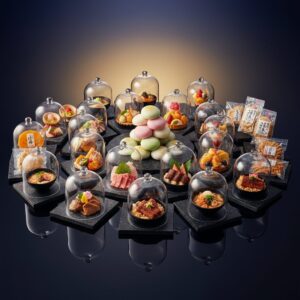
- Local Specialties: Here’s where things get fascinating. In the core regions of Aichi and neighboring Gifu Prefecture, the offerings can become surprisingly elaborate. It’s not unusual for a Morning Service set to feature a small bowl of udon noodles, a delicate cup of chawanmushi (savory steamed egg custard), or even a serving of spaghetti. This reflects intense local pride, with each kissaten striving to outdo the others in a generous culinary competition.
This tiered approach is ingenious. It preserves the core promise of a ‘free’ breakfast while giving options for those with bigger appetites or a desire for variety. It allows the kissaten to serve everyone from budget-conscious students to salarymen seeking a more filling meal before a demanding day.
A Ritual Born from Industry and Hospitality
Morning Service feels intrinsically Japanese, making it easy to assume it’s a longstanding tradition. However, it is actually a relatively modern creation, a post-war response to a particular need that grew into a nationwide cultural phenomenon. Its roots are found not in some grand culinary philosophy, but in the bustling, industrious textile mills of Aichi Prefecture.
The Looms of Ichinomiya
The most commonly accepted origin story takes us to Ichinomiya city, a dominant textile industry center in the 1950s. The city was thriving with activity. Salespeople and factory owners required places to hold meetings over coffee. The local kissaten became their informal offices, neutral spaces for negotiation and conversation. The clinking of cups and the quiet buzz of chatter became the backdrop to their business deals.
According to the tale, a perceptive kissaten owner noticed these customers lingered for hours, ordering multiple cups of coffee. As a token of appreciation for their continued patronage—a concept deeply rooted in the Japanese spirit of omotenashi, or wholehearted hospitality—the owner began offering a small, complimentary snack. It started with the simplest items: a few peanuts and a hard-boiled egg. It wasn’t a meal; it was a gesture of thanks. A way to say, “I appreciate your presence here.”
From Smart Business to Cultural Bedrock
This small gesture was groundbreaking. It wasn’t merely good manners; it was excellent business strategy. The complimentary snacks generated strong loyalty. Businessmen flocked to the kissaten that provided this little extra, this sābisu. In Japanese loanword usage, ‘service’ doesn’t just mean the act of serving; it often connotes something additional, a bonus, or something ‘on the house.’
Before long, other kissaten in Ichinomiya and nearby areas had to compete. The peanuts and egg evolved. Toast was added, turning the simple snack into a proper breakfast. The idea spread rapidly throughout the Chubu region, with Nagoya as its center. Each town, neighborhood, and kissaten began crafting its own variation, creating the rich diversity of Morning Service we enjoy today.
What began as a practical method to satisfy customers in an industrial town tapped into a deeper cultural current. It perfectly combined the commercial need to cultivate loyal customers (jōren-san) with the cultural value of showing gratitude. It transformed the kissaten from a place you merely visit into a place where you feel you belong.
The Soul of the Service: Understanding the Kissaten
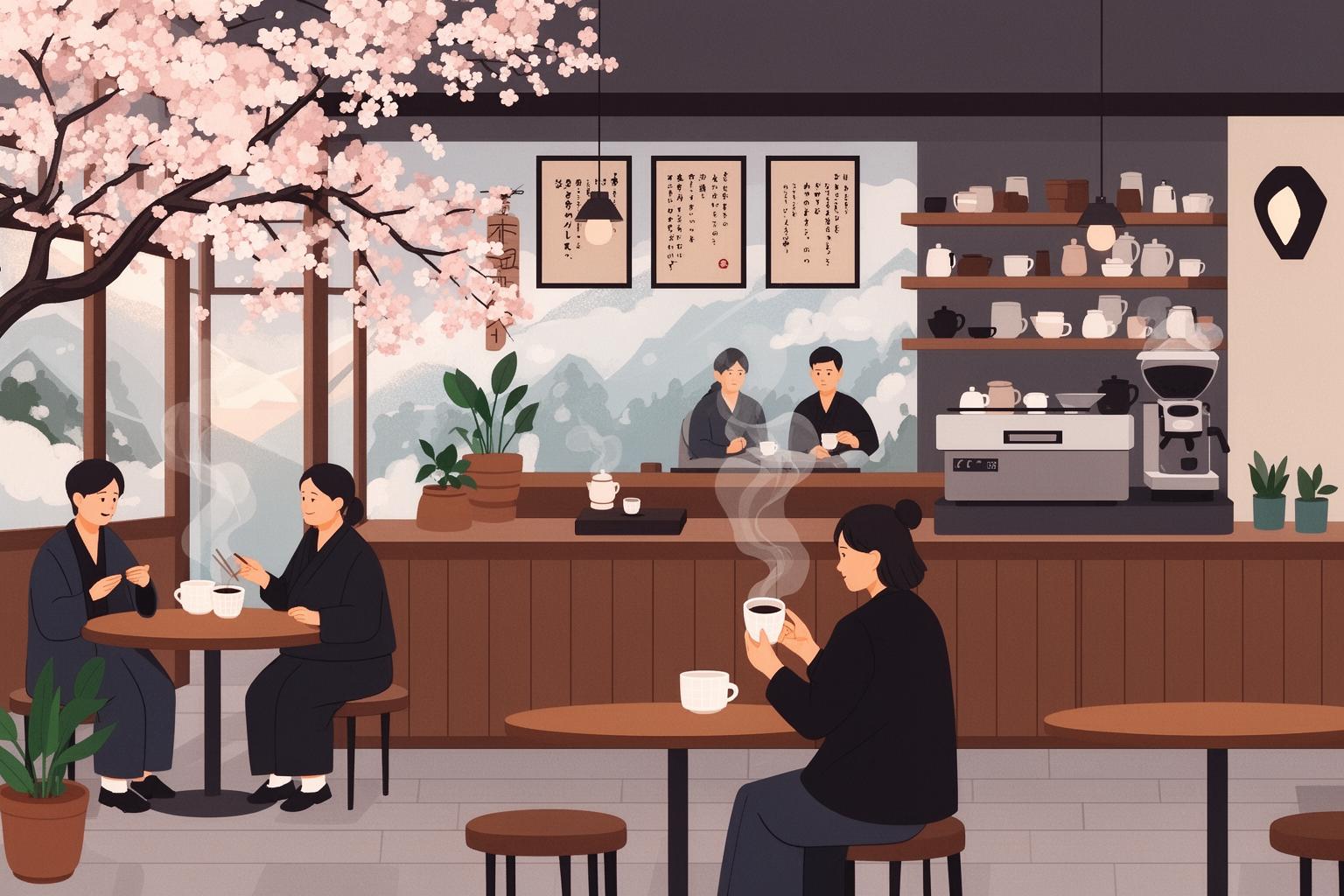
You cannot fully appreciate the meaning of Morning Service without first understanding the vessel that carries it: the kissaten. These establishments stand apart from the bright, sterile, Wi-Fi-saturated efficiency of modern global coffee chains. A genuine kissaten is a gateway to another time, a refuge devoted to the quiet pleasure of coffee and conversation.
A Sanctuary Between Home and Work
The traditional kissaten ambiance features dark wood, plush velvet or worn leather seats, ornate lamps casting a warm, soft glow, and gentle strains of jazz or classical music filling the space. There is a sense of weight and permanence to these places. They are designed for lingering, not quick visits. The air is often filled with the rich aroma of carefully brewed coffee and, historically, the faint sweetness of tobacco smoke (though this is becoming less common due to modern smoking regulations).
Sociologists call it a ‘third place’—an essential environment outside of home and work where community and connection can thrive. For decades, the kissaten has fulfilled exactly this role in Japan. It’s a place to read the newspaper from cover to cover, engage in quiet, serious conversation, lose yourself in a book, or simply enjoy comfortable solitude. Morning Service is the key that opens this space for many, giving them a reason to enter, sit down, and engage in the neighborhood’s life.
The Master’s Domain
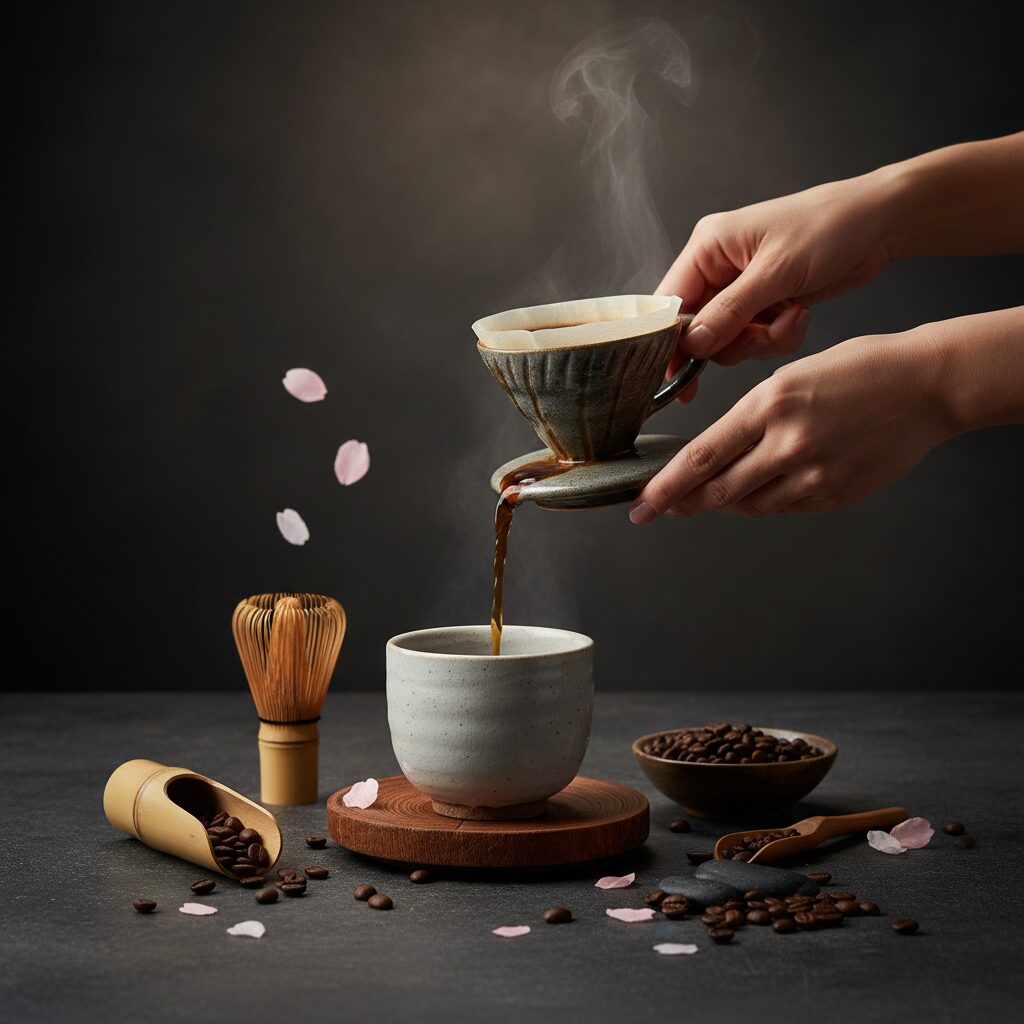
At the core of every great kissaten is the ‘Master’ (masutā). This individual is usually the owner and operator, often a stoic yet welcoming presence who has overseen their domain for decades. They are more than business owners; they are artisans and hosts. The Master’s craft shines in the coffee itself, where painstaking, theatrical brewing methods like the syphon or the flannel drip (neru dorippu) are used—techniques demanding immense skill and patience to produce a smooth, rich, and low-acidity brew.
The Morning Service, then, represents an extension of the Master’s personal hospitality. It is prepared in a small, often cramped kitchen behind the counter with the same careful attention as the coffee. The toast is sliced just right, the egg timed to perfection. This is not mass-produced fare; it’s a home-cooked meal, offered by the proprietor to their guest. This personal connection distinguishes the kissaten experience from an impersonal transaction at a chain. You are not merely a customer; you are a guest in the Master’s home, and the Morning Service is their welcoming gift.
More Than a Meal: The Cultural Resonance
On the surface, Morning Service appears to be a fantastic deal. However, its true value extends far beyond mere monetary savings. It is a practice deeply embedded in the social fabric of Japan, reflecting core cultural values such as community, loyalty, and a distinctive approach to economic thinking.
An Economy of Gratitude
The concept of sābisu is essential. In the West, ‘service’ denotes the expected standard of treatment, whereas in Japan, it often means an unexpected bonus—a freebie offered out of goodwill. This subtle linguistic distinction points to a deeper cultural difference. A transaction at a kissaten isn’t simply about exchanging money for goods. It represents the beginning of a relationship. The Morning Service acts as the kissaten‘s opening gesture, an investment in future loyalty. It conveys, “Thank you for choosing us. Please visit again.” In response, the customer feels gratitude and is more likely to become a regular, supporting the long-term survival of the kissaten.
This cultivates a micro-economy founded not on aggressive upselling or maximizing per-ticket profit, but on stability and mutual appreciation. It’s a more intangible, human-centered form of capitalism that values a steady base of regular customers over the transient business of strangers.
The Comfort of Routine
For many Japanese people, especially those from older generations, the act of going for ‘Morning’ is a crucial daily or weekly ritual. It serves as an anchor in their day. Local retirees gather with friends, reading the newspaper and sharing neighborhood gossip over coffee and toast. A solitary salaryman might use the quiet 30 minutes to mentally prepare for the day, away from the demands of home and office.
In a society that cherishes structure and routine, Morning Service offers a predictable and comforting start to the day. It provides a moment of affordable luxury, a pause before the rush of daily life. This ritualistic element transforms a simple breakfast into a cornerstone of community life, making the kissaten an essential hub for social connection.
Regional Pride on a Plate
Fierce competition, especially in the Chubu region, has made Morning Service a symbol of local identity. It is a matter of great pride for a kissaten to be recognized for offering the most generous or distinctive selections. This is not about being the cheapest, but about showing the greatest hospitality. The remarkable variety—from noodles to savory custards to fruit platters—attests to this regional pride. A lavish Morning Service signals that you are in a place that values generosity, a community that cares for its own and welcomes visitors with both open hearts and full plates.
How to Experience Morning Service for Yourself
With this understanding, seeking out a proper Morning Service becomes one of the most rewarding and authentic experiences you can enjoy in Japan. It offers a chance to step off the tourist path and immerse yourself in the everyday life of a local neighborhood.
Finding the Right Place
Your best option is to stray from the main streets and search for older, independent coffee shops. Look for the key words on a sign or blackboard outside: モーニングサービス (mōningu sābisu) or simply モーニング (mōningu). The sign typically indicates the hours, usually from opening time until about 10:30 or 11:00 a.m. While some modern chains, especially Komeda’s Coffee, have built their business model around a polished version of Morning Service, the true spirit of the tradition remains in family-run cafes.
Placing Your Order
The process is straightforward. After being seated, you’ll receive a menu. The first and most important choice is your drink. The price of your coffee, tea, or juice sets the base price for the entire meal. Once you’ve picked your beverage, the menu will display the Morning Service options. There’s usually a free ‘Regular’ set and several upgraded options with small additional costs clearly marked. Simply order your drink and specify which morning set you prefer. For example, “Hottō kōhī to regyurā mōningu, kudasai” (Hot coffee and the regular morning, please).
Settling In
Keep in mind, a kissaten is not a place for rushing. Part of the experience is soaking in the atmosphere. Bring a book or just enjoy the calm. Watch the Master at work and listen to the gentle murmur of the regular customers. This is slow food, not fast food. While some older cafes may still allow smoking, many have now become non-smoking or have designated smoking areas. It’s also worth noting that many smaller, traditional places prefer cash, so it’s wise to have some on hand.
Ultimately, what arrives at your table is much more than just an affordable breakfast. It’s a tangible piece of post-war history, a lesson in Japanese hospitality, and an invitation into a community. The humble slice of toast and simple boiled egg symbolize a culture that values the deep meaning of a small, generous gesture. It’s a ritual that nourishes not only the body but also the soul, reminding you that the best way to start the day is with a quiet moment of connection, a warm cup of coffee, and an unexpected gift.