If you took a time machine back to a Sunday afternoon in 2012 and stepped out near Harajuku Station in Tokyo, you’d be hit by a sensory tidal wave. It wouldn’t just be the crush of people, but a tsunami of color and texture. You’d see girls who looked like they’d stepped out of a Victorian dollhouse, their bell-shaped skirts bouncing with every step. You’d see others covered head-to-toe in so many plastic hair clips and rainbow bead necklaces that they’d jingle like human wind chimes. And you’d see groups cloaked in pastel shades of lavender, mint, and peach, clutching vintage My Little Pony lunchboxes like sacred texts. The unifying principle, the word for all of this, was kawaii. Cute.
To most of the world, that’s where the analysis stops. Kawaii is Japan’s most successful cultural export, a simple aesthetic of childlike charm. Hello Kitty, Pokémon, big-eyed anime characters. It’s often dismissed as frivolous, even infantile—a symptom of a society that encourages women to remain girlish and non-threatening. But to dismiss the vibrant, chaotic, and utterly mesmerizing street styles of 2010s Harajuku as just “cute” is to miss the point entirely. It’s like looking at a punk rocker’s leather jacket and seeing only a piece of outerwear. You’re missing the message. Because in a culture that prizes conformity above all else, this explosion of pink, lace, and plastic wasn’t just an aesthetic choice. It was a declaration of independence. It was a quiet, joyful, and deeply personal rebellion.
This wasn’t about being attractive in a conventional sense. In fact, it was often the opposite. It was about creating a world for oneself, a visual armor against the pressures of a society that had a very specific, very narrow path laid out for you. It was about rejecting the drab seriousness of adult life and the unspoken rules of Japanese society. Each layer of lace, every plastic bow, was a refusal to be invisible, a refusal to grow up in the way you were told you must. This was the unspoken revolution of Harajuku, fought not with slogans and marches, but with petticoats and platform shoes.
This vivid display of personal rebellion mirrors other facets of Japanese counterculture, such as the Oshikatsu ethos that transforms everyday devotion into a statement of individuality.
The Unspoken Rules of a Monochromatic World
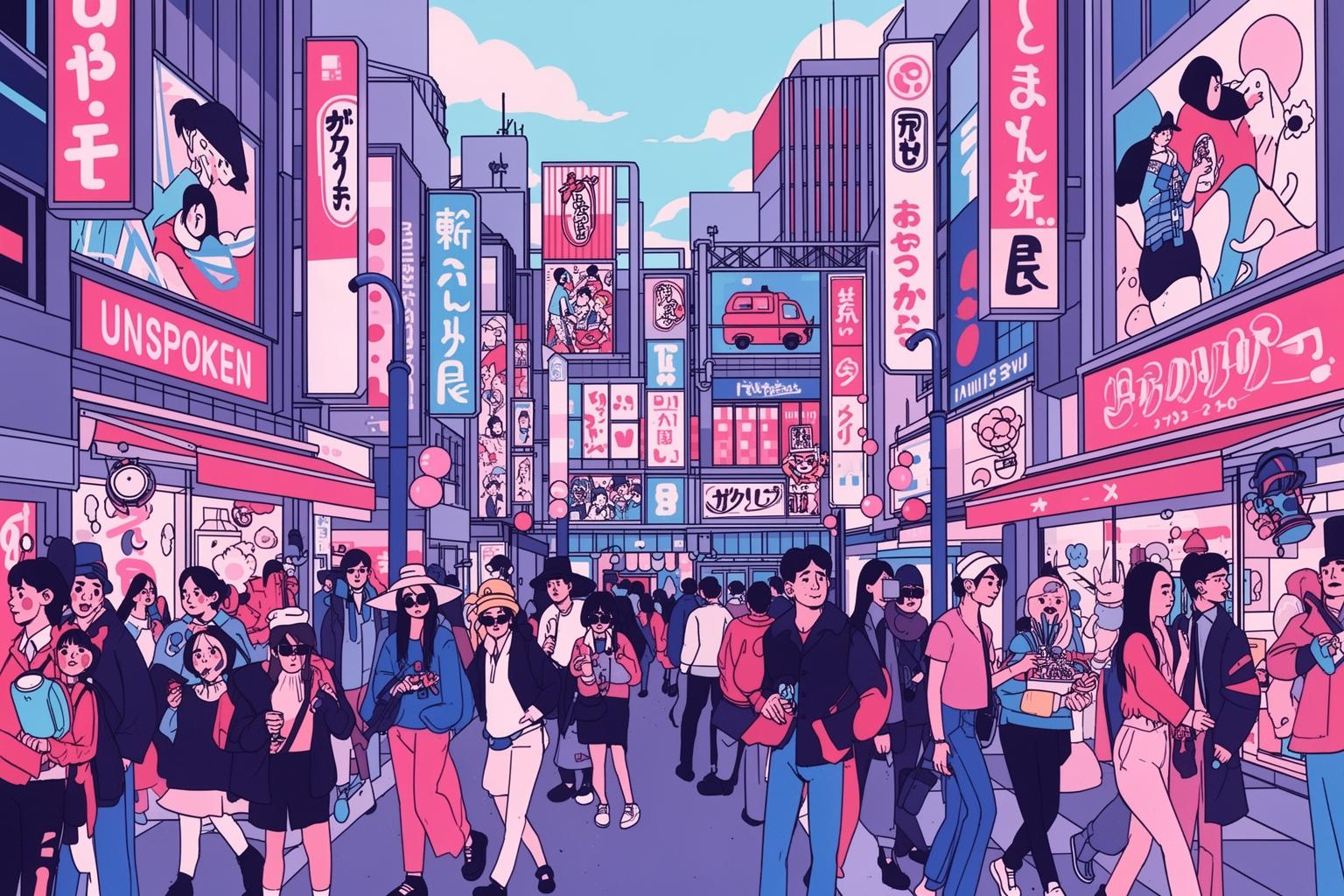
To grasp why a subculture centered on hyper-cuteness evolved into a form of rebellion, you first need to understand what it opposed. Despite Japan’s futuristic cityscapes and technological advancements, its society runs on a deeply embedded cultural code of conformity. There’s a saying every child learns: “Deru kui wa utareru.” The nail that sticks out gets hammered down. From the school uniform worn in childhood to the dark, conservative suit expected during job hunting and throughout your career, the message is unmistakable: blend in. Preserve group harmony, or wa, by suppressing individual desires for the collective good.
This pressure is especially intense for young women. Although slowly changing, the traditional ideal of ryōsai kenbo—good wife, wise mother—still looms large. The expected path has traditionally been modesty, grace, and eventual domestic life. Upon graduation, women work as “office ladies” for a few years, find a suitable husband, and then focus on raising a family. Their worth is tied to being agreeable, supportive, and unobtrusive.
Now, imagine being a teenager or young woman in the 2010s, feeling trapped by this path. You don’t want to be a silent, compliant cog in the system. Your vibrant inner world, fueled by anime, manga, and a growing internet culture, bursts with color and fantasy. The real world, with its shades of grey, black, and navy, feels like a denial of your existence. So, what can you do? You can’t exactly shout your dissent on a quiet Tokyo subway. But you can wear it.
Harajuku became a haven where the nail that stuck out wasn’t hammered down—it was celebrated. It was a physical space where Japan’s usual societal rules were temporarily put aside. On bustling Takeshita Street and the quieter back alleys of Ura-Harajuku, individuality was your currency. The more you showed it, the more you fit in. This wasn’t just about fashion; it was about finding your community and seeing yourself reflected in others. Six days a week, you might be a quiet student or a diligent part-time worker in a plain uniform. But on Sunday, you could transform into a pastel princess, a cyberpunk warrior, or a Victorian doll. You could finally be seen.
A Taxonomy of Kawaii Rebellion
The broad category of “Harajuku style” in the 2010s included a dizzying variety of sub-styles. Each had its own unique rules, philosophies, and ways of resisting the mainstream. These were not merely different outfits; they were distinct ideologies expressed through fabric and plastic.
Sweet Lolita: The Armor of Hyper-Femininity
At first glance, Sweet Lolita fashion appears to embody traditional femininity. Inspired by Rococo and Victorian aesthetics, it features bell-shaped skirts supported by layers of petticoats, delicate blouses with Peter Pan collars, lace-trimmed socks, and elegant Mary Jane shoes. The color scheme is dominated by pinks, whites, and baby blues, with prints often depicting cakes, candies, strawberries, and cute animals. It’s almost aggressively cute.
However, this is where the rebellion is found. The Lolita aesthetic is a strong rejection of the modern male gaze. In a world full of fashion designed to be sexually appealing to men—tight, revealing, suggestive—Lolita stands in contrast. Its silhouette completely hides the natural lines of the body. It is modest to the point of being anti-sexual. The wearer resembles less a potential partner and more a porcelain doll, something admired from afar but not touched. It creates an ornate, self-contained world.
This is femininity wholly on the wearer’s terms. The aim is not to attract a partner but to please oneself and connect with others in the Lolita community. The immense effort and expense put into a single coordinate—from the dress to the wig, the matching handbag, and the perfectly done nail art—demonstrate its seriousness. It is a hobby, a passion, a full identity. By crafting such a detailed, elaborate, and non-sexualized form of femininity, Lolitas establish a space entirely their own, free from mainstream expectations of attraction.
Decora: A Joyful Assault on Minimalism
If Lolita represents a controlled, elegant rebellion, Decora is a chaotic, joyful explosion. Its philosophy is simple: more is more. The base of a Decora outfit is often basic—a t-shirt paired with a colorful skirt or pants. But that is just the canvas. The art lies in the layering of accessories. Dozens of colorful plastic hair clips—ducks, stars, hearts, rainbows—are piled into the hair. Arms are stacked high with beaded bracelets. Necklaces featuring characters like Hello Kitty or Pochacco are layered until they form a plastic bib. Even the face is adorned with colorful band-aids and stickers.
Decora is a direct and gleeful protest against Japan’s refined, minimalist aesthetic. It’s the opposite of Muji’s muted earth tones and the Zen ideal of elegant simplicity. In a culture that often values subtlety and restraint, Decora is loud, vibrant, and impossible to overlook. It produces a cheerful clacking sound of plastic as the wearer moves.
This style is pure, unfiltered self-expression. It declares, “I will not be quiet, I will not be subtle, and I will not be ignored.” It embraces childhood symbols—cheap plastic toys, colorful stickers, cartoon characters—as badges of honor. It rejects the notion that growing up requires becoming serious and abandoning the things that once brought simple joy. Decora is a visual celebration of happiness, a wearable playground that dismisses the cynical and mundane.
Fairy Kei: Escapism in Pastel Hues
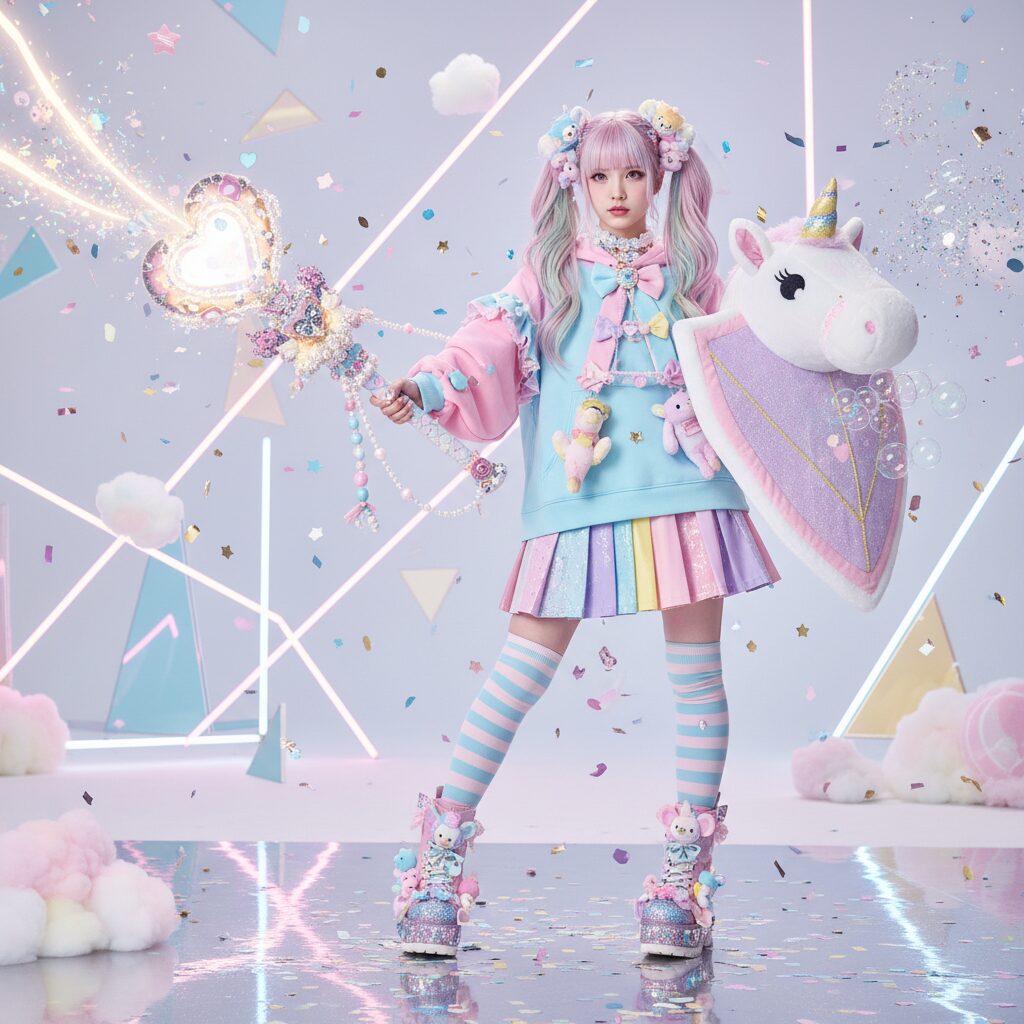
Somewhere between the structured elegance of Lolita and the chaotic energy of Decora lies Fairy Kei. Drawing heavily on the dreamy, fantastical pop culture of the 1980s, this style resembles a soft-focus daydream. The color palette is strictly pastel: lavender, mint green, baby pink, soft yellow, and light blue. The motifs evoke pure nostalgia, featuring characters from shows like My Little Pony, Care Bears, and Rainbow Brite.
Fairy Kei represents gentle escapism. It’s about creating a soft, safe, and magical world to shield oneself from the harshness and monotony of everyday life. The outfits are often comfortable and layered—tutus over leggings, oversized sweatshirts, and fluffy leg warmers. It’s a practical kind of fantasy, one you can actually move in. The aesthetic is gentle, sweet, and non-confrontational, but its message is powerful.
By dressing in symbols of an idealized Western childhood, Fairy Kei fans reject the rigid demands of Japanese adulthood. They create a personal utopia, a bubble of kindness and magic. This is not about denying reality but about choosing to overlay it with something more beautiful. In a society that demands diligence, seriousness, and often stoicism, embodying the gentle, caring world of the Care Bears is a radical act of emotional defiance. It’s a dedication to softness in a tough world.
The Decline of a Golden Era
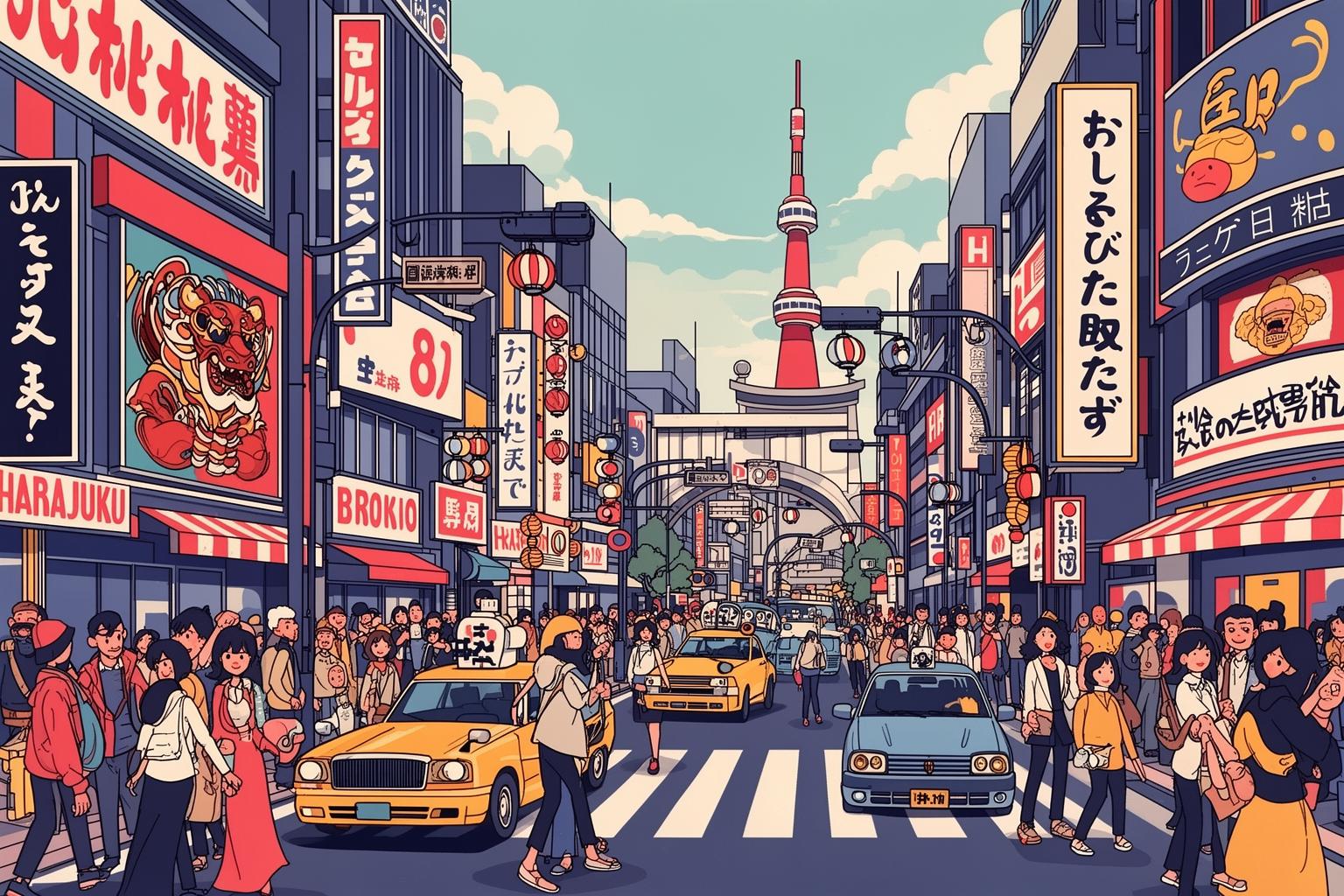
Strolling through Harajuku today reveals a very different atmosphere. Although the crowds remain, the vibrant and uniquely individual styles of the 2010s have become much rarer to see. The streets, once a dynamic runway of creative expression, are now largely taken over by global fast-fashion brands, crepe stands, and shops offering a more uniform, mass-market version of cuteness.
Several factors led to the end of this golden age. The emergence of fast fashion giants like H&M, Forever 21, and Zara in Japan provided affordable, trendy clothing, making it easier to follow global trends than to develop a distinctive, DIY style. At the same time, the rise of social media, especially Instagram, shifted the focus from physical streets to the digital screen. Style evolved from being about gathering in real spaces to curating a flawless online image. Korean pop culture and its associated fashion—sleek, modern, and commercially polished—also began to have greater influence than Harajuku’s homegrown creativity.
Perhaps the most emblematic moment was the 2017 announcement that FRUiTS, the iconic street snap magazine that chronicled Harajuku fashion for twenty years, would cease publication. Its founder, Shoichi Aoki, simply remarked that there were no more cool kids to photograph. This was a poignant acknowledgment that the era of bold, grassroots style innovation on Harajuku’s streets had ended.
Yet, the spirit of kawaii as a form of self-expression did not vanish. It transformed and relocated. It moved online, forming global digital communities. It was absorbed into the mainstream, with luxury brands adopting its aesthetics. It found a new home among J-pop idols and their passionate fans. The rebellion became less visible and less centralized. Though the physical haven diminished, the ideology it fostered had already spread far and wide.
Cuteness as a Form of Power
It’s easy to dismiss a grown woman wearing a frilly pink dress. It’s easy to see a teenager adorned with plastic toys and think it’s silly. But that’s only a surface-level interpretation. The kawaii street style of 2010s Harajuku was a rich and meaningful cultural movement. It was a quiet, peaceful protest against a world filled with rigid expectations.
This was not a loud, angry rebellion. It was a rebellion rooted in joy. It focused on finding power not through confrontation but by creating a personal world bursting with color, fantasy, and sweetness—so much so that the bleakness of the outside world couldn’t penetrate it. The outfits served as a form of armor, but a gentle one—a shield made of lace and pastel hues.
By embracing an aesthetic often coded as powerless—childlike, feminine, frivolous—these young people flipped its meaning. They transformed “cuteness” from a trait intended to please others into a tool for self-pleasure. They demonstrated that strength doesn’t require adopting masculine traits like aggression and stoicism. Instead, strength can be found in one’s own expression of femininity, no matter how frilly or colorful it may be. It was a quiet yet profound declaration: My world has its own rules, and in my world, I am powerful, visible, and free.