When you think of Tokyo, you probably picture the crush of Shibuya Crossing or the quiet reverence of a Shinto shrine. You think of a city defined by its density, its rules, its verticality. For most of the day, you’d be right. But when the last trains have departed and the metropolis finally seems to exhale, a different Tokyo reveals itself. It’s a city of vast, empty spaces and shimmering light, and its main artery is a 70-kilometer stretch of elevated expressway known as the Wangan, or Bayshore Route. This isn’t just asphalt and concrete; it’s a stage. It’s the home of a uniquely Japanese ritual: the midnight cruise. This isn’t about reckless street racing anymore, though the ghosts of that era certainly haunt the road. It’s about something quieter, more meditative. It’s a subculture of solitude, a search for a perfect, flowing state of being in a city that rarely allows for it. It’s about chasing a feeling, a specific shade of nocturnal peace that we call ‘midnight blue’.
As Tokyo transforms after dark into a realm of quiet introspection, you might also appreciate how Japan’s standing bar culture offers a contrasting celebration of social ingenuity.
The Concrete Dragon
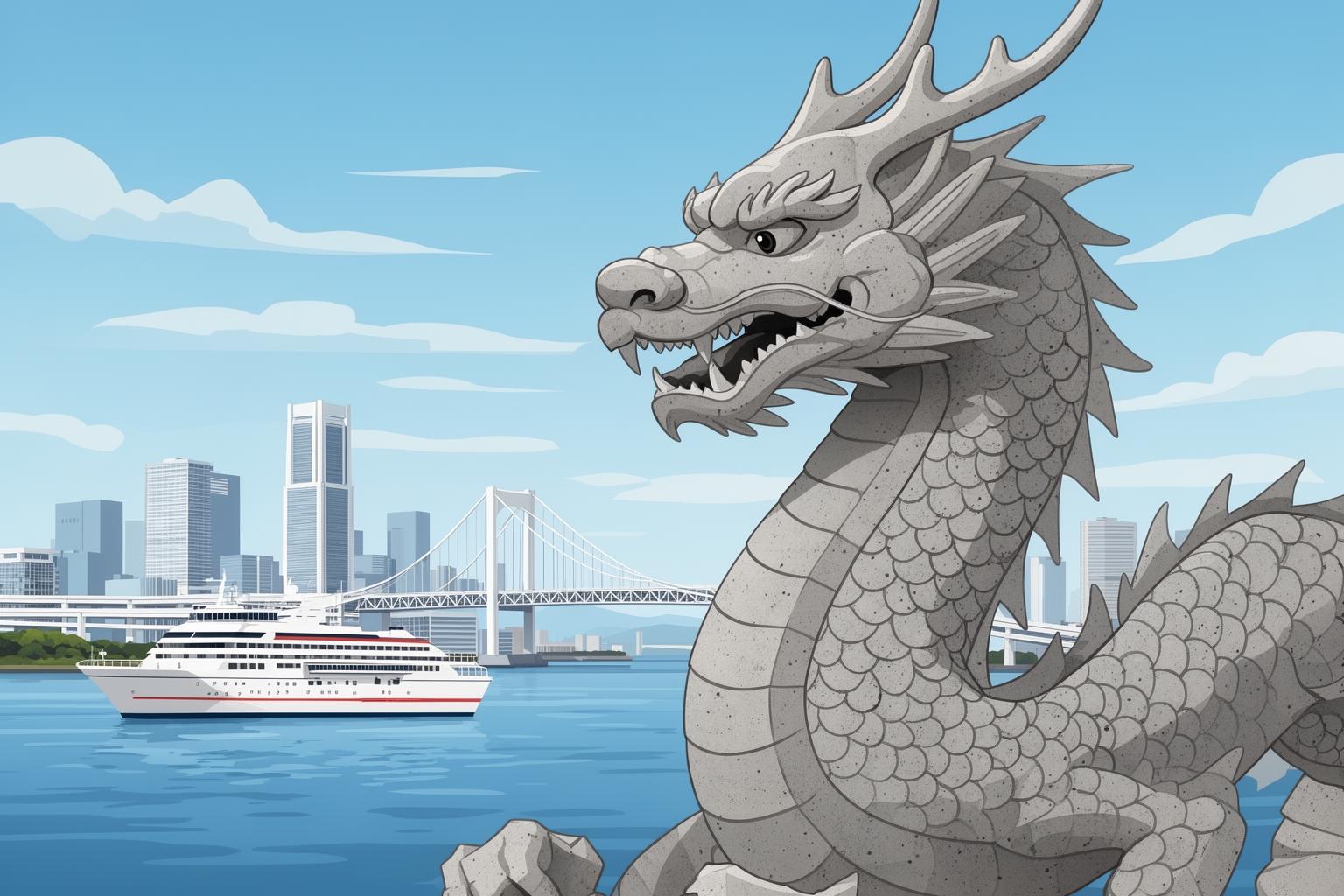
To appreciate its appeal, you first need to grasp the space itself. The Bayshore Route is an engineering marvel—a multi-lane river of asphalt winding along the coast of Tokyo Bay. It links the city to its industrial core, sweeping past the futuristic skyline of Odaiba, diving beneath the sea through the Aqua-Line, and skirting the runways of Haneda Airport. By day, it’s a congested artery clogged with container trucks and commuter traffic. It’s practical, frustrating, and utterly lacking in romance.
But at night, it changes. The trucks disappear. The traffic softens to a whisper. The road opens up, revealing its true nature: a sequence of long, hypnotic straights, elegant high-speed curves, and deep, resonant tunnels. Driving it contrasts sharply with maneuvering the tangled, narrow streets of central Tokyo. In the city center, you’re always stopping, starting, yielding. The city controls your pace. On the Wangan, for the first time, you hold the reins. The road invites speed and fluidity in a way that feels almost forbidden. Sodium-vapor lamps bathe everything in a steady orange glow, blurring the world outside into streaks of color. The journey becomes a rhythmic beat of light and shadow, engine sound and silence. You curve over vast bridges, suspended between dark water and a starless sky, with Tokyo’s glittering sprawl laid out alongside you like a circuit board. This isn’t just a road; it’s a grandstand seat to the megacity at rest.
Tunnels to Another World
The tunnels are an essential part of the experience. They act as sensory deprivation chambers that amplify the sensation of speed. Diving into the subterranean darkness, the world shrinks to the circular concrete tube ahead, white lights flashing by like something from a sci-fi movie, accompanied only by the sound of your engine. For a few moments, the city above disappears. What was a gentle hum on the open road becomes amplified, echoing off the tiled walls and filling the cabin with a mechanical symphony. It’s a private concert for one. Each tunnel’s acoustics differ, and experienced drivers have their favorites. Emerging on the other side feels like a rebirth, as the full panorama of the bay and city lights washes over your vision once more. It’s a cycle of compression and release, a fundamental part of the drive’s meditative rhythm.
Ghosts of the Mid Night Club
You can’t discuss the Wangan without recognizing the legends that originated here. In the 1990s, during Japan’s bubble economy, this road was the undisputed domain of the most notorious street racing team in history: the Mid Night Club. This wasn’t a group of reckless teens in souped-up Civics. They were highly secretive, exceptionally skilled drivers—often successful professionals like doctors and business owners by day—driving monstrously powerful, finely tuned machines such as Porsche 911 Turbos and Nissan GT-Rs. Their aim was clear: to surpass 300 km/h (around 186 mph) on public roads.
But what made the Mid Night Club legendary wasn’t just their speed. It was their strict code of ethics. Membership was exclusive and required a lengthy apprenticeship. A car had to be capable of reaching at least 250 km/h to even be considered. Most importantly, they had a firm rule: if any member caused an accident that endangered a civilian or another member, the club would be disbanded immediately and permanently. For them, it was never about reckless endangerment; it was about the pure pursuit of mechanical and personal limits. It was a high-stakes, high-discipline dance between man, machine, and the open road. The club ultimately disbanded in 1999 after a crash involving a Bōsōzoku biker gang resulted in hospitalizations, and true to their word, they disappeared overnight. But their spirit—that blend of technical mastery and philosophical purpose—laid the foundation for the Wangan’s mystique. Today’s cruisers aren’t trying to be the Mid Night Club, but they are driving in its shadow, chasing a similar sense of freedom on the same hallowed ground.
The Modern Cruiser: A Search for Flow
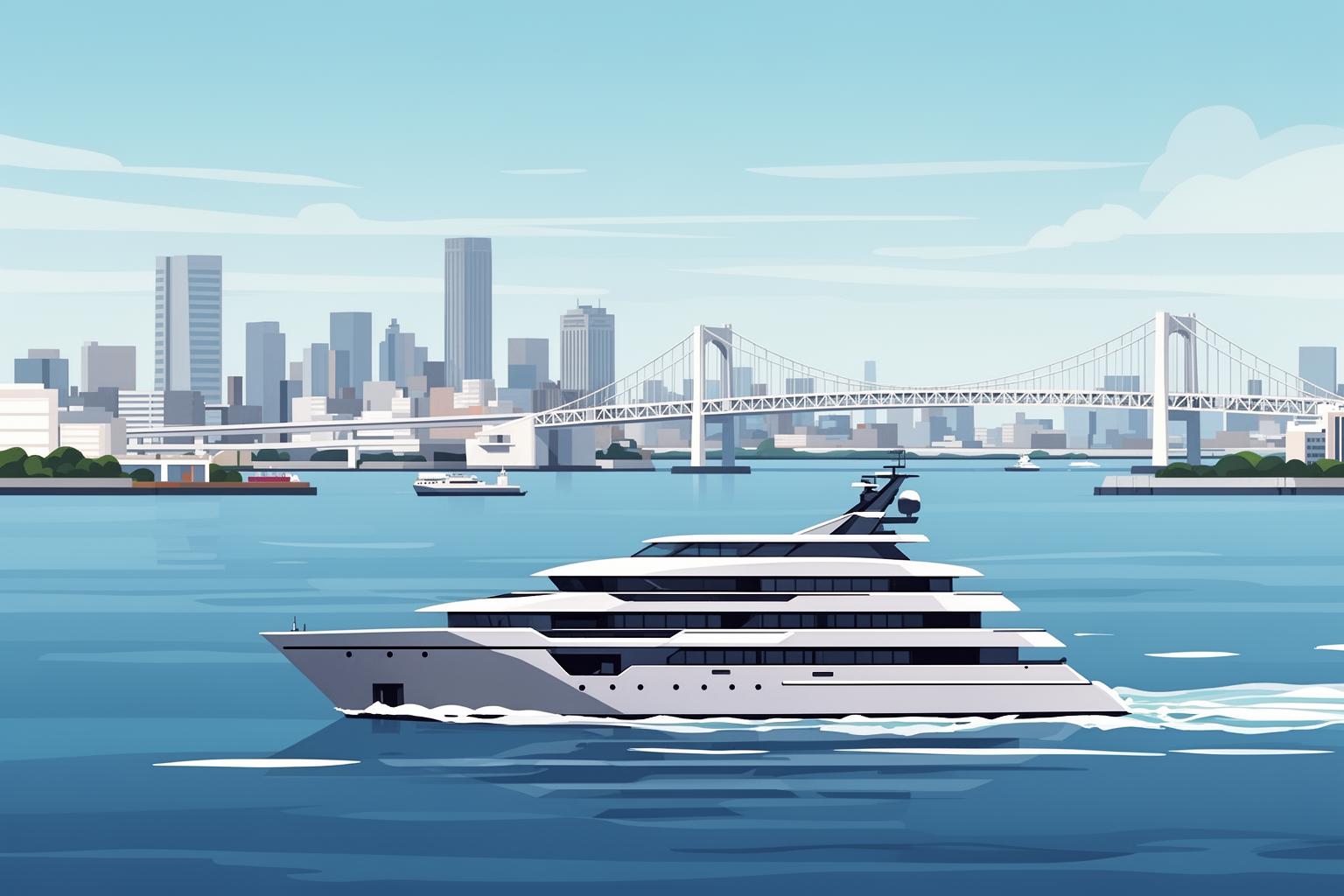
So who’s out there now? The police have cracked down hard on organized racing, and the culture has shifted. Today’s midnight cruiser is a different breed. It’s often a solitary activity or done in small, quiet groups. The motivation is no longer competition, but catharsis.
You’ll find the salaryman in his late thirties, still wearing his work trousers but having swapped into a pair of comfortable driving shoes he keeps in the car. His vehicle, perhaps a meticulously maintained R32 GT-R from his youth, serves as his escape. After a 60-hour workweek filled with rigid hierarchy and unspoken social pressures, the Wangan becomes his sanctuary. For two hours, there are no bosses, no deadlines, no bowing. There is only the clean line through a corner, the perfect downshift, the dialogue between his hands on the wheel and the feedback from the road. It’s a form of active meditation, a way to reclaim a sense of agency and control.
There are also young car enthusiasts, the heirs to the culture. They aren’t chasing top speed records. Instead, they gather to see and be seen, parking at the famous Daikoku or Tatsumi Parking Areas to admire each other’s vehicles. These parking areas act as impromptu, mobile car shows. The atmosphere is respectful, almost reverent. Owners quietly discuss suspension geometry or the unique sound of a particular exhaust system. It’s a community built on a shared passion for Japanese automotive craftsmanship. The drive there and back is part of the ritual—a pilgrimage to a concrete temple of car culture.
The Automotive Canvas
This reveals something fundamental about the Japanese relationship with machines, especially cars. In the West, a car is often a status symbol or a utility. In Japan, for this subculture, it’s something far more personal. It’s a partner. It’s a canvas for self-expression. The culture of tuning and modification runs very deep. An owner might spend years perfecting their car, not necessarily to gain more power, but to achieve better balance, a more responsive feel, or a specific aesthetic. The goal is to create perfect harmony between the driver’s intentions and the car’s execution.
Driving that car on the Wangan is the ultimate validation of that effort. It’s the only place where the machine can be used as intended, where its full character can be expressed. The long sweepers test the suspension’s balance. The long straights allow the engine to breathe. It’s the final piece of the puzzle—a dynamic conversation between the driver, the machine, and the perfect road.
The Aesthetics of the Drive
Ultimately, the Wangan cruise is an aesthetic journey. It’s about immersing yourself in the unique atmosphere of a sleeping megacity. The beauty is vast and industrial. You pass the geometric cranes of the Port of Yokohama, silhouetted against the sky. You glimpse the warm lights of apartment buildings, each one holding a tiny story you’ll never know. You watch planes descending silently towards Haneda, their landing lights like falling stars. It’s a lonely beauty, yet a profound one. There’s a Japanese concept called mono no aware, a gentle sadness or awareness of the fleeting nature of things. Seeing the city, so powerful and permanent by day, become a silent, shimmering blur at night evokes a similar feeling. You are a temporary observer, passing through a fleeting moment of stillness.
The drive is a sensory indulgence. The rhythmic thump-thump of tires over expansion joints becomes a hypnotic beat. The shifting colors of the city—the orange of the highway, the cool white of office buildings, the neon reds and blues of distant signs—all merge into a watercolor painting viewed through the windshield. It’s about finding a state of ‘flow,’ where conscious thought fades away and you simply react, feel, and exist in the moment. It’s a profound sense of presence, a feeling increasingly rare in our hyper-connected world. In the driver’s seat, speeding through the Tokyo night, there are no emails, no notifications, no obligations. There is only the road ahead. This highway, built for commerce and transit, has been unintentionally perfected for escape. It’s a loophole in the city’s fabric, a place to find peace at 100 kilometers per hour.