So, you’ve landed a job in Japan. You’re navigating the complex honorifics, mastering the art of the business card exchange, and generally feeling like you’re getting the hang of things. Then the email arrives. It’s an invitation, but it feels more like a summons: the department nomikai. A company drinking party. It’s on a Tuesday night and it’s listed as “optional,” but the subtle pressure from your section chief suggests otherwise. Your Japanese colleagues are talking about it with a mix of resignation and practiced enthusiasm. You’re probably wondering, “Is this just a party? Do I really have to go? And what on earth am I supposed to do there?”
Let’s be clear: the nomikai is not just a party. It is one of the most important, complex, and potentially hazardous rituals in Japanese corporate life. It’s a performance, a battlefield, a networking event, and a loyalty test all rolled into one and soaked in alcohol. This is where rigid office hierarchies are meant to temporarily dissolve, where true feelings (or a carefully curated version of them) can be shared, and where your career can be subtly advanced or quietly derailed. For an outsider, it can feel like a minefield of unspoken rules and baffling traditions. But it’s not impenetrable. The key is understanding that the nomikai isn’t an arbitrary hazing ritual; it’s a deeply ingrained cultural phenomenon with its own logic and history. This is your guide to understanding that logic, navigating the choreography, and surviving—maybe even thriving—at your next mandatory drinking session.
Navigating the nomikai’s intricate social rituals is just one side of Japan’s cultural tapestry, and delving into its mystical heritage through living deities in natural landscapes can further illuminate the subtle forces shaping your experience.
The Historical Roots: Why Drinking is Working
To grasp the modern nomikai, one must look beyond the neon-lit izakaya and back to the rice paddies of feudal Japan. The roots of this ritual lie in the concept of wa (和), or group harmony. For centuries, Japanese society was organized around small, interdependent communities centered on rice farming. Planting and harvesting involved collective effort and required total cooperation. To strengthen these bonds and ensure the group’s smooth operation, communities held festivals, or matsuri, which always included the ritual consumption of sake. Alcohol was regarded as a sacred medium, a way to connect with the gods and, equally important, with one another. It served as a means to dissolve minor grievances and social tensions that naturally emerged from living and working closely together.
When Japan underwent rapid industrialization in the late 19th and 20th centuries, this agrarian village mindset was directly transferred to the new corporate framework. Companies became the new villages. The post-war economic miracle was dominated by the lifetime employment system, meaning colleagues were not merely coworkers but family for the next forty years. The company represented the ultimate uchi (inside group), and strong loyalty and unity were imperative. The nomikai transformed into the modern-day equivalent of the village festival. It became the dedicated space to cultivate the bonds essential for the company-as-family to operate. It was, and still often is, regarded as a vital, though unofficial, part of the job—a setting to nurture the harmony needed for a productive workplace.
Alcohol’s role as a social lubricant is crucial to this. Japanese society functions under a strict hierarchy with layers of formal etiquette guiding interactions. The nomikai offers a sanctioned break from these rigid structures. It serves as the arena for what is called nomi-nication (a blend of nomu, to drink, and communication), the notion that genuine, candid communication can only take place over drinks, once the stiff office formalities have been eased away.
The Unwritten Rules: A Choreography of Respect
While the aim may be to relax, a nomikai is far from a free-for-all. It is a highly organized event governed by a complex set of unwritten rules. Breaking these rules, even unknowingly, can label you as someone who lacks understanding of social cues—a serious disadvantage in a culture that values them. This choreography is all about showing respect and awareness of your position within the group.
Seating Arrangements: The Map of Power (`Kamiza` and `Shimoza`)
The moment you enter the private room of the izakaya, the test begins. The seating arrangement is the clearest and most immediate display of office hierarchy. The most important seat is the kamiza, or “upper seat.” This seat of honor is usually the one farthest from the door, often located in a corner or in front of a decorative alcove (tokonoma). It is reserved for the highest-ranking individual present—the department head (buchō) or the president. It is considered the safest and most comfortable position.
On the other hand, the most junior employees are expected to occupy the shimoza, or “lower seat.” This is the seat nearest the drafty, high-traffic entrance. This is not a punishment but a role. From the shimoza, you are expected to serve as the logistical coordinator for the table. You are positioned to easily signal staff, place additional orders, and generally attend to the group’s needs. As a newcomer, you should instinctively choose the seat by the door. Hesitating or, worse, accidentally taking a seat closer to the kamiza is a significant faux pas. The space between the kamiza and shimoza is filled in descending order of rank, creating a physical representation of the company’s power structure.
The First Pour: Rituals of the `Kanpai`
After everyone is seated, the next ritual begins. Under no circumstances should you start drinking on your own. You wait. The first drink is almost always beer, ordered by everyone for uniformity. This ensures that every glass is full and ready for the main event: the kanpai (cheers). A senior manager will give a brief speech, after which everyone raises their glasses, shouts “Kanpai!” together, and takes their first sip simultaneously. This synchronized act is a powerful symbol of group unity, officially kicking off the evening collectively.
Even before the kanpai, the pouring ritual has already started. Pouring your own drink is considered rude. Instead, you should constantly be aware of the glasses around you, especially those of your superiors. The most junior person at the table is often responsible for ensuring the initial round of drinks is poured. When pouring for a superior, hold the beer bottle with both hands—your right hand gripping the bottle and your left supporting it from underneath. The label should face upward. This shows respect and formality. When someone pours for you, hold your glass with both hands and slightly tilt it toward them to make pouring easier. This intricate dance of giving and receiving reinforces hierarchical relationships without words.
The Art of Pouring: Constant Vigilance
The act of pouring drinks, called oshaku, is not a one-time task. It is an ongoing performance throughout the entire nomikai. Your main duty, especially as a junior member, is to scan the table, spot empty or nearly empty glasses belonging to your superiors, and promptly refill them. Approach with bottle in hand and politely say, “Buchō, may I pour you another?”
This is not merely about keeping people hydrated. It is an opportunity to interact. Making the rounds to pour drinks offers a valuable chance for brief, one-on-one conversations with senior managers you might rarely address at work. It’s a moment to make a good impression, showing that you are attentive, respectful, and a team player. Conversely, ignoring an empty glass on your boss’s right can be seen as careless or disrespectful. Never let a superior’s glass stay empty for long. And again, do not pour your own drink. Wait for someone—usually a junior or peer—to pour for you. If your glass is empty, it signals you to pour for another, which often prompts them to reciprocate.
Navigating Conversation: The `Honne` and `Tatemae` Shift
The nomikai is the designated setting for shifting from tatemae (public face, official stance) to honne (true feelings, private self). In the highly structured Japanese office, communication is dominated by tatemae. You remain polite, formal, and rarely voice strong personal opinions that might disturb group harmony. Alcohol at a nomikai is meant to break down those barriers and enable a more honest, personal connection.
However, this does not grant license to unload all your unfiltered thoughts and grievances. The honne expressed at a nomikai is a carefully curated, strategic version of your true feelings. This is your opportunity to express passion for your work, respectfully seek senior managers’ advice on a project, or praise the team’s efforts. It is absolutely not the time to complain about workload, criticize colleagues, or question company policies. The goal is to appear positive, engaged, and humble as a team member. The conversation remains part of the job. You are building social capital, not venting. The art is in seeming relaxed and open while staying keenly aware of the professional context.
The After-Party and the Aftermath: `Nijikai` and Beyond
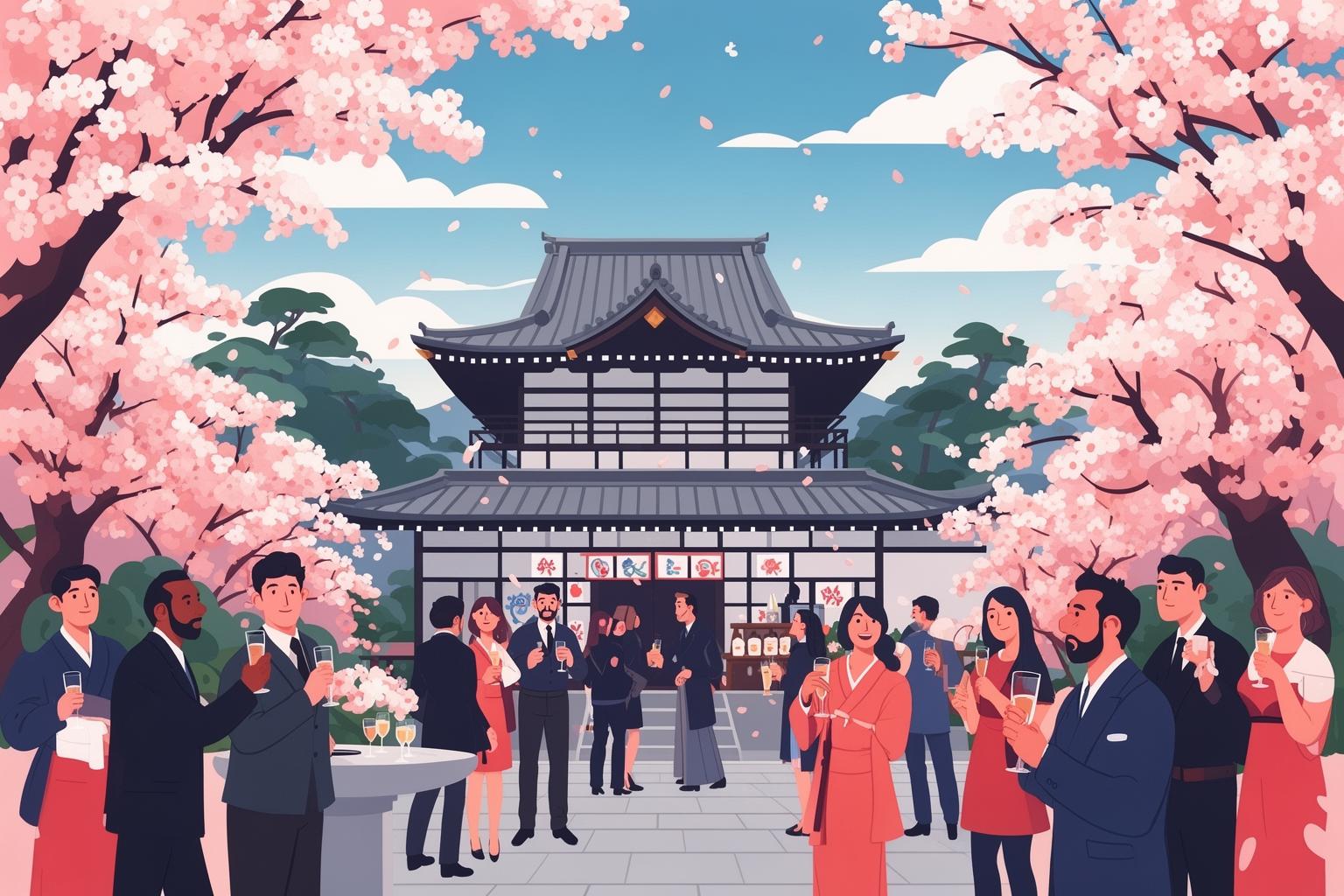
Just when you think the main event is over and you can finally head home, someone will inevitably shout, “Right, let’s go to the nijikai!” The night is far from finished.
The Second Round (`Nijikai`)
The nijikai, or second party, is a common part of the nomikai experience. It usually involves moving to a different venue, often a karaoke box, a darts bar, or a smaller, more intimate pub. The atmosphere at the nijikai tends to be more relaxed than at the first party. The group may have split, with some older members leaving, leaving a core group of more enthusiastic drinkers. While the rules of etiquette loosen somewhat, they don’t vanish. You are still “at work.”
For junior employees, attending the nijikai is often just as mandatory as the initial round. Leaving early can be viewed as antisocial or a lack of commitment to the team. This is where you might be expected to sing karaoke (enthusiasm matters more than talent) or engage in more personal conversations. It’s another test of your endurance and dedication to the group.
The Third Round (`Sanjikai`) and the Final Train
For the truly devoted, a sanjikai (third party) may follow, often ending at a late-night ramen shop to help soak up the alcohol before heading home in the early hours. However, for most attendees, the real end of the night is determined by a crucial piece of infrastructure: the last train, or shūden. In major cities like Tokyo, the train system shuts down shortly after midnight. Missing the last train means either a very expensive taxi ride home or spending the night in a capsule hotel. The shūden provides a socially accepted excuse to make a graceful exit. Saying you need to catch the last train is one of the few ironclad reasons to leave that will be accepted without question.
The Morning After: What Happens at Nomikai Stays at Nomikai?
In Japan, there is a popular concept called bureikō, which roughly means “disregarding rank.” In theory, a nomikai is a bureikō event where things said and done under the influence of alcohol are forgotten and forgiven by the next morning. This is a dangerous myth. People remember. Your drunken karaoke performance, your overly familiar chat with a director, your stumbling exit—it all gets noted. The real rule is to reach a state of being pleasantly tipsy and sociable, what the Japanese call horoyoi. You should be more open and relaxed than your office self, but you must never lose control. The next day in the office, you are expected to switch back completely to formal tatemae. You do not mention the previous night’s drunken confessions or antics. You might say a simple, “Thank you for last night,” to your boss, but that is all. The nomikai exists in its own separate reality, yet its consequences linger.
The Changing Face of Nomikai in Modern Japan
While the nomikai continues to be a powerful tradition, its absolute dominance is beginning to decline. A notable generational shift is taking place. Younger Japanese workers, who are more familiar with global work cultures and prioritize a better work-life balance, are increasingly questioning the necessity of these quasi-mandatory, after-hours drinking gatherings. The concept of nomi-nication is often seen as an outdated and inefficient relic from the past. They prefer to foster team cohesion during working hours.
Additionally, rising awareness of “power harassment” (pawa-hara) has made companies more cautious. Forcing an employee to drink excessively or attend a nijikai unwillingly can now lead to legal consequences. Many companies are responding by holding fewer and shorter nomikai, or by trying alternatives like team lunches, which achieve similar social objectives without the pressure and time demands of evening drinking.
The pandemic also accelerated this trend, forcing companies to suspend all group gatherings. Teams realized they could operate effectively without them. However, it would be wrong to declare the nomikai dead. The cultural need for a space to move from tatemae to honne and to reinforce group harmony remains strong. The form may be changing—becoming more genuinely optional, less frequent, or more varied in its activities—but the essence of building relationships outside the formal office setting is unlikely to vanish completely.
A Practical Survival Guide for the Uninitiated
Navigating your first few nomikai can be intimidating. Here is a straightforward checklist to help you get through them while keeping your reputation intact.
Before You Go
- Eat something beforehand. Arriving on an empty stomach is a recipe for disaster. Have a snack to slow the absorption of alcohol.
- Know the players. Mentally review the organizational chart. Make sure you know who the senior managers are so you can show them proper respect.
- Pace yourself. It’s a marathon, not a sprint. If you want to avoid drinking too much, keep your glass half-full, as people are less likely to top it off. Ordering oolong tea, which looks like a whiskey mix, is a classic move among veterans.
During the Party
- Find the shimoza. When you arrive, head straight for the seat by the door. This shows you understand the etiquette.
- Observe and mimic. Watch what your Japanese colleagues of similar age and rank are doing and follow their example.
- Be a vigilant pourer. Keep an eye on everyone’s glass, especially your superiors. This is your most important role.
- Engage positively. Use this chance to talk to seniors, but keep the conversation light and respectful. Ask for their advice, praise their wisdom, and show enthusiasm for the company.
The Art of a Graceful Exit
- Use the last train. The shūden is your best ally. It’s the perfect, unquestionable excuse to leave before the sanjikai begins.
- Thank everyone. Before leaving, make a point of personally thanking the buchō and other senior members for the evening. A slight bow and a simple “Otsukaresama deshita. Osaki ni shitsurei shimasu” (Thank you for your hard work. Please excuse me for leaving first) is essential.
Ultimately, the nomikai offers a glimpse into the core of Japanese group dynamics. It’s where the unspoken rules of harmony, hierarchy, and obligation unfold in real time. While it may seem archaic and demanding, it remains a key part of the corporate landscape. By understanding its history and mastering its intricate choreography, you can transform what feels like a stressful obligation into a genuine opportunity to build meaningful relationships in the Japanese workplace.