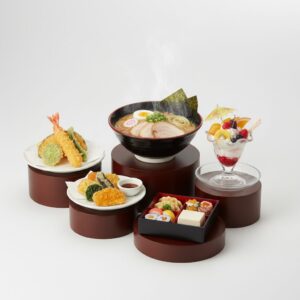
Walk down almost any commercial street in Japan, from a bustling Tokyo shotengai to a quiet station arcade in a rural town, and you’ll inevitably encounter them. Perfectly formed gyoza, glistening with a phantom crispiness. A bowl of ramen with noodles suspended mid-air by an invisible pair of chopsticks. A slice of strawberry shortcake so fluffy and pristine you can almost taste the cream. They sit in glass display cases, illuminated under soft lights, looking not just edible but exquisitely, tantalizingly perfect. This is the world of shokuhin sampuru, or food samples, and for most first-time visitors, the reaction is a predictable blend of awe and amusement. It seems like a quaint, charmingly analogue quirk in a country so often associated with futuristic technology.
But to dismiss these plastic and vinyl creations as mere decorations or novelties is to fundamentally misunderstand their role in Japanese society. This is not a cottage industry of hobbyists; it is a multi-billion yen business built on decades of artisanship, psychological insight, and a deep-seated cultural understanding of what it means to eat. These models are silent salesmen, visual contracts, and cultural ambassadors all rolled into one. They are a critical piece of the machinery that makes Japan’s vast and often intimidating culinary landscape accessible to everyone, from the hesitant tourist to the local salaryman in a hurry. They solve a problem you may not have even realized existed: the anxiety of the unknown menu. So why did Japan fall in love with food you can’t eat? The story behind these hyper-realistic models reveals more about the nation’s approach to food, commerce, and communication than you might ever imagine. It’s a story of artistry born from practicality, and it’s a business taken very, very seriously.
This intricate interplay between art and commerce finds a vivid parallel in the passionate energy of Japan’s fire festivals, where tradition and spectacle transform fleeting moments into enduring cultural celebrations.
From Wax to Wonder: The Unlikely Origins of Sampuru
The birth of shokuhin sampuru was not the product of a clever marketing strategy or an ambitious artistic vision. Like many of Japan’s most lasting innovations, it arose from a practical necessity, combining traditional craft with emerging challenges. Its origins lie not in a restaurant kitchen but within the realms of medicine and education, and its spread was driven by the sweeping social changes of 20th-century Japan.
A Candle-Maker’s Epiphany
The story often begins in the early 1920s with Takizo Iwasaki, a man from Gujo Hachiman, a small town in Gifu Prefecture that remains the heart of sampuru production today. Iwasaki was a skilled craftsman with a sharp eye. The well-known origin tale, now almost legendary, recounts how he had an epiphany while observing patterns formed by dripping wax from a candle. He realized that the natural material could be shaped into organic, lifelike forms. According to one famous story, he crafted a wax omelet so realistic that his wife could not distinguish it from the real dish.
Although his first experiments involved food, Iwasaki’s initial business was not with restaurants. At that time, medical and scientific institutions used wax models for anatomical and pathological exhibits. Iwasaki recognized the potential to apply his talents to create models for nutritional education, visually demonstrating the components of a healthy diet to a public with limited knowledge of the subject. This beginning is crucial: from the start, the craft was founded on the principle of clear, straightforward visual communication. It served as a tool for education and comprehension before it became a tool for commerce.
The commercial potential only became evident in 1932 when a newly opened restaurant in Osaka commissioned a model from him. During a period when Western dishes like omurice (omelet rice) and cutlets were gaining popularity but remained unfamiliar to the average Japanese diner, a visual representation proved revolutionary. It eliminated guesswork and hesitation when ordering unfamiliar foods, making these new culinary experiences accessible to a wider audience.
The Post-War Boom and the Visual Menu
The real surge of shokuhin sampuru, however, occurred after World War II. As Japan experienced rapid economic growth, its dining culture transformed significantly. Cities expanded, incomes increased, and eating out became a new cultural norm. Department stores, with their expansive basement food halls known as depachika, turned into fiercely competitive venues. Numerous small restaurants, coffee shops (kissaten), and specialty eateries opened, all competing for attention from a burgeoning urban middle class.
In this vibrant and competitive market, shokuhin sampuru became an essential tool. A restaurant could instantly convey its entire menu, specialties, prices, and portion sizes to passersby without them needing to step inside or read any text. The display case evolved into the ultimate advertisement. It was a silent, tireless spokesperson communicating a universal language. In a society that values efficiency and predictability, the sampuru display was an ideal solution. It enabled customers to make quick, informed choices, reducing the risk of ordering dishes they might not enjoy. This visual menu leveled the playing field, allowing even the smallest family-run ramen shops to compete with larger establishments simply by showcasing their best bowls.
The Craftsmanship of Deception: Inside the Artisan’s Workshop
To truly appreciate why shokuhin sampuru are so effective, you need to recognize the extraordinary skill and artistry involved in creating them. These are not mass-produced plastic toys fabricated by machines. Each model is a handcrafted masterpiece, made by a dedicated artisan, or shokunin, who has often spent years perfecting a unique blend of sculpture, painting, and chemistry. The process is meticulous, proprietary, and driven by a single goal: to produce an object that appears not just real, but irresistibly delicious.
The Alchemists of the Kitchen
Transforming a real dish into a permanent model is a form of modern alchemy. Initially, models were crafted from wax, which was fragile and prone to melting under display lights. Nowadays, artisans mostly use durable synthetic resins like polyvinyl chloride (PVC) and silicone, though the hands-on process remains largely unchanged.
It all starts when a restaurant sends a sample of the dish they want replicated to the sampuru workshop. The artisans don’t merely observe it; they deconstruct it. Every element—a slice of chashu pork, a grain of rice, a single scallion ring—is carefully arranged to create a silicone mold. This critical step captures textures and fine details that make the final product convincing. Once the molds are made, liquid plastic is poured in and heated in an oven until it solidifies.
The true magic happens after the pieces are cast. This is when the shokunin becomes both painter and sculptor. Using airbrushes and fine-tipped brushes, they painstakingly layer colors by hand. They don’t just paint a piece of tuna red; they replicate the subtle marbling of fat, the translucency of the flesh, and the glossy sheen indicating freshness. They have developed a repertoire of secret techniques to mimic every imaginable texture. The crisp, jagged surface of tempura batter is often created by dropping colored wax into water. Fizzy bubbles in a glass of beer are carefully embedded within the resin. Perfect grill marks on a steak are seared on with a hot metal tool. It’s a process demanding intense observation and flawless skill.
The Pursuit of Oishisou: The Look of Deliciousness
The central principle for every sampuru artisan is not just realism, but the concept of oishisou (美味しそう), meaning “looks delicious.” This is a crucial distinction. The aim isn’t to create a perfect one-to-one replica of the food, but to craft an idealized, perfected version that instantly evokes hunger and desire in the viewer.
This means colors are often slightly more vibrant than in reality. Ingredients are arranged with perfect balance and artistry. The gloss on a sauce is designed to catch the light perfectly. Visual tricks are employed to communicate the dish’s experience. For example, a bowl of ramen might show noodles lifted from the broth by chopsticks, instantly revealing the noodle type and hidden ingredients. A slice of pizza might depict cheese being pulled away, with strings stretched and frozen in time. These details aren’t literally realistic—cheese doesn’t hold that stretch forever—but they are emotionally true. They capture the peak moment of deliciousness.
This pursuit of oishisou elevates sampuru beyond mere models to powerful communication tools. They don’t just show you what a dish looks like; they convey what it feels like to eat it. They are a three-dimensional promise of satisfaction.
The Business of Belief: Sampuru’s Role in the Dining Experience
While the history is captivating and the craftsmanship undeniable, the enduring presence of shokuhin sampuru for nearly a century is due to its vital commercial and social role. The display case outside a restaurant is much more than mere decoration; it is a crucial element of the Japanese dining experience, influencing customer behavior, managing expectations, and establishing trust before any order is placed.
A Visual Contract, Universally Understood
The most apparent purpose of the sampuru display is to function as a visual menu. For foreign tourists who cannot read Japanese, it is an invaluable aid—you can simply point to what you want. However, its usefulness extends well beyond tourists. It offers comprehensive information at a glance for everyone. You can see the exact portion size, helping you decide if it’s a light snack or a substantial meal. You can identify all the ingredients, which is especially helpful for picky eaters or those with dietary restrictions. Prices are almost always shown next to each model, so there are no surprises.
This system effectively eliminates what economists call “information asymmetry.” The restaurant knows exactly what it serves, and thanks to the sampuru, so does the customer. This fosters fairness and transparency. It acts as a visual contract. The restaurant is making a clear, unequivocal promise: “What you see in this case is what you will receive on your plate.” In a culture that highly values honesty and avoiding conflict or disappointment, this guarantee is powerful. It reduces the anxiety of choice and replaces it with confidence. You enter the restaurant already knowing what you will order and what to expect, streamlining the entire dining experience.
A Tool of Trust and Temptation
The investment in a complete set of high-quality shokuhin sampuru is considerable. A single, intricate dish model can cost hundreds of dollars, often ten to twenty times the price of the meal it represents. A full display case can cost thousands of dollars. This expense attests to its effectiveness. Restaurant owners keep investing in these models because they deliver results.
From a marketing standpoint, sampuru are extremely effective at encouraging impulse decisions. A vibrant, well-lit display of appetizing food can be far more compelling than a printed menu or a photograph. It appeals to a primal part of the brain. You see the glistening sushi, the hearty katsudon, or the towering parfait, and you immediately feel hunger. When two restaurants are next to each other, the one with the more attractive sampuru display often attracts the customer.
Beyond mere temptation, investing in high-quality sampuru sends a deeper message. It communicates to customers that the restaurant is established, successful enough to afford such an investment, and confident in its offerings. It signals professionalism and pride. Conversely, a dirty, faded, or broken sampuru display is a major warning sign, suggesting a business that neglects details. In this way, the fake food serves as a reflection of the quality of the real food and service inside.
Beyond the Restaurant Window: The Evolving World of Sampuru
In an era dominated by Instagram, QR code menus, and online review sites flooded with user-uploaded photos, one might think the era of physical food models is coming to an end. However, shokuhin sampuru not only endures but has also blossomed, transforming from a purely functional business tool into a celebrated art form and a quirky emblem of Japanese pop culture. Its lasting presence highlights its deep cultural roots and its ability to evolve with the times.
From Utilitarian Craft to Pop Culture Kitsch
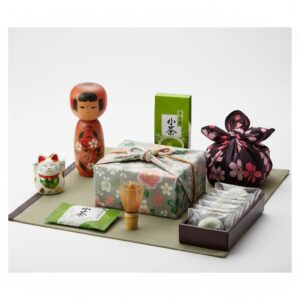
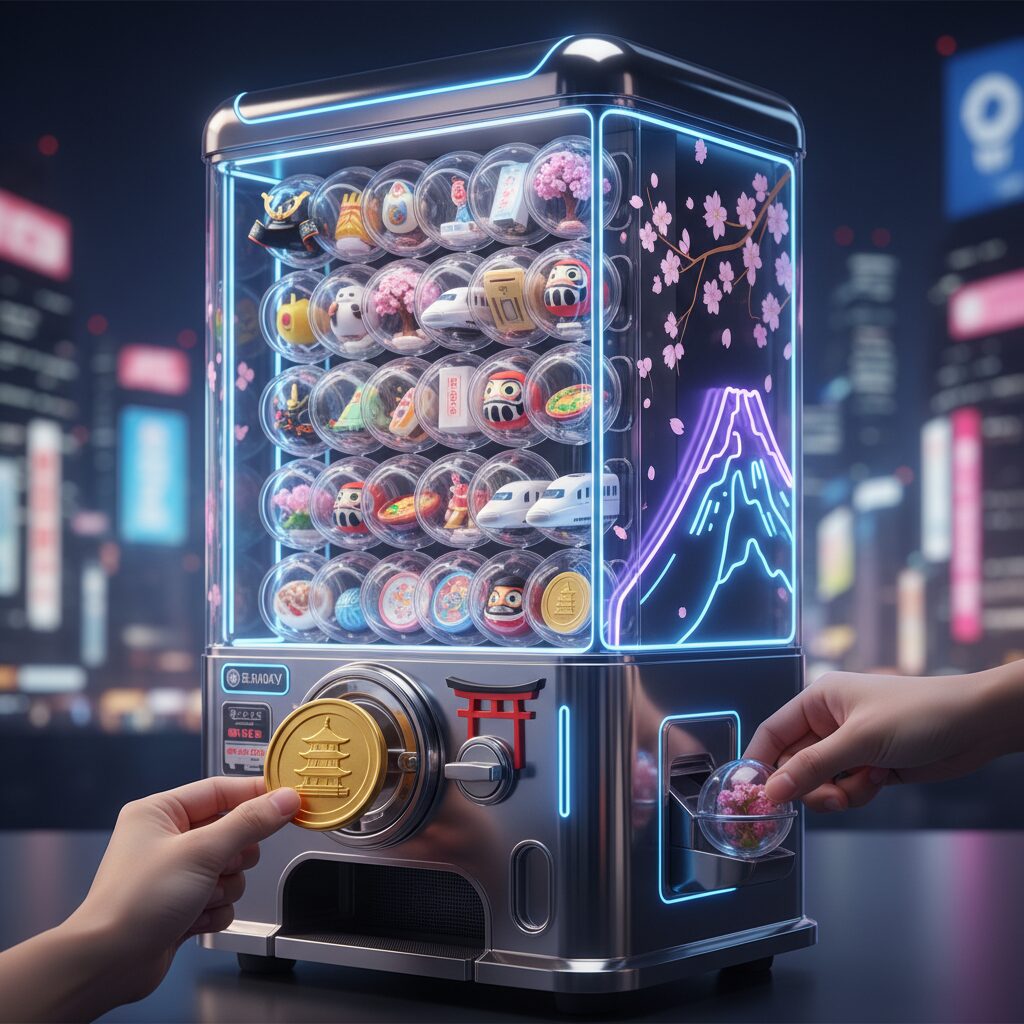
As shokuhin sampuru became a familiar sight across Japan, people began to value the craft itself. The striking realism and artistry started drawing attention beyond commercial use. This fascination has sparked a new market for sampuru as souvenirs and novelty items. Nowadays, you can find exquisitely detailed sampuru keychains, phone cases, USB drives, and refrigerator magnets resembling everything from sushi to spaghetti. These have become popular gifts, delighting people with the whimsical charm of carrying a tiny, perfect plastic tempura in their pockets.
This shift has also made sampuru-making a popular tourist experience. In areas like Tokyo’s Kappabashi Kitchen Town—the wholesale district for restaurant supplies—several workshops offer hands-on classes where visitors can craft their own sampuru. Guided by master artisans, you can learn how to create a remarkably realistic head of lettuce or a piece of tempura. These experiences have changed the image of sampuru from a B2B product into a tangible, accessible piece of Japanese culture for people to engage with firsthand.
The Digital Challenge and Enduring Appeal
Can a physical model really compete with the endless scroll on a smartphone? While digital photos are now a major factor in choosing restaurants, they haven’t rendered sampuru obsolete. The three-dimensional presence of a food model offers an impact that flat images on screens cannot match. It occupies real space, interacts dynamically with light, and provides a tangible sense of scale and volume. It’s the difference between viewing a photo of a mountain and standing at its base.
Sampuru displays are also integral to the full dining experience in Japan. They are part of the ritual of strolling down a street, browsing options, and letting your eyes, rather than an algorithm, guide your appetite. They provide a moment of sensory engagement before the digital interface takes over. Even though many eateries now use tablets for ordering, sampuru displays still perform the essential role of enticing customers inside.
The world of sampuru continues to evolve. Some makers incorporate new technologies to craft even more hyper-realistic models or find innovative uses. Yet its core value remains unchanged: a system built on clarity, trust, and the aesthetic appreciation of food.
So, the next time you find yourself captivated by a plastic food window display in Japan, take a moment to look beyond the novelty. You are not merely seeing a quirky decoration. You’re witnessing the legacy of a 20th-century innovator, the skill of master artisans, and an ingenious solution to the universal challenge of choice. It is a silent language conveying a simple but profound promise: that a good meal should look as exquisite as it tastes, and that what you see is exactly what you are about to enjoy.