Walk into any convenience store in Japan, or konbini as they’re universally known, and you’ll be met with a familiar, orderly glow. The air hums with the soft chime of the automatic door and the quiet whir of refrigerators. You can find almost anything you need for daily life here: a fresh shirt for an unplanned overnight stay, a solution to pay your utility bills at 3 a.m., or a perfectly acceptable bottle of wine. But push past the rice balls and bento boxes, and you’ll find the real heart of the modern konbini’s cultural power: the chilled dessert shelf. This is not a sad collection of pre-packaged, long-life snack cakes. It’s a brightly lit stage showcasing an ever-changing lineup of cream puffs, cheesecakes, roll cakes, puddings, and parfaits so sophisticated they could almost pass for patisserie creations. This is where you’ll find the evidence of a quiet, ferocious war being waged—not between convenience store chains alone, but between some of Japan’s most respected pastry chefs and the very concept of mass-market food. The central question isn’t just whether a 300-yen dessert from 7-Eleven can be good. The real question is why it has to be, and why accomplished patissiers are now eagerly lending their names and expertise to develop them. This isn’t just about snacks; it’s about a fundamental shift in how Japan understands and consumes luxury, ritual, and reward.
Japan’s culinary evolution doesn’t stop at gourmet desserts, as the in-depth look at gachi-chuka reveals a similarly innovative twist on traditional noodle culture.
The Rise of the Everyday Indulgence

To grasp the konbini sweet phenomenon, one must first understand the economic and social context that created its demand. This trend didn’t emerge suddenly but was shaped over the decades following the collapse of Japan’s economic bubble in the early 1990s. During the boom years, luxury was overt and conspicuous, characterized by French restaurants with starched tablecloths and designer handbags. However, as the economy stagnated, such extravagant spending became less accessible and, for many, less appealing. While salaries plateaued, the cultural appreciation for quality and craftsmanship remained strong. This gave rise to a new consumer desire known as puchi zeitaku, or “small luxury.” People looked for affordable, easily accessible ways to enjoy moments of high-quality indulgence without the expensive price or formal atmosphere of traditional luxury. A beautifully crafted dessert, savored alone after a long day’s work, became the ideal personal, quiet reward. The konbini, with its round-the-clock availability and widespread presence, was ideally suited to meet this emerging demand. At first, their offerings were simple—basic puddings and gelatin desserts—but as competition heated up among the major chains (7-Eleven, FamilyMart, and Lawson), it became clear that the dessert aisle was a crucial battleground for customer loyalty. It wasn’t sufficient to offer just a sweet treat; it had to be something exceptional.
The Anatomy of a Konbini Masterpiece
What truly distinguishes a modern konbini sweet from a typical grocery store snack is an obsessive, nearly fanatical, attention to detail that reflects the principles of high-end pastry. The development process is a continuous cycle of innovation, fueled by data, consumer feedback, and a profound understanding of the Japanese palate. This is not merely about combining sugar and flour; it is both a science and an art form.
Ingredient fundamentalism
One of the most striking features of premium konbini sweets is the exceptional quality of the raw materials. Leading chains have made significant investments in their supply chains to source specific, high-quality ingredients that also feature prominently in the product’s marketing narrative. It’s not just “cream”; it’s fresh cream sourced from a particular region in Hokkaido renowned for its rich dairy. It’s not just “eggs”; it’s a proprietary brand of eggs from hens fed a special diet to yield deeper, more flavorful yolks, like 7-Eleven’s renowned “Egga-cellent” eggs. They emphasize the use of Uji matcha from Kyoto or vanilla beans from Madagascar. This ingredient-first philosophy serves two goals. Firstly, it genuinely enhances flavor and texture, bringing the product closer to what you’d find in a dedicated bakery. Secondly, it signals quality and authenticity to consumers, justifying the slightly higher price and elevating the item from a mere snack to a worthy culinary creation. They are selling not just taste, but provenance.
The Relentless Pursuit of Texture
In Japanese cuisine, texture, or shokkan, is often regarded as equally important as flavor, and this mindset is crucial in the realm of konbini sweets. Developers go to extraordinary lengths to perfect the mouthfeel of each element. Take the celebrated cream puff, a konbini staple. The challenge is significant: how do you keep a crisp choux pastry shell while filling it with moist cream, without it turning soggy after hours in a refrigerated display? The solution lies in advanced food science. They might employ a double-layered shell, coat the interior with a thin chocolate layer as a moisture barrier, or create a specific flour blend that resists humidity. The cream itself is another point of obsession. Is it airy and light, or rich and custardy? Does it use a blend of different creams to develop a complex flavor profile? This attention applies to every dessert. A roll cake must have a sponge that is mochi-mochi (springy and slightly chewy) yet light. A pudding must be nameraka (silky smooth). A cheesecake must strike the perfect balance of creaminess and firmness. This precision in texture is a hallmark of Japanese patisserie, and its successful mass production is the konbini’s greatest technical triumph.
The Cult of the Seasonal and Limited
Another essential tactic borrowed from high-end retail is the steady introduction of gentei, or limited-edition items. Konbini dessert selections are in a constant state of flux. While a few perennial favorites may endure, most offerings change weekly or monthly in tune with the seasons. Spring brings sakura (cherry blossom) and strawberry flavors. Summer highlights citrus, mango, and refreshing jellies. Autumn introduces chestnut (marron), sweet potato, and pumpkin. Winter brings rich chocolate and festive cakes. This approach achieves several objectives. It creates urgency and excitement, motivating customers to visit often so they don’t miss the newest creation. It also aligns the konbini with the deeply rooted cultural appreciation for seasonality, a fundamental aspect of Japanese aesthetics and cuisine. A strawberry shortcake in May simply feels fitting. Beyond the seasons, there are limited-time collaborations, regional exclusives, and anniversary specials, all designed to turn each trip to the dessert shelf into a potential discovery.
The Patissier in the Factory
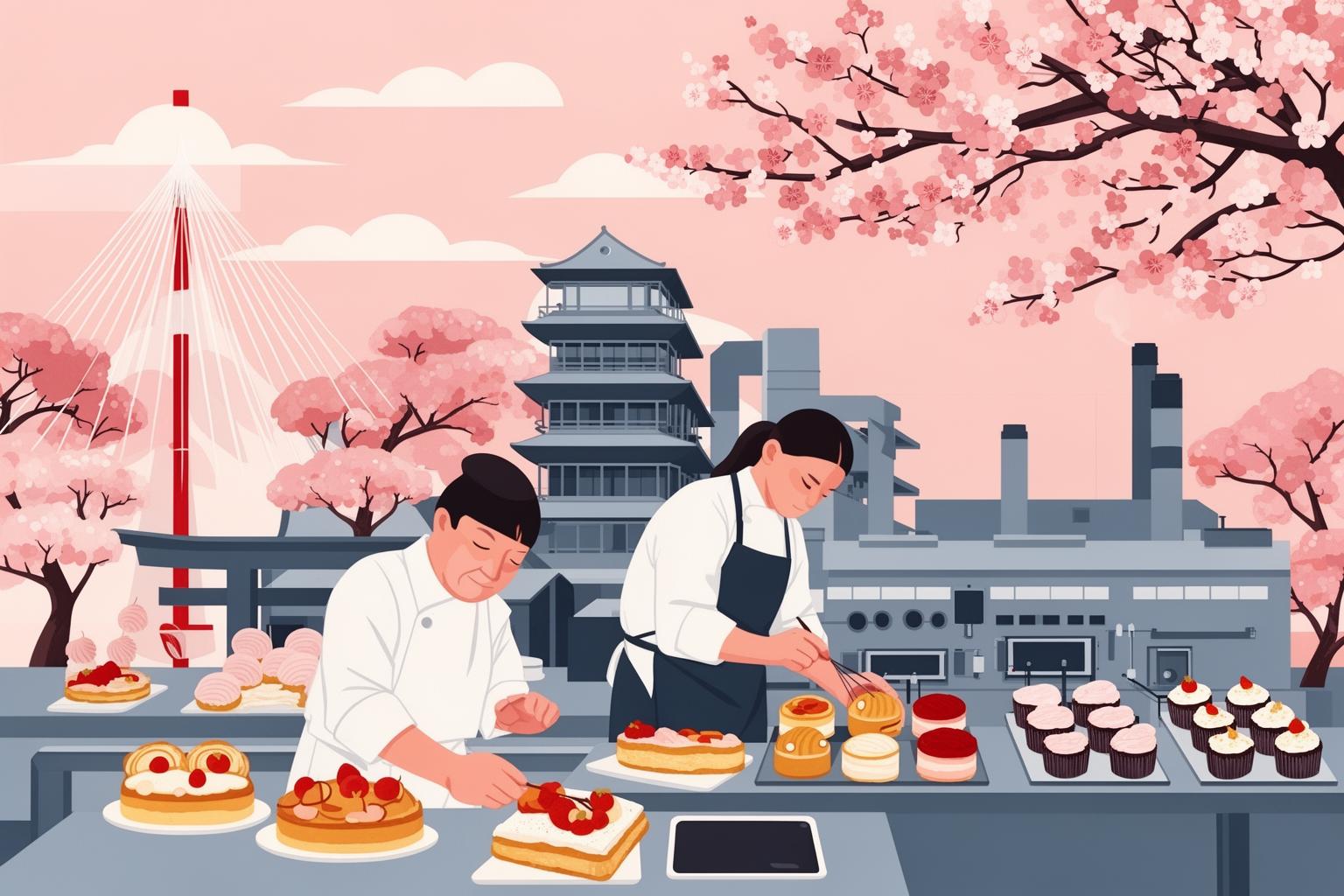
The most intriguing development in this dessert competition is the direct participation of renowned pastry chefs and patisseries. At first glance, it may seem counterintuitive. Why would a chef who has dedicated their life to mastering their craft in a small, artisanal environment lend their name to a product sold under fluorescent lighting beside instant noodles? The explanation reveals a pragmatic and distinctly Japanese approach to branding, scale, and culinary artistry.
Unprecedented Reach and Recognition
For the pastry chef, collaborating with a major konbini chain offers an unparalleled platform for exposure. A popular Tokyo patisserie might serve a few hundred customers daily, whereas a successful konbini dessert can sell hundreds of thousands or even millions of units across thousands of stores nationwide. This level of name recognition is otherwise unattainable. Chefs like Toshihiko Yoroizuka or Sadaharu Aoki, both highly esteemed in haute patisserie, have overseen product lines for Lawson and FamilyMart. These partnerships are not mere licensing agreements; the chefs are often deeply involved in product development, from selecting ingredients to refining recipes. Their participation is heavily promoted, with their faces and signatures prominently featured on the packaging. For the chefs, it’s a way to share their philosophy and flavors with a vast audience who might never visit their upscale boutiques. For konbini stores, the chefs’ names instantly confer an aura of quality and gourmet authenticity.
The Ultimate Creative Challenge
Beyond marketing advantages, working with a konbini poses a significant technical challenge that many chefs find appealing. The central question is: how can the delicate, fleeting quality of a freshly made pastry be transformed into a product that can be mass-produced in a factory, transported via refrigerated trucks, and still taste exceptional after sitting on a shelf for 24 hours? This requires a very different skill set, merging culinary artistry with the precision of food science and industrial manufacturing. Ingredients behave differently on a large scale, and textures that remain stable in small batches can deteriorate during factory processing. The chef must collaborate closely with the konbini’s R&D team to reformulate recipes, devising clever strategies to preserve the essence of their original creation while adapting it to the demands of mass distribution. Conquering this challenge is a creative pursuit in its own right—a testament to a chef’s deep understanding of their ingredients and techniques.
Democratizing Good Taste
There is also a cultural dimension at work. In Japan, there is a strong conviction about democratizing quality food. The belief that excellent cuisine should not be reserved exclusively for the wealthy serves as a powerful incentive. By partnering with a konbini, chefs contribute to this cultural mission. They help raise the standard of everyday food, making moments of genuine gourmet enjoyment accessible to everyone, from high school students after class to office workers on their way home. This is a form of cultural contribution, demonstrating that craftsmanship and care are not confined to expensive, exclusive settings. A perfect example is Lawson’s “Baschee,” a Basque-style burnt cheesecake that became a viral sensation. It captured the signature caramelized crust and creamy interior of the trendy dessert, transforming a niche gourmet item into a nationwide phenomenon at an affordable price.
More Than a Snack: The Ritual of the Konbini Sweet
The final piece of the puzzle lies in understanding how these sweets are enjoyed. They are more than mere products; they act as facilitators of a modern ritual. Purchasing a konbini sweet is often a deliberate choice, a planned moment of self-care seamlessly woven into the fabric of a busy life.
The Personal Reward System
The most common function of the konbini sweet is as a gohoubi, or a personal reward. After a demanding day at the office, a challenging exam, or simply to mark the end of the workweek, buying a small, beautiful dessert serves as a way to unwind and acknowledge one’s own efforts. It’s an indulgence without guilt—small, affordable, and private. Unlike going out for a fancy meal, it requires no planning or social coordination. The ritual often involves bringing the treat home, carefully plating it (or simply eating it straight from the clever packaging), perhaps brewing a fresh cup of tea or coffee, and savoring it alone during a quiet moment. This small act creates a clear boundary between the stress of the public sphere (soto) and the comfort of the private sphere (uchi), offering a vital psychological release.
The Social Currency of Discovery
In the era of social media, the konbini sweet has also become a form of social currency. The continuous introduction of new and limited-edition items fuels a culture of discovery and sharing. Finding a particularly delicious new pudding or a visually striking parfait is something to be documented and shared online. Instagram and X (formerly Twitter) are filled with photos and reviews of the latest konbini discoveries. This sparks a nationwide conversation, with people recommending favorites and rushing to try viral hits before they disappear from shelves. This digital word-of-mouth functions as a powerful marketing engine for the konbini chains, turning customers into an enthusiastic, unpaid army of trendspotters and influencers. To enjoy the latest konbini sweet is to take part in a shared, contemporary cultural experience.
The chilled dessert shelf of the Japanese convenience store, then, is far more than just a place to grab a quick sugar fix. It’s a cultural arena where the demand for affordable luxury, the obsession with quality, the rigor of food science, and the prestige of gourmet chefs all intersect. It reflects the modern Japanese consumer’s craving for moments of accessible, high-quality pleasure that can fit into the rhythm of a demanding daily life. The fierce competition that drives a patissier to perfect a cheesecake destined for a Lawson is the same force that delivers a small, perfect moment of joy to someone at the end of a long day. It stands as a testament to the idea that in Japan, excellence can—and should—be found anywhere, even beneath the 24-hour fluorescent glow of a neighborhood konbini.