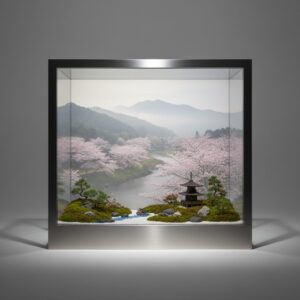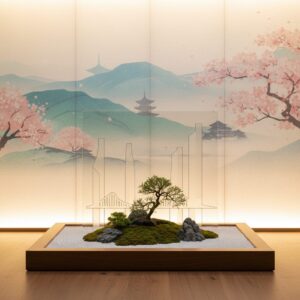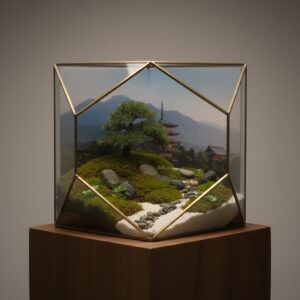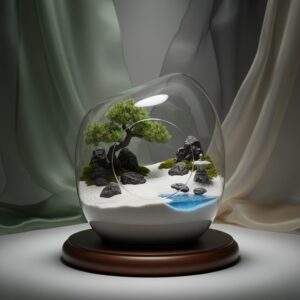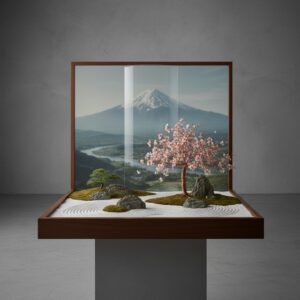
You are standing on the wooden veranda of a small temple in the northern hills of Kyoto. The garden before you is simple, almost austere. It consists of meticulously raked white gravel, a few thoughtfully placed stones, and a low, clipped hedge of azaleas. By itself, it is a serene, contained space. But your eyes don’t stop at the hedge. They are drawn over it, across a valley, to the commanding presence of Mount Hiei in the distance. The mountain isn’t just a backdrop; it feels like the garden’s dramatic, final feature. The hedge acts not as a barrier, but as a frame, intentionally presenting the mountain as the garden’s own. In that moment, this small patch of land feels boundless, connected to the entire landscape. You have just experienced shakkei.
Translated literally as “borrowed scenery,” shakkei is one of the most sophisticated and powerful concepts in Japanese landscape design. It is the art of capturing a distant view—a mountain, a forest, the sea, even a neighboring pagoda—and incorporating it into the composition of a garden as if it were an element placed there by the designer. This isn’t merely about having a nice view. It’s a deliberate act of architectural and philosophical genius, an illusion that dissolves the physical boundaries of a space to create a sense of the infinite. It is a technique that says more about the Japanese relationship with nature, space, and perspective than almost any other. To understand shakkei is to understand a fundamental aspect of the Japanese mindset: the belief that we are not separate from nature, but a small, integrated part of a much larger whole. It’s a design principle born from a culture that has long perfected the art of finding vastness within confinement.
This intricate balance between designed space and the immensity of nature is further explored in Japanese borrowed scenery, offering deeper insights into how landscapes can seamlessly integrate both elements.
More Than Just a Pretty View: The Philosophy of Shakkei
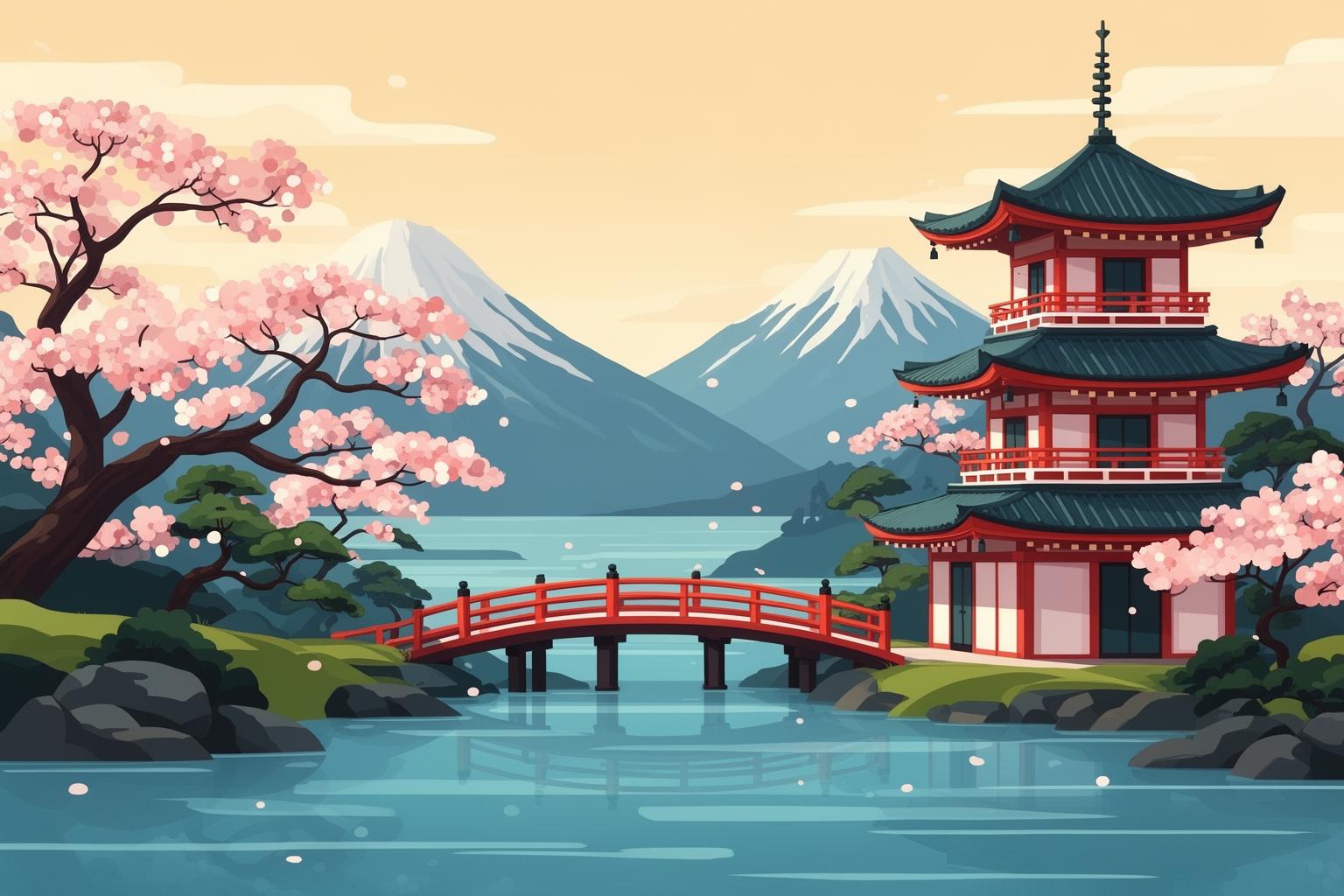
In the West, especially within the grand tradition of formal European gardens like Versailles, the aim was often control. Nature was to be subdued, shaped by human will into symmetrical designs, geometric perfection, and displays of authority. The garden served as a symbol of dominion, marking a clear boundary between civilization and the wilderness beyond.
Shakkei follows the opposite principle: integration. It embodies profound humility. The garden designer recognizes that the most beautiful elements often lie beyond their influence. Why create a fake mountain when a real one, magnificent and ancient, already graces the horizon? The objective is not to dominate nature but to engage in a respectful dialogue with it. The garden becomes a transitional space, carefully crafted to connect the human domain of the home or temple (uchi, or inside) with the vast natural world (soto, or outside).
This philosophy is deeply anchored in Japan’s indigenous Shinto beliefs, which perceive divinity (kami) in natural features such as mountains, waterfalls, ancient trees, and unique rock formations. A mountain is not simply a pile of stone; it is a sacred presence. To “borrow” it for your garden is to invite that sacred energy into your personal space—an act of reverence. Buddhist ideals also significantly influence this approach, especially the Zen focus on interconnectedness and the illusion of the self as a separate entity. A shakkei garden is a tangible expression of this concept, visually illustrating that the boundary between your small world and the universe beyond is porous, if not entirely illusory.
Moreover, shakkei offers an elegant solution to a practical challenge: space. In a densely populated, mountainous country, private land has always been a precious resource. Creating a sense of psychological expansiveness evolved into an art form. By borrowing the scenery beyond its borders, even a tiny urban garden can evoke a feeling of limitlessness. It is a clever visual trick that provides a profound sense of freedom and tranquility, a reminder of the vast world existing just beyond the fence.
The Four Types of Borrowed Scenery
Although the concept feels fluid and natural, Japanese aesthetics often encompass intricate classifications and a precise vocabulary. The principles of shakkei were gradually formalized, particularly in documents from the Edo period (1603-1868). Garden designers identified four main methods of borrowing from the surrounding environment, each tailored to different contexts and intended effects.
Enshaku (遠借): Distant Borrowing
This is the classic form of shakkei, the one most commonly associated with the idea. Enshaku entails incorporating a prominent, distant landscape feature, typically a mountain or significant hill. The key to its effectiveness lies in the careful handling of the middle ground. A low wall, clipped hedge, or thoughtfully thinned row of trees conceals the untidy, unstructured space between the garden and the distant feature—elements like roads, buildings, or farmland. This visual illusion creates the impression that the garden seamlessly blends into the base of the mountain. The effect is grand, majestic, and often awe-inspiring, connecting the viewer to the enduring, almost timeless elements of the land.
Rinshaku (隣借): Neighboring Borrowing
More intimate and frequently found in densely populated areas, rinshaku involves borrowing features from an adjacent property. This might include a lovely bamboo grove in a neighbor’s yard, the elegant tiled roof of a nearby temple, or a graceful pine tree peeking over a shared wall. This form of borrowing demands a certain social harmony and an appreciation for shared beauty. It recognizes that the aesthetic environment extends beyond one’s property line. It’s a subtle art that depends on carefully positioned windows or openings in fences to frame the borrowed element perfectly. It fosters a sense of a larger, interconnected community landscape, even amid the heart of a city.
Gyōshaku (仰借): Upward Borrowing
What if your garden is small and enclosed by high walls? You look upward. Gyōshaku is the art of borrowing the sky. By planting tall trees around the edges, the designer can block views of neighboring buildings and instead frame a portion of the sky. The garden thus becomes a place to appreciate drifting clouds, the changing colors of twilight, or the moon on a clear night. Sometimes it involves borrowing the tops of very tall trees outside the garden, making the garden’s own trees feel like part of a vast forest. It’s an exceptionally effective technique for creating a sense of tranquility and seclusion in an urban environment.
Fushaku (俯借): Downward Borrowing
This is the rarest and perhaps most striking form of shakkei. Fushaku applies when a garden is positioned on a height, such as a cliff or steep hillside. Instead of looking outward or upward, the viewer’s gaze is directed downward, borrowing the view of a river, lake, or sea below. The garden itself may be quite simple, designed primarily to offer a safe and beautiful vantage point from which to contemplate the vastness of the water beneath. The sensation it evokes is one of sublime elevation, as if floating above the world.
The Architect’s Toolkit: Techniques of Deception and Delight
Achieving a successful shakkei effect involves more than simply cutting a hole in a hedge. It demands mastery of composition, perspective, and a profound understanding of human perception. Garden designers use various techniques to craft a seamless and convincing illusion.
Framing and Miegakure (見隠)
The most essential technique is framing. A completely open, panoramic view can be overwhelming and, paradoxically, less effective. The art of shakkei lies in carefully curating the view. Elements such as a teahouse window, veranda posts, a stone lantern, or an arching pine branch can serve as natural frames. This framing transforms the distant scenery from a mere backdrop into a deliberate work of art—a “living painting.”
This concept closely relates to miegakure, or “hide and reveal.” A garden path might be designed to wind and turn so that the borrowed mountain is initially concealed by trees, then suddenly appears at the most dramatic moment. This fosters a sense of discovery and enhances the emotional impact of the view. The garden does not reveal all its secrets at once; rather, it engages visitors in a slow, unfolding narrative.
The Middle Ground as Connector
A designer cannot disregard the space between the garden’s edge and the borrowed feature. The middle ground must be carefully arranged to create a believable visual connection. For instance, when borrowing a forested mountain, the designer might plant trees within the garden that resemble the shapes or foliage of those on the mountain. A pond in the foreground could be shaped to mirror the outline of the distant hills. Rocks placed in the garden might share the same color or texture as those visible on the mountain. These subtle repetitions establish visual harmony, tricking the eye into perceiving one continuous, unified landscape.
The Power of the Void (Ma – 間)
Central to all Japanese aesthetics is the concept of ma, often translated as negative space, pause, or interval. In a shakkei garden, the empty space between the garden and the borrowed scenery is far from empty. It is infused with energy and meaning, granting the borrowed feature its power and scale, and allowing the mountain to breathe. The designer’s role is to compose this void with the same care as the rocks and plants. The low, clipped hedge in a shakkei garden is a masterpiece of ma; its primary purpose is to define and celebrate the space between here and there.
A Tour Through Shakkei Masterpieces
To truly understand the power of shakkei, it’s best experienced in its natural setting. Several gardens throughout Japan are celebrated as quintessential examples of this art form, each providing a distinct lesson in perspective and beauty.
Entsu-ji Temple, Kyoto
Frequently regarded as one of the purest representations of shakkei, Entsu-ji is a small, tranquil temple located in northern Kyoto. Its garden exemplifies elegant simplicity. When viewed from the temple’s main hall, a narrow garden of moss and stones is framed by a meticulously trimmed hedge. Beyond that hedge, a grove of cedar and cypress trees perfectly frames Mount Hiei. The middle ground is completely hidden. The effect is striking; the sacred mountain seems to rise directly from the garden itself. The composition feels so flawless that it is both entirely natural and divinely intentional. Sitting on the tatami, you sense the boundary between temple and mountain dissolve entirely.
Shugakuin Imperial Villa, Kyoto
If Entsu-ji represents shakkei as intimate poetry, Shugakuin portrays it as a grand epic. This expansive villa, also in northern Kyoto, was built in the 17th century for Emperor Go-Mizunoo. It consists of three separate gardens arranged on a large hillside. The experience unfolds as a journey. You wander through the lower and middle gardens along paths that reveal controlled, smaller-scale views. The climax occurs upon reaching the Upper Villa. As you ascend to the Rin’un-tei teahouse, you are rewarded with a breathtaking panorama. A vast pond, the Yokuryu-chi, lies below, its dam forming the garden’s edge. Beyond it stretches a landscape of rice paddies, forests, and the distant mountains of western Kyoto, all borrowed into one magnificent, sweeping vista. This is shakkei on an imperial scale, designed to inspire awe and evoke a sense of dominion achieved not by force but through masterful integration.
Adachi Museum of Art, Shimane Prefecture
Shakkei is not merely a historical relic. The Adachi Museum of Art, established in 1970, demonstrates that these principles remain timeless. The museum is renowned for two things: its collection of modern Japanese paintings and its garden, which has been ranked the best in Japan for over twenty years. Here, the concept is taken to its ultimate extreme. The gardens are not designed to be walked through; they are viewed from inside the museum through large windows that function as literal picture frames. The founder, Adachi Zenko, saw the garden as a living Japanese painting. The museum’s six gardens flawlessly borrow the surrounding natural mountains. Maintenance is meticulous; staff carefully tend every pine needle, and the museum collaborates with the landowners of the borrowed mountains to ensure their pristine appearance is preserved. This is a modern, perfectionist interpretation of shakkei, where the line between artifice and nature, painting and garden, is beautifully and intentionally blurred.
Shakkei in the Modern World
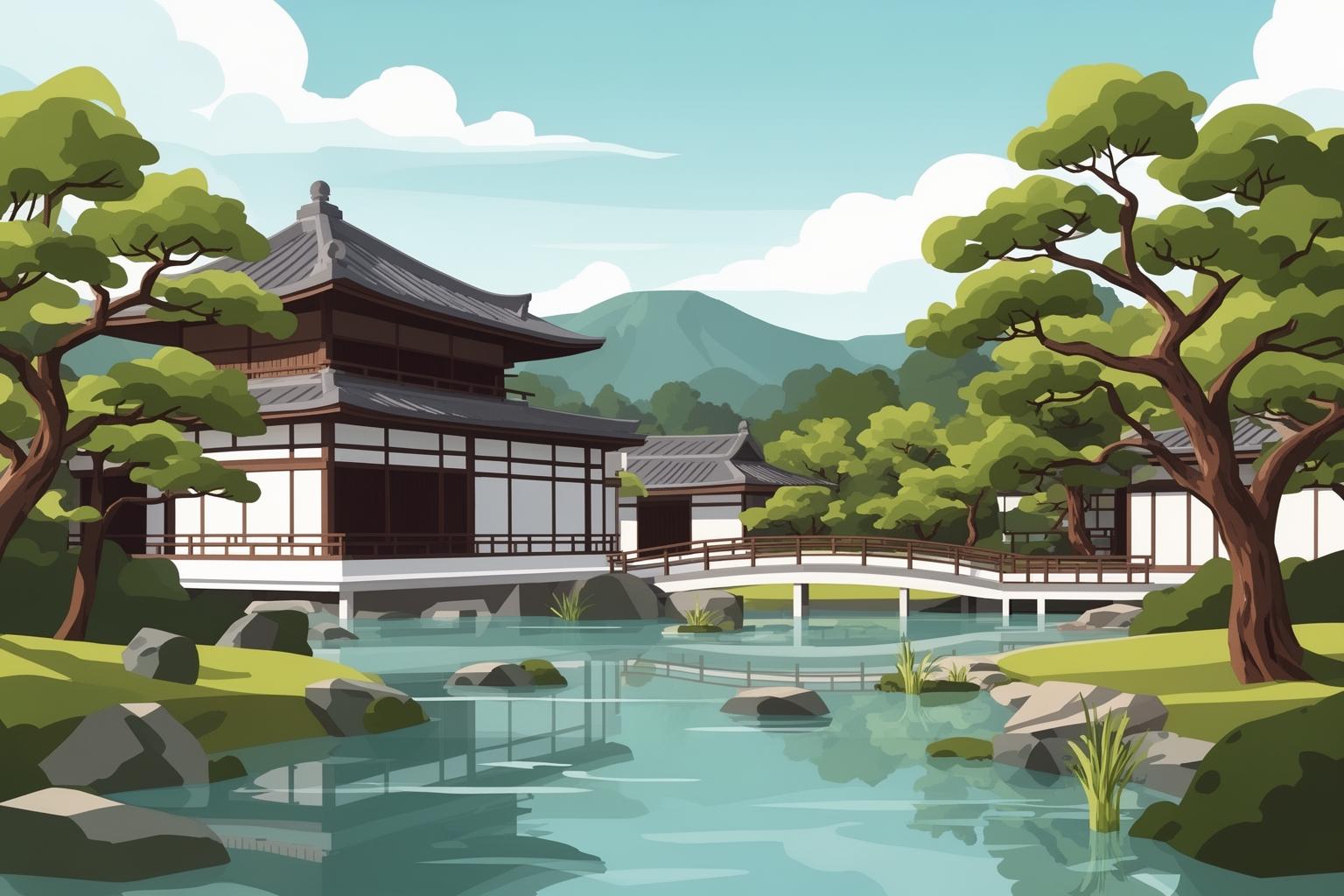
The spirit of shakkei continues to shape Japanese design well beyond the confines of temples and villas. In the densely packed cities of modern Japan, its principles have become more relevant than ever. A small urban courtyard garden, called a tsuboniwa, might be created to borrow the top of a neighbor’s cherry tree, offering a fleeting glimpse of seasonal beauty. The window of a high-rise apartment might be positioned not for the broadest possible view, but to precisely frame a distant temple roof or a uniquely shaped cloud. Architects and interior designers constantly consider how to connect interior and exterior spaces, using glass walls and carefully placed openings to borrow light, greenery, and sky.
At a deeper level, shakkei provides a mindset for modern living. It reminds us that our own small space, our own life, is enriched when we acknowledge and appreciate the world beyond our immediate control. It teaches us to find beauty not in possession, but in our relationship to things. You cannot own the mountain, but you can borrow its beauty. You cannot control the clouds, but you can design a space that celebrates their passing. It is a philosophy of quiet confidence and deep connection, a way of seeing the world that finds vastness in the smallest of spaces by artfully framing the infinite.
The next time you stand in a garden or simply look out a window, try to see with shakkei eyes. Notice the foreground, the middle ground, and the background. Observe how a tree branch frames the sky, how a low wall can make a distant hill appear closer. You may discover that the art of borrowing scenery is not only a Japanese gardening technique but also a way to compose a more beautiful and expansive life, wherever you are.