If you spend any amount of time in modern Japan, you’ll start noticing it. Maybe it’s a woman on the train whose tote bag is meticulously decorated with dozens of identical anime character keychains. Perhaps you’ll see a group of friends at a café, carefully arranging acrylic stand-up figures of pop stars around their cake slices for a perfect photo. Or you might overhear a passionate conversation about securing tickets for a concert, spoken with the gravity and strategic planning of a military operation. What you’re witnessing isn’t just fandom. It’s oshi-katsu.
The term is a fusion of two words. Oshi (推し) is the person, character, or even object you support with all your heart. It’s your chosen one, your fave, the one you’re pushing to succeed. Katsu (活) is short for katsudō (活動), meaning ‘activity’. Put them together, and you get ‘activities in support of your chosen one’. But this simple translation barely scratches the surface. Oshi-katsu is a full-blown subculture, an economic engine, and for many, a way of life. It’s a highly structured, ritualized, and deeply personal expression of devotion that goes far beyond simply liking something. It’s about dedicating time, money, and emotional energy to supporting your oshi, and finding immense joy and community in the process. It’s less about passive consumption and more about active, purposeful participation. To understand oshi-katsu is to understand a core driver of Japan’s contemporary pop culture, its consumer behavior, and the ways people find meaning and connection in a society that can often feel isolating. It’s a world with its own language, rituals, and sacred spaces, and this is your guide to navigating it.
The meticulous devotion found in oshi-katsu mirrors the subtle passion of urban anglers who quietly shape Japan’s cultural landscape.
Deciphering the Devotion: What is an ‘Oshi’?
Before discussing the activities, it’s important to first understand the object of affection. The idea of an oshi is wonderfully flexible. It goes beyond simply having a favorite singer or actor. The variety of what, or who, can be considered an oshi sheds light on the unique nature of this subculture.
The Pantheon of Popular Oshi
The most common and prominent category is, naturally, idols. This encompasses both male and female pop groups, ranging from mainstream giants managed by large entertainment agencies to smaller, niche underground groups. For fans, an idol is more than just a performer; they represent an aspirational figure whose journey the fan actively supports. The narrative of pursuing a dream, overcoming adversity, and shining on stage is central to their appeal.
Close behind are characters from anime, manga, and video games, known as 2D oshi. The devotion here is equally intense. Fans may commit themselves to a particular hero from a popular shonen series, a charming knight in a dating simulation game, or even a minor character with only a brief screen presence. The attraction lies in the character’s design, personality, story arc, and the voice actor’s performance. In many ways, 2D characters are ‘safer’ oshi—they never age, retire, or become embroiled in scandals that could tarnish their carefully crafted image.
Voice actors, or seiyū, represent another significant pillar. They serve as a bridge between the 2D and 3D realms. A fan might initially be drawn to a voice actor because of a particular character they portrayed, but often they become fans of the actor themselves, following their entire career, attending live events, and listening to their radio shows. The seiyū industry has evolved so that popular voice actors are essentially idols themselves, releasing music albums and holding concerts.
Beyond these three major categories, the world of oshi expands substantially. Stage actors—especially those in the hugely popular ‘2.5D’ musicals (live-action stage plays based on anime and manga)—command large, dedicated followings. There are also fans devoted to YouTubers, professional athletes, theme park characters, and even non-human entities. Some fans have an oshi that’s a particular train line, a historical castle, or a brand mascot. If it inspires passionate support, it can be an oshi. This inclusiveness is crucial: oshi-katsu is about the act of support itself, a framework of devotion that can apply to nearly anything.
The Emotional Contract: Why This Person? Why This Character?
So what transforms a favorite into an oshi? It’s a profound, personal connection that often feels like a one-sided supportive relationship. Fans frequently describe their oshi with gratitude. “They give me energy” is a common sentiment. “Watching them work hard inspires me to give my best.” In a world filled with daily stresses and anxieties, an oshi offers a dependable source of joy and a focus for positive emotions.
This connection often develops through a narrative of shared struggle and triumph. Fans don’t only appreciate the polished final performance; they follow the entire journey. They watch behind-the-scenes documentaries showing grueling practice sessions, read blog posts where the idol expresses self-doubt, and celebrate every small victory, like a first TV appearance or a sold-out concert. The fan feels invested in their oshi’s success. When the oshi triumphs, the fan feels victorious as well. This vicarious achievement creates a strong emotional bond.
For 2D characters, the connection is built through storytelling. A character’s tragic past, steadfast moral values, or relatable imperfections can forge a powerful bond. The fan invests in their story, hoping to see them find happiness or reach their goals within the fictional world. This relationship is nurtured and expanded through a steady stream of new content: story chapters, special illustrations, and merchandise that allows fans to bring a piece of that world into their own.
Ultimately, choosing an oshi is an act of identity formation. The traits you admire in your oshi—their talent, humor, resilience, or aesthetic—often reflect qualities you value or aspire to embody. Supporting them becomes a way to express and celebrate those values.
The ‘Katsu’: A Ritualized Guide to Fan Activities
Having an oshi marks the beginning. The katsu—the activities—are where this devotion is actively expressed. This is far from a casual pastime; it is a carefully planned, often costly, and deeply fulfilling series of rituals that bring structure to a fan’s life. These actions turn abstract affection into concrete expression.
Building the Altar: The Culture of ‘Goods’
Step into the room of a devoted fan, and you might spot a corner resembling a shrine. This is the oshi altar, a thoughtfully assembled collection of merchandise, commonly called ‘goods’ (guzzu). It’s not just a random assortment; it’s a symbol of commitment.
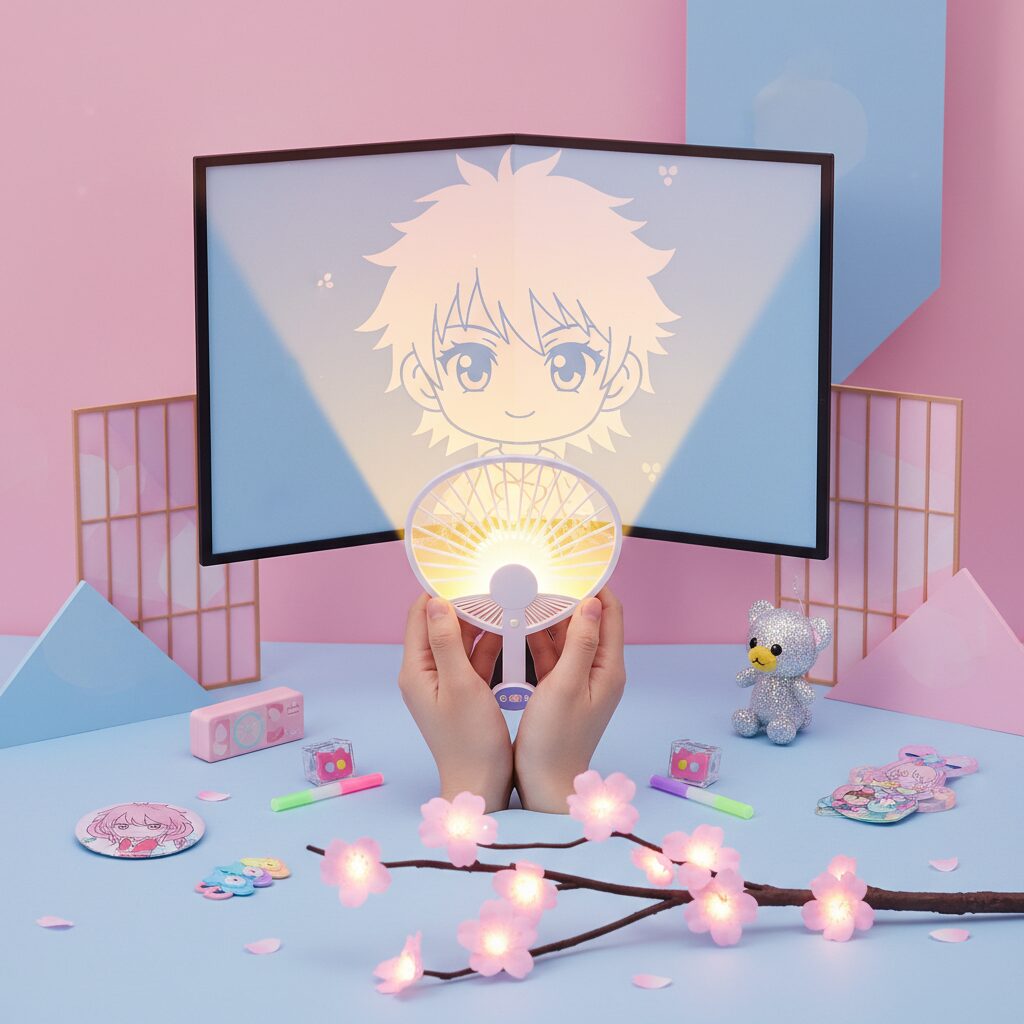
The essential trio of contemporary oshi goods includes acrylic stands (akusuta), can badges (kanbajji), and clear files (kuria fairu). Acrylic stands are small, collectible figures of the character or person that can be displayed on desks or shelves. Can badges are attached to ‘ita-bags’ (literally ‘painful bags’), tote bags with clear windows designed to showcase an extensive, overlapping collection of badges. Clear files, although technically stationery, are seldom used for documents; they are collected for their beautiful artwork.
Obtaining these goods is a significant part of the hobby. Much of this merchandise comes in ‘blind box’ form, meaning the specific character remains a surprise until the package is opened. This lottery-style setup encourages fans to purchase multiple items and then engage in a secondary ritual: trading. After major events or new releases, it’s common to see groups of fans laying out duplicates on the pavement, holding signs that show what they have and what they’re looking for. This social exchange is a vital part of the hobby, offering a way to connect with fellow fans and help one another complete collections.
The Pilgrimage: Sacred Space and ‘Seichi Junrei’
Oshi-katsu creates its own sacred geography. For anime and manga fans, this commonly takes the form of seichi junrei, or ‘sacred site pilgrimage’. This involves visiting real-life locations featured in or that inspired their favorite stories. A particular train station in Shinjuku, a quiet shrine in a rural town, or a specific high school in Kamakura can suddenly become tourist hotspots, flooded with fans eager to capture photos from the exact angles seen in the anime.
These pilgrimages help blur the boundary between fiction and reality, allowing fans to feel closer to the story and its characters. Local communities have increasingly embraced this trend, working with anime studios to produce special maps, stamp rallies, and limited-edition merchandise, turning fan enthusiasm into tangible economic benefits.
For idol and actor fans, the sacred places differ. They include concert venues hosting legendary performances, theaters for stage plays, and offices of their management agencies. Fans may travel just to photograph these locations. There are also collaboration cafés, temporarily themed entirely around a particular anime, game, or idol group. These cafés feature menus inspired by characters, walls adorned with artwork, and exclusive merchandise. Securing a reservation at a popular collaboration café can be as challenging as buying concert tickets, involving complex lotteries and frantic online booking the moment slots open.
The Main Event: Concerts, Stage Plays, and Fan Meetings
Attending a live show represents the climax of oshi-katsu. This is when the connection with the oshi becomes immediate and tangible. The process itself demonstrates dedication. Tickets are nearly always distributed through multi-stage lotteries. Fans enter the lottery, hope for the best, and if successful, gain the right to purchase a ticket. Seat assignments are often unknown until the event day, adding an extra layer of anticipation.
Live events are a masterclass in audience participation. Fans don’t merely watch; they actively engage. At idol concerts, this means mastering kakegoe or kōru, choreographed chants and calls shouted at specific points in songs to energize the performers and crowd. It also involves the use of penlights. Fans buy the official concert penlight, capable of switching among dozens of colors, and change its color to match the member performing or centre stage. A stadium of tens of thousands of lights shifting color in perfect harmony creates a breathtaking visual display of collective devotion.
Stage plays, especially 2.5D productions, have their own etiquette. Audiences remain quieter during the performance, but their devotion shows differently. Fans often watch the same show multiple times to savor subtle performance variations and support the entire cast. At the curtain call, penlights emerge again, set to the colors of their personal oshi on stage.
The Celebration: The Oshi Birthday Party
One of the most endearing and unique rituals in oshi-katsu is the birthday celebration—not for the fan, but for the oshi. When an idol’s or character’s birthday arrives, fans go to great lengths to mark the occasion.
This might involve reserving a private room at a karaoke parlor or restaurant. They bring their collection of goods—acrylic stands, dolls, photo cards—and artistically arrange them on the table. A custom cake decorated with the oshi’s face or related symbols is ordered. Food and drinks are often chosen to match the oshi’s official color; for instance, if their color is blue, fans might order blue cream soda. They sing “Happy Birthday,” take numerous photos for social media, and spend hours sharing their affection for their oshi. It is a purely devotional act, a special way to honor the day and celebrate with like-minded friends, even if the guest of honor is only a two-dimensional image or someone far away on stage.
The Social Ecosystem of Oshi-katsu
Although the bond between a fan and their oshi is deeply personal, oshi-katsu is fundamentally a highly social phenomenon. It flourishes through community, shared knowledge, and a complex network of unspoken rules. Finding your people is crucial to the experience.
Finding Your Tribe: Online and Offline Communities
Social media, especially X (formerly Twitter), serves as the central hub of the oshi-katsu world. It’s the place where official announcements are made, fans react in real-time to new content, and communities are built. Fans often create dedicated accounts separate from their personal ones, allowing them to express their devotion freely. They use specific hashtags to organize discussions, share fan art, and connect with others who support the same oshi.
These online bonds frequently develop into real-life friendships. People who meet through social media often plan to attend concerts together, visit collaboration cafés, or gather for trading sessions. The mutual passion for an oshi forms an immediate and powerful connection that can overcome differences in age, occupation, or background. Having friends who share the excitement of winning a ticket lottery or the heartbreak of a favorite character’s tragic fate is an essential part of the joy found in oshi-katsu.
The Unspoken Rules: Fandom Etiquette
Engaging in these communities requires an awareness of a complex set of unwritten rules and etiquette. These guidelines aim to preserve harmony within the fandom and demonstrate respect for both the oshi and fellow fans.
For instance, at live events, there are implicit rules regarding penlight use, such as not holding it above your head in a way that obstructs others’ views. When trading merchandise, politeness and fairness are expected. In online conversations, there’s a general consensus about handling spoilers for new story developments.
One key principle is keeping fandom life separate from one’s professional or “main” life. This is why creating dedicated social media accounts is common. It enables fans to immerse themselves fully in their passion without fear of judgment from colleagues or family who may not understand their level of commitment. This kind of compartmentalization is typical in Japanese social life and finds clear expression in oshi-katsu.
The Thorny Side: ‘Dōtan Kyohi’ and Possessiveness
Of course, it’s not solely positive. Intense passion can also give rise to conflict and possessiveness. A notable concept is dōtan kyohi (同担拒否), which literally means “refusing same-fan.” It refers to fans who do not want to associate with others who share the same oshi. For these fans, their relationship with their oshi is so personal and exclusive that they may experience rivalry or jealousy toward fellow supporters.
Although often viewed as an extreme position, this attitude highlights the deeply personal and sometimes possessive nature of the fan-oshi relationship. It can lead to online disputes, competition for merchandise, and territorial behavior. While most fans are happy to share their affection, the presence of dōtan kyohi serves as a reminder of the intense emotions involved. It represents the darker aspect of devotion, where for some the boundary between healthy support and unhealthy obsession becomes blurred.
Oshi-katsu as an Economic and Cultural Force
Oshi-katsu is far from a niche pastime; it serves as a significant economic force that influences entire industries. The willingness of fans to spend large sums on their dedication has given rise to business models designed specifically to cater to them. Grasping this economic dimension is essential to appreciating the phenomenon’s scale.
The ‘Handshake Ticket’ Business Model
The idol industry, especially for major female groups, was transformed by a business model that capitalizes directly on fans’ desire for connection. CDs frequently include a ticket for a handshake event or a voting slip for an internal popularity contest. A single fan might purchase hundreds or even thousands of copies of the same CD, not for the music, but for the tickets inside. Each ticket may only allow ten seconds of face-to-face time with their oshi, but to a devoted fan, that fleeting personal interaction is worth the hefty expense. This model ties album sales closely to fan engagement, providing a strong incentive for fans to spend money to demonstrate their loyalty and boost their oshi‘s standing within the group.
Fueling the Merchandise Machine
The volume and variety of merchandise are immense. The market relies on collectibility and rarity. Items are often available only for a limited period or at specific events, creating urgency. The ‘blind box’ system acts as a form of gambling that encourages repeated purchases. The continuous release of new products—new outfits, seasonal illustrations, anniversary items—ensures that there is always something fresh for fans to acquire.
This goes beyond mere collectibles. Brands across diverse sectors, from cosmetics to snacks to apparel, collaborate with popular anime or idols. A bottle of tea might be bundled with a small keychain, or a makeup brand might launch a palette inspired by a character’s colors. Fans purchase these products not necessarily for their utility but because of their connection to their oshi. This makes oshi-katsu an exceptionally effective marketing strategy.
More Than a Hobby: Oshi-katsu as Identity and Well-being
To dismiss oshi-katsu as mere consumerism or trivial escapism is to overlook its true significance. For many involved, it is a deeply meaningful and life-enhancing pursuit that provides purpose, community, and joy. It serves as a form of self-care and a vital aspect of their identity.
A Source of ‘Ikigai’ and ‘Harigai’
Oshi-katsu can offer a powerful sense of ikigai, a Japanese concept roughly meaning ‘a reason for being’. It gives individuals a reason to rise each day and a goal to strive toward. The daily routine of following news about one’s oshi, saving for upcoming concerts, and interacting with fellow fans adds positive structure and momentum to life.
Closely related is harigai, the feeling of tension and purpose that makes life feel worthwhile. The challenges of oshi-katsu—the stress of ticket lotteries, the effort of collecting rare merchandise, the planning required for trips to events—are not viewed negatively. Instead, these challenges enhance the sweetness of the eventual rewards. Overcoming them fosters a sense of accomplishment and adds meaning to the experience.
In a society where work can dominate and social connections are often difficult to maintain, oshi-katsu offers a vibrant parallel world filled with color, passion, and clear objectives. The income earned from a job no longer serves merely for survival; it fuels one’s passion. Work itself can feel more meaningful when the paycheck is dedicated to supporting the oshi. This reframing of everyday life through devotion can become a powerful source of motivation and psychological resilience.
A Modern Expression of an Ancient Impulse
At its core, oshi-katsu is a contemporary, commercialized manifestation of a timeless human drive: the desire to dedicate oneself to something greater than the self. The rituals, sacred objects, pilgrimages, and communal gatherings all find parallels in traditional religious practices. The oshi acts as a secular deity, a focus for admiration, hope, and gratitude.
It provides a framework for expressing intense emotions in a society that often values restraint. It offers a space where being openly passionate, crying with joy, and sharing excitement are not only accepted but encouraged. In a world that can frequently feel chaotic and meaningless, oshi-katsu offers a focused, orderly, and deeply fulfilling way to engage with culture, community, and oneself. It is not an escape from life but a vibrant and compelling way of living it.