You hear it before you see it. A crashing, clattering, metallic roar that spills out onto the street, a sound so dense it feels physical. You see the lights first—flashing, strobing, a chaotic nebula of pink, blue, and gold pulsing behind sliding glass doors. This is the pachinko parlor, Japan’s ubiquitous cathedral of chance. For most outsiders, and even many Japanese, these places are an assault on the senses, a symbol of addiction, or at best, a noisy, smoke-filled mystery. But I want you to consider a different perspective, one that took me years of living here to understand. What if the pachinko parlor isn’t just about gambling? What if it’s one of the most effective, albeit unconventional, spaces for solo meditation available in a modern city?
It sounds absurd, I know. How can anyone find peace in a place that seems engineered for sensory overload? But that’s precisely the point. The experience of sitting at a machine, lost in the flow of tiny steel balls, offers a unique form of mindfulness—a state of intense, single-minded focus that erases the outside world. It’s a space built for solitude in public, a ritual that demands nothing from you but your attention. Forget the stereotypes of grizzled old men and gambling addicts for a moment. Let’s explore the pachinko parlor as a dojo for the modern mind, a place where the path to inner quiet is paved with a million falling steel balls.
This exploration of meditative moments within chaotic urban energy naturally leads to considering how everyday facets of modern Japan, such as its unique vending culture, reveal subtle pathways to mindfulness.
The Sensory Assault as a Shield
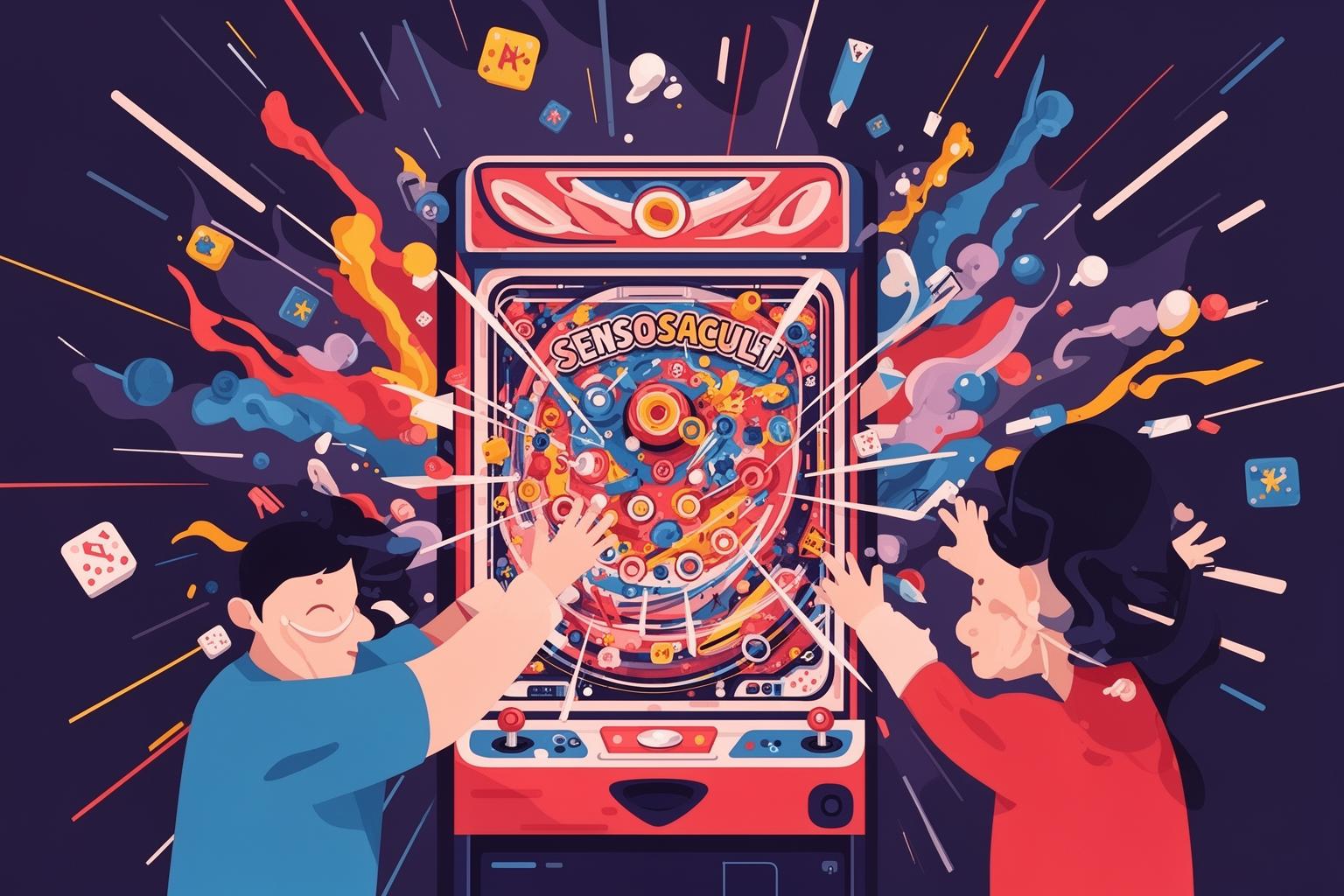
The first thing to grasp is that the overwhelming environment is not a flaw; it’s an intentional feature. The sheer volume inside a pachinko parlor is astonishing. It’s not merely loud; it’s a continuous, crashing wave of sound. Thousands of tiny steel balls tumble down metal pins, digital soundtracks blare from hundreds of machines, and triumphant jingles announce jackpots with electronic fanfares. This creates a dense wall of white noise so thick that conversation, phone calls, or even your own thoughts become inaudible.
And that’s where the magic lies. This sonic barrier acts as a personal shield. All the day’s anxieties—the pressing work deadline, unanswered messages, and nagging internal monologue—are simply drowned out. They cannot break through the roar. Your mind, unable to wander or worry, is compelled into the present moment. It has no choice but to submit to the immediate sensory input.
This is quite similar to other mindfulness techniques that use overwhelming stimuli to promote focus. Consider listening to intensely loud electronic music through headphones to block out the world and concentrate on work, or the disorienting chants and incense in certain religious ceremonies. The pachinko parlor operates like a sensory deprivation tank in reverse. Instead of eliminating stimuli, it bombards you with so much that you have to tune almost everything out, leaving only one focal point: the machine before you.
The Machine is Your Mandala
Once you’re enveloped in the sound, your world narrows to the vertical playground of glass, plastic, and light before you. The game itself is deceptively straightforward. You are not pulling a lever like on a slot machine or making strategic choices like in poker. Your sole task is to turn a small knob located on the lower right of the machine. This single action governs the force with which a spring-loaded hammer propels the steel balls, one by one, to the top of the machine.
This act evolves into a meditative ritual. Your entire attention focuses on the delicate connection between your fingertips and that knob. A millimeter turn to the right sends the balls flying into the left corner. A slight twist backward sends them cascading down the center. You are not aiming conventionally; you are seeking a kuse, a sweet spot, a subtle groove where the balls seem to follow the most advantageous paths. It’s a practice of minute adjustments and constant watching.
As the balls bounce unpredictably through a forest of brass pins, your eyes trail their journey. You watch them deflect, spiral, and occasionally, miraculously, fall into a specific gate—the “starter.” When a ball enters this gate, the digital slot machine on the central screen spins, offering a shot at a jackpot. But the jackpot, in this meditative state, is almost secondary. The primary aim is the flow.
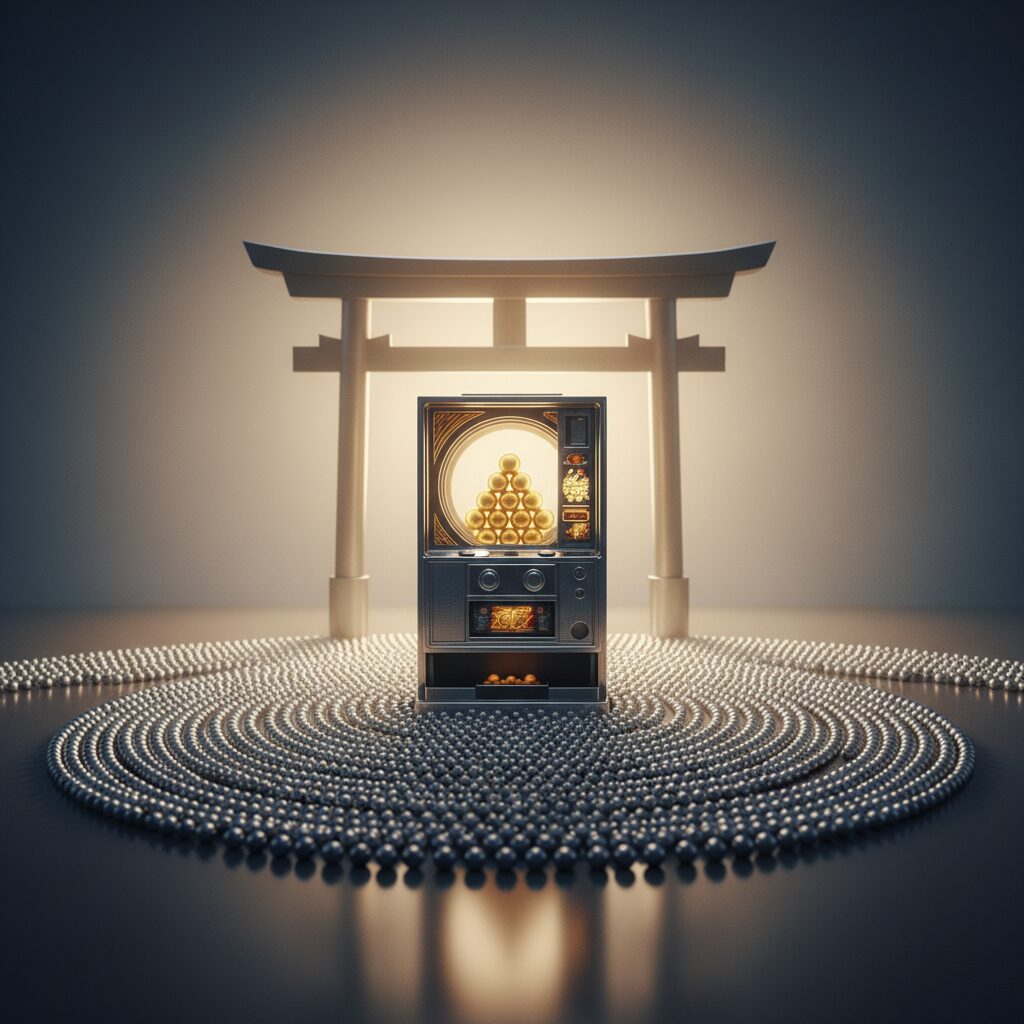
The machine becomes a kinetic mandala. You are not trying to win; you are striving to perfect a single, repetitive motion. You are observing patterns within chaos. The flow of the silver balls is like watching sand in a Zen garden, a mesmerizing, self-contained universe you can influence but never fully control. There is no complex strategy to clutter your mind, only the purity of action and observation. In these moments, time dissolves. An hour can feel like ten minutes.
A Social Space for Solitude
Perhaps the most distinctly Japanese aspect of the pachinko parlor is its function as a space for public isolation. The building is crowded with people, often sitting close together, yet it offers one of the most solitary experiences you can find in Japan. The very design of the space enforces this.
Players sit in long, straight rows, all facing forward. Tall partitions between the machines form personal cubicles, blocking peripheral vision and preventing any accidental interaction with neighbors. There is a strong, unspoken rule: you do not speak to, look at, or acknowledge the person beside you. Eye contact is strictly avoided. Everyone is locked into their own private battle, their individual meditation.
This is a sharp contrast to Western gambling venues like casinos, which often encourage social interaction with open tables for craps or blackjack and bars for communal drinking. The pachinko parlor is the opposite. It is a library of chance, where silence—or at least the absence of human conversation—is highly valued. This creates an extremely comfortable setting for being alone. There is no social pressure, no expectation to perform. You are an anonymous participant in a sea of other anonymous participants, each engaged in the same ritual.
For many, this serves as an essential release valve in a society that places tremendous emphasis on the group. It is a place to unwind after a day of forced smiles and hierarchical office politics. Here, you answer to no one and are responsible for nothing. You can simply exist, unjudged and unseen, shielded by the noise and the anonymous rows of machines.
The Ritual: From Entry to Exit
Demystifying the process uncovers its methodical, almost ritualistic character. It’s a journey composed of clear, defined steps that quickly become second nature.
Choosing Your Weapon
You enter and are immediately confronted with a decision. Which machine will you choose? Some players take a pragmatic approach, checking the data displays above the machines showing the previous day’s win-loss records. They seek out a “hot” machine—one that has been paying out frequently. Others are guided purely by aesthetics. Modern pachinko machines are highly elaborate, themed around popular anime, movies, or pop stars. You might spend your afternoon with Evangelion, a famous samurai drama, or a popular J-pop group, enjoying the custom animations and soundtracks.
For the solo zen-seeker, however, the choice is often more instinctive. It’s a gut feeling. You stroll the aisles, letting the sounds envelop you, until a machine simply resonates. You slide into the worn vinyl seat, molded comfortably by years of use, and your personal session begins.
The Exchange of Worlds
To start, you insert a bill—typically a ¥1,000 or ¥10,000 note—into the validator attached to your machine. You press the “tama-kashi” (ball rental) button. With a satisfying clatter, a stream of silver balls fills the upper tray of your machine. You have now converted currency from the outside world into that of this inner realm. The transaction is complete. You are now part of the system.
The Flow State
With your left hand resting on the tray to feed balls into the launcher, your right hand finds the knob. You launch the first ball. It shoots up, strikes the top bumper, and begins its chaotic descent. You watch. You launch another. And another. Your brain gradually stops analyzing and starts observing. You fine-tune the knob. The rhythm takes hold. The animations on the screen—flashing lights, dramatic character introductions, tense countdowns—become part of the visual texture. These “reach” (リーチ) sequences, signaling a potential win, are crafted to build excitement, but in a meditative state, they merely become part of the pattern, like a unique wave rolling across the ocean.
The Deluge and the Aftermath
If you’re lucky, the numbers or symbols on the digital slot align—a jackpot (大当たり). The machine erupts in a symphony of celebratory lights and sounds. A small gate opens at the bottom of the board, and for several minutes, every ball that enters it rewards you with a cascade of 15 more balls. The lower tray quickly fills to overflowing. Plastic boxes, stacked by each chair, await this moment. You unhook one and place it beneath the tray to catch the deluge. An attendant, seemingly appearing out of nowhere, often notices and brings you another empty box, silently stacking your winnings behind you with efficient nods. The win is a brief, thrilling interruption to the flow, but soon, the jackpot round ends, and you return to the core ritual: turning the knob.
Cashing Out: The Two-Step Abstraction
When you decide your session is over, you press a button on the machine to summon an attendant. They arrive with a portable counter, pour your balls in for an official tally, and print out a receipt or card encoded with your winnings. You take this to a central prize counter, usually behind thick acrylic. There, you exchange your ticket for a set of plastic-encased prizes—often gold or silver tokens of different sizes.
Here’s where the process becomes uniquely Japanese. By law, you cannot exchange these prizes for cash inside the parlor. Direct cash gambling is illegal. Instead, you take your tokens and leave the building. Nearby—down a discreet alley, around a corner, sometimes in a tiny hole-in-the-wall with a small window—is an independent TUC (Tokyo Union Circulation) shop. You slide your tokens through the window, and an unseen person hands you the equivalent cash in return. This two-step system provides a legal loophole enabling the entire industry to thrive. It’s a fascinating cultural workaround, a system of abstraction separating the game from direct monetary exchange.
More Than Just a Game
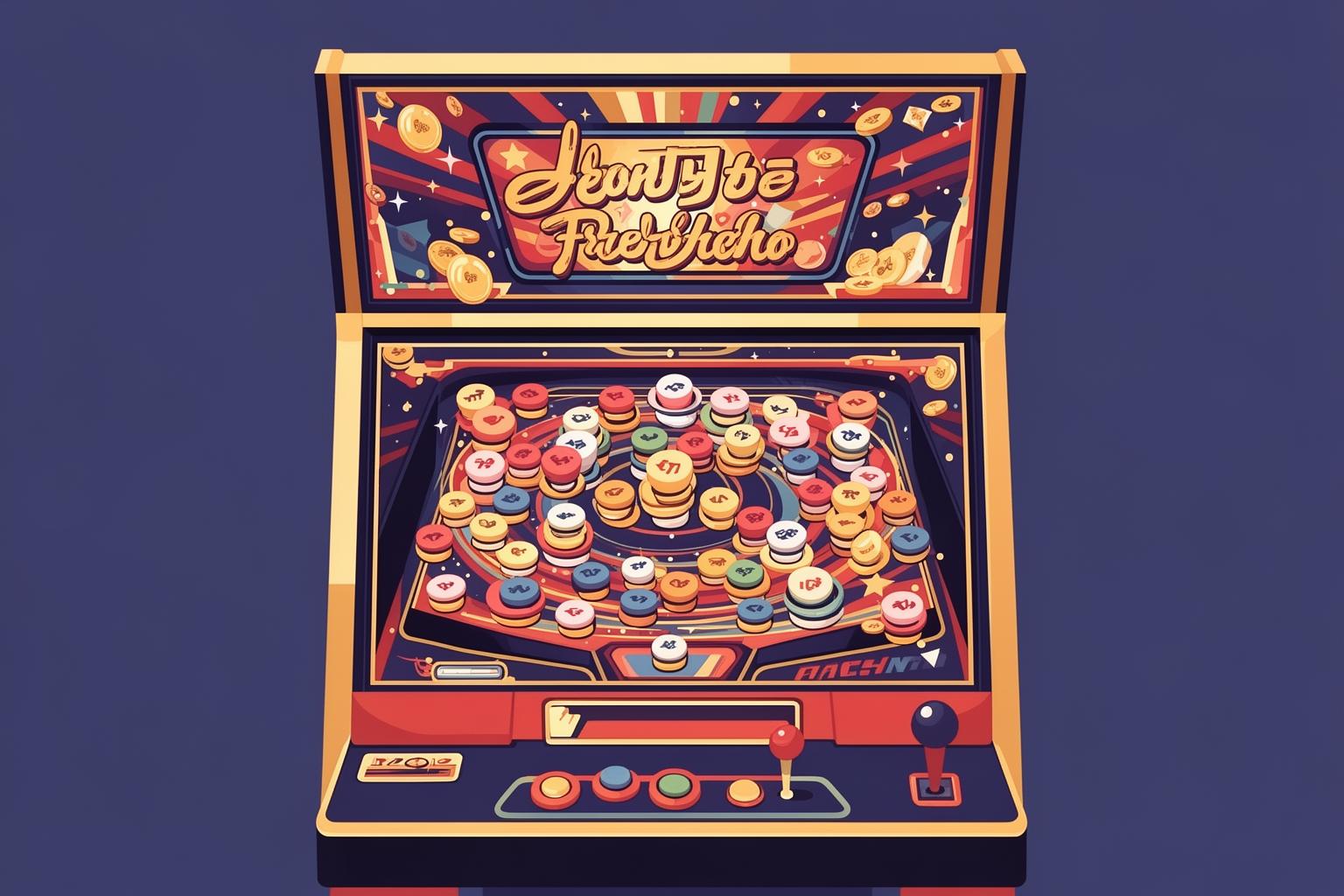
Look around a parlor on a weekday afternoon, and you’ll notice a cross-section of society that challenges stereotypes. Yes, there are older men for whom this is a daily routine. But there are also housewives in their 30s and 40s, taking a one-hour break from their domestic responsibilities. There are university students passing time between lectures. You’ll see salarymen in crisp suits stopping by after work, their ties loosened, before catching the train home. It’s a refuge for anyone seeking a momentary escape, a focus that requires nothing but their presence.
Ultimately, pachinko’s enduring place in Japanese culture is not only about the excitement of gambling. It’s about the space it creates. It is a noisy, chaotic, yet oddly peaceful place to be alone. It serves as a way to quiet the overactive mind and enter a state of simple, tactile concentration. In a society that can be rigid and demanding, the pachinko parlor offers a brief, anonymous, and accessible retreat. It’s not about winning a fortune; it’s about finding a moment of clarity amid the clatter, a single point of stillness in the eye of a steel storm.