It’s one of the first things that strikes you when you spend any real time in Japan, a detail so common it quickly becomes background noise, yet so fundamentally strange it never quite loses its power to surprise. I’m talking about the vending machine, the jihanki. They are everywhere. Not just in bustling train stations or office building lobbies, but in places that defy all commercial logic. You’ll find them standing sentinel at the base of a remote mountain trail, glowing softly in the middle of a sprawling rice paddy, or lined up in a silent residential alley where the only late-night traffic is a stray cat. They offer an astonishing array of goods: hot coffee in a can, cold green tea, beer, dashi soup stock, even fresh eggs or a hot bowl of ramen.
But the most remarkable thing about these millions of machines isn’t what they sell or where they stand. It’s their condition. They are almost universally pristine. The glass is not smashed. The coin slots aren’t jammed with foreign objects. The sides are not covered in spray-painted tags. The change dispensers are not pried open. They just work. Every single time. This quiet, reliable functionality raises a question that baffles visitors from countries where a public-facing machine dispensing cash and goods would be seen as a challenge, an invitation for vandalism or theft. Why are they left alone? The answer has little to do with advanced security alarms or hidden cameras, though those might exist. The real armor protecting these machines is invisible. It’s a complex and deeply ingrained cultural framework built on social trust, collective responsibility, and the ever-present, watchful eye of the community.
This same subtle cultural framework not only keeps Japan’s vending machines impeccably maintained but also permeates Japanese onsen traditions, where deep-rooted communal values ensure enduring trust and care.
The Bedrock of Social Trust
To grasp the safety of vending machines in Japan, you first need to recognize that the country operates on a foundation of high social trust. This is not an idealistic notion but a practical, observable fact. It explains why elementary school children, barely tall enough to reach the crosswalk button, navigate the extensive Tokyo subway system on their own. It’s also why people feel comfortable leaving their laptops on a café table to save their seat while ordering at the counter. There is an underlying belief that others will not steal belongings or harm children. This trust is cultivated from a very young age and reinforced through countless daily interactions.
Each vending machine acts as a small, everyday test of this social contract. The company that owns the machine trusts the public not to damage its property, while the public trusts the machine to provide the correct product and dispense the right change. Though a simple, automated exchange, it relies on a deep mutual confidence. Vandalizing a vending machine is more than a petty crime; it violates this essential trust. It is a disruptive and anti-social act in a society that values harmony and stability. The monetary damage from a broken machine is less significant than the social offense it constitutes. In a culture where expectations for public conduct are clear and widely accepted, deliberately breaking these norms is a notable transgression, one that most people would never consider.
The Power of the Public Gaze
There is a key concept in Japanese culture called hito no me, which literally means “other people’s eyes.” This is not about government surveillance, but rather the strong, internalized feeling of being observed by the community and the resulting pressure to adhere to its norms. Even on an apparently empty street, the hito no me remains. Someone might be watching from an upstairs window or a neighbor could be just around the corner. This constant, subtle social monitoring serves as a highly effective deterrent against anti-social behavior.
Vandalism is usually opportunistic, committed under the assumption of anonymity. In Japan, however, that sense of anonymity is far more difficult to achieve. Damaging a vending machine would involve carrying out a noisy, disruptive act in a space regarded, at least in part, as being under the community’s shared scrutiny. The potential shame, or haji, is tremendous. Being viewed as a person who disrupts order and harms communal property is profoundly humiliating. The community’s disapproval—the silent judgment of neighbors, the gossip, the loss of face—often serves as a more powerful punishment than a fine or official legal penalty. The vending machine remains safe not because a police officer is watching, but because simultaneously everyone and no one is watching.
A Clean and Ordered Public Square
The concept of collective ownership also applies to how public spaces are treated. There is a strong cultural belief that shared areas should be kept clean and orderly, a responsibility that everyone shares. This is most famously illustrated by the practice of souji, or cleaning time, in Japanese schools. From first grade onward, students are tasked with sweeping the floors, wiping the windows, and even cleaning the bathrooms of their own school. The message is clear: this space belongs to all of us, and we all share responsibility for its maintenance. This attitude continues into adulthood, evident in voluntary neighborhood clean-up events and the remarkable absence of litter on city streets, despite the near-total lack of public trash cans.
A vending machine, placed on a public street corner, falls under this concept of shared space. It forms part of the neighborhood’s landscape. Defacing it with graffiti would be like throwing personal trash into a neighbor’s carefully maintained garden. It violates the collective effort to keep the environment pleasant and clean. The machine isn’t viewed as the anonymous property of a massive corporation like Coca-Cola or Suntory. Instead, it is seen as a part of our street. This sense of shared stewardship fosters an environment where vandalism feels not only illegal but also deeply disrespectful to the community itself.
Practical Realities and Personal Ties
While the cultural explanations are compelling, they rest on some very practical realities. It’s mistaken to view this as purely abstract philosophy. Many vending machines in Japan aren’t owned by large corporations but are instead operated or even owned by the local businesses in front of which they stand. That machine selling beer and chuhai outside the neighborhood liquor store? It’s probably run by the family that owns the shop. The one dispensing cigarettes outside the tobacconist? It’s part of their business.
This changes the nature of a potential crime. Vandalizing that machine is no longer an anonymous act against a distant corporation; it’s a direct attack on Mr. and Mrs. Suzuki, the couple who have run that corner shop for forty years. In a close-knit urban neighborhood, this becomes a personal offense. The offender isn’t simply a vandal; they are the person causing significant financial loss and stress to the kind elderly couple at the corner store. This personal connection significantly raises the stakes and narrows the group of people who would even consider such an act. The machine is not merely an object; it represents a neighbor’s livelihood.
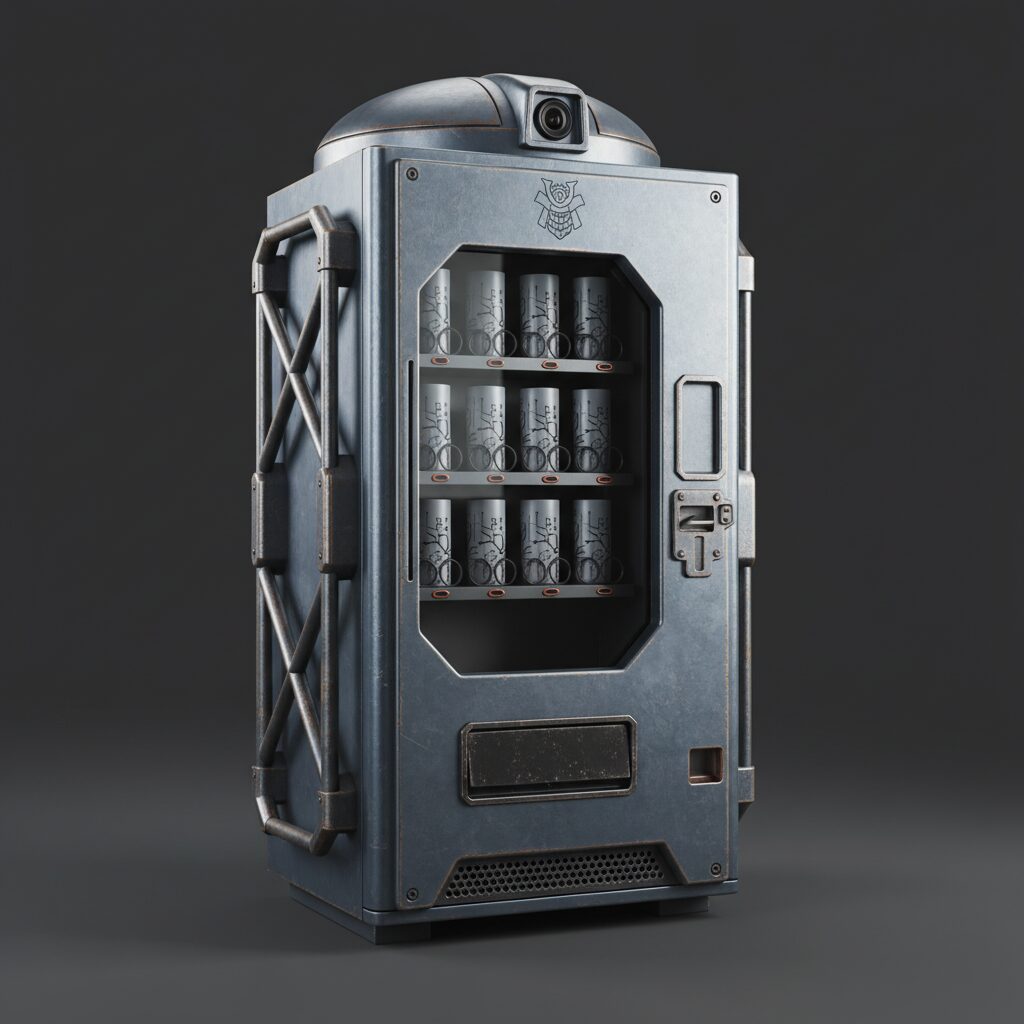
Moreover, let’s be realistic. The machines themselves are formidable. They are designed to endure harsh weather, including typhoons and earthquakes, and are made from heavy-gauge steel. Breaking into one would demand serious tools, considerable time, and generate a lot of noise, making a stealthy crime nearly impossible. While Japan’s overall crime rate is famously low, it is not zero. The societal safety is the primary reason the machines remain undamaged, but their sturdy construction adds a final, physical layer of deterrence.
The Exception That Proves the Rule
Certainly, no system is flawless. Vandalism targeting vending machines does occur in Japan, but it is extremely uncommon. So uncommon, in fact, that when it happens, it often makes local headlines. A vandalized machine is a classic man-bites-dog story. It is startling and significant precisely because it starkly contrasts with the usual. The community’s response is not one of tired acceptance but of genuine shock and disappointment. “Who would do such a thing?” people ask, and the question is sincere. It expresses an honest confusion at such an obvious breach of their shared social norms.
The rarity of these events only emphasizes the strength of the unwritten rules guiding daily life. Each of the countless intact, operational machines you encounter quietly testifies to the success of this cultural system. The rare damaged machine is the exception that proves the rule, its unsettling presence a reminder of the order and harmony expected—and almost always maintained.
Ultimately, the modest Japanese vending machine is far more than a convenient source for a cold drink. It is a cultural artifact, a monument to social trust, a symbol of the collective watchfulness, and a daily functional part of a society grounded in a deeply held contract of mutual respect and shared responsibility. As it hums quietly on a dimly lit street corner, it is not merely dispensing coffee or tea. It is offering a lesson in how a society can choose to organize itself—not through force and fear, but through a widespread, profoundly effective, unspoken agreement to simply do the right thing.