You’ve done it before. You walked up the stone path, passed under the stark, elegant gate, and found yourself in a space that felt quieter, older, and somehow more real than the bustling city you just left behind. You followed the steps you saw others performing, or maybe you read them in a guidebook. You washed your hands at the water basin, tossed a coin in the slatted box, clapped twice, and bowed. You felt a sense of participation, of having correctly completed a cultural task. But as you walked away, a question might have lingered: What did any of that actually mean?
This isn’t a guide for your first visit. This is for your second, third, or tenth. It’s for the moment you graduate from mimicry to understanding. Because a visit to a Shinto shrine is not a checklist of quaint actions. It is a deeply structured, non-verbal conversation with the divine, the kami. Every step, every gesture, every sound is a word in a physical language of respect, purification, and connection. It’s a grammar of the soul, refined over a thousand years, designed to shift your consciousness from the mundane to the sacred.
Forget the tourist-brochure explanations. We’re going to peel back the surface layer of etiquette and explore the profound spiritual logic humming just beneath. This is about understanding the why behind the wash, the bow, and the clap. It’s about recognizing that you are not just performing a ritual; you are engaging in a dialogue as real and meaningful as any spoken one. You are learning to speak a language without words, a language understood by the very air and ancient trees of the shrine grounds.
The quiet resonance of each shrine ritual finds a cultural echo in the practice of omiyage, where even a small token carries layers of meaning that bind tradition and community.
The Threshold: Crossing into the Realm of the Kami
The moment you decide to visit a shrine, the process is already underway. However, the first intentional step is crossing the boundary that divides our world from theirs. This transition is significant and marked by physical structures meant to prepare your mind for what lies ahead.
The Torii Gate: More Than an Entrance
The torii gate is the most recognizable symbol of Shinto. Its simple yet powerful design—two vertical posts topped with two horizontal beams—is an unmistakable sign. But it is not a gate in the Western sense, where a barrier must be opened. Instead, it serves as a frame. It frames the sacred space within, signaling that you are leaving the profane world, the realm of the everyday (zoku), and entering the sacred realm (sei). It is both a psychological and spiritual gateway.
This is why the first action upon arriving at a shrine is to pause just before the torii and perform a slight bow. This is more than a quaint custom. It is a conscious recognition of the transition you are about to make. It’s akin to knocking on the door before entering the home of a respected elder. You are expressing your intention and respect for the resident deity. Additionally, you may notice many Japanese people walking slightly to the side as they pass through, avoiding the direct center. This central path, the seichū, is considered the walkway for the kami themselves. By stepping aside, you show humility and quietly yield the path to the unseen presence you have come to honor.
The Sandō Path: A Journey of Preparation
Once through the torii, you enter the sandō, the approach or visiting path that leads to the main hall. This path is rarely a straight, efficient route. Often it meanders, encouraging you to slow down and walk with intention. This is intentional. The sandō acts as a meditative tool and a physical way of leaving behind the noise and rush of the outside world. It is a process of unwinding.
Frequently, the path is covered with gravel or small stones. This serves more than an aesthetic or drainage purpose. The crunching sound beneath your feet has a function. It is a simple, repetitive noise that aids concentration, redirecting your attention away from distracting thoughts and grounding you in the present. In Shinto, this act of purification through sound is a subtle yet important element. As you walk, the gravel purifies your steps, and the sound purifies your mind. You are not merely walking to a building; you are making a short pilgrimage, with each step bringing you closer—both physically and mentally—to the heart of the sacred space.
The Language of Purity: Water, Hands, and Heart
Before standing before the kami, you must be clean. However, in Shinto, cleanliness extends far beyond mere physical hygiene. It revolves around the concepts of kegare (impurity or defilement) and kiyome (purification). Kegare is not sin; rather, it is the natural spiritual residue that accumulates through life—stress, grief, anger, illness, and the everyday friction of existence. The chōzuya, the water pavilion near the shrine entrance, is where you perform ritual ablutions to wash away this kegare.
The Chōzuya: Ritual Ablution as a Spiritual Reset
Approaching the stone basin with its flowing water and long-handled ladles (hishaku), you are about to undertake a profound act of spiritual cleansing. Each step of the temizu ritual is deliberate and symbolic, preparing you to engage with the kami from a state of clarity and purity.
First, take up a ladle with your right hand and fill it with fresh water. Pour some over your left hand to cleanse it. The left hand is often symbolically linked to the physical world and our actions within it. Washing it first initiates the process of purifying your deeds.
Next, transfer the ladle to your now-clean left hand and pour water over your right hand. This balances the act, purifying the other half of your physical self. You have now cleansed the hands with which you engage the world.
Then, pour a small amount of water from the ladle into the palm of your left hand and bring it to your mouth to rinse, making sure never to touch the ladle directly to your lips. This step purifies your speech. Shinto embraces kotodama, the belief that words possess their own spirit and power. By rinsing your mouth, you cleanse your words, ensuring that prayers or thoughts offered are free from gossip, harshness, or falsehoods. Quietly spit the water onto the stones below the basin, never back into the clean water source. This is essential; you are expelling impurity, not returning it to the communal space.
Finally, cleanse the tool you used. Tilt the ladle upright to let the remaining water run down the handle before placing it back face down for the next person. This last gesture shows consideration and respect for the community and the sacred space. You leave the instrument of purification pure for those who follow. Completing this ritual means you are not only physically cleaner but have also performed a full-body reset, shedding the spiritual residue of the outside world to face the kami with a clear heart and mind.
The Conversation: Bows, Claps, and Silent Petitions
Now purified, you move forward to the haiden, the hall of worship, where the central part of your visit unfolds. This is the place for direct communication with the kami, following a precise ritual sequence: an offering, a call, and a structured expression of respect and petition.
The Saisen-bako: An Offering of Gratitude, Not a Transaction
Before you lies the saisen-bako, the large wooden box with slats for offerings. It’s easy to mistake this for a simple payment in exchange for a wish, like a divine vending machine. However, its true purpose is much deeper. Offering money is foremost a gesture of kansha, or gratitude. You are expressing thanks to the kami for their presence and the blessings already in your life—your health, your family, and the natural world they inhabit. It is giving before requesting.
When you drop the coin into the box, do so gently but with enough force to produce a sound. That clatter is intentional; it’s part of the offering, meant to purify it and attract the kami’s attention. While any coin is acceptable, many prefer the five-yen coin (go-en). This is because go-en (五円) is a homophone for go-en (御縁), which signifies a special connection, fate, or relationship. Offering a five-yen coin subtly prays for a favorable bond with the deity. Still, the amount matters less than the sincerity behind the act.
The Suzu Bell: Waking the Spirit
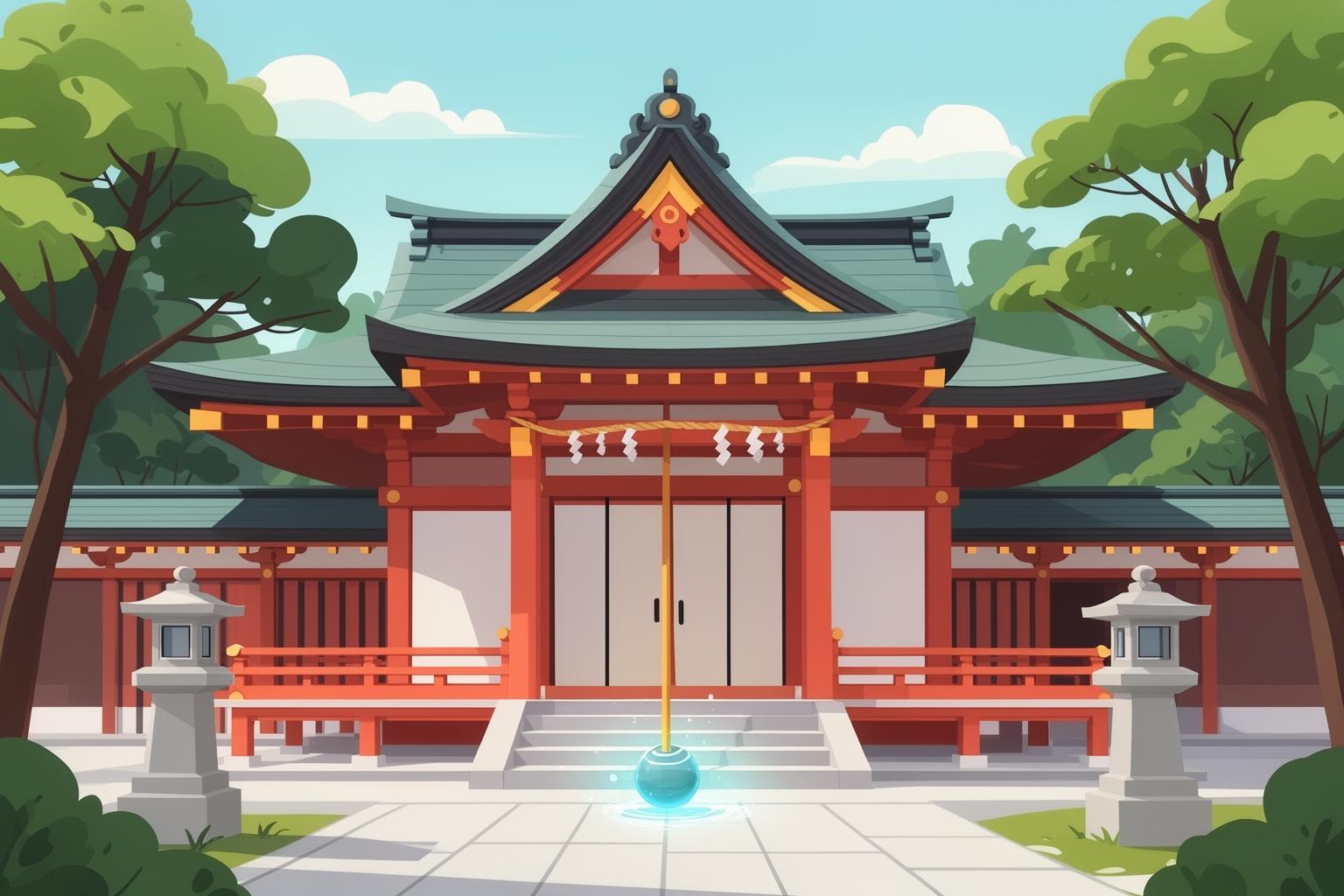
Above the offering box, you’ll often find a thick rope hanging from a large round bell called a suzu. After making your offering, you grasp the rope and ring the bell firmly. The clear, resonant chime of the suzu serves two purposes. Firstly, like the coin’s sound, it respectfully announces your presence to the kami, signaling that you are ready to communicate. Secondly, the pure tone of the bell is believed to have purifying power, dispelling negative energy or lingering kegare from the area, creating a clean and auspicious space for prayer.
Ni-rei, Ni-hakushu, Ichi-rei: The Grammar of Respect
This is the core of the ritual, the most common prayer sequence in Shinto: “two bows, two claps, one bow.” Each step is a distinct part of the conversation.
Two Bows (Ni-rei)
Begin by bowing deeply twice, ideally from the waist at about a 90-degree angle. This opening gesture expresses profound respect, reverence, and humility before the power and presence of the kami. You lower your head below your heart’s level, physically showing deference to the divine.
Two Claps (Ni-hakushu)
Next, bring your hands together in front of your chest, lowering your right hand slightly before clapping. This subtle offset sometimes symbolizes the meeting of the heavenly and earthly realms, or the temporary unity of human spirit and the divine. Then clap twice, sharply and clearly—not a quiet or polite applause. The clap, or kashiwade, is an ancient gesture of joy and reverence, expressing happiness at being in the kami’s presence and affirming the sincerity of your intentions. The sound helps focus your spirit and align it with that of the deity.
The Prayer (Inori)
With your hands still joined after the claps, enter the silent part of the dialogue. This is where you speak to the kami from your heart. It’s not a moment for a list of demands. A proper prayer begins with gratitude. You mentally state your name and address so the kami knows who is speaking, then thank them. Only after expressing gratitude do you share your concerns, hopes, or any resolution you have made (chikai). The ideal mindset is makoto no kokoro, a “true heart” or utmost sincerity, free from deceit or selfishness.
One Final Bow (Ichi-rei)
Once your silent prayer is complete, lower your hands and perform one final deep bow. This closes the formal encounter. It is a bow of thanks for the kami’s time and attention, respectfully ending the conversation before you step away.
Departing the Sacred: The Lingering Connection
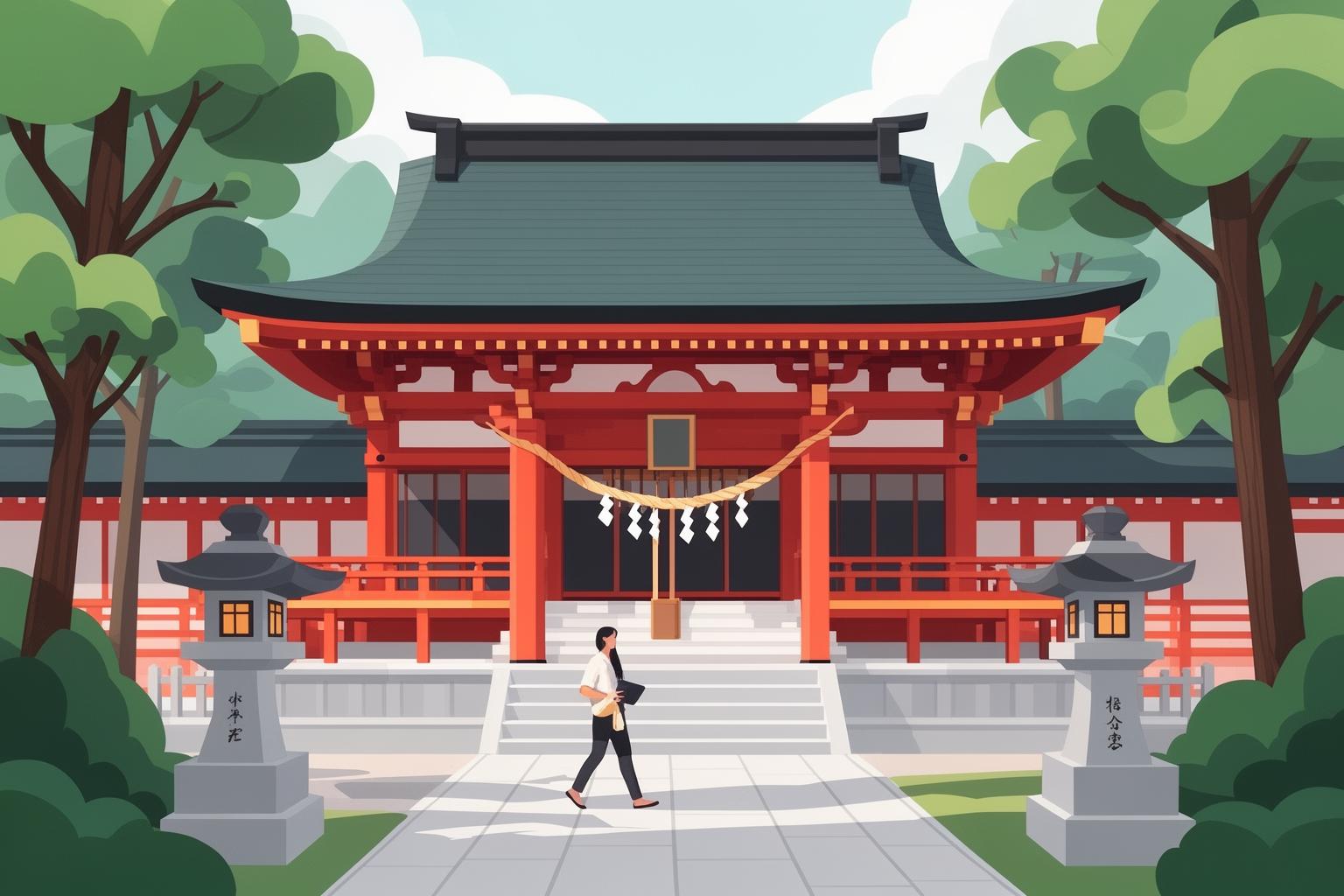
Your interaction with the shrine does not conclude the moment you complete your final bow. The act of leaving is just as intentional as the act of arriving, ensuring that the sanctity of the experience is respected until the very end.
The Art of Leaving
You don’t simply turn your back on the haiden and walk away. Instead, you take a few steps back before turning, maintaining a respectful posture. As you return down the sandō, the meditative path reverses its effect, giving you a moment to reflect on the encounter and absorb the peace of the grounds before re-entering the chaos of the outside world. When you reach the torii gate at the exit, the ritual comes full circle. Just after passing through it, you turn back toward the shrine and perform one last bow. This final gesture is an expression of gratitude and farewell, acknowledging that you are leaving the sacred realm while hopefully carrying a piece of its tranquility and clarity with you.
Omikuji and Ema: Tangible Echoes of the Divine Encounter
Many shrines offer ways to extend or commemorate your visit. These are more than mere souvenirs; they are continuations of the dialogue. Omikuji, the paper fortunes, are considered direct advice from the kami. If you receive a good fortune, you keep it as a blessing. If the fortune is bad, you don’t simply discard it; instead, you fold it and tie it to a designated rack or tree branch on the shrine grounds. This act is a request for the kami to hold onto the bad luck, purify it, and prevent it from following you home.
Ema are small wooden plaques on which you write a wish or prayer before hanging them at the shrine. This act transforms your intangible hope into a physical, lasting object, left in the care of the kami—a constant, visible reminder of your petition that remains in the sacred space long after you have gone.
Beyond the Ritual: A Mindset for Daily Life
Understanding the layers of meaning in a shrine visit reveals something fundamental about the Japanese worldview. This is not about superstition or blind adherence to tradition. Rather, it involves the use of kata, or form, to cultivate a particular internal state. The rituals provide a framework, a physical grammar that guides the practitioner toward mindfulness, purity, and genuine connection.
The focus on kiyome, or purification, goes well beyond the chōzuya. It shapes the cultural priority given to cleanliness in homes, streets, and public spaces. The carefully ordered sequence of bows and claps encapsulates the importance of proper form in all types of social interactions, from business meetings to tea ceremonies. These forms are not empty gestures; they serve as vessels conveying respect, sincerity, and consideration.
When you visit a shrine now, you can perceive it differently. The torii is no longer merely a gate, but a deliberate transition. The water is not just for washing, but for shedding the burdens of the world. The claps are not simply noise, but a joyful expression of connection. You participate in an ancient, elegant system designed to facilitate a dialogue between the human and the divine. The true purpose of the ritual is not merely to follow the steps, but to let the steps transform you, quiet your mind, and open your heart to a deeper reality that is always present, waiting just beyond the threshold.