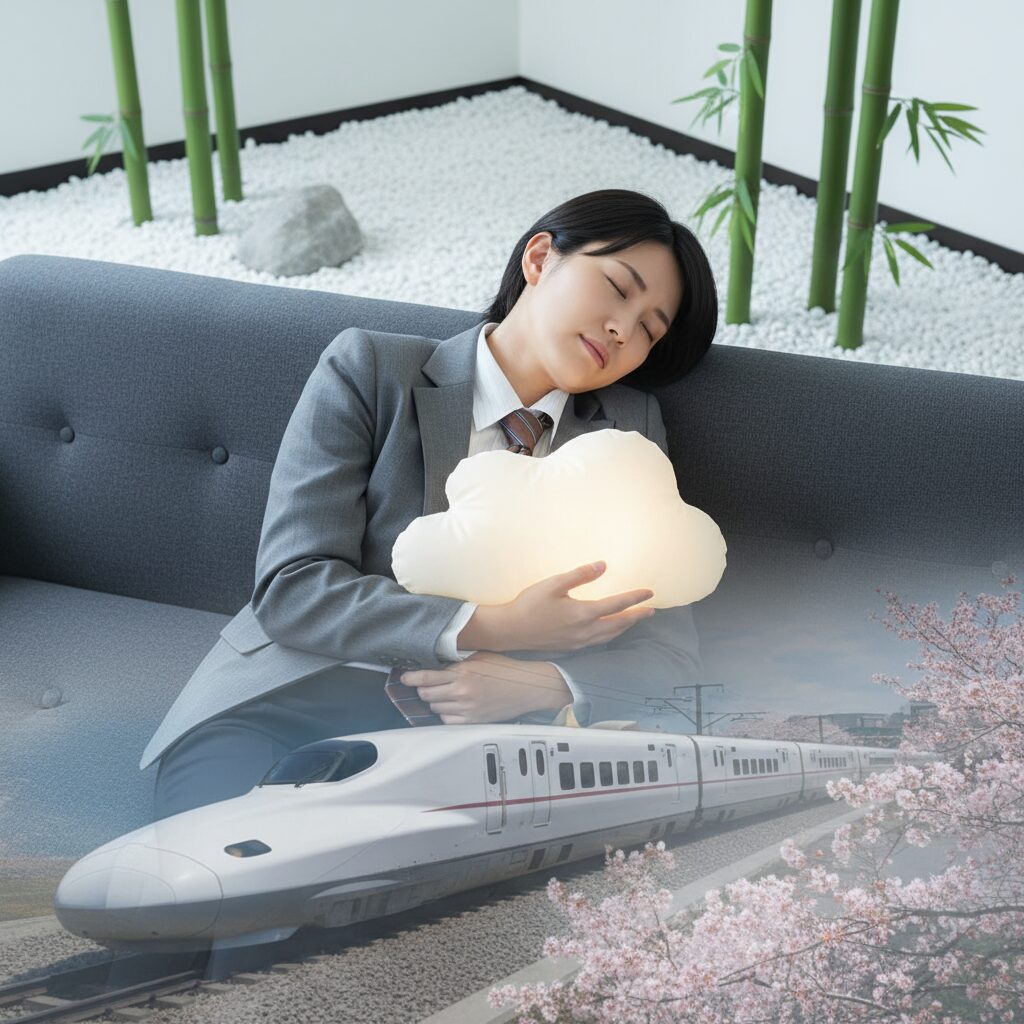
Picture this: you’re in a critical afternoon meeting in a Tokyo high-rise. The presenter is clicking through a dense PowerPoint, and the air is thick with polite concentration. You glance over at Tanaka-san, a senior manager known for his relentless work ethic, and notice his eyes are closed. His head dips forward, then gently snaps back up. He isn’t just drowsy; he’s asleep. In a Western office, this would be a career-limiting move, a blatant sign of disrespect or disinterest. Here, however, nobody bats an eye. In fact, it might even reinforce his reputation as a dedicated employee. Welcome to the confounding world of inemuri (居眠り), the Japanese art of napping in public.
This isn’t just about catching a few winks on the morning commute, though that’s certainly part of it. Inemuri is a complex social phenomenon that plays out in boardrooms, classrooms, and on park benches across the country. It’s a cultural paradox where falling asleep can be interpreted not as laziness, but as a badge of honor—physical proof of utter exhaustion from working tirelessly. The term itself offers the first clue. It’s a compound of two kanji characters: iru (居), meaning “to be present,” and nemuri (眠り), meaning “sleep.” The key is in that first character. This isn’t about checking out completely. Inemuri is about “being present while sleeping.” It’s a temporary, socially sanctioned surrender to fatigue in a space where you are otherwise expected to be engaged. Understanding why this is acceptable requires peeling back layers of Japanese work culture, social expectations, and the subtle rules that govern public behavior.
These nuanced cultural contradictions extend beyond the boardroom, as evidenced by Japan’s onsen tattoo ban, which highlights the country’s unique approach to blending tradition with modern social norms.
A Performance of Exhaustion

At its core, the acceptance of inemuri is rooted in a deeply ingrained cultural belief that equates long working hours with dedication. Traditionally, the ideal Japanese “salaryman” was one who arrived early at the office, left late, and joined colleagues for after-work drinks to foster relationships, often getting home just in time for a few hours of sleep before starting the cycle again. Within such a demanding system, exhaustion is not viewed as a weakness but as an inevitable consequence of commitment—it’s the battle scar of a corporate warrior.
When a manager dozes off during a meeting, the unspoken understanding is not that they are bored, but that they have pushed themselves to their absolute limit for the company’s sake. They worked late preparing for this very project and simply cannot stay awake. Their brief nap becomes a silent testament to their diligence, signaling, “I have given my all.” This is especially true for senior employees. While a young recruit falling asleep might be considered inappropriate, for a veteran department head it can indicate a status so secure and a work ethic so established that their momentary lapse is forgiven, even respected.
This display of exhaustion extends beyond the workplace. Seeing a well-dressed professional asleep on a train, still clutching their briefcase, rarely invites judgment. Instead, it fits into a narrative of a population that works extraordinarily hard. Public spaces become temporary sanctuaries for the overworked, reflecting a collective understanding that everyone is running on fumes and needs a moment’s respite whenever they can find it.
The Unspoken Rules of Engagement
Naturally, inemuri is not unrestricted. There are subtle but firm guidelines that govern when and how it is practiced. Mastering these is essential to ensuring that the act is perceived as a sign of diligence rather than negligence.
Posture and Presence
The most important rule is to maintain an upright posture. You may slouch, and your head may nod, but you must remain seated as if still part of the group. Spreading over several seats on a train or resting your head flat on a conference table crosses a boundary—that is neru (寝る), meaning intentionally going to sleep. Inemuri, by contrast, must always appear temporary and involuntary. You should look as though you could snap back to attention at any moment. This body language reinforces the notion of “being present while sleeping.” Your body remains correctly positioned in its social space, even if your mind momentarily checks out.
Context is Everything
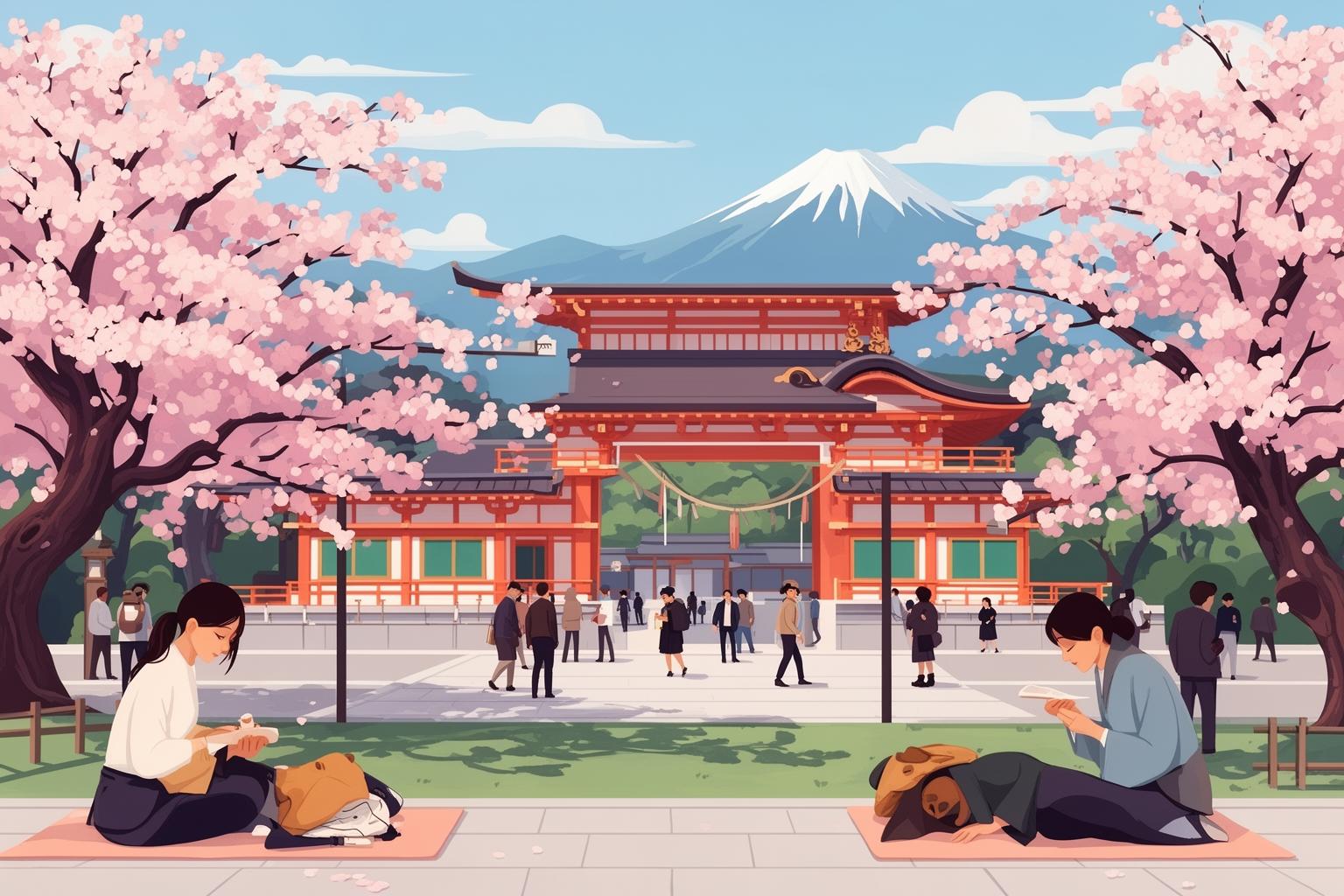
Where you choose to practice inemuri is crucial. Commuter trains, especially on long rides, are ideal settings. Lengthy, monotonous meetings or lectures are also commonly accepted venues. Sitting on a park bench during lunch break is perfectly acceptable. However, there are places where inemuri is entirely inappropriate. You cannot practice it during one-on-one conversations, while operating machinery, or when your active participation is required. The key is that it must happen during moments of passive involvement. You are a listener in a large group, a passenger on public transit—your brief lapse does not interrupt the main activity.
The Social Hierarchy
As noted, status plays a major role. Senior employees have earned the social capital to get away with it. Their long track record of hard work provides the necessary context. For junior employees, the same behavior could be seen as a lack of discipline or seriousness. They have yet to prove their dedication, so their fatigue is not automatically given the same generous interpretation. In this way, the privilege to practice inemuri in a professional setting is something earned through years of demonstrating commitment to the group.
A Symptom of a Deeper Issue
While it may be seen as a quaint cultural quirk, the widespread practice of inemuri is also deeply connected to the darker aspects of Japan’s work culture. The tragic phenomenon of karoshi, or “death from overwork,” underscores the immense pressures placed on workers. The societal expectation to prioritize the company over oneself has historically resulted in dangerously long hours, intense stress, and chronic sleep deprivation.
From this viewpoint, inemuri is less a quirky habit and more a vital coping mechanism. It serves as a quiet, passive form of resistance against a system that demands constant alertness and energy. It is the body’s way of seizing a few precious moments of rest in a society that structurally fails to provide enough. The broad social tolerance of inemuri can be interpreted as a collective, unspoken recognition of this unsustainable strain. By not stigmatizing public nappers, society implicitly concedes, “We know the demands are unreasonable. We share your exhaustion.”
This explains why inemuri feels so distinct from a Western nap. In the West, naps are often intentional, planned breaks for self-care or boosting productivity, sometimes supported by designated “nap pods” in workplaces. It is a structured response to fatigue. Inemuri, however, is an unstructured surrender—a natural consequence when the body’s need for rest outweighs social etiquette, and the culture has adapted to this reality because the alternative—acknowledging the systemic flaws—would be far more disruptive.
The Future of the Public Nap
Is this phenomenon here to stay? The answer is nuanced. On one hand, the cultural DNA that associates visible effort with value remains strong. The pressure to perform and be a committed member of the group has not disappeared. Yet, significant changes are underway in Japanese work culture that might alter the calculation of exhaustion.
Work-life balance, once an unfamiliar concept, has become a common topic of discussion, driven by government policies and a new generation of workers less inclined to embrace traditional salaryman ideals. The growth of remote work and more flexible schedules means employees spend less time physically in the office, reducing both the opportunity and the necessity for the public display of fatigue. As companies gradually shift their focus to productivity and results rather than merely hours spent at a desk, the very basis of inemuri as a badge of honor may start to erode.
Younger Japanese workers are increasingly likely to view chronic exhaustion not as a mark of loyalty but as a sign of an inefficient and unhealthy work environment. They may be less impressed by managers sleeping through meetings and more likely to question the corporate culture that causes such exhaustion. As these perspectives gain traction, the image of a sleeping professional might gradually transform from a symbol of diligence to an indication of a system in need of change.
For now, however, inemuri remains a fascinating insight into the Japanese mindset. It testifies to the resilience of the human body and the complex, often contradictory ways a society learns to handle the pressures it imposes on itself. The next time you see someone dozing on the Yamanote Line, remember you’re not just seeing a tired commuter. You are witnessing a quiet, intricate cultural performance that speaks volumes about work, sacrifice, and the subtle art of being present, even while asleep.