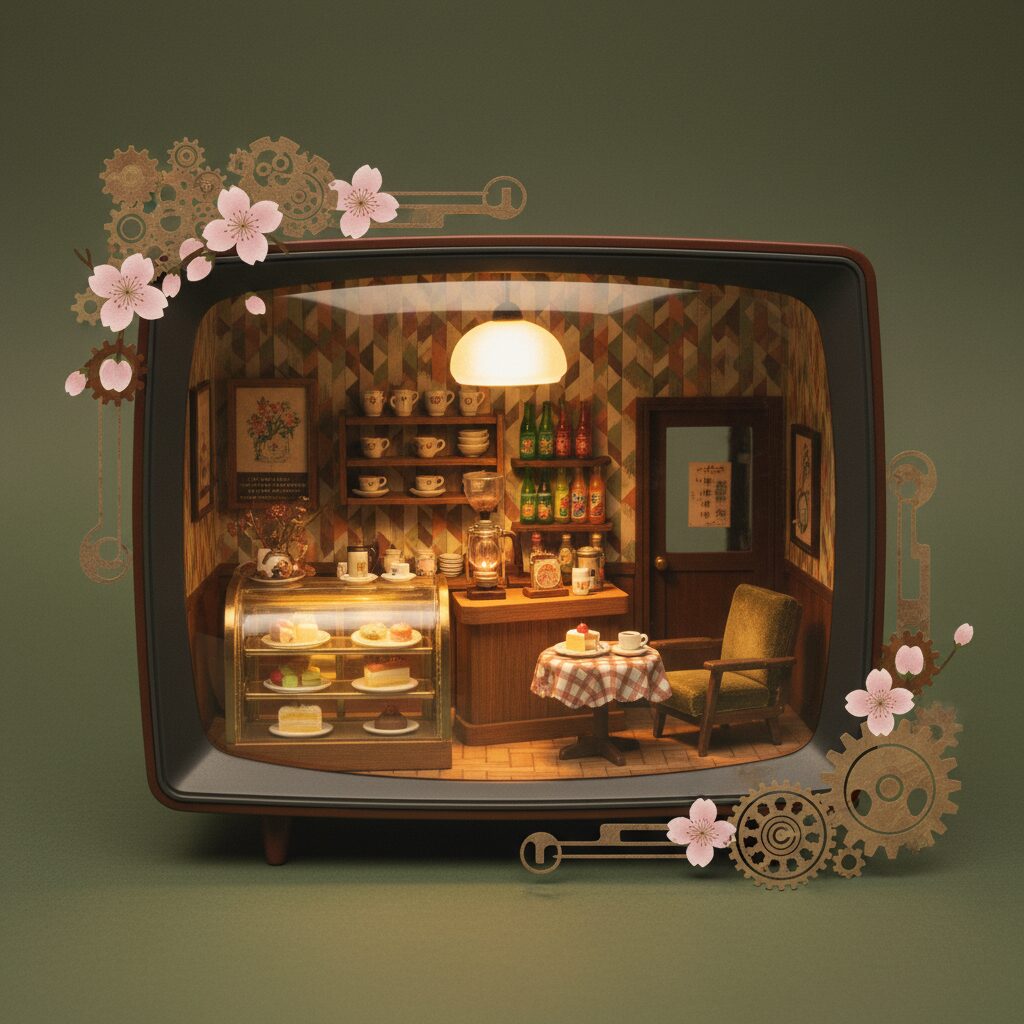
Step through a modest doorway, away from the relentless polish of modern Tokyo or Osaka. The air changes instantly. It grows quieter, thicker, scented with stale cigarette smoke, dark-roast coffee, and something vaguely sweet. Your eyes adjust to the gloom, and the world outside melts away, replaced by the warm glow of ornate, Tiffany-style lamps. You slide into a booth upholstered in worn, burgundy-coloured velvet, the springs sighing gently under your weight. The table is dark, heavy wood, maybe with a few faint rings from decades of coffee cups. A menu, often bound in faux leather, presents a catalogue of comforting, slightly peculiar offerings: Napolitan spaghetti, pizza toast, and the undisputed star of this universe—a drink of impossible, electric green, crowned with a perfect scoop of vanilla ice cream and a single, glistening maraschino cherry. This is the Melon Cream Soda, and you are in a kissaten, a quintessential Japanese coffee house that functions less as a place for a quick caffeine fix and more as a fully-fledged time machine.
These establishments are living museums dedicated to the mid-twentieth century, specifically the middle-to-late years of the Showa Era (1926-1989). This was a period of dizzying transformation for Japan, a time of post-war reconstruction, explosive economic growth, and a voracious appetite for Western culture, which was adopted, adapted, and reinterpreted with a uniquely Japanese flair. The kissaten became the social and cultural theatre where this transformation played out. It was a haven, a third place for salarymen to decompress, students to debate, artists to dream, and couples to conduct quiet courtships. Today, while many of the originals are vanishing, the aesthetic they pioneered and the feeling they evoke are more potent than ever. To understand the kissaten is to understand a particular mood in Japan’s recent past—one of burgeoning optimism, playful artificiality, and a deep appreciation for atmosphere. And nothing encapsulates that mood better than the lurid, lovely, and utterly unforgettable Melon Cream Soda.
For those who appreciate Japan’s nostalgic spaces, the artful allure of sacred temple stamps offers yet another portal into the nation’s rich tapestry of history and modern obsession.
What Exactly is a Kissaten?
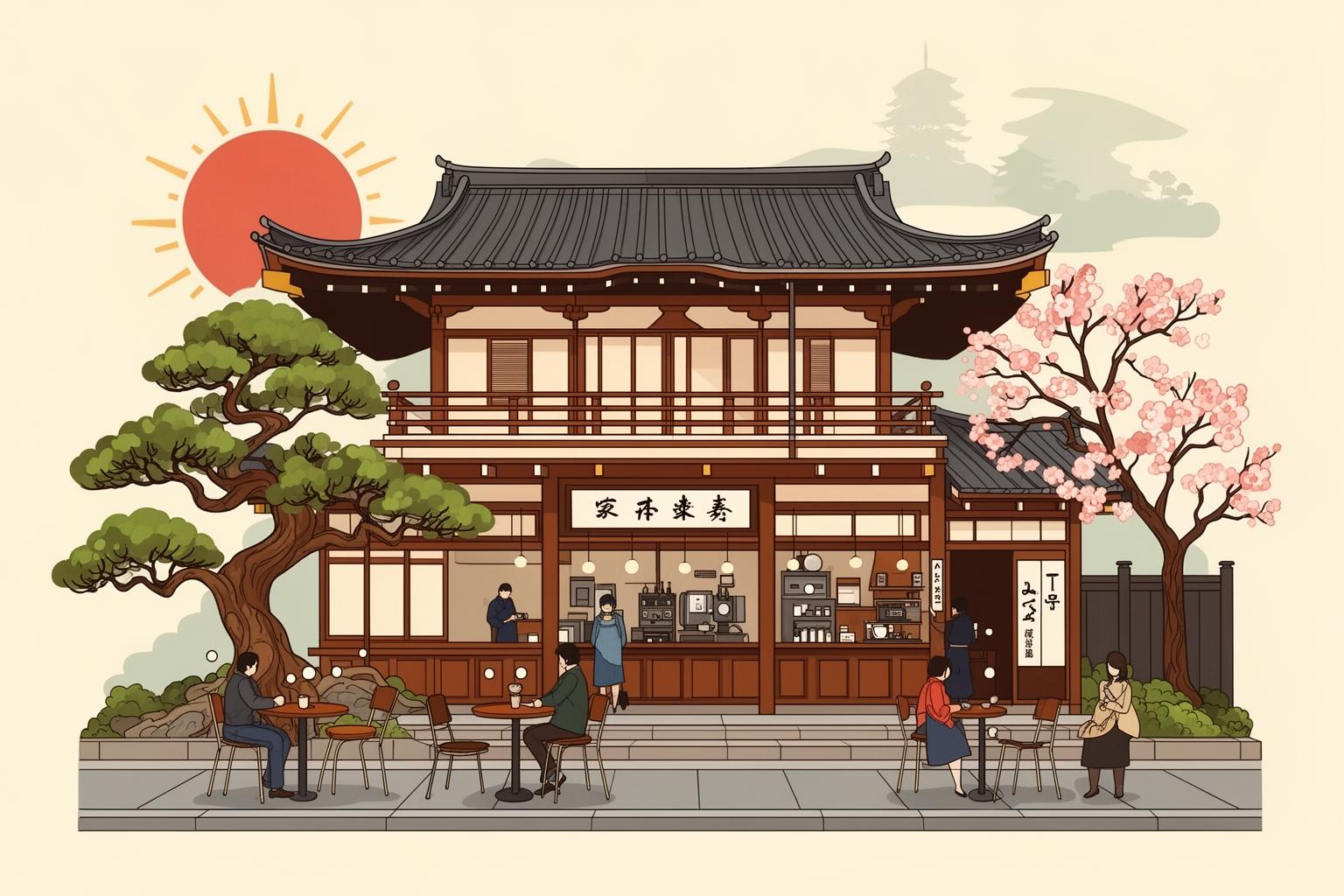
Before we explore the neon-green depths of its signature drink, it’s important to recognize that a kissaten is fundamentally different from the typical café that likely comes to mind. Forget the minimalist decor, the tapping of laptops, and the efficient, impersonal service typical of a global coffee chain. The kissaten operates on a completely different philosophy—one rooted in time, place, and personality.
More Than Just Coffee
The term 喫茶店 (kissaten) literally means “tea-drinking shop.” Their origins date back to the early 20th century, but they truly flourished after World War II. Unlike modern cafés, which prioritize quick turnover and takeout, the kissaten was designed for lingering. The price of a single cup of coffee, often a dark, syrupy brew prepared with a vacuum siphon, granted you the right to stay for hours. This was not merely a purchase; it was an entry fee to a particular atmosphere.
At the heart of this atmosphere is the “Master” (マスター, masutā). Usually the owner and sole operator, the Master is a vital part of the kissaten’s character. Often a quiet, focused man (though women Masters are by no means rare) of a certain age, he crafts the drinks with ritualistic care, curates the music—typically jazz, classical, or Showa-era pop—and tends to the space as his personal domain. You become a guest in his world. This creates a unique bond between the customer and the establishment, fostering a sense of familiarity and quiet respect far removed from the anonymous consumerism of modern cafes.
The Showa Golden Age
The heyday of the kissaten coincided with Japan’s post-war economic boom. As the nation prospered from the 1950s through the 1980s, the middle class expanded, along with the appetite for affordable luxuries and new social venues. The kissaten perfectly met this demand. It was an accessible escape, a slightly glamorous place that felt detached from everyday life.
Different kissaten catered to various groups. There were the meikyoku kissa (classical music cafés) with high-end sound systems where talking was discouraged. Manga kissaten allowed patrons to read comics for hours. University neighborhoods featured shops that acted as unofficial student lounges, buzzing with intellectual and political discussions. Business districts housed kissaten that served as informal meeting rooms for salarymen. In a country where homes were often small and private space limited, the kissaten offered a vital social refuge—a home away from home, an office away from the office.
The Anatomy of Showa Pop Aesthetics
The enduring charm of the kissaten lies in its unique and immersive aesthetic. It offers a sensory experience that is both comforting and somewhat theatrical. This style did not emerge from a single design movement but evolved naturally, drawing inspiration from Western lounges, American diners, and a distinctly Japanese sense of curated atmosphere. It’s characterized by rich textures, warm lighting, and a feeling of lived-in history.
A Symphony in Vinyl and Velvet
The first thing that stands out is the seating. Forget hard wooden chairs and communal tables. The classic kissaten centers around the booth. These high-backed, private nooks are almost always upholstered in a durable, tactile fabric. Deep red, forest green, mustard yellow, and chocolate brown are the signature colours. Vinyl or synthetic velvet was often chosen for its durability and subtly luxurious feel. The texture is essential; it absorbs sound, creating a quiet, intimate space. Sitting in a kissaten booth feels like settling into a well-worn vintage car. The seats may be cracked, and the springs a bit soft, but they provide a sense of enclosure and comfort that invites you to linger, relax, and shut out the outside world.
Complementing the upholstery is an abundance of dark wood. Wall panels, tables, and counters are almost always finished in a dark stain, further enhancing the cozy, den-like vibe. The effect is womb-like, a deliberate contrast to the bright, open, and often sterile spaces of modern design.
The Glow of Nostalgic Lighting
Lighting is perhaps the most vital element in setting the kissaten’s mood. The aim is never bright, functional light. Instead, the atmosphere is created with warm, decorative lighting. The fixtures themselves are characters. You’ll often see elaborate, multi-armed chandeliers that look at home in a European parlour, their brass tarnished by time. Stained-glass-effect pendant lamps, often featuring geometric patterns in amber, green, and red, cast colourful shadows on the dark wood tables. Tiffany-style lamps, with intricate floral or dragonfly designs, are another common feature, placed on counters or tucked into corners, adding a touch of Art Nouveau elegance.
The light source is almost always a warm, incandescent bulb. This soft, yellowish glow flatters the skin and is easy on the eyes, encouraging relaxation. It creates a perpetual dusk inside, regardless of the time of day, effectively pausing time and separating the interior from the harsh, fluorescent-lit city outside. This isn’t just lighting; it’s theatrical craft.
The Soundtrack of an Era
The soundscape of a kissaten is as deliberately curated as its visual design. The clinking of spoons against glass and the low hum of conversation are underscored by a steady musical backdrop. The Master also acts as DJ, and their taste shapes the audio experience. While many modern cafes suffer from algorithm-driven playlists of forgettable pop, the kissaten’s soundtrack is purposeful.
Classical music and jazz are the predominant genres. They bring an air of sophistication and timelessness to the space. You might hear the melancholic piano of Bill Evans or the grand symphonies of Beethoven playing from large, vintage speakers. In other establishments, the playlist might feature kayōkyoku—popular Japanese music of the Showa era—imbuing the air with a poignant nostalgia. The equipment itself often serves as decor: a vintage Marantz amplifier, a turntable behind the counter, and a collection of vinyl records or CDs on display. The music isn’t merely background noise; it is a fundamental part of the atmosphere, selected to enhance the feeling of being in a special, thoughtfully curated place.
Curated Clutter and Personal Touches
Unlike minimalist spaces that value emptiness, the kissaten embraces a curated form of clutter. These spaces are not sterile; they are deeply personal. Walls might showcase framed paintings of uncertain origin, old European movie posters, or signed celebrity photographs from a long-past era. Behind the counter, you’ll find the Master’s personal collection of coffee-making tools: gleaming copper kettles, rows of ceramic cups, and complex siphon brewers bubbling like alchemical experiments.
Other details complete the scene. A rotary-dial telephone might sit on the counter, a functional relic from another time. A rack might hold yellowed newspapers and weekly magazines for customers to browse. On every table, an essential item: a small glass or crystal ashtray. Until recently, smoking was inseparable from the kissaten experience, and for many, the faint lingering scent of tobacco adds to its nostalgic allure. These personal touches and historical artifacts ensure no two kissaten are alike. Each one reflects its owner’s personality and the decades of history that have unfolded within its walls.
The Star of the Show: Melon Cream Soda
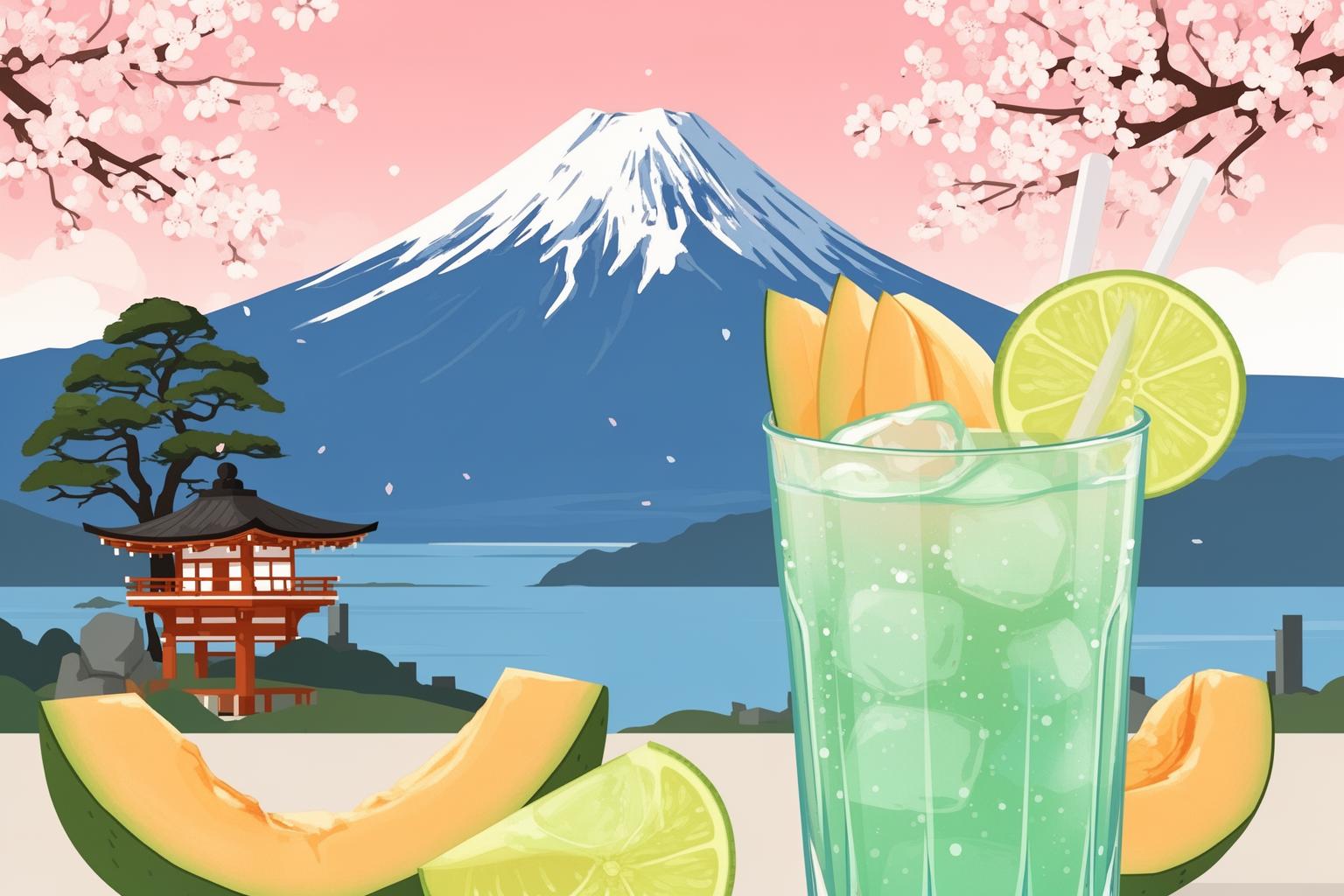
While the ambiance sets the scene, the menu narrates its own tale of the Showa era. And the star of that story is, without a doubt, the Melon Cream Soda. This drink is the kissaten aesthetic captured in a single, bubbly glass. It is a masterpiece of joyful artificiality—a beverage less about flavor and more about feeling.
A Drink That Tastes Like a Memory
Let’s be clear: Melon Cream Soda does not taste like actual melon. At least, not any melon found in nature. Its flavor is a unique, hyper-sweet, vaguely fruity blend that is distinctive and instantly recognizable. The base is melon-flavored syrup combined with soda water, producing a carbonated liquid in a shockingly vibrant, almost neon green. This luminous potion is poured into a tall, elegant glass, and then the magic unfolds: a pristine scoop of vanilla ice cream is gently placed on top, floating like a fluffy white cloud. The final, essential touch is a bright red, unnaturally perfect maraschino cherry, perched either on the ice cream or dropped into the drink itself.
Drinking it is an experience. First, you admire its undeniable beauty—a photogenic creation. Then you may take a sip of the soda using the long, graceful spoon provided. Next, perhaps a spoonful of the ice cream. The best part comes when the two begin to mix, the ice cream melting into the fizzy green soda to create a creamy, frothy head. It’s a dessert, a drink, and a spectacle all at once.
The Symbolism of Artificiality
To a modern palate, conditioned by a preference for natural, organic, and artisanal products, Melon Cream Soda might seem perplexing. Its color and flavor are proudly, defiantly synthetic. But that’s exactly the point. This drink is a product of its era—a time when “new” and “modern” were exciting concepts. The mid-Showa era embraced industrial progress, consumer culture, and Western influences wholeheartedly.
Brightly colored foods, processed snacks, and novel flavor pairings were markers of abundance and modernity. The Melon Cream Soda was exotic and futuristic. Its artificiality wasn’t a drawback; it was its defining feature. It marked a departure from the traditional, earthy flavors of Japanese cuisine. It was fun, it was pop, and it was optimistic. Drinking one was a small act of joining Japan’s bright, new, forward-looking future. The drink embodies the pop-art sensibilities of the 1960s and 70s, a cheerful rejection of dullness in favor of vibrant, manufactured joy.
The Supporting Cast of the Kissaten Menu
The Melon Cream Soda is not a lone star. It belongs to a category of food called yōshoku, or “Western-style food,” adapted to suit the Japanese palate. The kissaten menu is a hall of fame for these nostalgic, comforting dishes.
There’s Napolitan Spaghetti, a mix of soft-cooked spaghetti pan-fried with ketchup, onions, bell peppers, and sausage. There’s Pizza Toast, a thick slice of fluffy white bread (shokupan) topped with tomato sauce, cheese, and simple ingredients, then toasted until bubbly. And you’ll always find Mixed Sandwiches (mikusu sando), typically with egg salad, ham, and cucumber, made with the same pillowy white bread with the crusts neatly removed. Like the Melon Cream Soda, these dishes don’t aim to be authentic Italian or American cuisine. They are Japanese interpretations—comfort foods that recall a particular period of cultural curiosity and culinary creativity.
The Kissaten in Modern Japan: Nostalgia and Revival
In an era defined by hyper-convenience and constant change, one might expect the slow, deliberate world of the kissaten to have vanished completely. While it’s true that many have closed, the kissaten and the “Showa Retro” aesthetic it embodies are experiencing a strong revival, especially among younger generations.
Why Does Its Appeal Endure?
The kissaten’s appeal today is multifaceted. For older Japanese, it serves as a direct connection to their youth, a pure taste of nostalgia. For younger people who never lived through the Showa era, however, the kissaten offers something different: an escape. In a world overwhelmed by digital perfection and minimalist design, the analogue, slightly imperfect, and deeply personal atmosphere of a kissaten feels refreshingly genuine.
It represents a quiet rebellion against efficiency—a place where you can unwind, read a book, and not feel rushed to leave. The aesthetic, once considered outdated or kitschy, is now seen as cool and romantic. Instagram is filled with photos of Melon Cream Sodas and velvet booths, as a new generation discovers the cinematic charm of these spaces. The kissaten presents a fantasy of a past that feels slower, more romantic, and more tangible than our fleeting digital present.
The “Neo-Kissaten” Trend
This renewed fascination has given rise to a new trend: the “neo-kissaten.” These modern cafes, often launched by young entrepreneurs, deliberately replicate or reinterpret the Showa aesthetic. They select the most beloved features—the dark wood, velvet seats, classic menus—but often integrate modern amenities like Wi-Fi or specialty coffee. This shows that the appeal isn’t just nostalgia, but the timeless nature of the design philosophy itself: creating a comfortable, atmospheric, and personal space. These new establishments honor the originals while ensuring the aesthetic continues to evolve and attract new audiences.
The Disappearing Originals
Despite this revival, many original kissaten face an uncertain future. The Masters are aging, and few have successors to continue the business. The buildings are old and costly to maintain. Gentrification and rising rents put added strain on these small, independent shops. Each year, more of these cherished time capsules shut down permanently. This sense of impermanence lends an emotional depth to the experience of visiting one. It’s not just a coffee break; it’s an opportunity to witness living history before it fades away.
To sit in an authentic Showa kissaten is to realize it’s more than the sum of its parts. It’s more than the dark wood, the vinyl booths, or even the vibrantly green soda. It’s a sanctuary, a refuge for quiet reflection in a world that never stops clamoring. The Melon Cream Soda, with all its artificial charm, perfectly symbolizes this world—a sweet, fizzy, colorful reminder of an era filled with a special kind of hope. It’s a taste of a future dreamt of in the past. And for the price of coffee or soda, you can still step into that dream, sit awhile, and let the modern world rush past without you.