You’re back in Japan for the second time. The initial shock of the new has worn off, replaced by a comfortable curiosity. You can navigate the train system without breaking a sweat, you know your favorite konbini snack, and you’ve moved beyond the major tourist hubs. You decide to duck into a tiny, steamy ramen shop you spotted down a side street—the kind with a greasy curtain, a cramped wooden counter, and a line of locals hunched over their bowls. The air is thick with the scent of pork broth and simmering soy sauce. And then you hear it.
A chorus of loud, uninhibited slurps. It’s a sound that probably made you pause on your first trip, a direct contradiction to every table manner you were ever taught. Back home, that noise would earn you a stern look. Here, nobody bats an eye. In fact, it seems to be the default setting.
You know it’s not considered rude, but you don’t fully understand why. It feels like an inside joke you’re not quite in on. Why is this seemingly impolite act not just tolerated, but an integral part of the experience? The answer goes far beyond simple manners. Slurping isn’t just a quirk; it’s a functional, appreciative, and deeply ingrained ritual. It is the sound of someone truly tasting their food, a non-verbal message sent directly to the chef that says, “This is magnificent.” It’s a key that unlocks a deeper understanding of Japan’s relationship with food, where peak flavor is a fleeting moment worth chasing with gusto.
Immerse yourself in Japan’s multifaceted culinary scene by savoring every ramen slurp while also exploring the gourmet depachika experience that reveals another layer of local food culture.
More Than Just Noise: The Physics of Flavor

The first thing to grasp is that slurping isn’t merely for show. It is a practical technique, a form of culinary technology as essential as chopsticks, designed to enhance the sensory experience of eating noodles. It addresses several challenges simultaneously, transforming a simple bowl of soup into a multi-sensory event. The Japanese approach to food often involves engaging all the senses, and the sound of a proper slurp is regarded as part of the meal’s charm. It’s a functional action grounded in the science of taste.
Cooling the Noodles for Immediate Enjoyment
A perfect bowl of ramen is served piping hot. The broth has just been ladled from a pot simmered for hours, and the noodles are cooked for a precise, brief number of seconds. The entire dish is crafted to be at its absolute best the moment it’s presented to you. Waiting for it to cool isn’t an option; the noodles will swell, the broth will lose its sharpness, and the delicate balance will be spoiled. Slurping is the answer. As you draw in the noodles, a stream of cool air is pulled in as well. This air blends with the hot noodles and broth in your mouth, quickly cooling them to a safe temperature. This allows you to enjoy the ramen immediately, at its peak, without burning your tongue. It’s a smart, built-in cooling mechanism that honors the chef’s timing.
Unlocking Aroma, the Gateway to Flavor
This is where it becomes truly fascinating. What we recognize as “flavor” is heavily influenced by aroma. Consider how bland food tastes when you have a cold; your taste buds are fine, but your blocked nasal passages prevent you from smelling. Slurping is like a wine connoisseur aerating a fine vintage. Inhaling the noodles and broth together vigorously vaporizes the liquid and propels aromatic compounds up into your retro-nasal cavity. The complex scents of the dashi (broth base), the tare (seasoning base, such as shoyu or miso), and the fragrant oils (like black garlic or chili oil) are fully unleashed. This dramatically boosts the perception of umami—that savory, fifth taste that makes ramen so deeply satisfying. Without slurping, you are literally tasting only a fraction of what the chef intended. You experience the basic saltiness and sweetness on your tongue but miss the rich, layered bouquet that makes each bowl distinct. A quiet, polite bite results in a muted experience. A confident slurp is tasting in full detail.
The Race Against Softness
Texture reigns supreme in the world of ramen. The ideal noodle possesses a quality called koshi, which describes a perfect, gratifying firmness and chewiness. This textural perfection is fleeting. From the moment the noodles meet the hot broth, a countdown begins. The alkaline noodles start absorbing the liquid, and their koshi begins to diminish. Within minutes, they can shift from delightfully chewy to disappointingly soft and bloated. Slurping demands speed and efficiency. It enables you to eat the noodles quickly and decisively, ensuring you enjoy as many as possible while they remain in their prime. It’s an unspoken tribute to the transient nature of a perfect bowl of ramen. You eat with intent and respect—not out of haste, but to honor the integrity of the ingredients.
The Unspoken Language of the Ramen-ya
Beyond its practical advantages, slurping holds a crucial place in the social fabric of the ramen shop, or ramen-ya. These establishments are rarely venues for long, leisurely meals. Instead, they serve as temples of flavor, often small and cozy, where a quiet, focused connection forms between the customer, the food, and the chef. Within this setting, sound becomes a potent means of communication.
A Sonic “Gochisousama”
The primary message conveyed by a slurp is one of gratitude. In a typical ramen-ya, the chef prepares food in an open kitchen just a few feet away across the counter. They observe and hear everything. A loud, hearty slurp is the most direct and genuine compliment you can offer. It’s an immediate, instinctive response that declares, “This is so delicious I can’t help myself.” It breaks through the clutter and steam of the shop, delivering feedback much more effectively than a quiet post-meal “thank you” ever could. It is the culinary equivalent of applauding a musician, but for a chef. In a culture that often prefers subtle communication, the slurp stands as a moment of pure, candid expression. The chef hears this sound and recognizes that their effort has been rewarded. It’s a sign of a delighted, content customer fully absorbed in the experience.
The Rhythm of the Counter
Spend a few minutes in a ramen shop and simply listen. You’ll notice the sounds form a kind of rhythm: the clatter of bowls, the chef’s sharp greeting of “Irasshaimase!” (Welcome!), the whistle of boiling water, and above all, the rhythmic symphony of slurping. This is the ambient soundtrack of satisfaction. By slurping, you join the chorus. You demonstrate that you understand the environment—a place for focused, efficient, and appreciative eating. It signals you are not a passive observer but an engaged participant in the ritual. In this space, silence can feel almost unsettling. A quiet diner might be seen not as polite, but as hesitant or, worse, unimpressed with the food. The collective slurping creates a shared mood of enjoyment, a connection among strangers united briefly by an exceptional bowl of noodles.
A Note on Nuance
It is important to recognize that this auditory permission is specific. The acceptable sound is the sharp inhalation of air and noodles. It does not include loud chewing, lip smacking, or noisily gulping soup from the spoon. While slurping noodles is a compliment, other mouth noises remain poor manners. Additionally, this etiquette is mainly reserved for noodle soups such as ramen, soba, and udon. You would not slurp through a kaiseki-ryori (formal multi-course meal) or while eating sushi. It serves a particular purpose—a sound tailored to savoring Japan’s most cherished noodle dishes. Its absence in other dining contexts highlights how significant its presence is within the ramen-ya.
The Historical Roots of a Noodle Nation

This practice is not a recent invention; it is a cultural habit with deep historical roots that date back long before ramen became Japan’s iconic soul food. The tradition emerged from the fast-paced lifestyle of urban Japan centuries ago.
Soba and the Edo Period
The cultural foundation for slurping was established during the Edo period (1603-1868) with soba noodles. In the bustling city of Edo (modern-day Tokyo), soba was the original fast food. It was sold from street stalls to busy merchants and workers who needed a quick, inexpensive, and filling meal. They would stand at the stall, receive a bowl of noodles, and eat rapidly before returning to their day. This environment demanded speed. Slurping became the standard method—it cooled the noodles, enhanced their subtle, earthy flavor, and allowed for swift consumption. Over time, this practical necessity evolved into a cultural hallmark, regarded as the proper and most enjoyable way to eat soba. It became known as an iki act—a term describing a kind of chic, effortless urban cool. The sound of slurping soba became the sound of the city.
Ramen’s Modern Inheritance
Ramen, by contrast, is a much more recent addition, gaining widespread popularity in the post-World War II era. As this dish—originally of Chinese origin—was adapted and refined by Japanese chefs, it naturally inherited the established noodle-eating culture. The etiquette developed over centuries with soba was seamlessly transferred to ramen. As ramen shops multiplied and the dish became a national obsession, slurping was solidified as the authentic way to demonstrate your devotion to the bowl before you. It links a modern bowl of tonkotsu ramen in Shinjuku to a simple bowl of soba eaten on a street corner in Edo hundreds of years ago.
Your Turn at the Counter: A Practical Guide
Understanding the reason behind it is one thing; actually doing it is quite another. For many visitors, intentionally making noise while eating can feel deeply unnatural, almost like breaking a deeply ingrained code of etiquette. Yet, to fully appreciate ramen as it’s meant to be enjoyed, it’s a barrier worth overcoming.
Letting Go of Inhibition
First, give yourself permission. Look around the shop—the salaryman beside you in his crisp suit, the elderly woman at the end of the counter, the students laughing near the door—they’re all doing it. No one is judging you. In fact, they’re more likely to notice if you quietly and slowly poke at your noodles. The goal isn’t to be rude, but to be involved. Think of it as a gesture of respect toward the food and its creator. Your first attempt might be awkward and soft, and that’s perfectly fine. It’s the intention that matters.
The Technique, Demystified
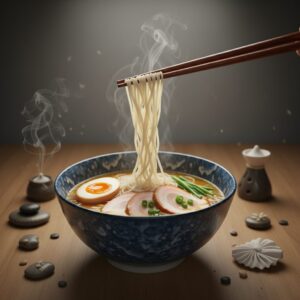
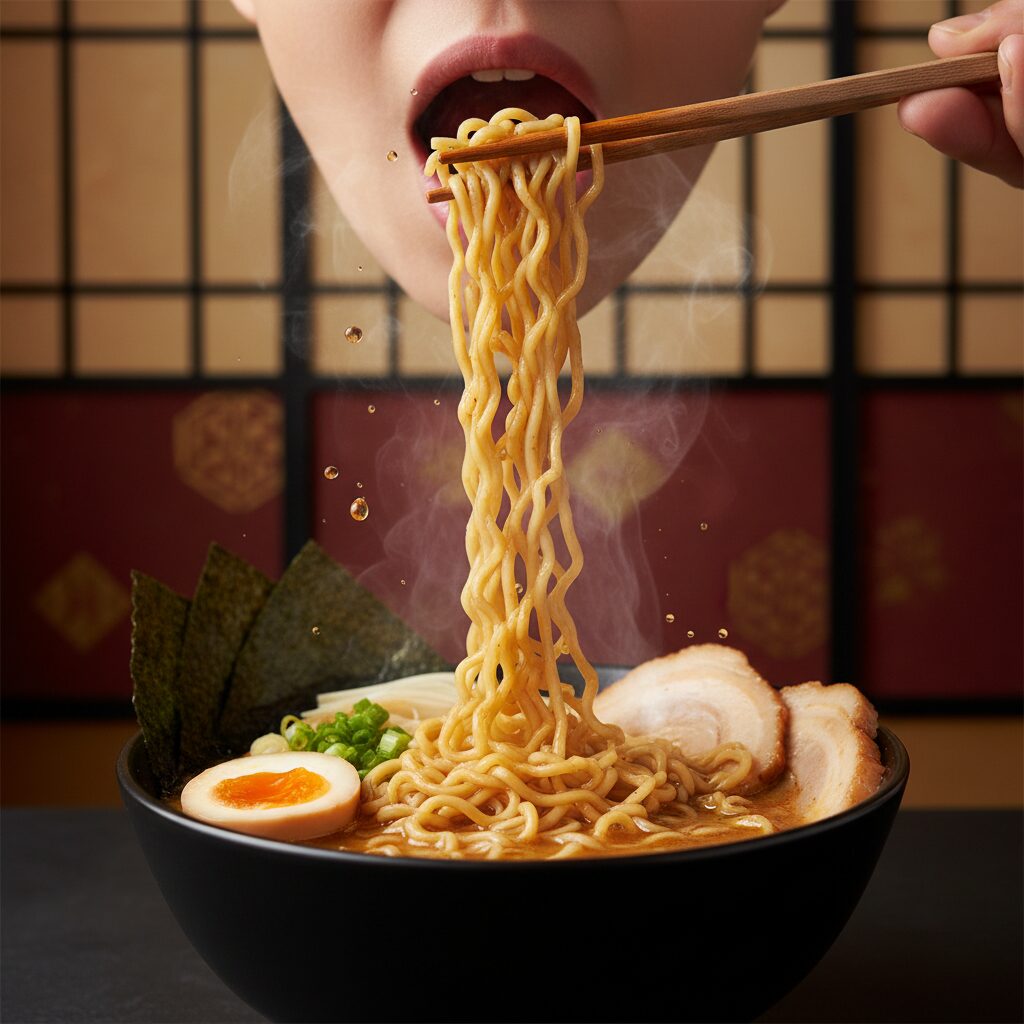
There’s no need to overanalyze it. The process feels quite natural once you try. Use your chopsticks to lift a small bundle of noodles from the bowl. As you bring them to your mouth, purse your lips slightly as if about to sip through a straw. Instead of simply putting the noodles in your mouth and biting, start to inhale sharply just as the noodle ends reach your lips. This is a quick, decisive move. The suction draws the noodles along with some broth and air into your mouth. It’s less of a lengthy sluuuuuurp and more of a brief, sharp zuzutto. Don’t stress about doing it perfectly. Focus on the combination of air, noodle, and broth.
The Payoff
When you get it right, you’ll immediately sense the difference. The flavor will become more intense, the aroma more vivid, and the entire experience more lively and engaging. This small, physical action bridges a cultural divide. You’re no longer just a foreigner watching a curious custom; you become an active participant, expressing your enjoyment in the local language. You’re connecting with the food, the chef, and the centuries of tradition that brought this bowl to you.
So next time you face a perfect bowl of ramen, pause for a moment and listen to the sounds around you. That chorus of slurps isn’t noise—it’s a symphony of appreciation, a pure expression of culinary delight. It’s an invitation. Pick up your chopsticks and join in.