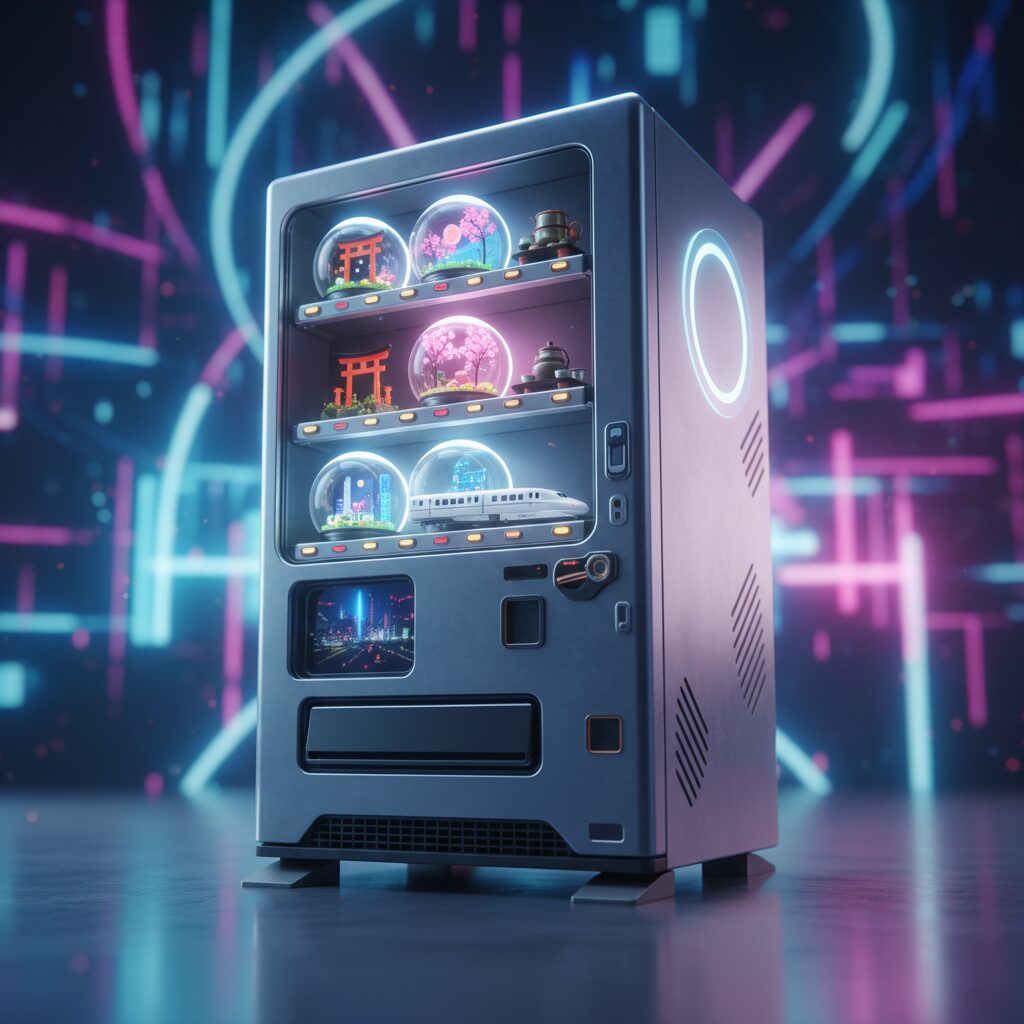
You’ve seen the pictures, I’m sure. Maybe you’ve even been here and experienced the pleasant shock yourself. A glowing vending machine on a deserted mountain pass. A bank of them in a Tokyo back-alley, offering not just green tea and Pocari Sweat, but hot corn soup, single-serving cartons of dashi broth, and even crepes in a can. You can buy fresh flowers, hot bowls of ramen, obscure batteries, and entire apples from these silent, humming salesmen. The sheer density and variety feel like a quirk, a fun bit of Japanese weirdness that makes for a great travel story. But it’s not just a quirk. The question of why Japan has an estimated one vending machine for every 30-something people—the highest density in the world—isn’t about a simple love for convenience. It’s a story about the country’s post-war ambition, a forgotten labor crisis, a perfectly timed piece of currency, and an invisible social contract that makes it all possible. The reason these machines are everywhere is a direct reflection of modern Japanese history, hiding in plain sight.
This phenomenon is further illuminated when you explore the vending machine soul that reflects Japan’s unique blend of convenience and cultural resilience.
The Thirst of an Economic Miracle
To understand the vending machine, one must go back to the 1960s. Japan was in the midst of its post-war “economic miracle,” a period of rapid growth that reshaped the nation. Cities were expanding, bullet trains were shortening distances, and a new class of urban office workers—the salaryman—became the symbol of national ambition. Life accelerated. People were working longer hours, commuting further, and enjoying more disposable income than ever before. This generated a massive, nationwide demand.
This was the opportunity companies like Coca-Cola seized. While the first locally produced “Fountain-style Juice Dispenser” appeared in 1953, it was the American beverage giants who really pushed things forward. They marketed aggressively, particularly leading up to the 1964 Tokyo Olympics, presenting ice-cold drinks as a modern, sophisticated refreshment for a nation on the move. Machines were installed in train stations, department stores, and bowling alleys. It was an ideal match of product and moment. The vending machine wasn’t just a novelty; it became a tool for this new, fast-paced lifestyle. It provided instant gratification, 24/7, without the need for the interactions involved with a shopkeeper. It was the taste of progress, in a can.
However, this initial surge only explains the why drinks? part of the story. It established the vending machine in public consciousness as a normal way to purchase items, but it doesn’t clarify the vending machines’ overwhelming prevalence, or why they began selling everything from sake to surgical masks. To understand that, we need to examine a problem that was quietly emerging beneath the surface of all that economic success.
The Silent Salesman Solution
By the 1970s, Japan’s economy was booming, but it faced a serious challenge: a persistent labor shortage. The same economic growth that fueled demand for convenience also created so many jobs that small, family-run businesses struggled to find and afford workers. Neighborhood liquor stores, small rice shops, and local cigarette vendors couldn’t compete with the wages offered by large corporations. They also found it difficult to keep up with changing lifestyles. Customers were working late and wanted to shop at all hours, yet a family-run business simply couldn’t keep their doors open 24/7.
This marked a crucial turning point, the real “aha!” moment in the story. For these small business owners, the vending machine wasn’t just a cool gadget; it was a lifeline. It was a mono iwanu hanbaīin—a silent salesman. A sake shop owner could place a machine outside, stocked with beer, sake, and chuhai. Suddenly, their store was open all night, earning money while they slept, without having to pay a single yen in wages. Similarly, a rice vendor could sell 10kg bags through a large locker-style machine, and a tobacco shop could serve customers long after closing hours.
This is the primary reason behind the explosion in vending machine variety. The machines weren’t just installed by massive beverage corporations; they were, and still are, mostly owned and operated by the small businesses in front of which they stand. They serve as an extension of each shop’s inventory. This decentralized, entrepreneurial approach allowed the network to grow densely, spreading into residential neighborhoods and quiet side streets where a purely corporate model would never make financial sense. It was a practical, almost accidental, response to a nationwide economic pressure.
How a Single Coin Changed Everything
There’s one more essential component that made the system seamless: the 100-yen coin. Prior to 1967, the 100-yen value existed only as a fragile banknote. However, that year, the government introduced a durable cupronickel coin. It was released just as the vending machine boom was gaining momentum, making it an ideal fit.
Suddenly, a single, high-value coin became the perfect price for a canned beverage. This was both a technological and psychological breakthrough. It greatly simplified the vending machines’ mechanics—they no longer had to manage complex combinations of smaller coins or provide change. For consumers, the transaction became remarkably straightforward: insert one coin, make one selection, receive one product. The distinctive sound of a 100-yen coin dropping in and the satisfying clunk of a can being dispensed became a familiar part of daily life in Japan.
This “one-coin, one-drink” system eliminated all friction from the purchase process. It turned buying a drink into an impulsive, effortless act taking only seconds. Its significance cannot be overstated. Without the widespread use of this convenient, high-value coin, the rapid and almost viral expansion of vending machines would have progressed much more slowly. It lubricated the entire operation, establishing itself as the go-to method for grabbing a quick drink.
The Invisible Foundation of Trust and Safety
Naturally, none of this would be possible without the final, and perhaps most crucial, element of the puzzle: the fundamental nature of Japanese society itself. You might have the economic incentives and the right currency, but if you set up a glass case filled with goods and cash on a public street in many other countries, you know what would happen—it would be vandalized, broken into, or covered in graffiti within days.
Japan’s famously low crime rate forms the foundation of the entire vending machine phenomenon. Business owners can confidently place thousands of dollars’ worth of machines and stock on a dimly lit street corner, trusting they will remain untouched. This strong sense of public safety is no accident; it arises from a complex social fabric based on mutual respect and collective responsibility for public spaces.
This extends beyond just crime. There is an unspoken agreement to maintain order. Vending machines rarely have trash piled around them; there is almost always a small, dedicated recycling bin nearby, and people use it. There is also a deep-seated trust in the quality of the products. No one worries that a hot can of coffee has been sitting there too long or that the food inside is unsafe. This reflects a broader consumer confidence and a high standard of maintenance and quality control for which Japanese companies are known. The machines are almost always clean, well-stocked, and operational. This reliability turns them from a potential risk into a dependable feature of urban infrastructure, as trustworthy as a traffic light or a mailbox.
The Modern Landscape of Automated Retail
Today, the historical forces that shaped the vending machine ecosystem have evolved, yet the machines themselves have adapted accordingly. Although the demand for a “silent salesman” to address labor shortages has diminished, the cultural expectation for ultimate convenience persists. Technology has expanded the possibilities. Many machines now feature digital touch screens, accept cashless payments via IC cards such as Suica and Pasmo, and even include “disaster-response” functions, programmed to dispense their contents for free in the event of a major earthquake.
The variety remains astonishing. You can find machines offering high-end soup stock from renowned restaurants, gourmet cakes, and even insects as novelty snacks. During the pandemic, machines dispensing masks and PCR test kits appeared overnight. They have become a platform for hyper-niche retail, enabling the sale of almost anything to anyone, at any time.
So, the next time you’re in Japan and find yourself purchasing a can of hot lemon tea from a glowing machine on a quiet residential street, take a moment. You’re not just engaging in modern convenience. You’re interacting with a living artifact. That simple machine stands as a testament to a phase of explosive economic growth, a clever solution for struggling shopkeepers, the legacy of a single coin, and the quiet, powerful social trust that sustains it all. It’s a piece of history, ready to dispense you a cold drink.