I remember standing in a Japanese supermarket in early May, watching a woman in her sixties hold a single, small bamboo shoot with a reverence usually reserved for precious gems. She turned it over in her hands, inspecting the tightly wrapped layers and the fresh, loamy scent clinging to its base. The price was extravagant, but that wasn’t the point. This wasn’t just a vegetable; it was a declaration. Spring, in its most potent and fleeting form, had arrived.
In the West, we talk about eating seasonally. It’s a nice idea, a wholesome goal often connected to farmers’ markets and reducing food miles. But in Japan, this concept is distilled into something far more intense and culturally significant: shun (旬). Shun is not a season; it’s a moment. It is the brief, glorious window when an ingredient is at its absolute, undeniable peak. Its flavor is most profound, its nutritional value is highest, and its essence is purest. To eat something in its shun is to taste time itself.
This isn’t just a preference for freshness; it’s a culinary and cultural ritual that dictates menus from the most exalted multi-course kaiseki restaurants down to the humble family dinner table. It’s an obsession woven into the fabric of daily life, a collective appreciation for the transient beauty of nature’s clock. Understanding shun is understanding that in Japan, when you eat something is often just as important as what you are eating. It’s a philosophy that transforms a simple meal into an act of communion with the present moment.
The fleeting peak of seasonal flavors in Japan mirrors other innovative culinary shifts, as seen in gravity-defying demae delivery, where modern techniques meet time-honored tradition.
More Than a Season: Decoding the Three Acts of Shun
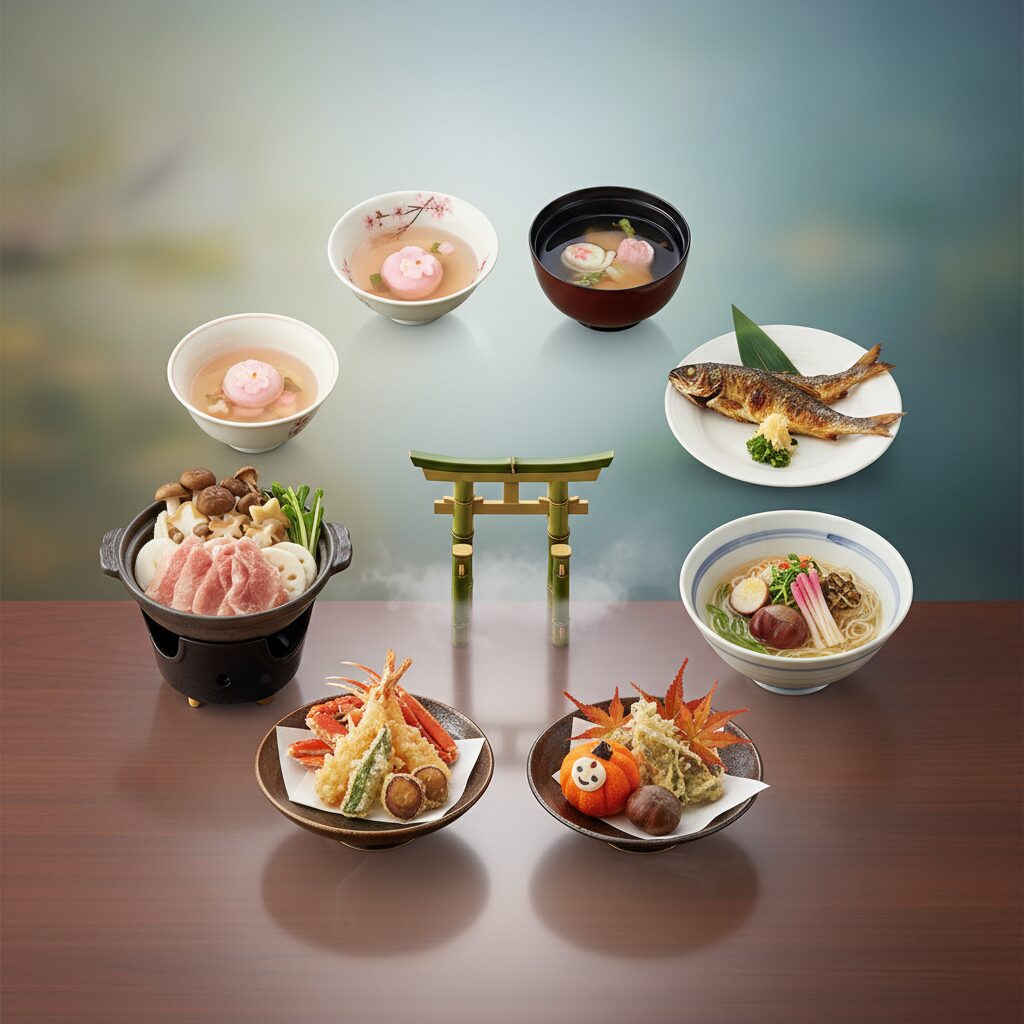
To truly understand shun, you must let go of the broad, four-season framework we are accustomed to. Japanese culinary culture divides time much more finely. An ingredient’s journey through its peak period is observed with such precision that it unfolds like a three-act drama, each act offering its own unique appeal and flavor profile.
Hashiri: The First Run
Hashiri (走り) marks the initial appearance of an ingredient, the exciting debut of the season. Picture the very first bonito (hatsugatsuo), the earliest strawberries, or the tender, young bamboo shoots of spring. These ingredients are often valued not for their depth of flavor—since it hasn’t fully developed yet—but for their crispness, subtle aroma, and the excitement of anticipation they bring. Eating hashiri is a celebration of new beginnings, a joy in the first taste and a promise of abundance to follow. The flavor tends to be lighter, cleaner, and more vibrant. There’s a certain prestige in being among the first to enjoy them, which is why hashiri items can command remarkably high prices. It’s the culinary equivalent of hearing the opening notes of a much-anticipated symphony.
Sakari: The Peak of Glory
Next is sakari (盛り), the main act. This is the essence of shun, the period when an ingredient is at its most plentiful, affordable, and, most importantly, delicious. The flavor has fully matured, becoming rich, complex, and deeply satisfying. This is the fat-rich “returning” bonito (modorigatsuo) of autumn, the sun-ripened tomatoes of mid-summer, and the sweet, plump chestnuts of October. During sakari, the ingredient takes center stage in kitchens nationwide, prepared in every imaginable way—grilled, stewed, pickled, or served raw—because its innate flavor shines through. This taste defines the season, creating a flavor memory that lasts until the next year.
Nagori: The Lingering Farewell
Finally, there is nagori (名残), which poetically means “lingering trace” or “relic of a name.” This represents the end of an ingredient’s season, the last opportunity to enjoy it before it vanishes for another year. The flavors may have shifted; a late-season vegetable might be slightly tougher, or a fruit less sweet. But eating nagori is an act filled with a distinct bittersweet appreciation. It’s a moment of reflection—a wistful farewell to a passing season. There’s a sense of mono no aware, the gentle sadness evoked by ephemeral things. Enjoying the last Pacific saury (sanma) of autumn or the final handful of edamame acknowledges the cycle of time and savors a memory while it lasts. This final taste is cherished precisely because it is fleeting.
The Roots of an Obsession: Nature, Ritual, and a 72-Season Calendar
This deep-rooted emphasis on shun isn’t a mere affectation; it is the natural consequence of Japan’s geography, history, and core beliefs. As an archipelago spanning from the subarctic to the subtropical, Japan experiences four vivid and distinct seasons. For centuries, before refrigeration and global supply chains existed, survival depended on a keen awareness of the subtle changes in the natural world. Eating what was available wasn’t a choice; it was a necessity that gradually evolved into an art form.
This practical necessity is further supported by the spiritual foundations of Shinto, Japan’s native religion. Shintoism is animistic, recognizing a divine spirit, or kami, in all things—rocks, rivers, trees, and, consequently, the food derived from them. Honoring an ingredient by consuming it at its peak is a way to honor the life force contained within it. It is a small, daily ritual that connects one with the rhythms of nature, demonstrating respect for the cycles of birth, growth, and decline.
This careful observation of nature is enshrined in the traditional Japanese calendar, which, in an astonishing display of detail, divides the year not into four but into 72 micro-seasons (kō). Each five-day period has a name describing a specific natural event occurring at that time, such as “The East Wind Melts the Ice” (early February), “First Peach Blossoms” (early March), or “Praying Mantises Hatch” (late May). When your sense of time is this precise, you naturally develop a heightened sensitivity to the exact moment when a fish is at its fattiest or a vegetable at its most tender. The 72-season calendar serves as the philosophical framework for shun, offering a poetic language to express the constant, subtle changes of the natural world.
From Market to Plate: How ‘Shun’ Shapes Japanese Cooking
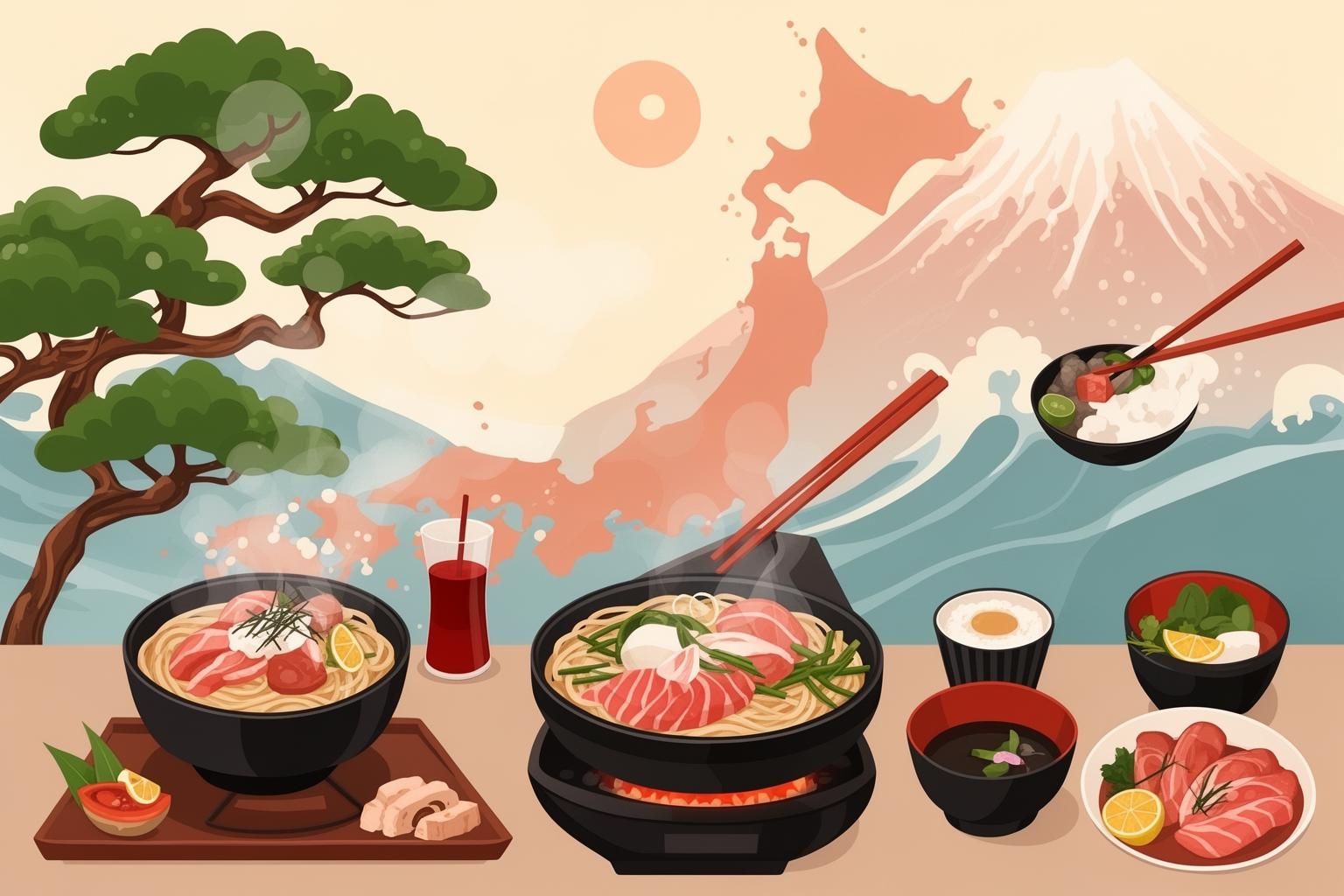
The principle of shun embodies a fundamental aspect of Japanese culinary philosophy: minimalism. When an ingredient is at its peak, the chef’s role is not to alter it but to highlight its essence. Cooking methods—whether lightly grilling with salt, gently simmering in a clear dashi broth, or precisely slicing to serve raw as sashimi—are all aimed at bringing out the ingredient’s natural character. There’s no need for heavy sauces or complex spices when a summer tomato, eaten cold with just a pinch of salt, tastes purely of sunshine.
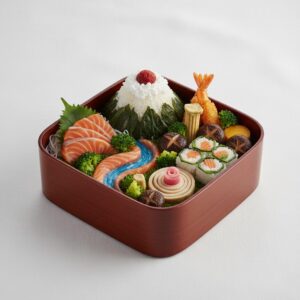
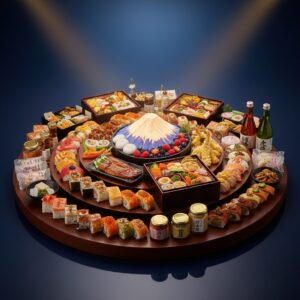
The pinnacle of this philosophy is embodied in kaiseki, Japan’s traditional haute cuisine. A kaiseki meal is a multisensory exploration of the current micro-season. The chef acts as a curator, selecting ingredients that are at their absolute prime in that very moment. A spring menu might include tender bamboo shoots, briny firefly squid, and bitter mountain vegetables. The garnishes, the tableware, even the scroll displayed in the alcove, are all chosen to evoke the distinct atmosphere of that season. Eating kaiseki is like experiencing a poem crafted from flavors, where every component contributes to a unified narrative of the season.
However, this philosophy is not limited to high-end chefs. Shun also guides the everyday life of home cooks. A visit to the supermarket becomes a treasure hunt for what has just appeared. The arrival of the first corn on the cob in summer or yuzu citrus in winter are small but notable events. Conversations frequently include food-related seasonal remarks: “Have you tried this year’s shin-tamanegi (new onions) yet? They’re so sweet.” This shared awareness fosters a strong sense of collective experience—a national dialogue centered on the joy of eating something perfect at exactly the right time.
The Taste of Now: ‘Shun’ in a World of Endless Supply
Certainly, we now inhabit a world filled with technological wonders. Greenhouses can grow strawberries in December, and global logistics can transport asparagus from Peru to Tokyo within a day. The modern Japanese supermarket, much like its Western equivalent, offers a breathtaking variety of produce year-round, seemingly making the idea of shun obsolete. So, is this profound cultural practice disappearing in the face of convenience?
Not at all. If anything, the contrast between the modern world of endless availability and the traditional value of shun has made its observance a more deliberate and meaningful choice. While you can purchase a bland, watery tomato in February, everyone recognizes it as a pale shadow of the genuine article. The flavor simply isn’t there. Choosing to wait, to look forward, becomes a subtle act of defiance against the placeless, timeless essence of globalized food culture.
High-end restaurants remain staunch defenders of shun, as their reputations rely on it. Food media—magazines, websites, and television programs—regularly emphasize what is currently at its peak, guiding consumers on what to seek. For many, paying attention to shun is a form of mindfulness. It compels you to be present, to savor what the world offers you right now. In a culture that cherishes the beauty of impermanence, shun is the edible representation of mono no aware—the awareness that things are beautiful precisely because they are transient.
Ultimately, shun is a philosophy that imparts a deeper form of satisfaction. It’s about realizing that the greatest luxury isn’t having anything you want, whenever you want it. The greatest luxury is tasting something at its moment of perfect expression, a moment that will never return in quite the same way. It elevates eating from a mere act of consumption to a ritual of connection—to the earth, to the flow of time, and to a culture that has perfected the art of mindful appreciation.