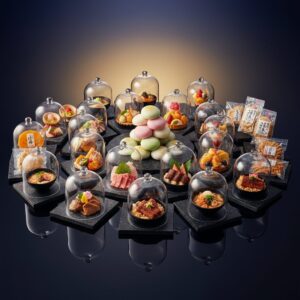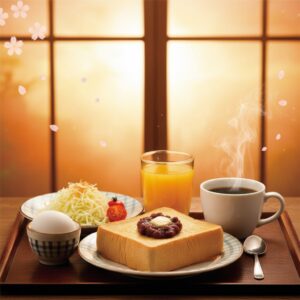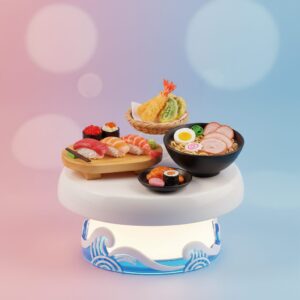
Walk down almost any commercial street in Japan, from a bustling Tokyo shotengai to a quiet lane in a provincial town, and you’ll see them. Gleaming in glass display cases, arranged with geometric precision, are perfect plates of food. A bowl of ramen, its broth frozen mid-ripple, with a glistening slice of chashu pork and a perfectly jammy egg. A plate of spaghetti, a single strand lifted by an invisible fork, sauce clinging just so. A frosty mug of beer, beads of condensation tracing paths down its side, a head of foam so solid it seems eternal. Your stomach rumbles. Your brain, however, does a double-take. It all looks impossibly perfect, static, and just a little bit surreal. This is the world of shokuhin sampuru, Japan’s intricate and ubiquitous food samples.
For a first-time visitor, it’s a delightful oddity. Why does every restaurant, from humble noodle shops to high-end department store eateries, have a window display of its entire menu rendered in plastic? It seems like an incredible expense and effort. You might wonder if it’s just a quirky national habit. But these plastic feasts are far more than a novelty. They are a silent, brutally effective sales tool, a form of visual communication honed over a century, and a unique expression of Japanese culture itself. They represent a solution to a specific historical problem, an obsession with craftsmanship, and a deep-seated philosophy of customer service. To understand these uncanny replicas is to understand something fundamental about the way Japan presents itself to the world, and to its own people. This isn’t just about showing you what’s for dinner; it’s a window into a culture that values clarity, trust, and the quiet art of making a choice easy.
Japan’s attention to detail in crafting these exquisite food replicas mirrors the same devotion to captivating sensory experiences found at the Nachi Fire Festival, where tradition and passion blaze in striking contrast.
The Birth of an Industry: A Candle-Maker’s Curious Creation

The story of shokuhin sampuru doesn’t start in a kitchen or restaurant, but in a workshop scented with wax. In the early 20th century, Japan was in the midst of the Taisho era, a time of swift modernization and Western influence. Tastes were evolving. Cafes and department store cafeterias began serving a public newly intrigued by foreign dishes like omurice (an omelet filled with fried rice) and curry rice. The challenge was that most people had no clear idea of what these dishes were supposed to look like. Menus were often text-only, and the gap between a dish’s name and the plate that arrived could be intimidating.
Enter Takizo Iwasaki, a man from Gujo Hachiman, a small mountain town in Gifu Prefecture. Iwasaki earned a living creating wax models for anatomical and educational uses. The story goes that one evening in 1932, he was at home when drops of hot wax from a candle fell into a puddle of water on his tatami mat. As the wax met the cold water, it blossomed into a delicate flower-like shape, reminiscent of a plum blossom. A flash of inspiration struck him: if wax could mimic something as delicate as a flower, could it also replicate food?
His first attempt was a masterful work of domestic artistry—an omelet. He poured melted wax into a mold, lined it with a yellow wax skin, and then, for the final touch, wrapped it around a mound of rice. He drizzled it with ketchup, also made of wax, and showed it to his wife. She was so thoroughly deceived that she couldn’t tell the wax creation apart from a real, freshly cooked omelet. At that moment, Iwasaki realized he had discovered something significant. He founded his company, Iwasaki Mokei Seizo, and began making wax food models for Tokyo’s department stores and restaurants. The silent salesman was born. These models perfectly solved the problem of unfamiliar menus. Customers could see exactly what they were ordering—the size, ingredients, and presentation. This eased anxiety and increased sales. The sampuru were an immediate success, and a new industry emerged.
From Wax to Vinyl: The Post-War Perfection
Iwasaki’s early wax models were groundbreaking, yet they had a major drawback: they were made of wax. In the heat of a Japanese summer or under the warm glow of display case lights, they would sag, lose their color, and eventually melt into an unappetizing, sad puddle. The craftsmanship was evident, but the material was flawed. The real golden age of shokuhin sampuru emerged with the technological advances that followed World War II.
The widespread access to plastics, especially polyvinyl chloride (PVC), transformed the industry. Plastic was durable, resistant to melting, and its colors remained vibrant. It could be molded with remarkable precision and capture textures wax never could—the delicate, lacy web of tempura batter, the shiny translucence of raw fish, the crumbly crust of fried pork. This technological breakthrough aligned perfectly with Japan’s post-war economic boom. As the country rebuilt and prospered, people had more disposable income for dining out. The restaurant industry flourished, driving high demand for hyper-realistic, long-lasting food samples.
Switching from wax to plastic enabled artisans to raise their craft to new levels. The process grew more intricate, but the results improved drastically. The sampuru industry, still rooted in Iwasaki’s hometown of Gujo Hachiman, expanded to meet national demand. Having a full sampuru display case became an essential part of opening a restaurant. Although it was a significant upfront investment, often costing thousands of dollars, it was regarded as critical business infrastructure, as necessary as tables and chairs. The plastic display came to symbolize a restaurant’s professionalism and its dedication to honesty with customers.
The Silent Salesman: Unpacking the Psychology of Sampuru
To dismiss shokuhin sampuru as mere decoration is to overlook the sophisticated cultural and commercial logic that supports their existence. They operate on multiple levels, each fulfilling a specific need for both the customer and the business owner. Their persistence, even in the Instagram era, speaks to their psychological impact.
First and foremost, the sampuru is a promise—a three-dimensional contract that communicates, “This is what you will receive.” In a culture that highly values avoiding trouble and ensuring predictability, this is deeply reassuring. There is no ambiguity. You don’t have to guess portion sizes or wonder if the menu photo was creatively enhanced. The model in the window is a faithful, tangible representation of the meal ahead. This establishes a strong sense of trust before you even step inside. It eliminates the risk of ordering something disappointing, a phenomenon known as “menu anxiety.”
Beyond clarity, the samples are experts in temptation. Our brains are wired to respond to visual food cues, and a 3D model is far more effective than a flat photograph. You can walk around it, view it from various angles, and appreciate its volume and texture. You see the sheen of the teriyaki sauce, the individual grains of rice, the crispness of the lettuce. This vivid, multi-angle presentation sparks a more immediate and powerful appetite than any picture could. It’s the difference between viewing a holiday brochure and standing on the hotel balcony. One is an idea; the other is a tangible reality.
Finally, the sampuru serves as a universal language. Japan can be an intimidating place for foreigners, and language barriers are real. The food sample elegantly circumvents this issue. Don’t speak Japanese? No problem. Simply lead the waiter outside and point. This act of communication requires no words and leaves no room for misunderstanding. This form of omotenashi, or anticipatory hospitality, makes dining accessible to all, allowing visitors to confidently explore the culinary landscape without fear of confusion.
The Artisan’s Workshop: Where Fake Food Becomes High Art
Although the final product is a mass-produced item found nationwide, its creation is anything but ordinary. Shokuhin sampuru making is a meticulous, highly skilled craft—an artful blend of creativity and engineering carried out in specialized workshops, many of which remain in Gujo Hachiman. These individuals are not merely factory workers but artisans who have often dedicated years to perfecting their craft.
The process usually starts with real food. A restaurant sends a dish to the workshop, where artisans immediately begin their work. They produce a silicone mold for every component—the pork slice, the carrot piece, each individual noodle. This initial step is essential to accurately capture the size, shape, and texture of the original.
After the molds are prepared, the true artistry unfolds. Liquid plastic is poured into the molds and baked until solid. The magic lies in the details. Although the technique is a closely guarded secret, it involves layering different plastic colors to create realistic depth. For example, a piece of tuna sashimi might start with a deep red base, then layers of lighter shades to replicate muscle and fat. For grilled fish, the base color is applied first, and an artist uses an airbrush to carefully add grill marks and the slightly charred, crispy skin.
Some techniques are remarkably ingenious. To replicate the delicate, porous texture of tempura batter, artisans drip melted plastic into warm water from a height, allowing it to spread and form a lacy, web-like pattern, which is then wrapped around a plastic shrimp or vegetable. For chopped green onions, they fuse thin layers of green and white plastic into a long tube, then slice it thinly, revealing a flawless cross-section with each cut. Making a simple head of lettuce involves pouring layers of colored vinyl into water and skillfully folding and shaping it as it cools to create the crinkled, natural form of the leaves. This process is a display of expertise and accuracy. Each finished piece is hand-painted and assembled, becoming a perfect, inedible tribute to the dish it portrays.
Sampuru in the 21st Century: Evolution and New Frontiers
One might expect that in our hyper-digital era of online menus, QR codes, and social media food photography, the modest plastic food model would be nearly extinct. Yet, they endure. Stroll through any major train station in Japan, and restaurant floors remain adorned with illuminated display cases. The sampuru’s essential roles—offering clarity, building trust, and stimulating appetite—remain as vital as ever.
At the same time, the industry has cleverly adapted, extending beyond its traditional function. The artistry of shokuhin sampuru has found a fresh audience through tourism and novelty items. The same workshops crafting hyper-realistic ramen bowls for eateries now produce miniature versions as keychains, magnets, and phone cases. These products have become popular souvenirs, quirky and uniquely Japanese keepsakes for visitors to bring home, celebrating the craft itself, separate from its original purpose as a sales tool.
Moreover, the sampuru has evolved into a cultural experience. In Tokyo’s kitchenware district, Kappabashi, and in the industry’s birthplace, Gujo Hachiman, workshops now offer hands-on classes for tourists. Visitors eagerly line up to create their own tempura or lettuce from wax and plastic. This shift from a B2B product to an interactive cultural activity highlights its deep-rooted presence in popular imagination. It is no longer merely a restaurant tool but a celebrated and recognized Japanese art form.
Beyond tourism, sampuru have found practical uses in other areas. Nutritionists and dietitians employ them as educational aids to visually demonstrate portion control and balanced diets. Medical schools utilize highly detailed models to simulate organs and tissues for surgical practice. The boundary between commercial product and functional art continues to fade.
More Than Just Plastic: The Sampuru as Cultural Mirror
The enduring presence of shokuhin sampuru on Japan’s streets says a great deal. These plastic replicas are more than just a historical curiosity or a clever marketing tactic; they are a tangible expression of deeply rooted cultural values. They form a small but vital piece of the puzzle in understanding modern Japan.
At their essence, they symbolize a form of omotenashi, the country’s renowned philosophy of hospitality. The entire purpose of the sampuru is to anticipate the customer’s needs and concerns and address them before they even arise. It’s about delivering information with complete clarity and honesty, ensuring the customer feels confident and at ease in their decision. It’s a gesture of respect.
They also reflect the spirit of kodawari, the unyielding pursuit of perfection and an obsessive attention to detail. The artisans who craft these models are not satisfied with a rough likeness. They aim to produce a flawless replica, capturing not only the appearance but the very essence of the food. Why spend hours perfecting the bubbles in a glass of soda or the glistening fat on a slice of pork? Because the craft requires it. It’s a pride in meticulous workmanship that is evident across many aspects of Japanese society, from electronics to train schedules.
So the next time you find yourself captivated by a window display of fake food in Japan, pause for a moment. Look more closely. Appreciate the artistry in that perfect, plastic tonkatsu. See it not as a quirky relic, but as a silent communicator, a piece of commercial art, and a delicious promise waiting to be honored. It’s the art of the fake feast, a tradition that beautifully captures a nation’s passion for both food and impeccable presentation.