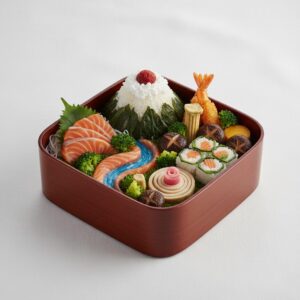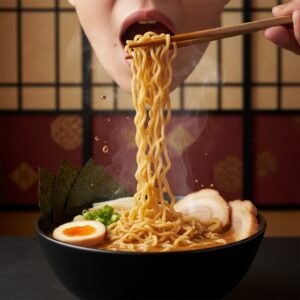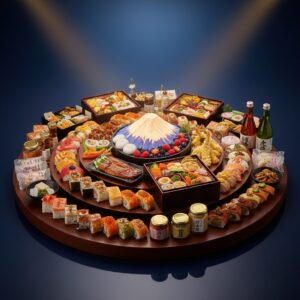
Sit down for any meal in Japan, and you will witness a quiet, almost imperceptible ritual. It happens in Michelin-starred temples of gastronomy and in fluorescent-lit ramen shops where salarymen slurp noodles shoulder-to-shoulder. It happens in school cafeterias and around family dinner tables. Before anyone lifts their chopsticks, before the first grain of rice is touched, hands come together, heads dip in a slight bow, and a single word is uttered: “Itadakimasu.”
To the casual observer, it’s easy to file this away as the Japanese equivalent of “Bon appétit” or “Let’s eat.” A simple, polite phrase to mark the beginning of a meal. But to do so would be to miss the point entirely. This one word is not a signal to begin eating; it is a moment of profound recognition. It’s a compact philosophy, a quiet acknowledgment of the vast, interconnected web of life and labor that brought the food to your plate. It is a moment of gratitude so deep and all-encompassing that it requires you to pause and consider your place in the universe, right before you pick up a piece of tempura. If you really want to understand a fundamental pillar of the Japanese mindset, you have to unpack what is truly being said in that moment of stillness. It’s far more than just good table manners.
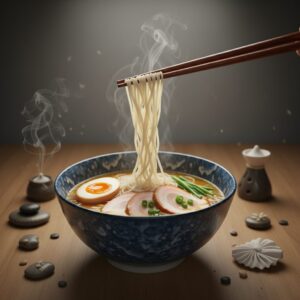
Building on the profound significance of “Itadakimasu”, a closer look at a meticulously crafted Japanese noodle ritual further unveils how every meal encapsulates an intricate blend of science, art, and gratitude.
Untangling the Translation: More Than a Command

First, let’s address the biggest misconception. “Itadakimasu” does not translate to “Let’s eat.” A closer equivalent would be tabemashou. It is also not directed at your dining companions like “Enjoy your meal.” Instead, it is a personal expression spoken by the person receiving the food.
The word itadakimasu (いただきます) is the humble form of the verb itadaku, meaning “to receive” or “to accept.” The choice of this verb is important. It is the same verb used when receiving a gift from someone of higher status. The nuance conveys respectful, humble acceptance, implying receiving something from above. In fact, the kanji for the root of the word, 頂, means “summit” or “crown of the head.” Historically, this evokes the image of respectfully lifting a gift above one’s head to receive it. So, when you say itadakimasu, you are literally saying, “I humbly receive.”
This changes the act of eating entirely. It is not simply taking or consuming, but receiving. This subtle change in perspective is significant. It transforms a routine biological act into a moment of mindful gratitude. But the question remains: what exactly are you receiving? And from whom are you receiving it?
The Three Tiers of Gratitude
The philosophy of itadakimasu functions on several levels. It represents a cascade of gratitude that reaches far beyond the immediate dining table. It recognizes a chain of existence and effort that is both beautiful and humbling. When someone utters this word, they are expressing thanks in three primary directions.
Tier One: Gratitude for the Lives Given
At its core, itadakimasu is a way to thank the food itself. This is where its foundations in Buddhist philosophy become clear. Buddhism emphasizes deep respect for all living things and an understanding of the interconnectedness of life. To eat, something else must cease to exist. A plant must be harvested, an animal must be killed. This is an unavoidable truth of our existence.
Itadakimasu is a direct recognition of this sacrifice. It is a moment to express thanks to the spirit of the fish, the pig, the stalk of rice, the daikon radish. It acknowledges that you are about to take their life force into your body to sustain your own life. This is not a morbid or guilt-ridden idea; rather, it is a profoundly respectful and realistic one. It prevents food from being viewed as a mere commodity—an anonymous, plastic-wrapped item on a supermarket shelf. Instead, every piece of food is seen as having once had its own existence, its own life.
Consider a simple bowl of rice. Saying itadakimasu honors the individual grains, the plant that grew in the paddy, swaying in the wind and absorbing the sun. Reflect on a slice of sashimi; it is a moment to thank the fish that swam in the ocean. This perspective encourages a deep respect for ingredients and is closely connected to the Japanese cultural aversion to waste, summed up in the word mottainai—a sense of regret over waste. When you have just consciously thanked an ingredient for its life, you are less likely to discard it carelessly.
Tier Two: Gratitude for Human Labor
The next layer of gratitude extends to every person involved in bringing the meal to the table. This acknowledges the vast, often unseen, human effort behind the food. It is a silent thank you that reaches back through time and space along the entire supply chain.
Your gratitude goes to the farmer who worked tirelessly in the fields, battling weather and pests to grow the vegetables. In Japan, with its terraced rice paddies and small family farms, the farmer’s dedication remains a powerful cultural symbol. It goes to the fisherman who ventured out in the dark, cold early hours to catch fish. It extends to the rancher, the soy sauce brewer, the tofu maker.
But it does not end there. Thanks also go to the truck driver who transported the produce, the person who stocked market shelves, and, of course, the chef or cook who skillfully transformed raw ingredients into a delicious meal. If you are eating at home, it is a direct thank you to whoever prepared the food for you. If dining with others, it subtly includes gratitude for the company and shared experience.
In today’s globalized world, this chain of labor is longer and more complex than ever. Itadakimasu serves as a meaningful mental practice to cut through this complexity and remember the web of human hands and efforts that sustains us. It is a recognition that we do not eat alone; we are supported by a vast community of workers, most of whom we will never meet.
Tier Three: Gratitude for Nature Itself
Finally, the gratitude broadens to encompass the greatest forces of nature that made the food possible. This reflects a Shinto-like reverence for the natural world. It is an expression of thanks for the sun that provided energy, the rain that watered the fields, the earth that nurtured the crops, and the mountains and seas that offered their bounty.
This view sees a meal not merely as a human creation but as a gift from nature. It places humanity within a larger ecosystem, dependent on its health and harmony. It is a humble acknowledgment that, despite all our technology and ingenuity, we fundamentally rely on nature’s generosity. Saying itadakimasu reaffirms this connection, reminding us that the food on our plate is a product of soil, water, and sunlight, guided by the rhythm of the seasons.
A Ritual of Mindfulness

Beyond expressing gratitude, itadakimasu holds an important psychological role: it acts as a ritual that fosters mindfulness just before eating. In many cultures, meals are hurried occasions. We eat while walking, driving, or fixated on screens. Often, food becomes an afterthought—something to be consumed quickly to move on to the next task.
Itadakimasu, paired with the gesture of placing one’s hands together (gassho), creates a pause. It marks a deliberate, conscious shift. For that brief instant, you are not focused on the email you need to send, the meeting you just attended, or errands you have to run. Your attention is fully on the meal before you. You are present.
This custom is taught to Japanese children as soon as they can sit at a table. In schools, the whole class recites it together before lunch. It becomes a deeply ingrained habit, a form of cultural muscle memory. This simple act of centering oneself before eating can profoundly alter one’s relationship with food. It encourages slower, more intentional eating. It fosters appreciation for flavors and textures. It frames the meal as a moment of nourishment and rejuvenation, rather than merely fuel.
The Bookend: Gochisousama Deshita
The ritual that starts with itadakimasu has a corresponding closing phrase: gochisousama deshita (ごちそうさまでした), spoken at the end of the meal. If itadakimasu represents a quiet intake of breath, gochisousama deshita is the satisfying exhale. Like its counterpart, its literal meaning carries much more depth than a simple “Thank you for the meal.”
The word gochisou (ご馳走) is composed of kanji meaning “to run” (馳) and “to run” (走). This vividly conveys the effort involved in preparing a feast. The host would have been “running around” to gather the finest ingredients and prepare the meal for their guests. Thus, when you say gochisousama deshita, you are expressing, “Thank you for this feast and for all the running around you did.”
It beautifully closes the circle of gratitude. It is a direct thank you to the host or chef for their effort, and by extension, echoes the thanks already offered by itadakimasu to the farmers, fishermen, and nature itself. It acknowledges that the process is now complete—you have humbly received the gift of the meal and are now expressing your final, heartfelt appreciation for the effort involved.
Why It Still Matters

In an era dominated by convenience stores, fast food, and heavily processed meals, one might question whether a concept like itadakimasu still holds significance. When your dinner is a plastic-wrapped onigiri, is it necessary to express gratitude to the farmer and the forces of nature?
The truth is that it’s perhaps more important now than ever. The modern food system is designed to mask its origins. We are intentionally distanced from the reality of where our food comes from. The farther removed we are from the source, the easier it becomes to take it for granted and to waste it. A pre-packaged sandwich doesn’t reveal the field where the wheat was grown or the person who baked the bread.
Itadakimasu serves as a crucial counterbalance to this modern detachment. It is a small, personal act of resistance against mindless consumption. It compels you, even if only for a moment, to remember the farm, the ocean, the factory, the driver, the cook. It reconnects the broken link between the product and its origin story. It reminds you that no matter how it’s packaged, all food comes from a life that was given and from a vast amount of effort, both human and natural.
To truly grasp itadakimasu is to understand a fundamental aspect of Japanese culture: a profound appreciation for the transient, a reverence for nature, and an awareness of mutual dependence. It’s a perspective in which you are not the master of your food, but a grateful recipient. It’s a philosophy that finds deep meaning in the ordinary. The next time you sit down to eat, wherever you may be, try taking a brief pause. Look at your plate and consider the journey it took to get there. You may not say the word aloud, but embracing its spirit can transform not only how you eat, but also how you view the world.