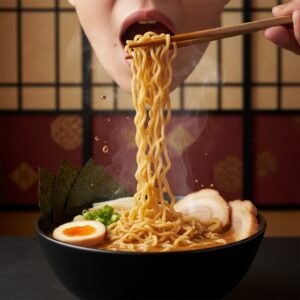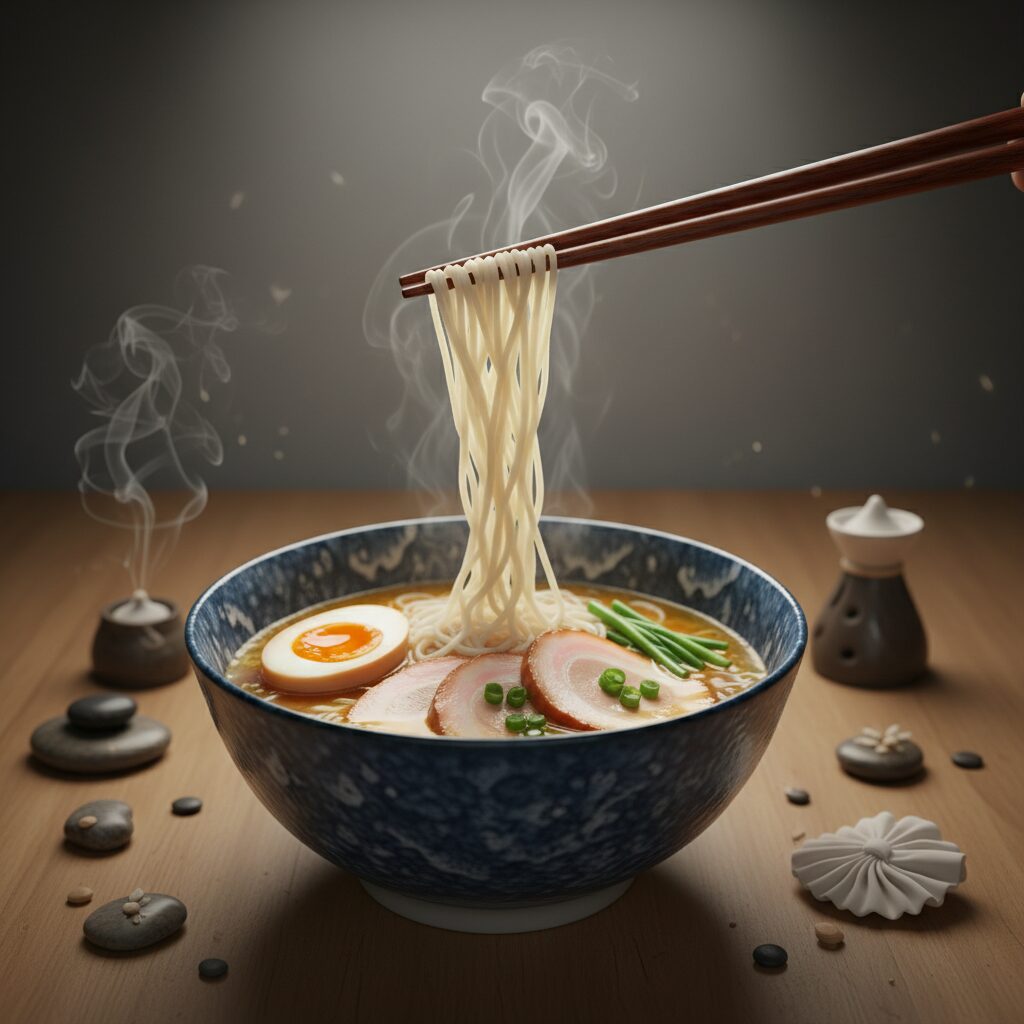
The first time you walk into a genuine ramen shop in Japan, your senses are flooded. There’s the savory steam fogging up the windows, the sight of a chef methodically draining noodles with a flick of the wrist, and the rich, complex aroma of broth that’s been simmering for hours, maybe even days. But then there’s the sound. A chorus of loud, unabashed slurping from every corner of the room. For anyone raised with Western table manners, where making noise while you eat is considered a cardinal sin, the sound can be jarring. It feels wrong, like you’ve stumbled into a place where all the rules have been gleefully thrown out.
You might find yourself wondering if this is a lapse in etiquette, a collective moment of bad manners. The truth is the exact opposite. In the world of Japanese noodles, that noisy slurp isn’t just acceptable; it’s essential. It is a sign of respect, a practical necessity, and a scientifically sound technique for unlocking the full, explosive flavor of the dish in front of you. This isn’t just a cultural quirk. It’s a mark of a true connoisseur, an acoustic key that opens a door to a deeper culinary experience. Forget what your mother taught you about eating quietly. To truly understand Japanese noodles, you first have to understand the slurp.
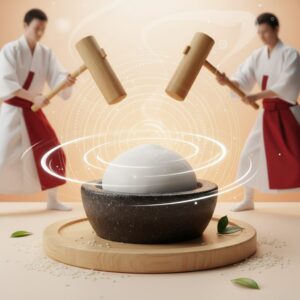
Beyond the auditory delight of slurping noodles, exploring Japan’s intense New Year’s Mochitsuki ritual further deepens your appreciation for the nation’s rich culinary traditions.
More Than a Sound: A Message to the Chef

Before delving into the science, it’s essential to reconsider the cultural significance of the sound itself. In many Western cultures, silence at the dinner table signals politeness and decorum, while slurping soup or noodles is often viewed as rude or unrefined. In Japan, however, the context differs entirely, especially regarding noodles. A hearty slurp is a non-verbal but universally understood expression meaning, “This is delicious. I am thoroughly enjoying this meal.”
Picture the ramen master, an artisan who has devoted their life to perfecting their broth, tare seasoning, and noodle texture. They spend their day amid clouds of steam, carefully crafting each bowl. The sounds of customers savoring the results are immediate, positive feedback. A quiet restaurant can be a cause for concern, possibly indicating uninspired food. Conversely, a restaurant filled with the rhythmic sounds of slurping is lively and successful. It’s an auditory signal that the chef has accomplished their goal: to create a dish so irresistible that diners eagerly devour it.
This gesture of appreciation is very specific. You wouldn’t slurp sashimi or make loud noises during a formal kaiseki meal. Slurping is almost exclusively reserved for noodles—ramen, soba, and udon. This exception within Japan’s typically structured and often quiet etiquette underscores that the practice isn’t arbitrary but serves a purpose intrinsic to the food itself.
The Science of Flavor: Aeration and Aroma
This is where the practice goes beyond culture and enters the domains of physics and biology. The main purpose of slurping is to enhance flavor, achieved through two key processes: aeration and retro-nasal olfaction. It’s the same principle used by professional wine tasters or coffee cuppers, only applied to a bowl of noodles.
First, consider the difference between taste and flavor. The sensations on our tongue are limited to five basic tastes: sweet, salty, sour, bitter, and umami. The rich, complex experience we call “flavor”—such as the notes of roasted pork in tonkotsu broth, the earthy aroma of buckwheat in soba, or the delicate smokiness of dried bonito flakes—is primarily aroma, detected by olfactory receptors in the nasal passages. To fully experience food, you need to smell it, and not just by sniffing before eating.
This is where retro-nasal olfaction plays a crucial role. When you chew and swallow, aromatic compounds travel from the back of your throat up into your nasal cavity. This explains why food tastes bland when you have a cold; blocked nasal passages prevent these aromas from being sensed. Slurping significantly amplifies this process. By inhaling noodles and some broth with a sharp intake of air, you essentially atomize the soup and coat the noodles with it, creating a vapor of aromatic compounds that fills your entire mouth and nasal passages simultaneously. The aromas don’t simply drift upward; they are actively drawn in, saturating your olfactory system. It’s like the difference between smelling a flower from a distance and pressing your nose directly into the bloom to inhale deeply.
This surge of aroma combines with the taste on your tongue to produce a far more intense and multi-layered flavor profile. The subtle nuances of the broth that might otherwise go unnoticed come to the forefront. Slurping aerates the food, unlocking its full aromatic potential and allowing you to enjoy the dish as the chef intended.
A Functional Technique: Temperature and Texture

Beyond flavor, slurping fulfills a deeply practical role. Japanese noodle dishes are nearly always served piping hot, and this is deliberate. The broth’s flavors and fats achieve perfect emulsification at a high temperature, and the noodles are cooked to a specific texture called koshi.
Koshi is an essential concept in appreciating Japanese noodles. It describes the ideal firm, chewy, and elastic texture—a pleasant resistance felt when biting into the noodle. However, koshi is short-lived. From the moment the noodles hit the hot broth, a countdown begins. They start absorbing liquid immediately, becoming steadily softer and mushier. To enjoy noodles at their best, you need to eat them quickly.
Slurping provides the perfect solution to this challenge. If you tried to eat the piping hot noodles delicately with a fork or in small, quiet bites, you would have to wait for them to cool. By the time they reach a safe temperature, the noodles would be overcooked and lose their essential chewiness, undermining the dish’s integrity.
When you slurp, you draw a flow of cool air alongside the hot noodles and broth into your mouth. This airflow cools the noodles just enough during their trip from bowl to palate, enabling you to eat them at their ideal temperature without burning yourself. It’s a clever, built-in cooling mechanism that supports speed, letting you finish the noodles while they still have perfect koshi, preserving the texture the chef worked so hard to create.
How to Slurp Without Fear
For many visitors to Japan, deliberately making noise while eating can feel quite uncomfortable, almost like breaking a lifelong rule. However, embracing the slurp is a step toward a more genuine and enjoyable culinary experience. No one expects perfection, but the effort shows respect for the food and the culture.
If you’d like to try, here’s a simple guide to the technique:
First, pick up a small bundle of noodles with your chopsticks. Avoid overloading them; a manageable mouthful is essential. Lift the noodles just above the surface of the broth.
Next, bring your face closer to the bowl. Ramen isn’t a dish meant to be eaten from a distance. Leaning over the bowl helps prevent broth from splashing.
Place the ends of the noodles in your mouth. Rather than thinking of it as “sucking,” consider it a sharp, quick inhalation. Slightly purse your lips and breathe in through your mouth. The noodles will follow the airflow. It’s less pulling and more guiding the noodles up. The goal is to take in noodles, some broth, and plenty of air all at once.
Don’t worry about the noise. It’s a natural result of the technique, not the aim itself. If you’re aerating the noodles correctly, a slurp will occur naturally. It may be messy at first, and that’s perfectly okay. Ramen shops are casual places, and a few splashes are part of the experience.
The Slurp Across the Noodle Kingdom
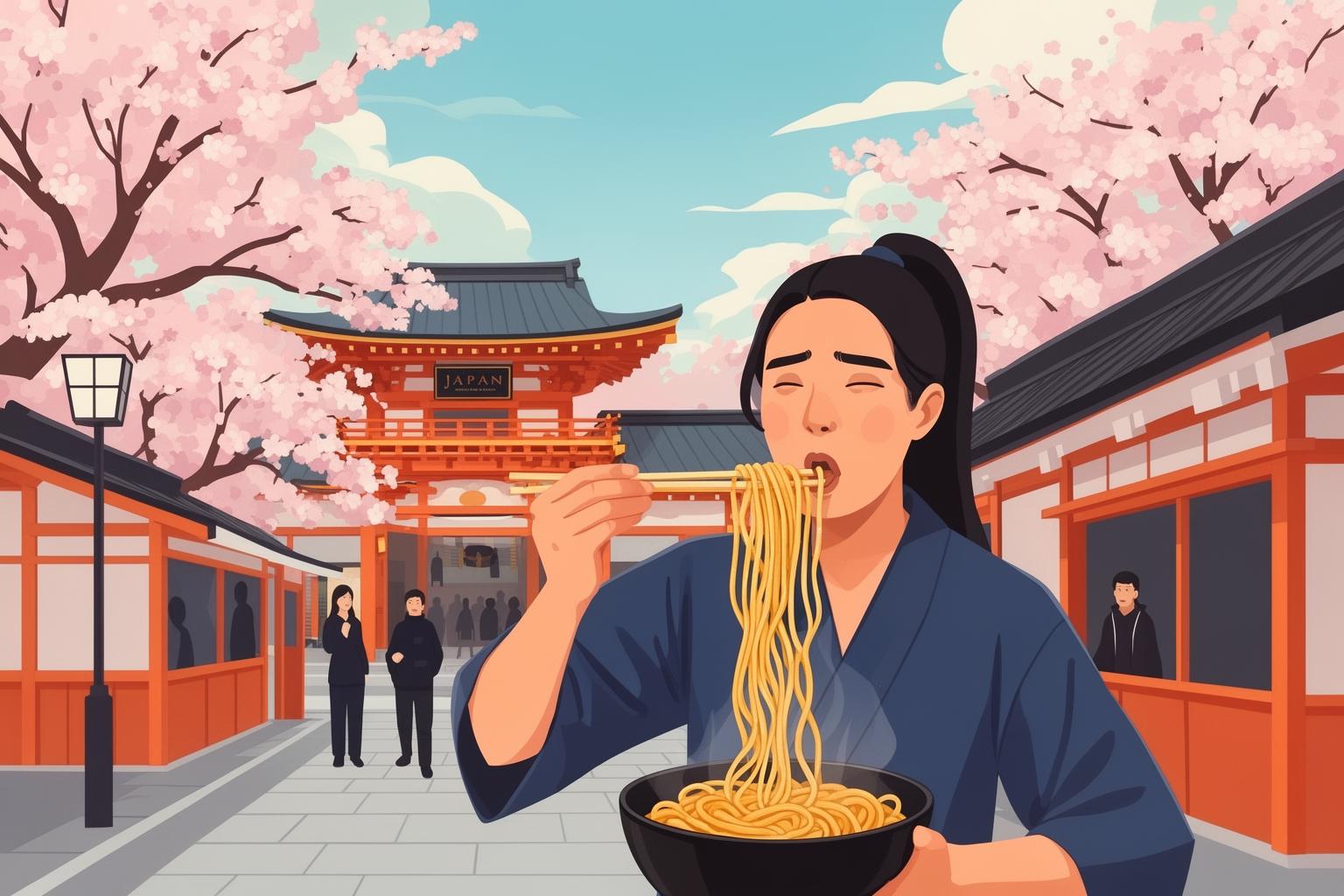
While ramen is the best-known example, slurping is essential to fully enjoying other Japanese noodles as well. With udon—the thick, chewy wheat noodles—slurping enhances your appreciation of their texture and helps coat them in hot, savory broth. This is especially gratifying with a simple kake udon, where the interaction between the noodle and the dashi-based broth takes center stage.
Perhaps the most refined use of slurping is with soba. These thin buckwheat noodles possess a subtle, nutty, and earthy flavor that can easily be overshadowed. When eating cold zaru soba, you dip a small portion of noodles into a concentrated tsuyu sauce. Slurping them from the dipping cup is crucial. It prevents the delicate noodles from being soaked in excess sauce, ensuring a balanced bite. More importantly, the aeration brings out the delicate buckwheat fragrance itself, a vital element of high-quality soba that quiet chewing would obscure.
Whether the noodles are thick or thin, hot or cold, in a rich pork broth or a light soy-based dip, slurping remains a universal constant. It is the proper way to engage with the dish—a technique that adapts to each noodle’s unique character while fulfilling the core functions of enhancing flavor, regulating temperature, and preserving texture.
So, the next time you sit down to enjoy a bowl of Japanese noodles, leave your old inhibitions behind. Consider the bowl not just as a meal, but as an experience waiting to be savored. Lean in, take a deep breath, and slurp. That sound, once unfamiliar, will become the satisfying soundtrack of a meal enjoyed exactly as intended—with enthusiasm, appreciation, and a full-bodied, glorious noise.