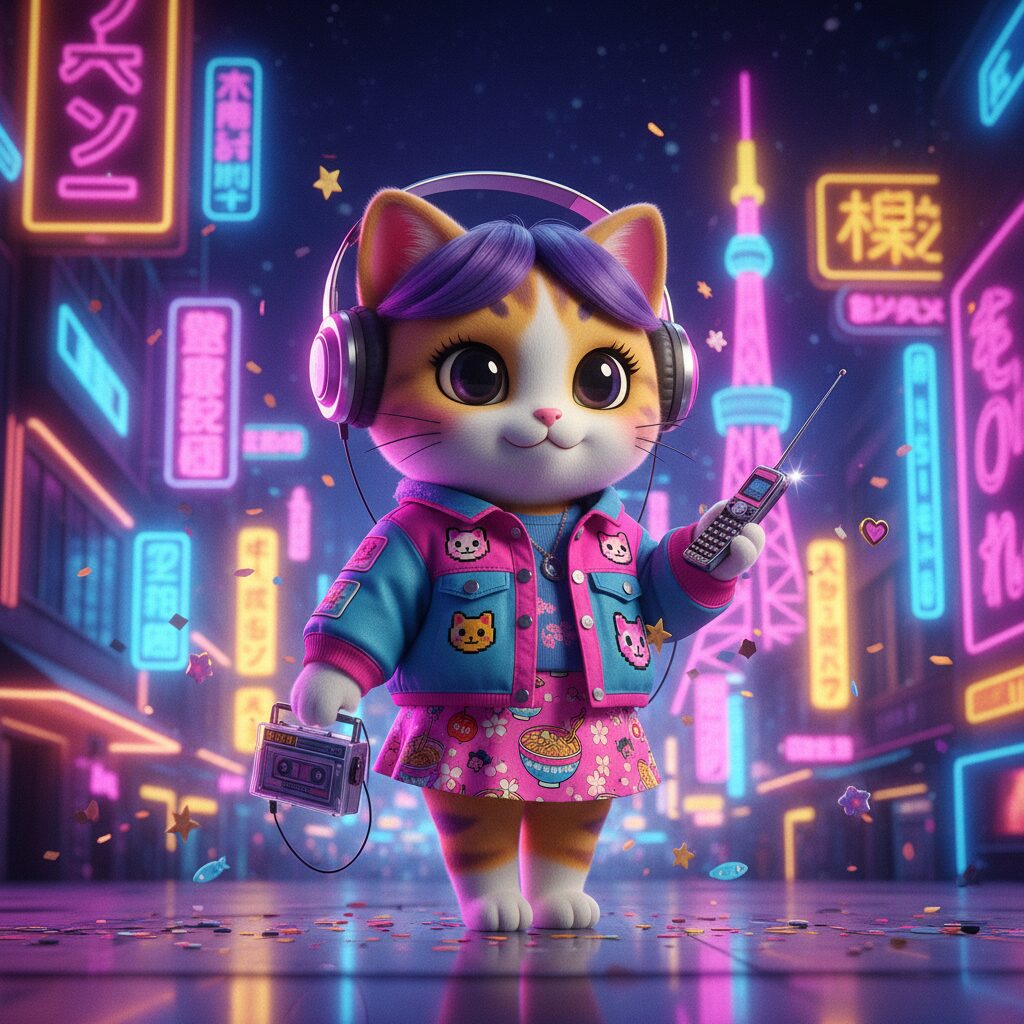
Imagine it’s 1995 in Tokyo. A woman in her mid-twenties, dressed in a smart but conservative navy blue suit, steps off a crowded train at Shinjuku Station. She navigates the throng with practiced efficiency, her expression a mask of professional composure. But hanging from the strap of her serious leather handbag is a small, unexpected flash of color and whimsy: a tiny plastic charm of a cartoon cat with a red bow and no mouth. This is not a gift for a niece or a younger sister. This is her Hello Kitty, and in the Japan of the 1990s, this small act was something of a quiet revolution. Sanrio, the company behind the character, had built its empire on the pocket money of children. Its products were the stuff of schoolyards and childhood bedrooms. Yet, in the span of a few years, its characters became an essential accessory for a generation of adult women. How did this happen? How did a brand synonymous with girlish innocence become a staple for grown-ups navigating the complexities of careers, relationships, and a sputtering economy? The answer isn’t just about a love for things that are cute. It’s a story about social pressure, economic anxiety, a search for comfort, and a brilliant corporate pivot that captured the unspoken feelings of a generation. To understand why that woman on the train platform needed her Hello Kitty, you have to understand the world she was living in.
In the same way that Hello Kitty became a subtle emblem of resistance amid shifting societal expectations, many found comfort in traditional practices like goshuin collecting, which encapsulate Japan’s unique blend of modernity and heritage.
The World Before the Wave: Sanrio’s Cheerful Beginnings
Before Sanrio characters became a form of adult therapy, their purpose was simply to make children smile. The company’s philosophy, established by founder Shintaro Tsuji in the 1960s, was grounded in the beautifully simple idea of “Small Gift, Big Smile.” The business aimed not just to sell products but to foster communication and friendship through giving small, thoughtful presents. This concept held great significance in a culture where gift-giving is deeply ingrained in social custom.
A Universe of Friendship for Children
Sanrio’s early success during the 1970s and 80s was solidly anchored in the youth market. Characters created in this era—Hello Kitty (1974), My Melody (1975), Little Twin Stars (1975)—were crafted with a child’s sensibilities at heart. They were simple, friendly, and lived in idyllic worlds free from conflict. Their stories, when present, centered on friendship, kindness, and small daily adventures. The merchandise reflected this focus—Sanrio stores, often called “Gift Gates,” were treasure troves for elementary and middle school students. They sold stationery sets, pencil cases, small vinyl coin purses, and stickers. These weren’t extravagant purchases; they were affordable treats children could buy with their allowance, or parents could choose as small rewards. Owning the latest Hello Kitty pencil box or a sheet of Kiki and Lala stickers became a form of social currency in the classroom, signaling that you were up-to-date with popular trends and allowing you to share common interests with friends. The aesthetic was overwhelmingly sweet and innocent. For two decades, this was Sanrio’s world—a happy, pastel-colored universe for kids. Few would have guessed that its main customers would eventually become women old enough to be those children’s mothers.
The Bubble Economy’s Long Shadow
The Japan that nurtured Sanrio’s initial growth was a nation on a rising path. The post-war economic miracle reached its peak in the asset-inflated “Bubble Era” of the late 1980s. This period was marked by boundless optimism, lavish spending, and a belief in endless prosperity. Companies offered lifetime employment, and the corporate world stood as the undisputed center of society. However, when the bubble burst spectacularly in the early 1990s, the national mood shifted swiftly and dramatically. The following decade was dubbed the “Lost Decade.” Stock markets crashed, real estate values collapsed, and the promise of lifetime employment began to dissolve. The atmosphere of carefree extravagance gave way to widespread anxiety, uncertainty, and disillusionment. The work-centric culture that had driven the economic miracle now felt like a heavy burden with diminishing returns. People were stressed, overworked, and concerned about the future. It was within this context of collective national anxiety that a new cultural need arose: the search for iyashi.
The Rise of Iyashi: A Nation in Need of Healing
Iyashi (癒し) is a Japanese term that roughly translates to “healing” or “soothing.” It refers to a concept encompassing a gentle feeling of comfort, relief, and spiritual or emotional balm. In the post-bubble 90s, iyashi emerged as a cultural buzzword. People were deliberately seeking out things that could ease their frayed nerves and provide a break from the harsh realities of a recessionary economy and a high-pressure society. This wasn’t about indulgent escape but about discovering small, gentle moments of peace.
From Hot Springs to Character Goods
The iyashi trend appeared in various forms. There was a renewed interest in natural and calming elements such as aromatherapy, herbal teas, trips to hot springs (onsen), and new-age music. It also extended into the consumer goods market. Items that were soft, gentle, and non-threatening gained immense popularity. This included plush toys, soft-textured fabrics, and, importantly, cute characters. The simple, rounded, emotionally straightforward designs of Sanrio’s characters fit perfectly with this cultural trend. Looking at Hello Kitty or Pochacco required no complex thought or emotional involvement. There was no challenging narrative or moral complexity—just purely and soothingly cute designs. They represented visual iyashi. For adults struggling with corporate restructuring and an uncertain future, a small dose of this uncomplicated sweetness served as a powerful remedy against daily stress.
The Psychology of a Mouthless Cat
Hello Kitty’s design is a brilliant example of psychological projection, which gained special significance during the iyashi-seeking 90s. Her most distinctive feature is, of course, the absence of a mouth. Sanrio has stated this is intentional: without a fixed expression, Kitty’s mood depends on the viewer. If you’re happy, she appears happy. If you’re sad, she seems to share your sorrow. This makes her an ideal silent confidante. She doesn’t judge, nor offer unsolicited advice; she simply mirrors your emotional state. For a generation of women facing immense societal pressures—to be the perfect employee, daughter, and potential wife—this non-judgmental presence was profoundly comforting. Hello Kitty provided a safe space for their emotions in a world that often demanded they conceal them behind a mask of polite stoicism.
The 90s Woman: A Quiet Rebellion in Pink

The widespread embrace of Sanrio by adults in the 90s was predominantly a female phenomenon. To understand this, one must consider the specific pressures experienced by Japanese women during that period. Although the 1986 Equal Employment Opportunity Law had theoretically opened doors to career opportunities, the reality was a deeply ingrained corporate culture designed by and for men. Women found themselves caught between two worlds: the traditional expectation to marry and become homemakers, and the new, often unwelcoming, path of pursuing a career.
Navigating the Office and Expectations
Women who sought careers frequently found themselves in positions as “Office Ladies” (OL), carrying out administrative and clerical duties while their male counterparts were groomed for management roles. They faced a double standard: expected to be both competent and hardworking, yet also feminine, deferential, and ultimately, marriageable. There was immense pressure to marry and leave the workforce, epitomized by the harsh term “Christmas cake,” which referred to unmarried women over 25 (implying they were past their prime). This created a stressful atmosphere where a woman’s professional and personal lives were constantly scrutinized. The workplace demanded a uniform seriousness—dark suits, muted colors, and a professional demeanor—with little room for individual expression.
Kawaii as a Tool of Self-Expression
Within this restrictive environment, kawaii goods became a powerful means of self-expression and identity. Attaching a small Hello Kitty charm to a work bag or using a My Melody pen during meetings was a small yet meaningful act of defiance. It was a way of saying, “Despite this serious suit and demanding job, there is another side of me: a softer, more playful, more personal self.” It allowed women to inject a splash of color and personality into a monochrome corporate world. This was not about being childish or unprofessional; rather, it was a sophisticated way to navigate a dual identity. The Sanrio character served as a personal emblem, a secret handshake among women acknowledging the pressures they faced. It was a form of “cute rebellion,” a way to resist becoming unfeeling cogs in the corporate machine without directly challenging the system.
Sanrio’s Strategic Embrace of the Adult Market
Sanrio could have easily dismissed this trend as a mere strange anomaly. Instead, the company recognized it as a significant opportunity. They identified a new demographic with considerable purchasing power: adult women with disposable income and a strong emotional connection to the characters from their youth. Sanrio’s marketing brilliance in the 90s lay not only in allowing this trend to develop but also in actively nurturing and legitimizing it.
Designing for a Grown-Up Life
The company shifted its strategy, creating product lines specifically aimed at adults. The focus moved away from stationery for schoolgirls toward items that could seamlessly fit into a grown woman’s daily life. This included toasters that burned Hello Kitty’s face onto bread, car seat covers and air fresheners, rice cookers, and even office supplies like computer mice and phone cases. They realized that for adults to purchase these goods, functionality was essential. It wasn’t just about collecting figurines; it was about weaving kawaii into everyday routines. This approach made buying and using Sanrio products feel practical rather than frivolous, normalizing the idea that cuteness didn’t have to be abandoned after turning 18.
Expanding the Character Roster for a Broader Appeal
While Hello Kitty remained the flagship character, Sanrio also smartly promoted other figures that resonated with a somewhat different, sometimes more cynical, 90s sensibility. Badtz-Maru, a mischievous penguin with a signature grumpy look, debuted in 1993 and became immensely popular. His slightly rebellious, “I’m not trying to be sweet” attitude connected with women who wanted their cuteness with a bit of an edge. He was the ideal character for those who loved the kawaii style but didn’t relate to the pure sweetness of My Melody. By offering a diverse range of characters with distinct personalities—the sporty dog Pochacco, the laid-back frog Keroppi—Sanrio gave consumers the freedom to select a character that best reflected their own personality, further reinforcing the role of the characters as symbols of personal identity.
From Subculture to Mainstream Staple

As the 90s unfolded, Japanese popular culture amplified the trend, transforming it from a personal coping strategy into a recognized and celebrated subculture. Media coverage and celebrity endorsements were pivotal in legitimizing adults’ affection for kawaii.
The Influence of Idols and Magazines
A prominent advocate for this aesthetic was singer and TV personality Tomoe Shinohara, renowned for her eccentric, colorful, and childlike fashion style that often included toys and cute accessories. Her popularity helped position a playful, kawaii-focused look as fashionable and cool, rather than simply odd. Simultaneously, youth fashion magazines like Cutie and FRUiTS began chronicling street style, highlighting young women who skillfully combined high fashion with cute character goods. This media attention validated the trend, demonstrating to millions of readers that embracing kawaii as an adult was both a valid and creative form of self-expression. It evolved from a private comfort into a public style statement.
The Lasting Legacy of the 90s Shift
Sanrio’s shift in the 1990s was transformative, with lasting effects still evident today. By embracing their adult female audience, they dismantled the notion that their brand was solely for children. They fostered a multi-generational customer base, where women who purchased Hello Kitty toasters in the 90s now buy Sanrio products for their own children, creating a strong cycle of nostalgia and brand loyalty. This era normalized the idea that kawaii is a legitimate aesthetic across all ages. That’s why today, it is entirely commonplace to see adults of all genders and nationalities wearing Sanrio merchandise. The 90s was the decade when a simple cartoon cat became far more than just a character. She became a companion, a symbol of gentle resistance, and a source of healing comfort in a complex world. The woman on the Shinjuku platform wasn’t merely carrying a trinket; she was carrying a small piece of emotional armor, a reminder of softness in a harsh world, and a quiet declaration that even in a navy blue suit, she would not relinquish joy.