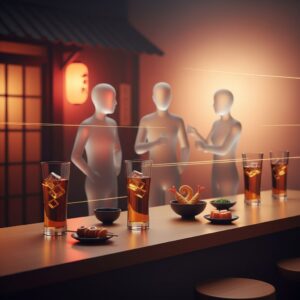
You see it on a Friday, walking through Shinjuku or Shibuya now. The streets are alive, certainly. Groups of friends head to izakayas for affordable drinks, couples look for a quiet ramen shop, and office workers, looking drained, trudge towards the station for the train home. There’s a pleasant, orderly buzz. But it’s a hum, not a roar. To understand the Tokyo of today, you have to understand the roar it has lost. You have to understand Han-kin.
Han-kin, or 花金, translates to “Flower Friday.” The characters are simple: hana (花) for flower, and kin (金), the character for gold, money, and Friday. It’s a poetic name for a phenomenon that was anything but delicate. During the height of Japan’s Bubble Economy in the late 1980s, Flower Friday was the weekly explosion of a nation convinced it had won the 20th century. It wasn’t just the start of the weekend; it was a ritual of conspicuous consumption, a frantic, champagne-fueled performance of economic invincibility. It was the night when salarymen became kings, armed with bottomless corporate expense accounts, and the streets of Tokyo thrummed with an energy of pure, uncut excess. That era is long gone, dead for over three decades. But its ghost lingers, shaping every quiet Friday night that has followed. To grasp modern Japan’s relationship with work, wealth, and pleasure, you first have to attend the party that ended it all.
Amid the lingering echoes of bubble-era excess, modern Tokyo reveals new rituals as intriguing as the adult gashapon trend that fuses nostalgia with innovative urban play.
The Fuel for the Fire: Understanding the Bubble Economy

To grasp why a nation known for its diligence and reserve began lighting cigars with yen notes and showering disco queens with champagne, one must first understand the economic furnace they were living in. The Baburu Keiki (バブル景気), or Bubble Economy, was not merely a time of prosperity but a period of perceived invincibility that distorted reality.
A Nation Drunk on Confidence
In the mid-1980s, a convergence of factors, including the 1985 Plaza Accord which significantly strengthened the yen, created an economic perfect storm. The Bank of Japan cut interest rates drastically, making borrowing money incredibly cheap. This cheap money poured into two main areas: the stock market and real estate. The result was a speculative frenzy of historic scale. The Nikkei 225 stock index tripled in value between 1985 and 1989. Tales of ordinary individuals becoming millionaires overnight by trading stocks or property were widespread.
Even more famously, land prices skyrocketed. At one point, the Imperial Palace grounds in Tokyo were reportedly worth more than all the real estate in California combined. This wasn’t just an abstract economic statistic; it shaped a powerful national mindset. Japan, a country rebuilt from the ashes of World War II, had become an economic giant. It was acquiring American landmarks like Rockefeller Center and Columbia Pictures. There was a sincere belief that the Japanese approach to business and society was superior and that this upward momentum would never falter. Frugality, once a virtue, began to seem outdated, even foolish. Why save when your assets were doubling in value every year? Spending became a patriotic act, a celebration of Japan’s success.
The Corporate War Chest
For the typical office worker, or salaryman, this national wealth was experienced mostly through the company. Businesses, flush with cash and eager to grow, spent extravagantly. Bonuses were enormous. But the true engine of Han-kin was the corporate expense account, especially for settai (接待). Settai refers to the practice of entertaining clients, and during the Bubble Era, it became an art form. It was a critical part of business, where deals were made not in the boardroom but over multi-course French dinners, in the smoky lounges of Ginza hostess clubs, and on exclusive golf courses.
This meant that on Friday nights, vast sums of money were spent not by individuals but by companies. A manager might receive a budget that would be unimaginable today, with the implicit understanding that he was to provide the client with the best possible experience. This fueled demand for hyper-luxury services and fostered a culture where spending obscene amounts of money was not only accepted but expected. The salaryman, a cog in the corporate machine Monday to Thursday, was handed a magic wand on Friday and told to conjure money in the form of extravagant entertainment. This dynamic set the stage for the weekly ritual known as Han-kin.
The Friday Night Playbook: Deconstructing the Han-kin Ritual
Flower Friday was not a spontaneous gathering. It followed a structured, almost theatrical sequence of events, each governed by its own codes and status symbols. From the moment the clock struck five, participants shed their daytime identities and assumed their roles in the grand drama of Tokyo’s nightlife.
5 PM: The Starting Signal
The workday didn’t merely end; it shattered. The quiet buzz of the office gave way to a tangible anticipation. Young women, known as “OLs” (Office Ladies), would discreetly change in company restrooms, swapping their conservative uniforms for sleek, body-conscious dresses—the iconic bodikon (ボディコン) style—and applying bold makeup. Men might loosen their ties, but the true shift was mental. They ceased to be just section chiefs or department managers; they became patrons, commanders of the night, armed with corporate credit cards.
The first hurdle was simply getting from the office to the battlefield. This was the era of the great taxi hunt. In districts like Marunouchi and Otemachi, crowds of suited men surged onto sidewalks, waving not just hands but ¥10,000 notes (worth about $80 at the time, yet with far greater purchasing power). Taxis were in such demand that drivers acted like gatekeepers to the evening’s festivities. Desperate salarymen might offer two, three, or even five times the meter fare just for a ride. This led to the infamous “Cinderella Taxis,” which accepted only long-distance, high-fare passengers late at night, leaving short-ride seekers stranded. This frantic, cash-flashing taxi battle was the opening ceremony of Han-kin, a perfect snapshot of the era’s money-no-object spirit.
The First Act: Dinner on the Company’s Dime
The night always began with dinner, and it was rarely casual. A settai dinner choice was a strategic decision, intended to convey significance. This meant booking a table at one of Tokyo’s most exclusive—and expensive—restaurants. Top-tier sushi counters, where chefs greeted you by name; traditional ryotei with private rooms and impeccable service; or brand-new, dazzlingly pricey French and Italian establishments were the preferred venues.
Ordering was a show. No one inquired about prices. One ordered the finest sake, imported French wines—often Romanee-Conti or Chateau Margaux, chosen for their prestige rather than deep oenophilic knowledge—and the most decadent dishes. The aim wasn’t just to nourish the client but to overwhelm them with generosity, creating a debt of obligation repayable with a signed contract. The bill, which could easily run into hundreds of thousands or millions of yen for a single table, was settled with a quick, nonchalant swipe of the corporate credit card. The meal was merely the appetizer for the evening’s main event.
The Main Event: Discos, Clubs, and the VIP Cult
As night deepened, activities shifted to the temples of Bubble-era indulgence: the discos. These were not grimy, sticky-floored clubs but monumental, multi-story palaces of light and sound. Names like Maharaja, M-Carlo, and the undisputed queen, Juliana’s Tokyo, achieved legendary status. Getting inside was the first challenge. Bouncers enforced strict dress codes, turning away anyone who didn’t fit the image. Inside, the atmosphere was electric.
Juliana’s and the Night’s Theater
Opened in 1991 at the bubble’s tail end, Juliana’s became the era’s excess icon. Famous for its otachidai (お立ち台), elevated platforms where women in scanty bodikon dresses danced, waving feathered fans—or sensu (センス). It was pure spectacle. Men, mostly watching from the floor or coveted VIP sections, cheered them on. The soundtrack was high-energy Eurobeat, fueling collective euphoria.
This wasn’t just about dancing; it was about being seen. Status was everything. Having a table was good; a VIP table better. The ultimate display was sending bottles of outrageously expensive champagne to the otachidai or tables of attractive women—a public declaration of financial might, a performance for the entire club to witness.
The VIP Room Mentality
Behind velvet ropes, in VIP rooms, corporate hierarchies reasserted themselves. Here, away from the throng, real players networked, gossiped, and impressed clients. Admission demanded a vow to spend astronomical sums on bottle service. This obsession with exclusivity and tiered access was central to the Han-kin experience. It wasn’t enough to be at the party; you had to be in the best part, shielded from the common crowd. This mirrored the corporate ladder, translated into nightlife language.
The Long Fade-Out: Karaoke, Hostess Clubs, and Dawn
For many, the night was still young when discos closed. The third act often moved to a different venue. Karaoke boxes, which grew massively popular then, were a common stop. Fueled by more alcohol, colleagues and clients would belt out ballads and City Pop hits, releasing tension and fostering group unity through shared, tone-deaf performances.
For high-stakes settai, the night’s final stop was often a high-end hostess club in Ginza. These were not brothels but lavish lounges where impeccably dressed women poured drinks, lit cigarettes, and engaged in witty, flattering conversation—all for an exorbitant hourly fee. Hostesses mastered ego management, making clients feel like the most important men in the world. In this intimate, ego-stroking setting, business deals were often finalized. A successful Ginza night could secure multi-million-yen contracts, making the staggering bill seem a worthwhile investment.
The night ended in the early morning hours. Drunken men, ties loosened, piled into the last taxis for the long, costly ride home to suburbs, arriving as the sun rose, with only a few hours to rest before repeating a fraction of the ritual on Saturday. This was Flower Friday: a marathon of spending, a status performance, and the weekly apex of a nation riding a wild, unsustainable high.
The Uniform of the Night: Fashion, Cars, and Status Symbols
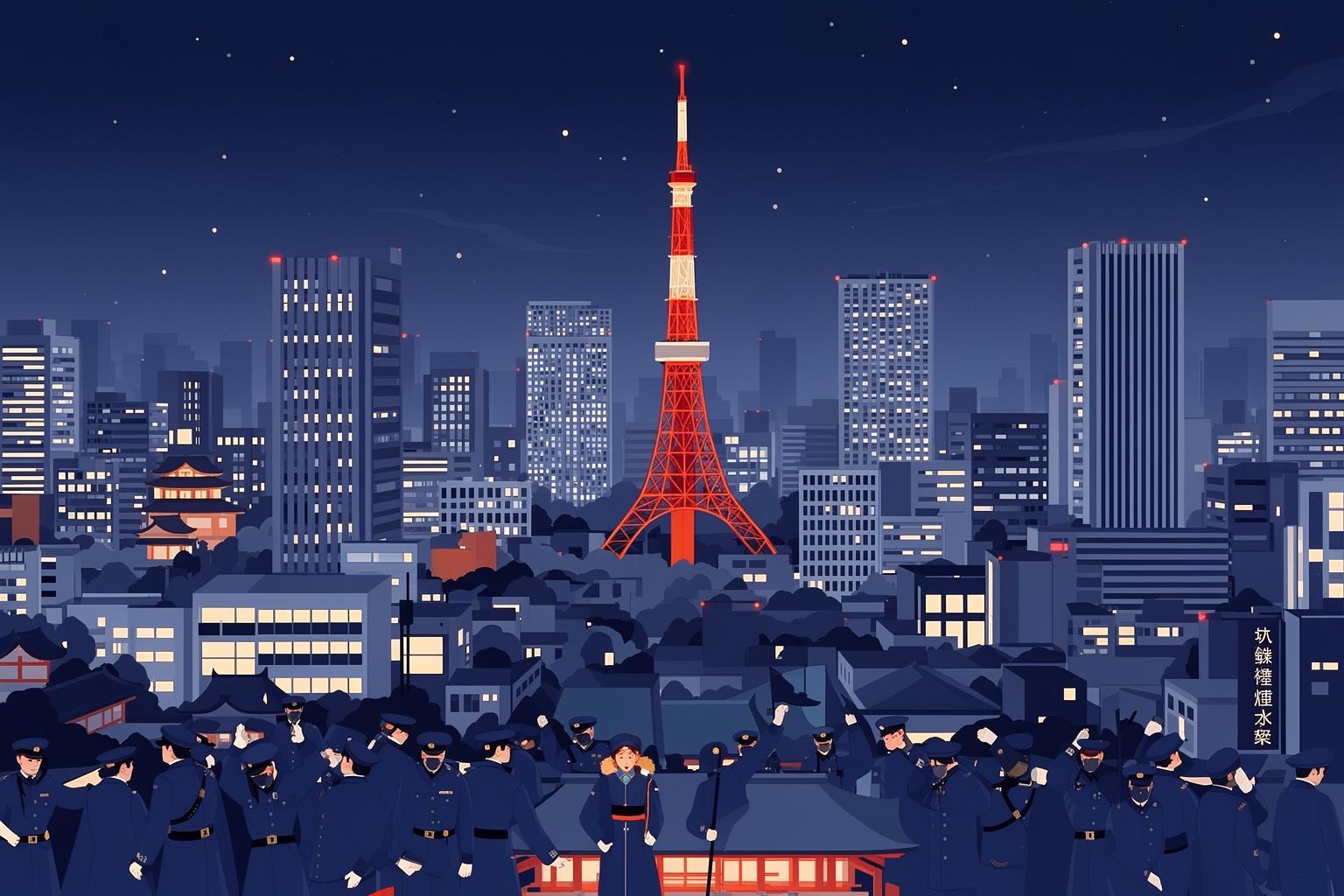
The Han-kin performance required a very specific set of props and costumes. Conspicuous consumption called for visible symbols of wealth and taste—or at least what was considered taste at the time. The brands, styles, and machinery of the Bubble Era were as integral to the story as the venues themselves.
“Shoulder Power”: The Look of the Bubble
Bubble-era fashion was summed up in one word: power. For both men and women, this meant suits with enormous, exaggerated shoulder pads. Men’s suits, often Italian brands like Armani and Versace, were draped and oversized, exuding an air of confident nonchalance. The double-breasted suit was the hallmark of the successful businessman. For women, the “body-con” silhouette dominated the nightlife, while the professional day look was equally structured. The female power suit, sporting shoulders that could rival a linebacker’s, signaled a firm arrival in the corporate world.
This period was also the heyday of the logo. A handbag wasn’t just a handbag; it was a Chanel or Louis Vuitton. A watch wasn’t merely a timekeeper; it was a Rolex or Cartier, its gleaming gold band a constant reminder of success. Young OLs famously saved for months or took out loans to buy a single designer bag, which acted as a ticket into the glamorous world they dreamed of entering, even if just for a night. This brand fixation, known as the “DC Boom” (for Designer & Character brands), was about securing a tangible piece of the era’s prosperity.
The Chariots of Flower Friday
Just as critical as attire was the choice of vehicle. For the truly successful, the car was the ultimate status symbol. Although Tokyo’s public transport is famously efficient, the car was a private realm, a sign of having escaped the crowded commuter trains. German luxury cars like BMWs (nicknamed “Roppongi Porsches,” even if they weren’t Porsches) and Mercedes-Benzes were highly prized.
The domestic market also produced its own icons. Chief among them was the Nissan Cima. Released in 1988, this large, powerful luxury sedan quickly became a sensation, selling in record numbers despite its steep price. The “Cima Phenomenon” meant these cars were everywhere, often driven by a new breed of flashy, self-made entrepreneurs. Arriving at a restaurant or club in a shiny Cima or a Toyota Celsior (later known as the Lexus LS) announced your entry into the upper echelons. These vehicles were more than transportation; they were mobile VIP lounges, symbols of success you could park right at the door.
The Morning After: When the Bubble Popped
No celebration lasts indefinitely. The frenetic, debt-driven music of Japan’s Bubble Economy abruptly ended in the early 1990s. Concerned about rampant speculation, the Bank of Japan sharply increased interest rates. The stock market crashed, losing nearly half its value in 1990 alone. The real estate market soon collapsed as well, burdening banks and companies with trillions of yen in bad debt. The aftermath was harsh and prolonged, stretching over more than a decade.
The “Lost Decade(s)” and the End of Excess
What ensued became known as the Ushinawareta Jūnen, or the “Lost Decade,” which for many extended into two or even three decades of economic stagnation. The national mood shifted from euphoric optimism to a prolonged, grinding era of anxiety and austerity. Lifetime employment, once considered secure, began to erode. Companies struggling to survive drastically cut the extravagant settai budgets that had been the lifeblood of Han-kin. The ¥10,000 bills disappeared from street corners, replaced by a new emphasis on cost-cutting and efficiency.
The once-packed lavish discos and upscale restaurants that marked every Friday night started closing down. Juliana’s Tokyo, the emblem of late-bubble extravagance, lasted only until 1994. The culture of conspicuous spending became not only impossible but distasteful—a painful reminder of a reckless era that ended in disaster for many. A new national value emerged: kosupa, or “cost performance.” Getting good value for money became the new guiding principle.
The Legacy of Han-kin in Modern Japan
Today, the Bubble Era and its Flower Fridays exist as a form of modern folklore, a tale of a wild, almost mythical past that feels entirely foreign to younger generations. Its legacy is not in its presence but in its stark and total absence, as well as the cultural shifts that arose from its demise.
A Cautionary Tale
For those who experienced it, Han-kin is often recalled with a complex blend of nostalgia, amusement, and some shame. It tells the story of their wild youth, yet also serves as a powerful cautionary tale about the perils of hubris and unsustainable growth. It stands as a cultural touchstone, a collective memory shaping the more risk-averse, stability-oriented mindset in Japan today.
The Rise of Frugality and Ohitorisama
The Bubble’s collapse directly influenced the cultural trends we see now. The loud, group-focused, money-spending rituals of Han-kin have given way to more introverted and economical leisure activities. The rise of ohitorisama (お一人様), or solo culture, is a direct response. People now find fulfillment in solo dining, solo karaoke, and solo travel—pursuits that prioritize personal enjoyment over group dynamics. Today’s typical Friday night is more likely spent at a budget-friendly izakaya chain like Torikizoku, where every item is reasonably priced, rather than at an establishment requiring a wine list that demands a bank loan.
Echoes in Entertainment
The Bubble’s spirit remains most visible in pop culture. The global resurgence of City Pop, the smooth, stylish soundtrack of the 1980s, is pure nostalgia for the era’s optimism. Films, anime, and video games such as the Yakuza series often portray the Bubble Era as a time of vibrant, neon-lit danger and opportunity—a caricature, yet grounded in the era’s real energy. It’s remembered as a period when Japan was glamorous, powerful, and somewhat reckless, a stark contrast to today’s more reserved and cautious nation.
Flower Fridays have vanished. The wild energy, the blatant displays of wealth, the collective belief that the party would never end—all disappeared when the bubble burst. The quiet, orderly buzz of a Tokyo Friday night now marks a culture that has learned a difficult lesson. But if you listen carefully, beneath that hum, you can still catch the faint, echoing Eurobeat from a disco that closed thirty years ago. It’s the ghost of a night when Japan danced atop the world, a bittersweet reminder of the dizzying heights before the long, sobering decline.