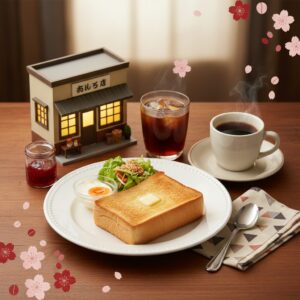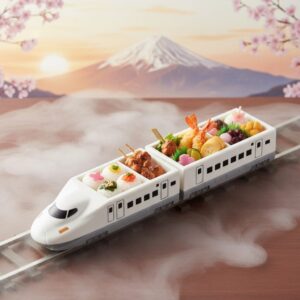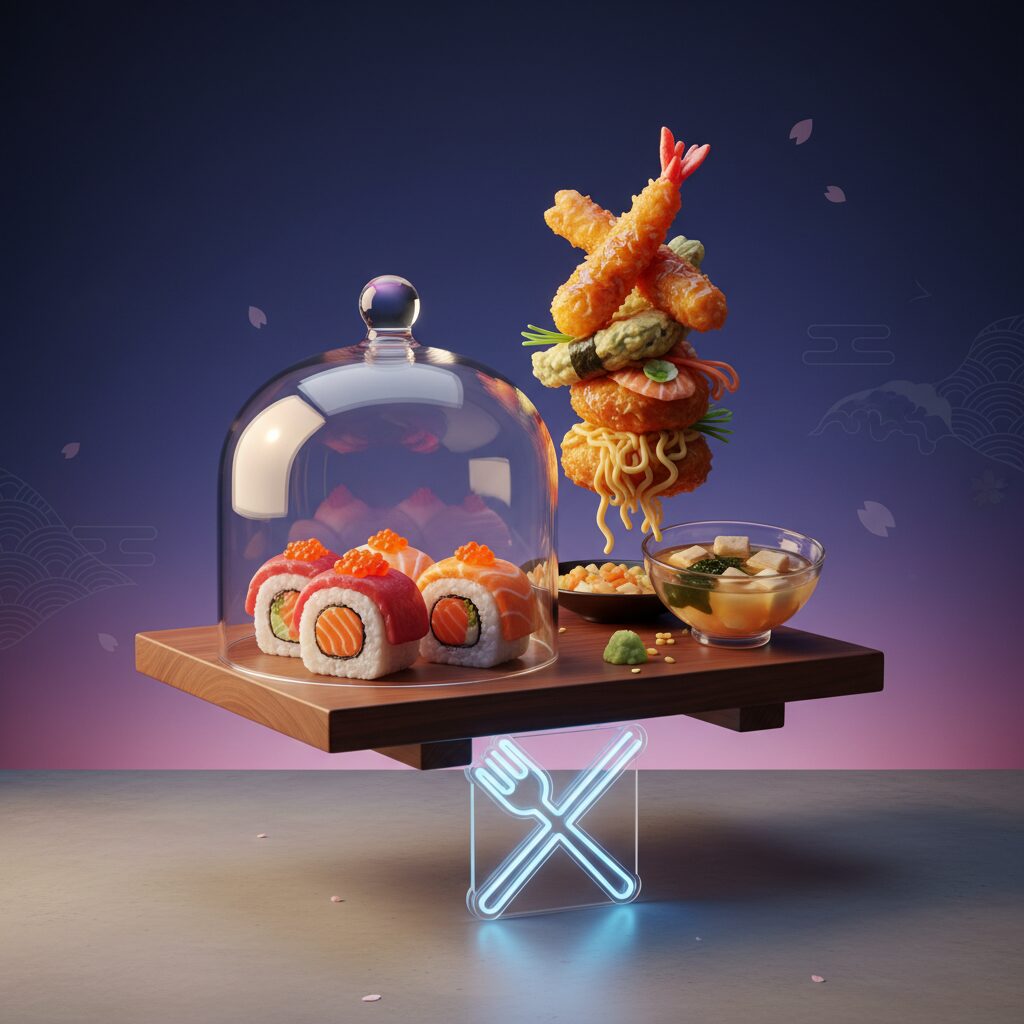
Walk down almost any bustling street in Japan, from a major Tokyo thoroughfare to a sleepy neighborhood shotengai (shopping arcade), and you’ll see them. Glistening in glass cases, positioned just outside the restaurant entrance, is a full-course meal that will never be eaten. A bowl of ramen, its pork slices glistening with a fatty sheen, noodles frozen mid-lift by a pair of floating chopsticks. A plate of spaghetti Napolitan, its ketchup-based sauce impossibly vibrant. A perfect slice of strawberry shortcake, its cream looking perpetually light and freshly whipped. This is the world of shokuhin sampuru, Japan’s unnervingly realistic fake food models. For the first-time visitor, the reaction is often a double-take, a moment of genuine confusion followed by awe. Is it real? It can’t be. But it looks more real than real food.
It’s easy to dismiss these plastic sculptures as a quirky bit of Japanese kitsch, a practical tool for tourists who can’t read the menu. And they are that, of course. Pointing at a model and saying “Kore, kudasai” (“This one, please”) is a universally understood transaction. But to leave the analysis there is to miss the point entirely. Shokuhin sampuru is far more than a communication aid. It’s a century-old art form born from a moment of profound cultural exchange, a sophisticated psychological tool that manages customer expectations with surgical precision, and a testament to the Japanese spirit of shokunin craftsmanship. It’s a silent contract between the restaurant and the diner, a tangible promise of the meal to come. Understanding these plastic dishes means understanding a deeper layer of Japanese commercial culture, one where clarity, honesty, and visual perfection are paramount. This isn’t just about showing you what’s on the menu; it’s about eliminating the anxiety of choice and delivering on a meticulously presented promise.
This exploration of shokuhin sampuru’s intricacies not only highlights the artistry of Japanese craftsmanship but also resonates with the cultural depth found in itadakimasu, Japan’s most profound mealtime blessing, enriching our overall culinary narrative.
A Solution Born from Misunderstanding
The story of shokuhin sampuru begins, like many intriguing Japanese cultural fusions, in the early 20th century. During the Taisho (1912-1926) and early Showa (1926-1989) periods, Japan was undergoing rapid modernization and Westernization. Cafes and department store cafeterias started serving yoshoku—Western-style dishes modified for the Japanese taste. Items such as omu-raisu (omelet rice), kare-raisu (curry rice), and korokke (croquettes) were new and exciting. However, they also posed a challenge. For people used to rice, fish, and pickled vegetables, the menu names were unfamiliar. What exactly was a “cutlet”? How large was an “omelet”?
A restaurateur in Osaka, puzzled about how to explain these unfamiliar dishes to his confused customers, found a solution in a craftsman from Gifu Prefecture named Takizo Iwasaki. In the 1930s, Iwasaki, who had been experimenting with wax models for educational use, experienced a moment of accidental inspiration. According to the story, a drop of hot wax fell into a puddle of water on his floor, forming a delicate, flower-like shape. He immediately recognized its potential. His first creation was a wax model of omu-raisu. It was so realistic that when he showed it to his wife, she couldn’t tell it was fake. Iwasaki realized he had discovered something significant. He established his company, Iwasaki Mokei Seizo, in 1932, and the industry was born.
At first, these models were crafted from paraffin wax, which was fragile and prone to melting under the heat of display case lights. But the concept was revolutionary. Suddenly, a restaurant could show, not just tell. They could present the exact size, composition, and arrangement of a dish. For Japanese diners, who greatly appreciate visual presentation (mitame) in their food, this was an ideal solution. It bridged the gap between the unfamiliar foreign word on the menu and the tangible meal that would arrive at their table. It was a communication tool that transcended language, created from a desire to make the foreign familiar and the daunting approachable.
From Wax to Vinyl: The Evolution of a Craft
What started with melting wax has transformed into a highly advanced artistic and industrial process. The transition from wax to polyvinyl chloride (PVC) in the latter half of the 20th century was revolutionary. This durable plastic didn’t melt, its colors remained vibrant longer, and it could capture even finer details. This shift marked the moment when shokuhin sampuru evolved from a clever craft into a true art form, fueled by the obsessive dedication of shokunin—master artisans.
Crafting a high-quality food model is a meticulous, labor-intensive endeavor that can take weeks. It is the opposite of mass production. The process usually begins with the restaurant sending the actual dish to be replicated to the sampuru factory. The artisans don’t rely on photographs; they work directly from the real thing.
The Molding Process
First, a mold is made. The various components of the dish—a piece of grilled salmon, a slice of tomato, a mound of rice—are precisely arranged and suspended in a container. Liquid silicone is poured over them and left to harden. Once set, the real food is carefully removed, leaving behind a perfect, incredibly detailed negative impression in the silicone. This mold captures every grain of rice, every flake of fish, and every seed on the tomato’s skin.
The Art of the Pour
Liquid PVC is then poured into these molds, often in multiple layers of varying colors to achieve a realistic appearance. For example, a piece of tuna sashimi might first receive a lighter red layer, followed by a deeper, blood-red hue to replicate the natural coloration of the fish. The pieces are then baked in an oven to cure the plastic.
The Master’s Touch
This is where genuine artistry takes place. Once the basic plastic forms are removed from their molds, they become essentially blank canvases. Artisans use airbrushes, fine-tipped paintbrushes, and proprietary techniques to bring them to life. They hand-paint the sear marks on a steak, the translucent shimmer on a piece of raw squid, and the delicate browning on a gyoza wrapper’s edges. Creating the fizz in a glass of beer involves special methods to trap air bubbles realistically within clear resin. The glossy, rich broth of a ramen bowl is created from a carefully mixed and poured layer of colored resin, designed to look perpetually hot and inviting. Even the condensation on a chilled glass is painstakingly replicated.
This craft isn’t merely about making something that looks like food from a distance. It strives for hyper-realism that can withstand close inspection. The artisans who create these works train for years, often focusing on specific food types. There are specialists in noodles, rice, and desserts. Their devotion exemplifies the Japanese pursuit of perfection in a chosen craft, no matter how niche. The final product is not just a cheap plastic replica; it is a handcrafted sculpture that can cost hundreds, sometimes thousands, of dollars.
The Silent Salesman: Why Sampuru Work So Well
The lasting success of shokuhin sampuru extends well beyond their artistic value. They serve as powerful psychological tools that directly influence our decision-making process, especially regarding food. Acting like silent salesmen, they alleviate customer concerns and stimulate appetite with a level of effectiveness that text-based menus can never achieve.
The Ultimate Expectation Manager
The most significant role of a food model is to establish a WYSIWYG—What You See Is What You Get—agreement. In many parts of the world, you choose from a menu described enticingly or depicted with professionally styled, often misleading, photographs. However, the dish arriving at your table is frequently a smaller, less polished version of that ideal. This discrepancy between expectation and reality can lead to disappointment.
Shokuhin sampuru eliminates that gap. The model displayed is not an idealized fantasy; it is a 1:1 scale replica of the exact dish you will receive. It shows you the portion size, the number of shrimp, and the precise arrangement of the pickles. It removes any uncertainty. This is especially important in Japanese culture, which highly values clarity, predictability, and avoiding trouble or inconvenience (meiwaku). By showing exactly what you’ll get, the restaurant manages your expectations upfront. There will be no surprises, no disappointment. This builds trust and fairness—core elements of Japanese service culture, or omotenashi.
Overcoming Choice Paralysis
A lengthy, text-heavy menu can be daunting. When faced with too many options, customers may experience choice paralysis, resulting in stress and sometimes a less satisfying choice. The display case serves as a curated visual guide. Restaurants highlight their most popular dishes, daily specials, and most visually attractive creations. The sampuru display effectively pre-sells these items, directing the customer’s attention and simplifying their decision-making. Your brain processes this visual information instantly. You don’t have to read and imagine; you simply see and desire. This speeds up the ordering process and subtly steers customers toward higher-margin or signature dishes.
The Primal Power of Visual Cues
Humans are inherently visual beings. We eat with our eyes first. Seeing a three-dimensional, perfectly rendered model of a delicious meal triggers a primal, Pavlovian response. The glistening sauce, the crispy texture of fried tempura, the vibrant colors of fresh vegetables—these visual cues stimulate appetite in a way words cannot. A photo might be effective, but a 3D object has a presence and tangibility that makes the dish feel more immediate and accessible. The sampuru doesn’t just inform you about an option; it actively makes you hungry for it. It transforms a potential passerby into a hungry customer stepping inside.
The Sampuru Economy and Its Heartland
While shokuhin sampuru can be seen throughout Japan, the industry’s core lies in a small, picturesque castle town nestled in the mountains of Gifu Prefecture called Gujo Hachiman. This town, with its clear, rushing canals, produces an overwhelming majority of all the fake food in Japan. It is home to Takizo Iwasaki’s original company headquarters, along with several other major manufacturers.
Strolling through Gujo Hachiman, you’ll find workshops and showrooms where artisans demonstrate their craft and visitors can even try making their own sampuru. These tourist-friendly workshops allow you to craft a piece of tempura out of wax and water or decorate a cupcake parfait. Such experiences highlight the great skill involved. Creating a lacy, delicate piece of tempura batter is surprisingly challenging and gives you a new appreciation for the masters who do this professionally.
The business model is highly specialized. Restaurants don’t simply order a generic “ramen” model from a catalog—they work directly with manufacturers. Often, chefs visit the factory or send their signature dishes to be carefully deconstructed and replicated with perfect accuracy. This bespoke service aims to produce a model that is an exact replica of the restaurant’s unique dish, down to the specific ceramic pattern of the serving bowl. This high level of customization explains the models’ high cost, representing a significant investment for restaurants. However, it’s an investment that pays off, serving as a permanent, 24/7 advertisement and an essential part of their storefront identity.
In recent years, the appeal of sampuru has grown beyond the restaurant world. Their artistry and quirky charm have turned them into a pop culture phenomenon. Now, you can purchase sampuru keychains, phone cases, USB drives disguised as sushi, and refrigerator magnets shaped like gyoza. They have become popular souvenirs—tangible and amusing pieces of modern Japanese culture to take home.
An Honest Illusion

In a world overwhelmed by digital filters and Photoshopped ads promising an unattainable perfection, there is something profoundly refreshing about the honesty of shokuhin sampuru. By its very nature, it is a form of deception—plastic masquerading as food. Yet, its aim is to achieve absolute transparency. It is an illusion serving the truth.
The continued presence of these models in the era of Instagram and digital menus highlights their lasting effectiveness. They represent a uniquely Japanese approach to universal challenges: how to communicate across language barriers, how to make a choice, and how to understand what you’re paying for. They reflect a cultural obsession with visual detail, a commitment to artisanal craftsmanship, and a customer service philosophy focused on clarity and comfort.
So, the next time you find yourself gazing into one of those glass cases, captivated by a gravity-defying noodle pull or a perfectly translucent lemon slice in a highball, pause for a moment. You’re not just viewing a clever menu; you’re witnessing a piece of art, a fragment of history, and a masterclass in psychological marketing. You’re beholding a delicious deception that, paradoxically, is one of the most honest things you’ll encounter all day.