Ask someone from North America or Europe to describe convenience store food, and you’ll likely get a grimace. The image that comes to mind is one of culinary compromise: leathery hot dogs sweating under a heat lamp, luridly colored slushies churning in a perpetually sticky machine, and bags of neon-dusted chips that offer crunch but little else. It’s food of last resort, a transaction born of desperation on a long road trip or a late-night study session. It’s cheap, it’s fast, and it’s almost universally understood to be a significant step down from a “real” meal.
Then, there is the Japanese convenience store, the konbini. Step inside, and that entire Western framework collapses. The familiar chime of the automatic door gives way not to an odor of stale coffee and disinfectant, but to a clean, neutral scent, perhaps punctuated by the savory aroma of fried chicken or a hint of dashi broth. The aisles are impeccably organized, the lighting is bright and even, and the food section is a universe unto itself. Here, the concept of “convenience food” is not an apology; it’s an art form. It’s a complex, highly efficient, and surprisingly sophisticated culinary ecosystem that challenges the very notion that speed must come at the expense of quality. The konbini is not just a place to grab a snack. It is a daily ritual, a cornerstone of the Japanese diet, and a quiet testament to a culture that believes even the most humble, accessible food deserves care and respect.
The innovative spirit of konbini food seamlessly mirrors Japan’s broader culinary excellence, a phenomenon also evident in the meticulous art of depachika cuisine.
The Unspoken Contract of Freshness

To truly understand konbini food, you must first grasp the logistics that support it. This is not a world of long-lasting preservatives and frozen-then-thawed mediocrity. The entire system revolves around an unwavering, almost fanatical dedication to freshness. This isn’t a marketing ploy; it’s a fundamental operational principle shaping the daily rhythm of every 7-Eleven, FamilyMart, and Lawson nationwide.
Most fresh products—the onigiri rice balls, bento boxes, sandwiches, and salads—are delivered not once but up to three times daily. A sophisticated fleet of temperature-controlled trucks travels the country on a precise schedule, ensuring that the bento you buy for lunch wasn’t made yesterday morning but likely just a few hours earlier. This continual restocking is a commitment: an unspoken agreement between the store and the customer that what you’re purchasing is at its freshest.
This dedication is especially evident in the handling of expiry dates. Food is carefully monitored, and items nearing their “best by” date are often marked with a discount sticker—a small but appreciated gesture for budget-conscious students and late-night workers. However, once that time expires, there is no leniency. The products are immediately removed from the shelves. While this might seem wasteful from an outsider’s perspective, it’s essential for maintaining trust. In a country where food safety and quality are paramount, konbini cannot risk being seen as a place that cuts corners. This philosophy reflects a broader Japanese culinary concept known as shun (旬), the celebration of ingredients at their absolute seasonal peak. Although a konbini oyakodon bento isn’t the same as a masterfully prepared plate of seasonal sashimi, the underlying ethos is similar: a commitment to consuming foods at their best, honoring freshness as a flavor in itself.
The Anatomy of a Perfect Konbini Meal
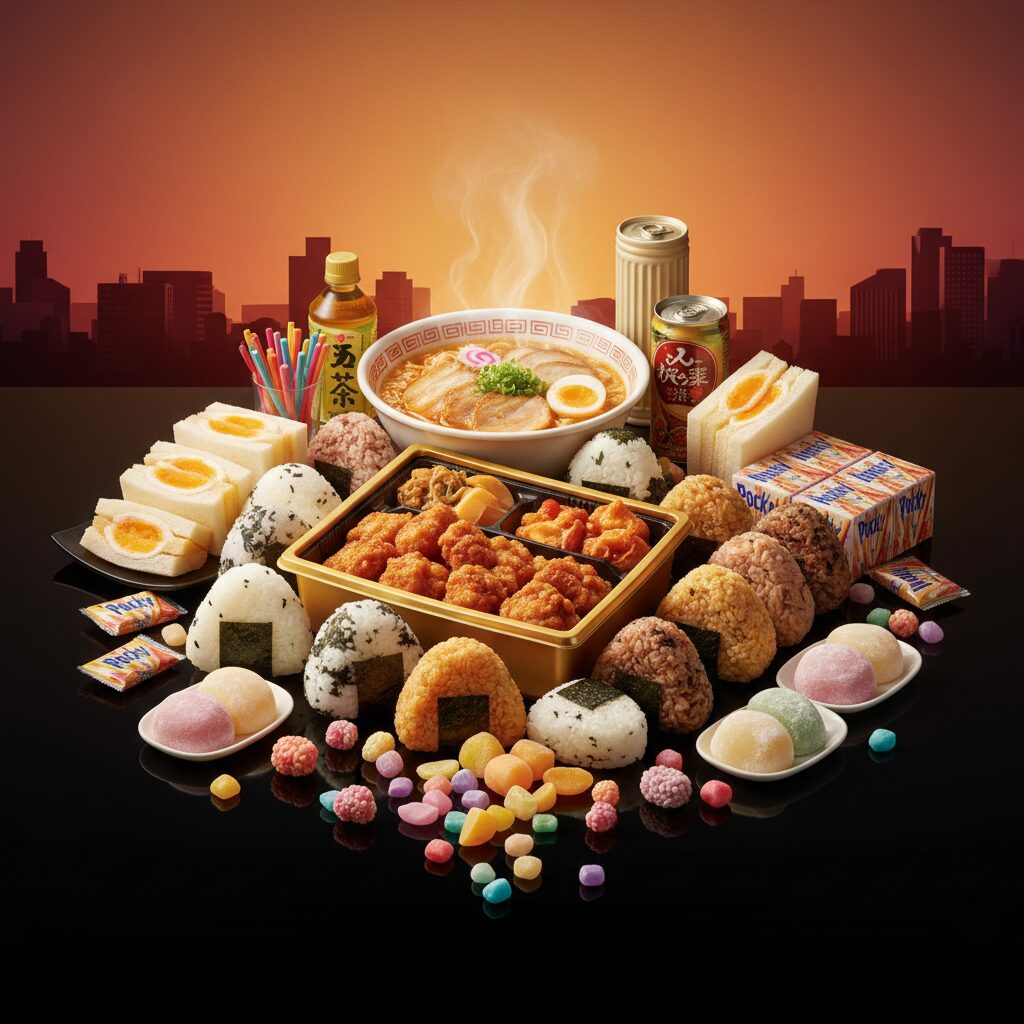
The vast variety of food available can be overwhelming, but it’s far from a random assortment. The offerings represent a carefully curated selection of Japanese culinary staples, each category prepared with remarkable precision. It’s entirely possible to create a complete, balanced, and truly delicious meal solely from konbini shelves.
Onigiri: The Soul of Portable Japan
The modest onigiri, or rice ball, stands as perhaps the most iconic konbini food. It’s much more than just a mass of rice. The rice used is high quality—fluffy, slightly sticky, and perfectly seasoned. The fillings range widely, from the timeless simplicity of salted plum (umeboshi) or cured salmon flakes (sha-ke) to more contemporary, intricate combinations like tuna with mayonnaise, seasoned cod roe (mentaiko), or savory beef.
What truly distinguishes konbini onigiri is its clever packaging. Many are wrapped in a special plastic film that keeps the crisp nori seaweed separate from the moist rice. Unwrapping involves a simple three-step process printed on the package—a small ritual in itself. The final pull wraps the nori around the rice, keeping it perfectly crisp and crackling, never soggy or limp. This small engineering marvel reflects a deep understanding of texture. It’s a design that enhances the eating experience, ensuring the first bite delivers the perfect contrast between crunchy seaweed and soft rice—a level of care rarely applied to a snack costing just over a dollar.
The Bento Box: A Balanced Universe in Miniature
Forget the sad, compartmentalized plastic trays of Western “TV dinners.” The konbini bento is a direct descendant of the traditional Japanese packed lunch, embodying the principle of a balanced meal. It’s more than just a main dish; it’s a complete ensemble. A typical bento features a bed of Japanese rice alongside a main protein—perhaps a breaded pork cutlet (tonkatsu), a piece of grilled mackerel glazed with teriyaki sauce, or a savory hamburg steak.
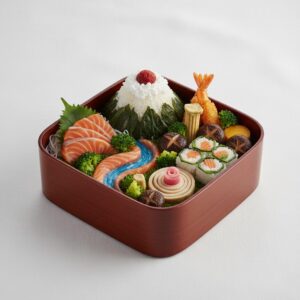
But the main dish is only part of the experience. Surrounding it are various small side dishes known as okazu. These might include pickled vegetables (tsukemono) for a crisp, acidic bite, a scoop of creamy potato salad, simmered hijiki seaweed, or a brightly colored piece of tamagoyaki (rolled omelet). Even inside a plastic container, there’s strict adherence to the principles of washoku (traditional Japanese cuisine): a harmony of flavors, colors, and cooking methods. There’s something fried, something simmered, something pickled. This variety ensures the meal is nutritionally balanced and appealing to the palate, avoiding flavor fatigue. It’s a genuine, thoughtfully arranged meal, designed to be microwaved in-store and enjoyed as a full lunch or dinner.
Sandwiches and Breads: The Fluffy Anomaly
At first glance, the sandwich section might appear as a nod to Western tastes, but it is a category thoroughly and brilliantly reinvented. The base of the Japanese sandwich, or sando, is shokupan—a pillowy, slightly sweet white bread that is extraordinarily soft and fluffy. Crusts are always carefully removed, a small detail that elevates the sandwich from rustic to refined.
The undisputed favorite is the tamago sando, or egg salad sandwich. It’s a cult classic for good reason. The filling isn’t a chunky, celery-filled salad; it’s a creamy, rich puree of hard-boiled egg yolks and premium Japanese mayonnaise (typically Kewpie, known for its richness and tanginess due to using only egg yolks). The result is pure, indulgent comfort. Other favorites include the katsu sando, featuring a crispy pork cutlet with tangy tonkatsu sauce, and the surprisingly delightful fruit sando with whipped cream and fresh strawberries or kiwi, blurring the line between meal and dessert.
Hot Foods Counter: The Scent of Welcome
Located near the cashier, the heated display case radiates warmth and inviting aromas, especially on chilly days. In winter, it becomes the realm of oden, a classic Japanese comfort food. A large, sectioned vat contains gently simmering dashi broth where various ingredients cook slowly. Customers select their favorites, handing a bowl to the clerk who deftly retrieves their choices: a thick slice of daikon radish, translucent and soaked with broth; a springy fish cake; a boiled egg; or a fried tofu pouch (kinchaku). It’s a deeply traditional, communal food experience, conveniently available 24/7.
Year-round, the counter offers an impressive selection of fried foods. This isn’t the greasy, generic chicken sold at gas stations. Each chain boasts its own signature boneless fried chicken, like FamilyMart’s wildly popular “FamiChiki” or Lawson’s “L-Chiki.” These are remarkably juicy, with a crisp, seasoned coating that’s more savory than salty. Nearby, you’ll find crispy croquettes (korokke), skewered meat (kushikatsu), and American-style corn dogs that somehow taste better here. It’s the perfect hot, savory snack to accompany a cold beer or simply to provide a moment of indulgence during the day.
A Ritual for Every Occasion

Konbini food is more than just a selection of well-crafted products; it’s deeply embedded in everyday life, offering a tailored solution for countless situations. It acts as a quiet companion, adjusting to the needs of each individual.
For the salaryman returning home after a tough day of overtime, the konbini is the last stop before arriving home. It’s a place to pick up a cold can of beer or a chuhai alongside a piece of FamiChiki. This isn’t a full meal; rather, it’s a ritual of relaxation, a personal reward savored on the train platform or during the walk home, creating a buffer between the stress of work and the demands of family life.
For the university student pulling all-nighters studying for finals, the konbini serves as a 24-hour lifeline. A high-caffeine energy drink provides the necessary boost, while a katsudon bento delivers both nourishment and superstition—the word katsu (カツ) sounds like the verb “to win” (勝つ), making it a popular lucky meal before exams. A sweet melon-pan bread offers a sugary morale lift during the lonely early morning hours.
For the increasing number of people who live and eat alone—a lifestyle known as ohitorisama—the konbini is an ideal solution. It provides a wide variety of high-quality, single-portion meals that remove the hassle of cooking for one and the discomfort of dining solo in a restaurant. You can find elegant single-serving pasta dishes, cheese-topped gratins, and chilled soba noodle sets that feel like a fulfilling, proper meal without any of the effort or social awkwardness.
For the early-morning commuter, the konbini experience is one of quiet efficiency. It’s a quick stop to grab a freshly brewed machine coffee—surprisingly good and very affordable—and an onigiri to eat discreetly en route to the station. It offers a simple, clean, and predictable start to the day, a brief moment of calm before the chaos of the morning rush hour.
In each of these cases, the konbini does more than just provide food. It delivers comfort, structure, and a solution perfectly suited to the pace of modern Japanese life.
The Konbini as a Third Place
Ultimately, the success and quality of konbini food are inseparable from the environment in which it is sold. The konbini itself serves as a vital “third place” in Japanese society, a crucial piece of social infrastructure situated between home and workplace. The food is the anchor, but the trust it inspires arises from the entire experience.
The stores are consistently clean. The staff, though often busy, remain professional and polite, their calls of “Irasshaimase!” (Welcome!) a constant, comforting refrain. This atmosphere of safety, predictability, and order lays the foundation for trust. You trust the freshness of the egg salad sandwich because the floors are spotless and the shelves are immaculately arranged. The quality of the food reflects the overall quality of the operation.
This is a place where you can do much more than just eat. You can pay your utility bills, buy concert tickets, print documents, send and receive packages, and use a clean restroom at 3 AM. The konbini is a hub, an essential part of the neighborhood. The food is the main reason people stop by multiple times a day, and this steady foot traffic sustains all the other services. The daily ritual of buying an onigiri or a coffee is what holds this entire community center together.
To dismiss konbini food as merely “fast food” misses the point entirely. It is the product of a system that has successfully reconciled the seemingly opposing forces of convenience and quality. It challenges the Western belief that food prepared quickly and sold cheaply must inevitably be a poor compromise. Here, under the steady, even glow of fluorescent lights, convenience doesn’t mean sacrificing freshness, flavor, or cultural significance. It means making a thoughtful, delicious, and deeply satisfying aspect of Japanese food culture accessible to everyone, at any hour of the day or night. It is a quiet culinary revolution hiding in plain sight.