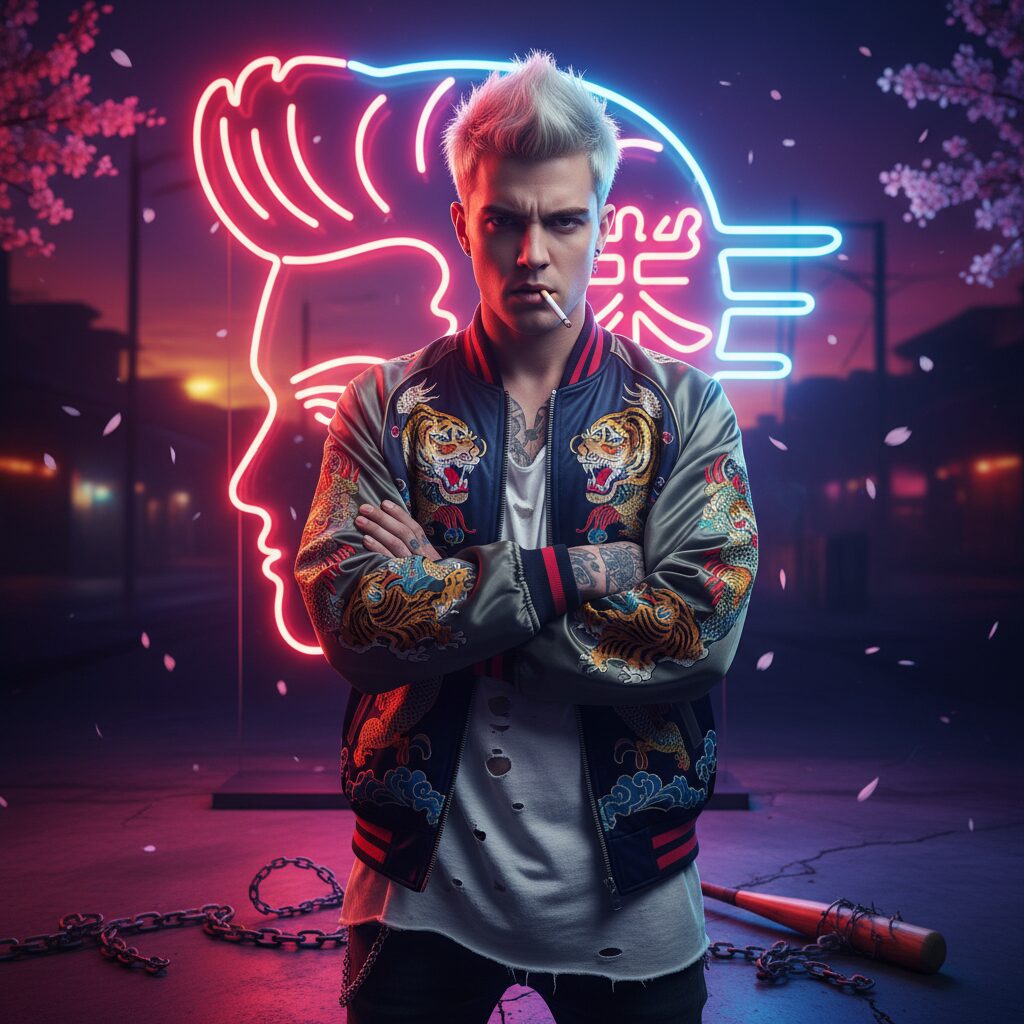
If you’ve spent any amount of time watching anime or reading manga, you’ve met him. He’s leaning against a school wall, hair slicked back into an impeccable pompadour, his black school uniform jacket draped over his shoulders like a cape. He might be chewing on a blade of grass, sporting a few facial scars, and addressing his superiors with a level of disrespect that would make a normal Japanese student break into a cold sweat. This is the Yankī, the classic Japanese delinquent, and he is an undeniable staple of Japanese fiction. From the hot-headed brawlers of Tokyo Revengers to the surprisingly noble thugs in Slam Dunk, the yankī trope is everywhere. But it begs the question: in a society so famously orderly and polite, why is this figure of rebellion so enduringly popular? Why does Japan’s pop culture have such a lasting love affair with its own bad boys? The answer isn’t just about a simple fascination with rule-breakers. It’s a story of post-war identity, a nostalgia for a bygone era of visceral passion, and the appeal of a surprisingly rigid moral code hiding beneath a tough exterior. To understand the yankī in your favorite anime, you first have to understand the yankī on the streets of 20th-century Japan.
His rebellious charm on screen is matched by another captivating subculture within Japan, as seen in the rise of oshi-katsu devotion, which reveals a deep commitment to fandom that fuels countless creative expressions.
Defining the Delinquent
Before we explore the history, let’s first clarify what a yankī truly is, as the term is more precise than simply ‘thug’ or ‘gangster.’ The classic image is a blend of specific, highly codified styles and behaviors. It’s a subculture with its own distinctive uniform. The most iconic feature is the hair. The gravity-defying pompadour, called a ‘regent’ hairstyle in Japan, was directly inspired by 1950s American rock-and-roll culture, especially stars like Elvis Presley. Another popular style is the punch perm, a tight, curly perm that signifies a readiness to endure pain for a unique look. Fashion plays an equally important role, often involving modifications to the standard Japanese school uniform, the gakuran. Yankī would wear oversized, long jackets and baggy pants, openly defying the neat, fitted uniforms of their peers. This wasn’t just a style choice; it was a visual rebellion against the system the uniform symbolized. Other distinctive traits include thin, arched eyebrows, carrying flat, thin school bags (pechanko kaban), and a unique way of squatting on their heels, a posture called ‘yankī-zuwari.’ It’s an entire aesthetic language crafted to express non-conformity and project an intimidating presence. Their behavior is similarly stylized. They speak in a rough, slurred dialect, show overt disdain for authority figures like teachers and police, and often settle disputes or claim territory through fistfights. Yet importantly, they are distinct from the yakuza, or organized crime. A yankī is a youth phenomenon, rooted in school life and teenage rebellion rather than professional criminality.
The American Shadow and Post-War Rebellion
The origins of the yankī are closely linked to Japan’s post-World War II era. The name itself is quite revealing. ‘Yankī’ is the Japanese adaptation of ‘Yankee,’ the American slang term. During the post-war occupation, American culture poured into Japan, bringing a dynamic mix of movies, music, and fashion. For a generation of Japanese youth raised amidst the ruins of a defeated empire and under the influence of a foreign power, American ‘cool’ was both captivating and attainable. The rebellious charm of actors like James Dean in Rebel Without a Cause and the raw energy of rock and roll provided a compelling alternative to the strict, traditional values upheld by their parents. The American greaser, with his leather jacket, slicked-back hair, and anti-authoritarian stance, became the template for a new form of Japanese youth rebellion. This was not merely an imitation of a style; it was an embrace of a defiant spirit in a country desperately striving to rebuild and maintain social harmony. By the 1970s and 80s, this spirit had grown and crystallized into its most famous form: the bōsōzoku. These were motorcycle gangs known for their customized, extraordinarily loud bikes, ornate embroidered jackets (tokkō-fuku), and large-scale street cruises often ending in confrontations with the police. The bōsōzoku embodied the yankī subculture at its height. They were a conspicuous and disruptive force, openly defying a society that demanded conformity, academic success, and a predictable corporate career. They rejected the ‘salaryman’ lifestyle, opting instead for brotherhood, territorial pride, and the exhilaration of the open road.
The Unspoken Code of the Yankī

This is where we reach the core reason why the yankī has become such a romanticized figure in fiction. It would be easy to write them off as mere delinquents, but that would completely miss the point. The yankī subculture, particularly in its fictionalized form, adheres to a fierce and unwavering internal moral code, often holding it above the laws of mainstream society. At its foundation lies absolute loyalty to one’s own group. A yankī will drop everything to support a friend in need, with betrayal of the crew representing the ultimate sin and defending its honor the highest calling. This fuels countless manga storylines: a friend encounters trouble with a rival gang, prompting the protagonist to rally the team for a climactic showdown. This is not simply senseless violence; it is a ritualized defense of their community. Additionally, there is a deeply ingrained principle of standing up for the weak and confronting injustice directly. Although they may be feared by their rivals, the classic fictional yankī often emerges as the unexpected protector of bullies’ victims, outcasts, and the helpless. They cannot tolerate witnessing unfair fights or abuses of power. They embody a raw, unpolished sense of justice. Corrupt teachers, sleazy businessmen, manipulative adults—these are the true antagonists in a yankī’s world, and physical retribution will be dealt without hesitation. This gives rise to the beloved “delinquent with a heart of gold” archetype. While he might fail grades and curse out his homeroom teacher, in critical moments his moral compass is more reliable than that of the straight-laced student council president. This duality is deeply compelling, suggesting that true strength and integrity are not found in blind obedience but in the courage to follow one’s own convictions, even if it means standing against the world.
From Menace to Nostalgia
By the late 1990s and into the 2000s, the real-life yankī and bōsōzoku subcultures began to decline. Stricter law enforcement, updated traffic regulations specifically targeting motorcycle gangs, and shifting social and economic conditions rendered their lifestyle increasingly unsustainable. The flashy rebel on a loud motorcycle started to seem less like a cool icon and more like a public nuisance from a bygone era. As the real yankī faded from the streets, their presence in manga and anime surged. They became symbols of nostalgia. For those who grew up in the 80s and 90s, these characters were a reminder of their own youth, a period that seemed more passionate, riskier, and perhaps more genuine. The yankī embodies a kind of fiery, straightforward masculinity often viewed as missing in modern Japan. They resolve conflicts with their fists, express their emotions loudly, and live and die by the loyalty of their friends. There is a simplicity and purity to their outlook that sharply contrasts with the complexities and anxieties of today’s life. In a highly digital and often isolating world, the yankī’s focus on direct confrontation and unbreakable physical bonds feels like a relic of a more connected era. For younger viewers who have never witnessed a real bōsōzoku gathering, the yankī is purely a fictional archetype. They provide an escape, a safe way to experience the excitement of rebellion without real-world consequences. Following a character who can fight his way through problems offers a cathartic fantasy for students facing intense pressures from exams, social hierarchies, and expectations of conformity. The yankī is free in a way most are not. He speaks his mind, acts on his desires, and submits to no one. That fantasy remains powerful and eternally appealing.
The Modern Yankī on Screen

The trope is not fixed; it has transformed over time. Early yankī manga like Be-Bop High School centered on the raw realities of gang fights and delinquent school life. Then emerged a wave of stories that portrayed the yankī as a hero. In Slam Dunk, the yankī protagonist Hanamichi Sakuragi directs his aggression and fighting spirit into basketball, discovering discipline and purpose through teamwork. In Gokusen, a young yakuza heiress becomes a high school teacher, using her underworld toughness and sincere honor code to reform a class full of yankī students. These narratives focus on redemption and finding a place for the yankī spirit within society. More recently, series such as Tokyo Revengers have framed the yankī subculture as the backdrop for intricate stories involving time travel and high-stakes drama, reigniting interest in the classic aesthetic for a new generation. The trope also lends itself well to comedy. Cromartie High School and The Way of the Househusband satirize the hyper-masculine, overly serious posturing of delinquents and yakuza, highlighting the absurdity that arises when their intense code is applied to mundane situations. This versatility is crucial to the yankī’s lasting presence as a trope. He can play the hero, the villain, the comic, or the tragic figure. Yet what remains unchanged is the core appeal: the tough exterior concealing a noble spirit, unwavering loyalty, and a fierce passion to live freely and by one’s own rules. He represents the untamed heart of Japanese pop culture, a reminder that even in the most orderly societies, there endures a profound respect for the honorable rebel.