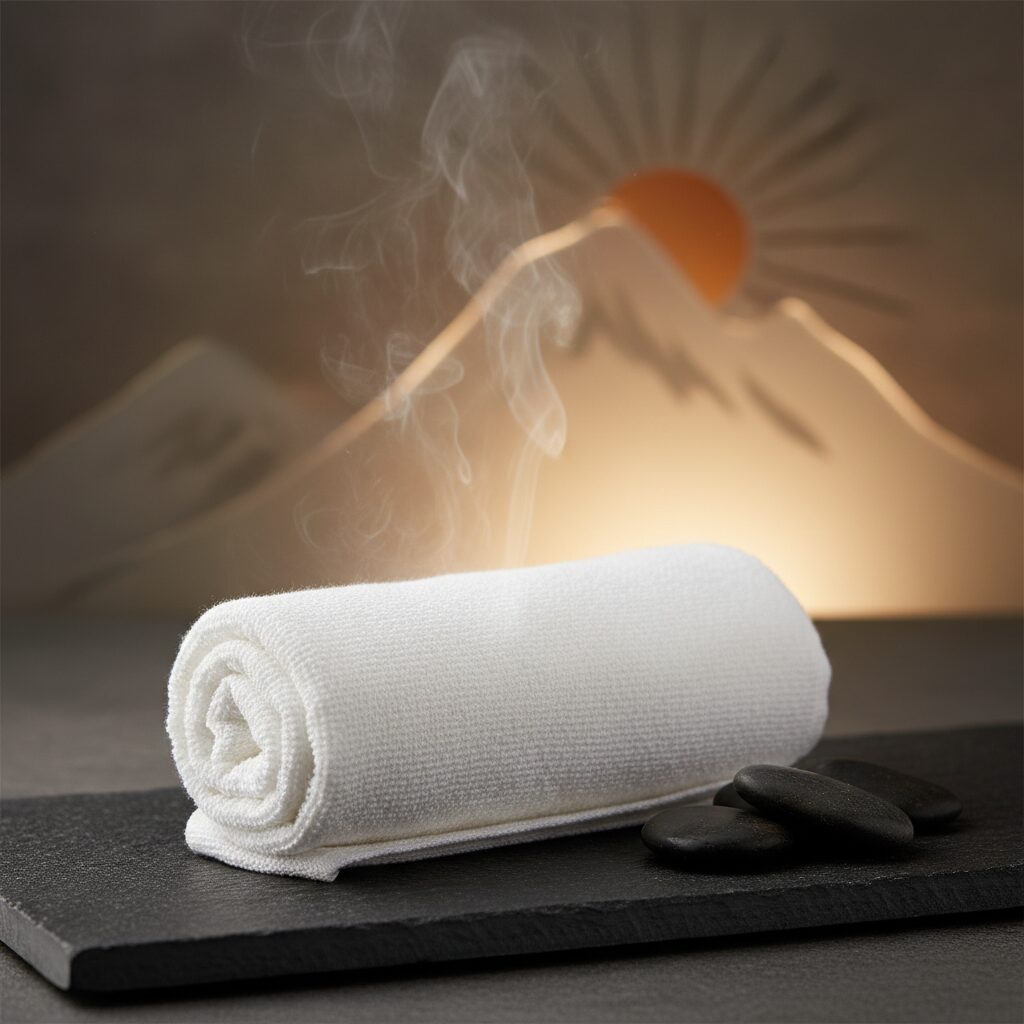
You’ve just ducked out of the humid Tokyo summer or a biting Kyoto winter wind, finding your way to a reserved table in a quiet restaurant. Before a menu is offered, before your drink order is taken, a small, tightly rolled object is placed before you. It might be steaming gently in the cool air, or it might feel refreshingly chilled to the touch. This is the oshibori, a damp towel, and it’s the most important gesture you’ll receive all evening. It’s easy to dismiss it as a simple wet napkin, a functional item for cleaning your hands. But that would be like calling a handshake just a touching of palms. In Japan, this humble towel is the opening act of hospitality, a non-verbal welcome that sets the entire tone for the experience to come. It’s a ritual steeped in history, a tangible piece of the philosophy of omotenashi—that uniquely Japanese brand of anticipatory, wholehearted hospitality. The oshibori is a moment of punctuation, a pause. It’s a signal to shed the world outside, to cleanse yourself both literally and mentally, and to prepare for the meal you are about to receive. It is the first, and perhaps most profound, statement that you are not just a customer, but an honored guest.
Embracing the refined gesture of the oshibori is just the beginning, as Japanese hospitality also shines through in the subtle konbini rituals that transform everyday encounters into cherished cultural experiences.
The Anatomy of a Gesture

Not all oshibori are made the same, and recognizing their subtle differences is the first step to valuing their importance. The oshibori itself is a study in careful design, created to respond to both the environment and the guest’s unspoken needs. The most traditional and rewarding form is the cloth towel. Usually crafted from soft, absorbent cotton, its quality can vary from a simple, thin weave at a casual ramen shop to a thick, plush towel at a high-end kaiseki restaurant. Its weight and texture are important. A heavy, well-crafted oshibori feels substantial in your hands, with its quality reflecting the establishment’s dedication to guest comfort.
The most crucial aspect, however, is its temperature. This is where the true attentiveness of the gesture becomes clear. In the warmer months, from late spring through early autumn, you are offered a tsumetai oshibori, a cold, damp towel. Often chilled and sometimes carrying a subtle, refreshing scent of mint or lemon, it serves as an immediate relief from the heat. The simple act of pressing the cool cloth to your wrists and the back of your neck can feel like a small miracle after walking through a crowded, sun-drenched street. By contrast, in colder seasons, you receive an atsui oshibori, a hot, steaming towel. Taken from a dedicated warmer, it provides a small pocket of warmth that thaws chilled fingers and offers a moment of deep comfort. This seasonal variation is more than just a pleasant touch; it is a fundamental expression of care, showing sensitivity to the guest’s physical state upon arrival.
Besides the classic cloth version, you’ll also find modern disposable oshibori, especially at convenience stores, fast-food chains, or on airplanes. These are usually pre-packaged, single-use towelettes made from non-woven fabric or paper. While they fulfill the basic purpose of cleaning your hands, the experience is entirely different. They lack the satisfying weight, soothing texture, and precise temperature control of their cloth counterparts. The disposable oshibori focuses on utility; the cloth oshibori embraces ritual.
The Silent Etiquette of Welcome
Like many customs in Japan, the use of the oshibori follows a set of unspoken rules and elegant choreography. Its presentation marks the beginning of this subtle ritual. The towel is rarely handed to you directly; instead, it is offered with both hands as a sign of respect and often placed on a small, dedicated tray called an oshibori-tate. These trays might be simple bamboo slats, refined lacquered wood, or intricate ceramic pieces, each enhancing the restaurant’s ambiance.
When you receive it, you should lift it and unroll it. Its primary, universally accepted purpose is to clean your hands. Take a moment to thoroughly wipe your fingers and palms. This is the essence of the ritual: to cleanse your hands before you touch the food. It’s a moment to center yourself and prepare for the meal.
Equally important is what you do not do with it. Although it may be tempting, especially on a cold day with a warm towel, wiping your face is generally considered impolite in a formal or mid-range restaurant. Doing so transforms the oshibori from a hand-cleaning tool into a personal washcloth. Nonetheless, you will often see Japanese businessmen doing this enthusiastically in a lively, casual izakaya after a long day at work. Context matters. As a guest seeking polite manners, it’s best to limit use to your hands. Under no circumstances should the oshibori be used as a napkin to wipe your mouth during the meal or, worse, to clean up a spill on the table. It has fulfilled its singular, noble role at the start of the meal; using it for ordinary cleaning would disrespect the gesture of hospitality it embodies.
After using it, fold or roll it back up neatly. Avoid crumpling it into a ball. Return it to its tray or fold and place it beside your place setting. It remains there throughout the meal, a quiet reminder of that initial act of hospitality.
Purity, Care, and a Traveler’s Respite

The oshibori is not a modern invention. Its origins are believed to date back to the Edo Period (1603-1868), an era of relative peace when domestic travel thrived. Inns and teahouses along major travel routes like the Tokaido Road would offer weary travelers a damp cloth. This was not merely for cleanliness; it represented a sincere act of care. Travelers arrived dusty and exhausted from their long journey on foot. The cloth, provided with a basin of water, offered immediate relief and refreshment, allowing them to wipe away the grime of the road before settling in. It was a gesture that conveyed, “Your journey has ended. Rest now. You are cared for.”
This history underscores its connection to a deeper cultural concept: purity. In the native Shinto faith, purification rituals, or kiyomeru, are essential. Before entering a shrine, visitors cleanse their hands and mouth at a water basin called a chōzuya. This act symbolically separates the ordinary world from the sacred space inside. The oshibori serves as a kind of miniature, secular version of this ritual. It is a cleansing act that marks the transition from the outside world to the focused experience of the meal. It purifies the hands that will receive the food, fostering a sense of readiness and respect for the chef’s creation.
Ultimately, the oshibori is one of the purest expressions of omotenashi. This concept is often translated as “hospitality,” but that term does not fully capture its depth. Omotenashi is a selfless, intuitive form of service that anticipates needs before they are voiced. A hot towel appears on a cold day without your request. A cold one materializes in the summer humidity because your host knows it will bring comfort. It is a proactive gesture, a form of communication without words. It shows that your host has considered your well-being from the moment you entered, setting a meaningful tone for the entire dining experience.
The Hidden Industry Behind the Towel
For a gesture deeply rooted in tradition, the modern oshibori is maintained by an impressively efficient and invisible industry. Most restaurants in Japan do not wash their own towels. Instead, they subscribe to one of the numerous oshibori rental services, known as kashi-oshibori.
These companies operate on a vast scale. Daily, their fleets of small trucks navigate crowded city streets, delivering crates of fresh, individually wrapped oshibori to thousands of clients, ranging from tiny noodle shops to large hotel restaurants. Simultaneously, they collect the used towels from the previous day. Back at the facility, an industrial process takes place. The towels are sorted, treated for stains, and washed in massive machines at high temperatures. They are then sanitized, often using chlorine-based solutions and sometimes UV light, to comply with Japan’s strict public health standards. Finally, they are carefully folded or rolled, sealed in plastic to preserve moisture and hygiene, and prepped for the next day’s delivery.
This system forms a cornerstone of the Japanese service economy. It enables even the smallest neighborhood eatery to offer consistently clean, high-quality cloth towels to every guest without the logistical challenges of in-house laundering. It also establishes a foundation of trust. Customers are assured that the towel they use has been professionally sanitized, a crucial aspect in a culture that highly values public hygiene. This unseen network of collection, cleaning, and delivery allows this intimate, traditional gesture to be performed flawlessly millions of times daily across the country.
The Future of the First Welcome

In modern Japan, the cloth oshibori is facing an uncertain future. The pressures of cost and convenience have prompted many businesses, especially international fast-food chains and budget-friendly eateries, to switch to disposable paper towels. These are cheaper, require no rental service, and generate less laundry. Functionally, they serve their purpose. However, with each cloth towel replaced by a paper one, a small yet meaningful part of the cultural ritual disappears.
The experience changes fundamentally. There is no sensory pleasure in tearing open a plastic packet and wiping your hands with a flimsy, chemically scented paper. The comforting weight, soothing temperature, and tactile satisfaction of the cloth are all missing. The act becomes less about genuine hospitality and more about basic hygiene, shifting the interaction from host and guest to vendor and customer.
Yet, this trend has also transformed the cloth oshibori into a subtle symbol of quality. In an increasingly fast-paced world, restaurants that continue to offer a proper cloth towel are making a conscious statement. They signal their dedication to traditional service standards, attention to detail, and commitment to the full guest experience. Entering an establishment and receiving a thick, perfectly heated oshibori now feels like a more special welcome. It’s a declaration that the small comforts matter, promising that the details in food, drink, and service will be cared for with the same intentionality.
So, the next time you find yourself in Japan and a small, rolled towel is placed before you, take a moment. Appreciate its temperature, texture, and clean scent. Recognize that it’s not just a wet wipe. It is the heir of a centuries-old tradition of caring for travelers. It is a ritual of purification. It is the first unspoken word in a long and beautiful conversation about hospitality, a silent promise that you are in good hands.