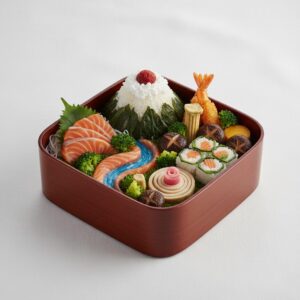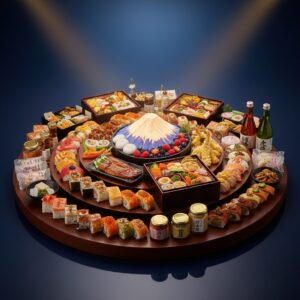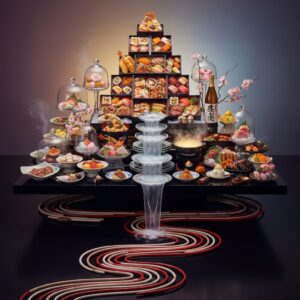
Picture this: you’re standing in the controlled chaos of a major Japanese train station. It could be Tokyo Station, a sprawling subterranean city in itself, or the elegant, modern expanse of Kyoto’s hub. The digital departure boards click over with satisfying precision, Shinkansen bullet trains glide to their platforms like white serpents, and rivers of people flow with an unspoken, collective purpose. Amidst this symphony of movement, you spot it. A brightly lit kiosk, or perhaps an entire shop, filled with a kaleidoscopic array of boxes. They are stacked neatly, wrapped in beautiful paper, adorned with striking calligraphy and enticing photographs. This is the world of ekiben, and you’re about to discover that these are not just lunchboxes. They are edible postcards, portable museums of regional pride, and a core part of the ritual of travel in Japan.
The word itself is a simple portmanteau: eki (駅), meaning station, and bento (弁当), the ubiquitous Japanese packed lunch. A station lunchbox. On the surface, it’s a straightforward concept, born of necessity. But to leave the definition there is like calling a vineyard just a patch of grapes. The reality is far richer, more complex, and deeply woven into the nation’s cultural fabric. An ekiben isn’t just food you happen to eat on a train; it’s a culinary experience designed specifically for the journey. It transforms the act of transit from a simple A-to-B into a destination in itself. It is a container not just of rice and fish, but of history, identity, and the very essence of a place. So, why does this seemingly simple meal carry so much weight? The answer lies in how it perfectly captures Japan’s obsession with regionality, seasonality, craftsmanship, and the art of turning a mundane moment into something memorable.
The meticulous care seen in ekiben mirrors the attention to detail evident in Japan’s office souvenir culture, where even everyday tokens tell stories of regional pride and heritage.
The Birth of a Ritual: How the Railway Forged a Culinary Tradition
To grasp the importance of ekiben, you need to look back to the beginning of train travel in Japan. In the late 19th century, during the Meiji Restoration, the nation was rapidly moving toward modernity. Railways served as a powerful emblem of this progress, connecting a country of isolated feudal domains into a unified, industrializing state. However, these early train journeys were long and demanding. A trip that today takes two and a half hours on the Shinkansen could once have taken a whole day or more. Dining cars were a rare luxury, and passengers needed nourishment.
A Marriage of Convenience and Craft
The most commonly accepted origin story of the ekiben dates back to 1885 at Utsunomiya Station in Tochigi Prefecture, a stop on one of Japan’s first major rail lines. A local innkeeper began selling a simple meal to passengers through the train windows. It consisted of two onigiri (rice balls) seasoned with sesame and salt, accompanied by a few slices of bright yellow takuan (pickled daikon radish), all wrapped in a modest bamboo sheath. It was simple, portable, and affordable—a practical solution to a problem.
This basic formula—rice, a main protein or vegetable, and pickles—became the standard. As the rail network grew, so did the concept. Local food vendors at stations across the country saw an opportunity. They weren’t just selling food; they were offering a taste of their hometown to a passing audience. The train window became a marketplace, a brief point of contact where travelers could buy a piece of local culture. The ekiben was born not in a fancy kitchen, but on the station platform, a product of practicality and emerging regional entrepreneurship.
From Necessity to Nostalgia
As the decades passed and train technology advanced, the role of the ekiben evolved. Journeys became faster and more comfortable, and dining cars were introduced. Yet, the ekiben didn’t just survive; it flourished. It experienced a vital transformation from a simple necessity to a cherished travel ritual. It became an object of nostalgia and a beloved tradition.
The magic lies in the sensory experience. There is a special joy in settling into your seat, watching the urban scenery fade into rice paddies and mountains, and ceremoniously unwrapping your chosen meal. The rustling of the paper, the lifting of the lid to reveal a carefully arranged display of colors and textures—it’s a moment of intentional enjoyment. Unlike grabbing a stale sandwich to eat quickly, the ekiben invites a pause. It aligns your personal journey with the culinary story of the region you’re passing through. That connection, between the food in your hands and the landscape outside your window, creates a lasting memory. For many Japanese people, the taste of a particular ekiben is deeply tied to childhood holidays, family trips, or solo adventures. It’s edible nostalgia.
A Culinary Map of Japan
The true brilliance of the ekiben phenomenon lies in how it serves as a comprehensive, delicious map of Japan’s diverse culinary landscape. The country is fiercely regional, with each prefecture and even individual towns boasting their own meibutsu (famous local products) and tokusanhin (regional specialties). This strong local pride finds its highest expression in the ekiben. The rivalry among vendors is friendly yet intense, each aiming to craft a bento that perfectly captures the flavor of their home.
Terroir on the Tracks: Capturing a Region in a Box
An ekiben is a statement of identity. It declares, “This is who we are. This is what our land and sea provide. This is what we eat here.” A vendor from a coastal town in Hokkaido won’t feature wagyu from Kobe. Instead, they will fill their box with the freshest uni, crab, and scallops imaginable. A producer in the mountains of Gunma will highlight local mushrooms, river fish, and vegetables grown in volcanic soil. The ekiben becomes a miniature ambassador, offering a curated taste of the local terroir. For travelers, it provides an incredibly efficient and enjoyable way to sample the country’s food culture. In theory, you could eat your way across Japan without ever leaving the train system.
Hokkaido: The Bounty of the North
Japan’s northernmost island is a haven for fresh seafood and hearty agricultural products, and its ekiben directly reflects this abundance. One of the most famous and deceptively simple examples is the Ika Meshi from Mori Station. It consists of whole squid simmered in a sweet and savory soy-based broth, then stuffed with glutinous rice. This has been a staple since the 1940s, a testament to the timeless appeal of a perfectly crafted local specialty. Further north, at stations like Sapporo and Asahikawa, you’ll find luxurious kaisen bento overflowing with glistening salmon roe (ikura), sweet scallops (hotate), creamy sea urchin (uni), and thick chunks of crab meat, all artfully arranged over vinegared rice. Eating one of these is like breathing in the cold, clear air of the northern seas.
Honshu’s Heartland: Rice, Mountains, and Sea
Japan’s main island offers a staggering variety of flavors. In the northeast, Sendai Station is famous for its Gyutan Bento. This box features expertly grilled slices of beef tongue—the city’s signature dish—laid over a bed of barley rice. It even includes a clever self-heating mechanism; a simple pull-string triggers a chemical reaction that steams the meal hot within minutes, releasing an irresistible, savory aroma. It’s a brilliant piece of engineering that enhances the entire experience.
Travel west to the Japan Sea coast, and at Toyama Station, you’ll find Masu no Sushi. This isn’t your typical nigiri; it features thin slices of cured trout pressed onto a circular bed of sushi rice, then tightly wrapped in fragrant bamboo leaves. The act of unwrapping and slicing it like a cake is part of its unique charm. Over in the mountains of Gunma Prefecture, at the now-defunct Yokokawa Station, the iconic ekiben Toge no Kamameshi was born. Served in a heavy, reusable ceramic kama pot, it contains seasoned rice cooked with chicken, shiitake mushrooms, chestnuts, and bamboo shoots. It’s warm, comforting, and rustic. The fact that you get to keep the distinctive pot has made it one of the most beloved ekiben in the country—both a souvenir and a meal in one.
Kyushu: Southern Comfort and Volcanic Flavors
Down in Kyushu, the southern island, the flavors grow bolder and warmer. Fukuoka, a city famed for its food culture, offers the classic Kashiwa Meshi. This is Japanese comfort food at its best: rice cooked in a savory chicken broth and topped with finely shredded chicken, thin strips of cooked egg, and nori seaweed. It’s a humble yet deeply satisfying meal that tastes like home. Stations in the region also showcase local specialties such as spicy cod roe (mentaiko) or high-quality pork from Kagoshima. Each box tells a unique story of the island’s rich agricultural and maritime heritage.
More Than Just Food: The Art and Experience of Ekiben
While the contents are crucial, what truly enhances the ekiben is the complete experience that surrounds it. This encompasses the artistry of its packaging, the ritual involved in choosing it, and the mindful act of savoring it. The Japanese aesthetic sensibility, which cherishes detail, presentation, and thoughtfulness, is fully expressed.
The Art of the Container
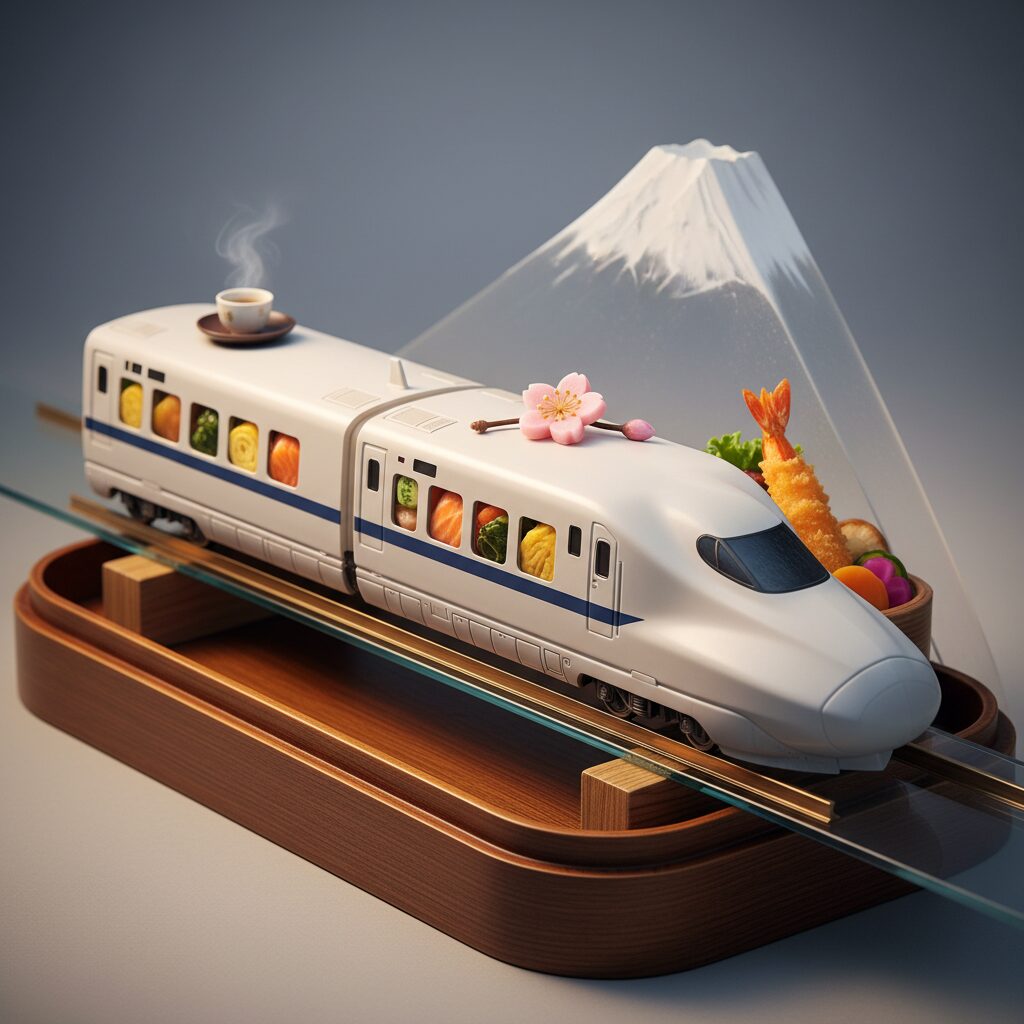
The packaging of an ekiben is much more than just a container; it represents the opening chapter of the story. Its design is a key element of the appeal. You’ll encounter boxes wrapped in beautifully printed washi paper featuring local landmarks or historical figures. Some are crafted from thin, fragrant cedar wood that lends a subtle aroma to the rice. Others are cleverly shaped to resemble their contents—a daruma doll, a crab, or even a Shinkansen train, a consistent favorite among children.
The aforementioned Toge no Kamameshi pot exemplifies packaging as a lasting keepsake. This emphasis on presentation serves several purposes. It catches the eye in a busy marketplace, builds anticipation, and transforms a disposable item into something treasured. The container promises the quality and care inside, assuring you that this is not merely fast food, but a carefully prepared meal.
The Ritual of Choosing and Eating
For many, the journey starts long before boarding the train. It begins at the ekiben-ya, specialty shops found in every major station. Entering one is like stepping into a culinary library. Walls are lined with hundreds of options, each accompanied by a sample box or a vivid photo. There are nationwide best-sellers alongside strictly local, limited-edition selections. The act of choosing is a vital part of the enjoyment. Do you go for a classic favorite? Or do you take a chance on something new, a taste from a region you’ve never visited? It’s a moment of delightful indecision.
Once on the train, the ritual continues. There is a perfect moment to start—usually after the train has left the city behind and the scenery has become more pastoral. You clear your tray table, carefully untie the string or remove the paper sleeve, and lift the lid. The reveal is a brief moment of joy. Inside, the food is not casually assembled. It is arranged with an artist’s eye for color, balance, and harmony. Each ingredient is given its own space, creating a miniature, edible landscape. This careful arrangement is a hallmark of Japanese cuisine and reflects a deep respect for the ingredients and the person who will enjoy the meal. It transforms a simple lunch into a moment of quiet reflection and appreciation.
The Future of a Traveling Tradition
In an era of ever-faster trains and an increasing number of convenience stores, the humble ekiben faces new challenges. When a trip between Tokyo and Osaka takes just over two hours, is there still room for a leisurely meal? And when a 500-yen onigiri set from a konbini is just steps away, will people still be willing to pay three or four times that price for an elaborate bento?
Challenges in a Changing World
The industry is not exempt from the pressures of modern life. The Shinkansen’s remarkable efficiency is, paradoxically, a threat to the tradition of eating on board. Rural depopulation also means that some small, family-run ekiben producers at quiet local stations have struggled to survive, taking with them generations of culinary heritage. The rise of convenient, affordable alternatives has undoubtedly created tough competition. Yet, the ekiben has shown remarkable resilience, adapting to the times while preserving its essential character.
Innovation and Preservation
Rather than disappearing, the ekiben world is evolving. Renowned chefs and restaurants now collaborate with producers to craft high-end, limited-edition ekiben. The aforementioned self-heating boxes offer a brilliant example of blending tradition with modern convenience. Additionally, the ekiben has attracted a new and enthusiastic following among foreign tourists, who view it as an authentic and accessible way to experience Japanese food culture.
Perhaps the greatest innovation has been taking the ekiben off the train. Large ekiben fairs, held regularly in major department stores, have become major events. These fairs bring hundreds of varieties from across the country to a single location, allowing people in Tokyo or Osaka to sample famous bentos from Kyushu or Hokkaido without leaving the city. It’s a clever strategy that transforms the ekiben from a travel necessity into a destination product, a gourmet item to be sought out and enjoyed.
The Unspoken Answer in the Box

So, we return to the fundamental question: why does this lunchbox hold such significance? Because an ekiben is a microcosm of the finest aspects of Japanese culture, all beautifully contained within a single, elegant box.
It reflects a profound connection to place and the importance of one’s hometown, or furusato. It demonstrates a deep respect for seasonality, highlighting ingredients at their peak in that specific region, at that exact time of year. It embodies the spirit of omotenashi—wholehearted hospitality—in its meticulous preparation and exquisite presentation, offering care to the anonymous traveler.
Ultimately, the ekiben transforms the impersonal nature of modern travel into something deeply intimate. As you eat, you are literally consuming the identity of a region, engaging with its history and culture. You are not merely a passenger passing through a landscape; you are a guest receiving the very best that landscape has to offer. The simple act of eating a station lunchbox becomes a rich, meaningful, and delightfully flavorful journey in itself.