You’ve been to Japan. Maybe a few times. You’ve dutifully eaten ramen in winter and shaved ice in summer. You’ve nodded knowingly when someone mentions that Japanese food is “very seasonal.” You get it. Or, at least, you think you do. The Western world has embraced seasonality, after all. We have farmers’ markets, farm-to-table restaurants, and we know that strawberries taste better in June than in December. But to equate that with the Japanese concept of shun (旬) is like comparing a pleasant stroll in a park to a multi-day mountain pilgrimage. They both involve walking, but their purpose, their depth, and their impact on the soul are worlds apart.
This isn’t about freshness. Not really. Freshness is merely the entry fee, the baseline expectation. Shun is the silent, profound rhythm that dictates the entire philosophy of Japanese cuisine. It’s a way of eating that is simultaneously a way of marking time, of honouring nature, and of understanding the beautiful, bittersweet transience of life itself. It’s the reason why a simple grilled fish in October can feel more satisfying, more right, than the most elaborate Michelin-starred meal out of season. For the traveler who wants to go deeper, understanding shun is the key that unlocks not just the food, but a fundamental aspect of the Japanese worldview. It’s the ‘aha!’ moment hiding in plain sight on your plate.
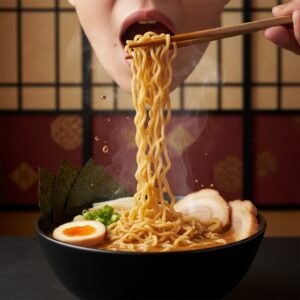
This deep appreciation for seasonal authenticity finds a vivid expression in the culinary art of grumpy ramen masters, who transform each bowl into a soulful celebration of shun.
The Western Illusion of “Seasonal”

Let’s be honest about our own idea of seasonality. For most of us, it’s more of a loose guideline, a suggestion. It means picking tomatoes that look slightly redder in August or perhaps paying extra for the first asparagus of spring. But modern logistics have smoothed our seasons into a year-round plateau of availability. We can find Chilean grapes in February and Mexican avocados in November. “Fresh” has become synonymous with “not frozen” or “recently transported,” a technical definition rather than a temporal one.
In Japan, this perspective is completely foreign to the traditional culinary mindset. Shun isn’t a gentle recommendation; it’s an organizing principle. It marks a fiercely specific, often brief window when an ingredient is at its absolute peak. This isn’t just about optimal flavor. It encompasses peak nutrition, peak aroma, peak texture, and peak cultural significance. A daikon radish harvested from the frosty winter soil is fundamentally different from one grown in the milder autumn; it’s sweeter, denser, and carries the energy of the cold. A Pacific saury (sanma) in September is plump with fat for the approaching winter, its silvery skin ready to crisp over a flame. Eating it in July would be, for a traditional Japanese chef, not just a culinary error but a form of temporal dissonance—a note played off-key.
This isn’t about food snobbery. It’s a deep, ingrained respect for the integrity of the ingredient and the natural cycle that brought it forth. The Japanese chef’s aim isn’t to manipulate an ingredient with elaborate sauces and techniques, but to let the ingredient in its perfect shun moment reveal its true essence with minimal intervention. The chef serves as a conduit, not a magician.
The Three Acts of a Season: Understanding Shun’s Life Cycle
The true revelation, extending beyond a simple farmer’s market calendar, is that shun is not just a single moment in time. It is a story with a beginning, middle, and end. The Japanese palate is so finely tuned to this cycle that it recognizes and honors three distinct stages for many ingredients: hashiri, sakari, and nagori.
Hashiri: The Excitement of the First Taste
Hashiri (走り) means “running” and denotes the first arrival of an ingredient at the very start of its season. Consider the first bonito (hatsu-gatsuo) of the year, a fish so revered during the Edo period that people would say, “I’d pawn my wife for a taste of hatsu-gatsuo.” It remains a status symbol—a flavor full of potential.
Ingredients in their hashiri stage are not always at their peak flavor. That initial bonito is leaner than its autumn counterpart. The first bamboo shoots (takenoko) may be smaller and more delicate in flavor. So what drives the excitement? Hashiri is all about anticipation. It embodies the flavor of hope. It’s the culinary equivalent of the first cherry blossom bud—not the full, spectacular bloom, but its promise. Eating hashiri is a celebration, a welcome to the new season. It carries a fresh, vibrant, almost green energy. The premium paid is not for richness but for the privilege of being among the first to witness nature’s seasonal shift. It’s a taste that links you to the future.
Sakari: The Peak of Excellence
Sakari (盛り) marks the heart of the season, the moment of full maturity. This is the phase most people—Japanese and foreigners alike—associate with the word “seasonal.” The ingredient is at its absolute best in every aspect. It’s abundant, affordable, and boasts the most balanced, robust flavor and nutritional quality.
The autumn bonito is now plump and rich, ideal for searing. Summer’s edamame pods are full and sweet. Autumn chestnuts (kuri) are starchy and flavorful, perfect for steaming with rice. This is a time of culinary confidence and plenty. The flavors are deep, settled, and distinct. Chefs can present the ingredient with bold simplicity because its own quality shines through. If hashiri is the thrilling overture, sakari is the powerful, soaring main movement of the symphony. It’s a moment for pure, unfiltered enjoyment of the present.
Nagori: A Sweet, Lingering Goodbye
This is where the idea of shun becomes truly profound and deeply Japanese. Nagori (名残) means “relic” or “vestige,” referring to the very end of an ingredient’s season. In the West, we might simply call this “past its prime” and perhaps discount it. But in Japan, nagori is cherished for its unique, bittersweet quality.
An ingredient in its nagori phase carries a wistful, nostalgic taste. It signals the season’s close and the knowledge that this exact flavor won’t be experienced again for another year. The summer eggplant may have tougher skin, the late-autumn persimmon might be softer, but they possess a deeper, more complex flavor developed over a long season in the sun. Eating nagori is a reflective act—a moment to look back and appreciate the season that has passed. It resonates strongly with the Japanese aesthetic of mono no aware—the gentle sadness and awareness of impermanence. It is beautiful precisely because it is ending. To savor nagori is to embrace the entire life cycle, not just its perfect middle.
Shun in the Kitchen, Shun on the Plate
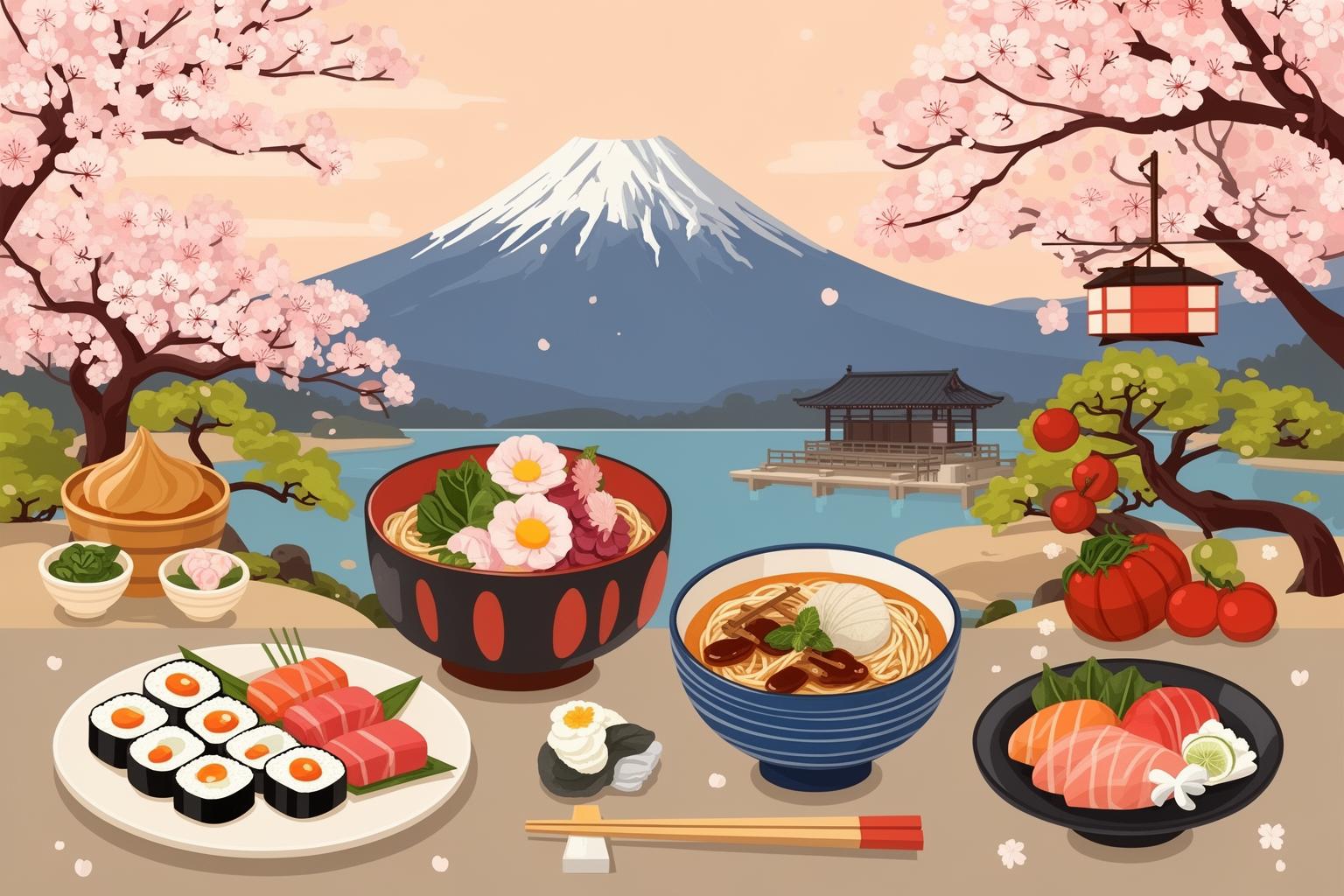
This philosophy is not merely an abstract concept; it guides every decision made in a traditional Japanese kitchen, from the cooking techniques to the very vessels in which the food is presented.
A Symphony of Senses
The preparation of ingredients shifts with the seasons to best showcase their shun qualities. In spring and summer, when ingredients are young and fresh (hashiri and early sakari), cooking methods are light and swift to preserve their delicate nature. Think of raw sashimi, lightly blanched vegetables, or quickly grilled fish. The aim is to capture a sense of crispness and vitality.
As autumn arrives, bringing richer and heartier ingredients, cooking methods adapt accordingly. Grilling over charcoal (yakimono) enhances the flavor of fatty fish like sanma. Simmering (nimono) draws out the deep sweetness from root vegetables. In winter, the focus turns to warmth and preservation. Hot pots (nabe), deep-frying (agemono), and long, slow stews offer comfort and nourishment, intensifying the flavors of ingredients that have stored energy for the cold season.
The Vessel is the Scenery
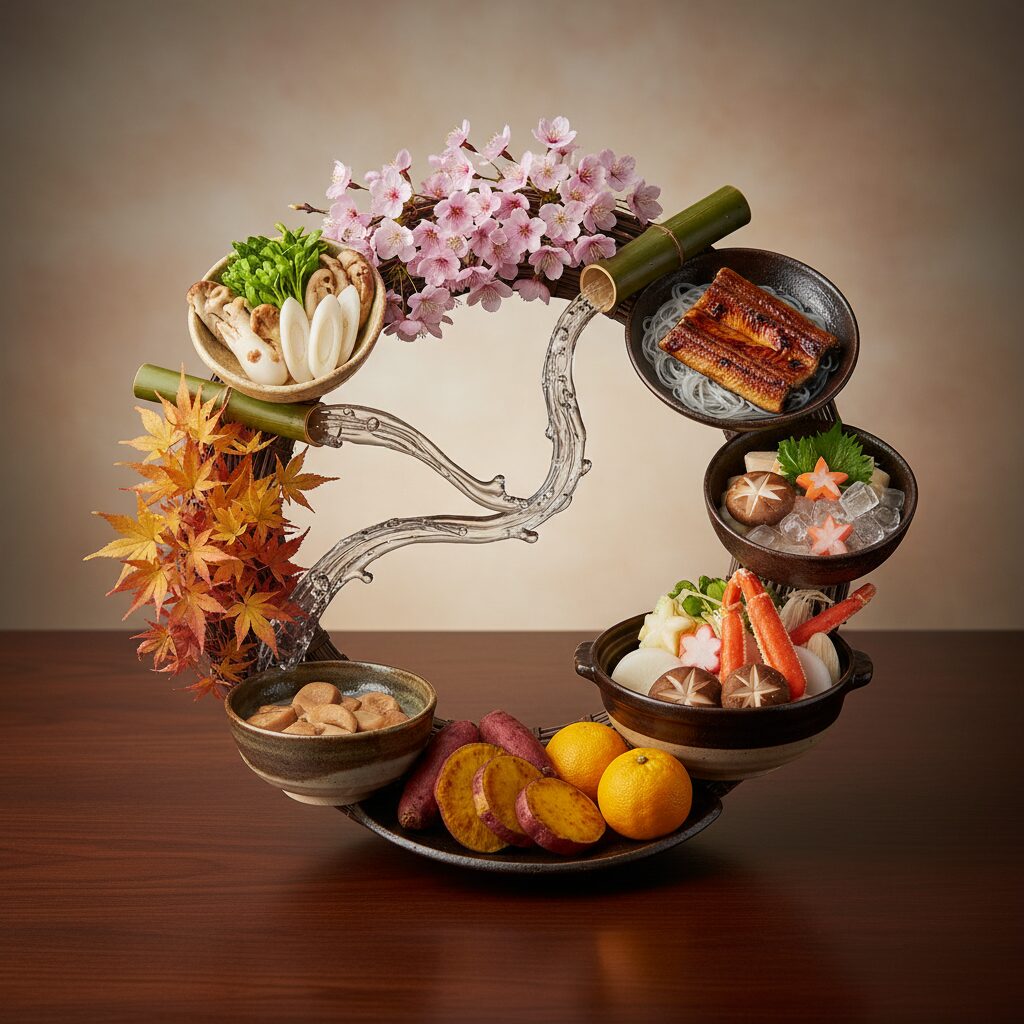
The experience of shun extends to the tableware. The plate is more than just a plate; it’s part of the meal’s landscape. In the oppressive heat of summer, food is often presented on cool, clear glass plates or in light, airy bamboo baskets to evoke a visual and tactile sense of refreshment. In autumn and winter, the tableware becomes more substantial. Warm, earthy, and rustic pottery—like Shigaraki or Bizen ware—complements the deeper flavors and provides a feeling of warmth and groundedness. The patterns on the bowl might depict autumn maples or winter snow, creating a complete sensory experience that situates you firmly in that particular moment in time. A chef would never serve a cooling summer dish on a heavy, dark winter bowl, as it would violate the entire aesthetic.
More Than a Meal, It’s a Micro-Season Calendar
Ultimately, shun represents a way of experiencing time that is much more detailed and closely connected to the natural world than the four broad seasons of a Western calendar. Japan traditionally recognizes 72 micro-seasons (kō), each lasting around five days, with names such as “East wind melts the ice” (early February) or “First peaches bloom” (early March). Although few people follow this ancient calendar today, its essence endures in the practice of shun.
Living by shun means noticing that for about two weeks in May, the fava beans are at their peak. It means knowing that firefly squid (hotaru ika) appear in Toyama Bay for a brief window in early spring. It means looking forward to sudachi citrus in autumn as the perfect tangy complement to grilled fish. This approach transforms every meal into a quiet recognition of the present moment. In a world overwhelmed by constant digital alerts and an endless, seasonless flow of global information, this practice is a radical form of mindfulness.
When you sit down to eat in Japan and truly pay attention, you’re not simply consuming food. You’re savoring a specific week of the year. You’re partaking in the culmination of a natural cycle. The ‘aha!’ moment extends beyond flavor—it’s the realization that the simple dish before you is a calendar, a poem, and a philosophy lesson all at once. It’s the understanding that the greatest luxury isn’t an imported rare truffle, but the perfect tomato from a nearby farm, enjoyed on the single day it was meant to be eaten.