The other day, I was walking along a canal in Kyoto when I felt it. It wasn’t a dramatic shift, not the kind of obvious seasonal change that makes headlines. It was subtler. It was the specific way the evening light, now a softer gold, caught the surface of the water. It was the faintest crispness in the air, a whisper that the punishing humidity of summer was finally losing its grip. In most places, this feeling might be just that—a vague, unnamable transition. But here in Japan, it has a name. It’s a sign that we’re moving from one micro-season to the next, a shift noted and cataloged for centuries. This is the world of kigo, or seasonal words, and it’s one of the most profound and misunderstood aspects of Japanese culture.
When people hear about kigo, they often think of poetry, specifically haiku. And while that’s their most famous home, to leave it there is to miss the point entirely. These words are not just literary devices; they are a cultural operating system. They form a shared, high-resolution calendar that attunes an entire nation to the subtle, continuous flow of the natural world. It’s a system so deeply embedded in the language and psyche that it shapes everything from what’s on the dinner menu to the patterns on a kimono. It begs the question: why did a culture go to the trouble of creating such an elaborate, codified system to describe the weather? The answer reveals a worldview that sees time not as a linear march of dates, but as a recurring cycle of sensory experiences.
Just as kigo translates the shifting moods of nature into language, the Japanese notion of amae similarly invites us to explore the deep, unspoken bonds that color everyday life.
More Than Just Four Seasons
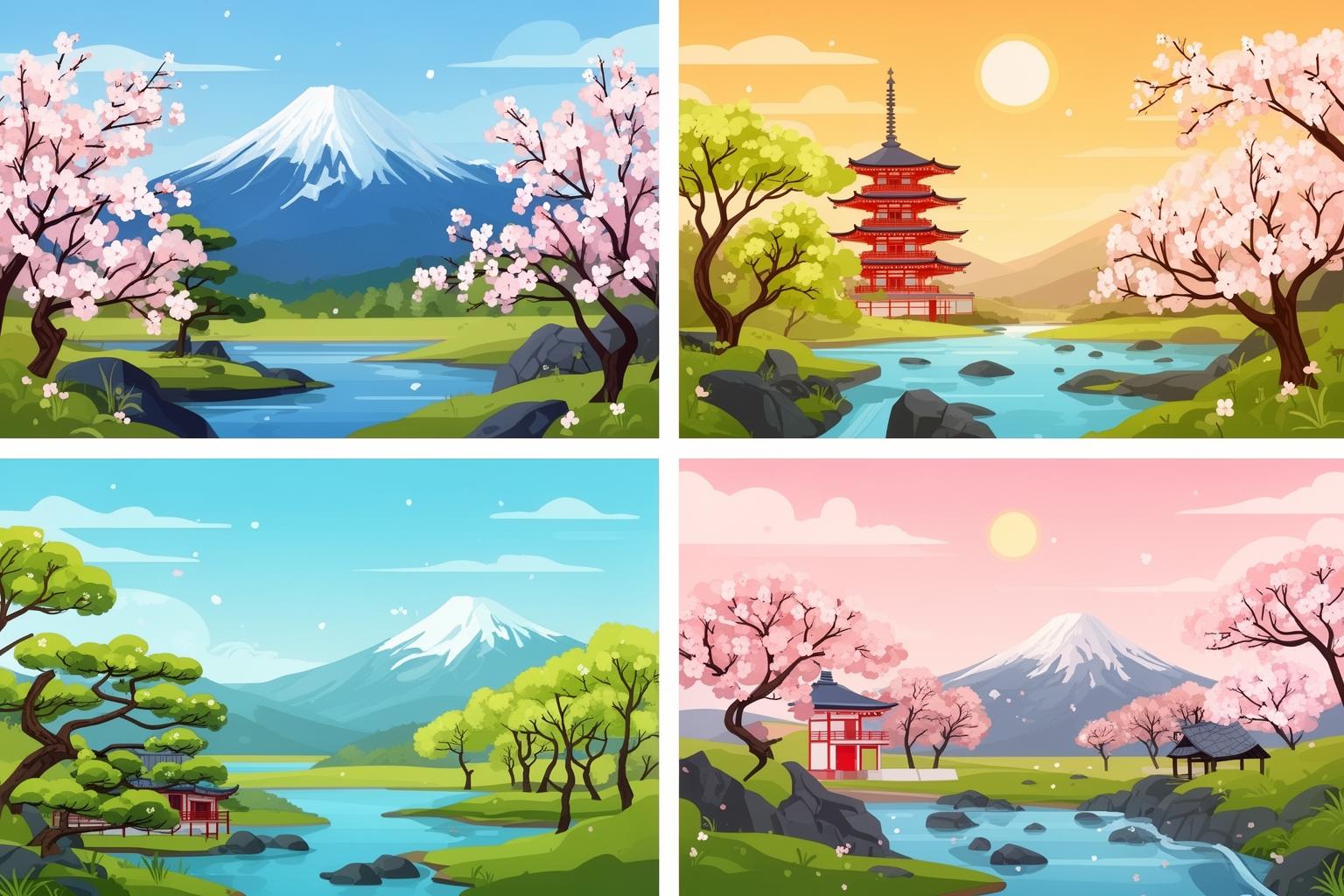
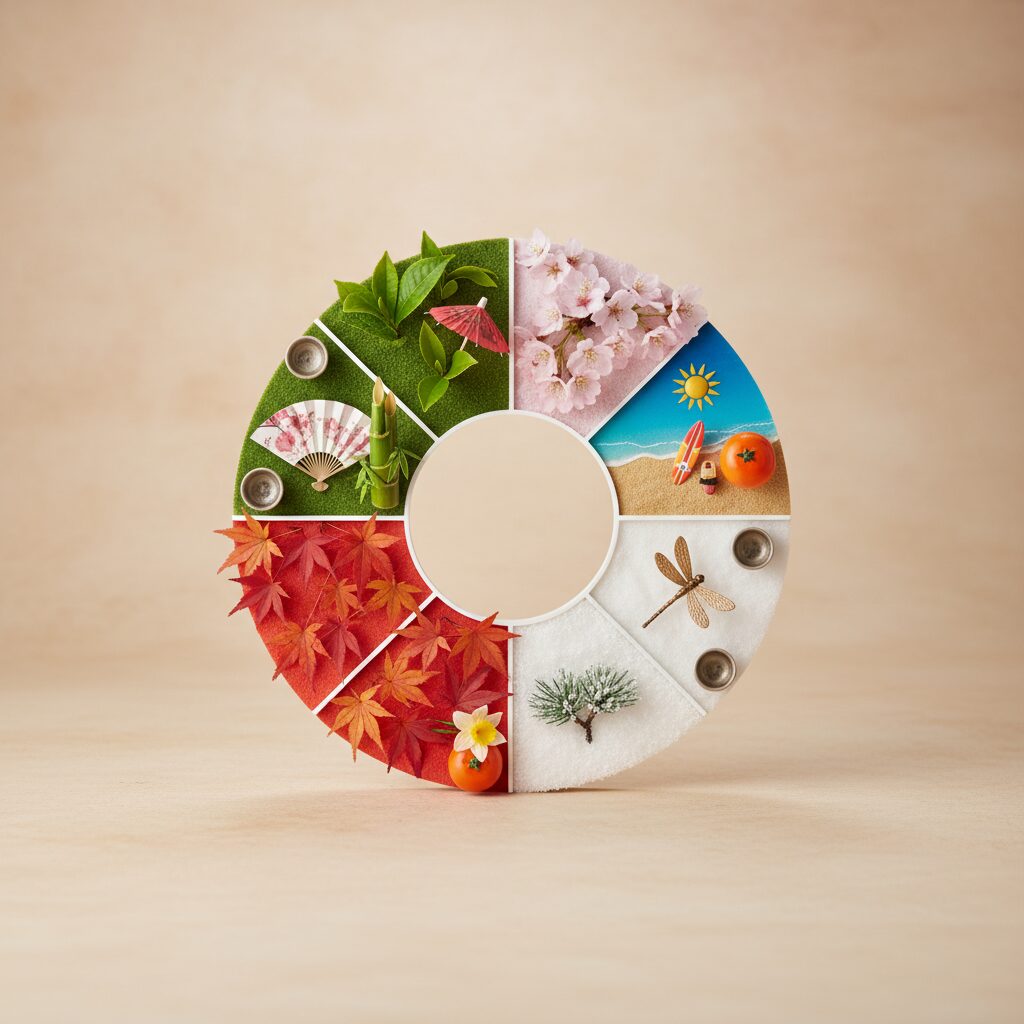
Most of us grow up learning about four seasons as distinct, monolithic segments of time: spring, summer, autumn, and winter. These categories are clean, simple, and ultimately insufficient for capturing the complexity of reality. Japan, naturally, recognizes these four seasons as well, but considers them broad categories—more like chapter titles in a richly detailed book. The true intricacy of the year emerges from an older system, borrowed from China and perfected over centuries: the 72 micro-seasons, or shichijūni kō.
This calendar breaks the year into 72 five-day intervals, each bearing a poetic name that reflects a particular natural phenomenon occurring at that moment. It is a system marked by extraordinary precision. Instead of simply “spring,” there are intervals such as Uguisu naku (The bush warbler starts to sing) in mid-February, followed by Momo hajimete saku (First peach blossoms) in early March, and later, Tsubame kitaru (Swallows return) in April. Summer is not a uniform stretch of heat; it includes phases like Kusaki tsuyu shiroshi (Dew glistens white on grass) and Semi no koe shikirini su (The cicada’s cry becomes incessant).
This system is not only for farmers or poets. It establishes a shared timeline of expectations and observations. When someone speaks of the suzushikaze (cool evening breeze), it’s more than weather commentary. It functions as a specific kigo for late summer, evoking a communal sense of relief—a collective breath as the stifling heat begins to ease. This language enables people to pinpoint themselves in time with remarkable specificity, grounded in natural cues. It transforms the environment from a passive setting into an active, dynamic presence whose changes are meaningful and deserving of recognition.
The Poetic Heart of Kigo
To grasp the power of kigo, you need to examine haiku. While the classic 5-7-5 syllable pattern is well-known, the essential rule is that every traditional haiku must include a kigo. This single word acts as the poem’s anchor, instantly placing the reader in a specific time and setting, rich with centuries of associated emotions and imagery.
Consider Basho’s most famous poem:
Furu ike ya Kawazu tobikomu Mizu no oto
An old pond A frog jumps in— The sound of water
The kigo here is kawazu, the frog. For a Japanese reader, this word immediately evokes the feeling of a gentle spring day. Frogs are linked to rice planting and the thawing earth. The poet doesn’t need to write, “On a pleasant day in April…” The single word frog carries all the weight, setting the scene with unmatched economy. This is the brilliance of the system—it’s a kind of cultural shorthand, a compression algorithm for sensory and emotional information.
The dictionary for this shorthand is the saijiki, an extensive almanac listing thousands of kigo, organized by season. Browsing one is eye-opening. It’s more than a glossary; it’s a catalog of a nation’s collective memory. The seasons are divided into categories: The Heavens (moon, rain, wind), The Earth (mountains, fields, rivers), Humanity (festivals, customs, food), Animals, and Plants. You’ll find entries for “first snow,” “lingering heat,” “insect song,” “harvest moon,” and even “the scent of new tatami mats,” which is linked to summer when mats were traditionally changed.
This shared vocabulary forges an immediate, profound connection between the artist and the audience. They both draw from the same well of experience. The poet offers a single, perfect brushstroke, and the reader’s imagination completes the rest of the scene.
A Language for Living in the Moment
The influence of kigo extends well beyond poetry, intertwining with daily life. It offers a framework for appreciating the present moment, a practice most clearly expressed in food, art, and celebrations.
In Japanese cuisine, the concept of shun (旬) holds great importance. It denotes the peak season of an ingredient, the brief period when it is at its most flavorful and nutritious. Consuming shun is seen as a way to harmonize the body with the natural rhythm of the seasons. In spring, menus feature tender takenoko (bamboo shoots) and bitter mountain vegetables. Early summer introduces the first bonito (hatsu-gatsuo), a delicacy so treasured that samurai would pawn their swords to taste it. Autumn brings the Pacific saury (sanma), grilled over charcoal, and freshly harvested rice (shinmai). This practice goes beyond enjoying fresh ingredients; it is a communion with nature, a celebration of what the earth offers right now.
This seasonal awareness is equally reflected in aesthetics. The motifs on formal kimonos shift with the months: plum blossoms for February, cherry blossoms for late March, wisteria for May, cooling water patterns for summer, and crimson maple leaves for November. The same concept applies to the tea ceremony, where the alcove scroll, flower arrangement, and even the ceramic tea bowl are selected to represent the season. Japanese sweets, wagashi, offer perhaps the most charming example. These miniature, edible sculptures often imitate the seasonal flower or plant—a pale pink cherry blossom in spring, a translucent green maple leaf in summer, or a golden-brown chestnut in autumn.
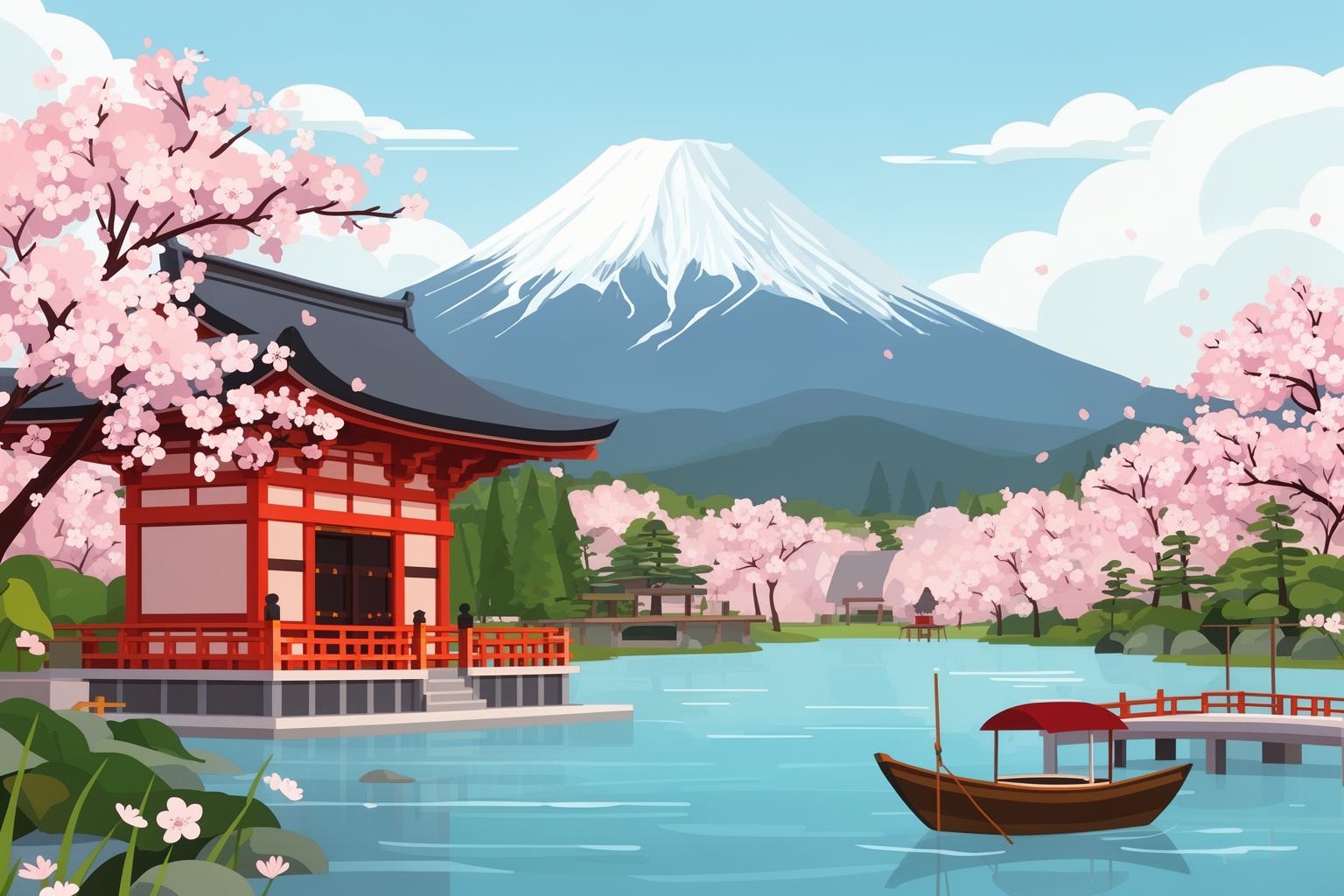
Even national holidays and festivals are closely aligned with this seasonal calendar. Hanami (cherry blossom viewing) is a nationwide celebration of a fleeting spring moment. Tsukimi (moon viewing) in autumn is a reflective event timed to the beauty of the harvest moon. These occasions are not random dates on a calendar; they are ritualized recognitions of nature’s most beautiful and transient displays.
Why a System? The Cultural Logic
This brings us back to the key question: why such an intense focus on codifying nature’s changes? The answer lies at the crossroads of Japan’s geography, spirituality, and philosophy.
First, there are the practical agrarian roots. For a nation historically reliant on rice cultivation and fishing, survival depended on a close understanding of the seasons. This was not an abstract interest; it was a matter of life and death. The 72 micro-seasons provided a precise guide for when to plant, when to harvest, and when to anticipate typhoons or migrating fish. This practical necessity cultivated a culture of deep observation.
On a spiritual level, the indigenous Shinto religion plays a vital role. Shintoism is animistic, believing that gods or spirits (kami) dwell in all natural things—in mountains, rivers, trees, and even in uniquely shaped rocks. The changing of the seasons is viewed as the activity of these kami. Observing the blossoming of a flower or the arrival of the first typhoon is thus an act of reverence, a way of communicating with the divine forces that shape the world.
Buddhist thought, introduced later, added another dimension of meaning. A central concept in Japanese Buddhism is mujō, or the impermanence of all things. Life is seen as a transient, fleeting flow of moments. The seasons, in their constant, predictable yet always changing cycle, embody mujō. The cherry blossoms are beautiful precisely because they last only a week. The vivid autumn leaves are poignant because we know they will soon fall. Kigo offers a language to understand and appreciate this bittersweet truth. It is a tool for practicing mindfulness, for noticing the beauty in the “now” before it disappears.
Together, these influences shaped a culture that not only appreciates nature but actively seeks to align with its rhythms. Kigo became the language of that alignment, a shared framework for living in harmony with the world outside.
Kigo in the Modern World: Fading or Adapting?
Certainly, Japan is now among the most urbanized countries on the planet. Many people reside in concrete jungles, disconnected from the agricultural cycles that originated this system. Does kigo still carry significance in a world of air-conditioned subways and convenience stores open 24 hours that sell strawberries year-round?
It’s a reasonable question. For some, the direct connection is certainly weaker. Climate change is also distorting these signals; cherry blossoms bloom earlier, and the timing of seasonal rains grows increasingly unpredictable. The natural calendar is falling out of alignment with the traditional one.
However, the system is not obsolete. It is evolving. Discussions in haiku communities about introducing new kigo to reflect modern life are emerging. Terms like kurisumasu (Christmas) and even eakon (air conditioner) have been suggested, fueling debates about what qualifies as a valid seasonal marker today. This indicates the framework remains vibrant, a living language able to develop.
More importantly, the foundational mindset endures. The cultural fixation on seasonality is evident everywhere, even in heavily urbanized areas. Department store food halls carefully rearrange displays to highlight shun ingredients. Gourmet restaurants design entire tasting menus focused on a single, fleeting micro-season. Even convenience stores enthusiastically launch seasonal-themed items that can bewilder outsiders—sakura-flavored products in spring, sweet potato and pumpkin in autumn.
This shows that although daily, direct nature observation may have diminished for some, the urge to connect with the seasonal cycle continues as a strong cultural undercurrent. The kigo system offers the vocabulary and rationale to support this impulse.
In the end, kigo is much more than a set of poetic words. It is a perceptual technology. It trains the mind to observe details, to find meaning in subtle shifts, and to cherish the profound beauty of moments in flux. It reminds us that time is not merely something that passes; it is something that can be experienced, tasted, and seen. In a world seemingly speeding toward a seasonless, nonstop uniformity, this ancient Japanese system provides a powerful counterbalance: a method of slowing down, looking more closely, and fully inhabiting the brief slice of time we have.