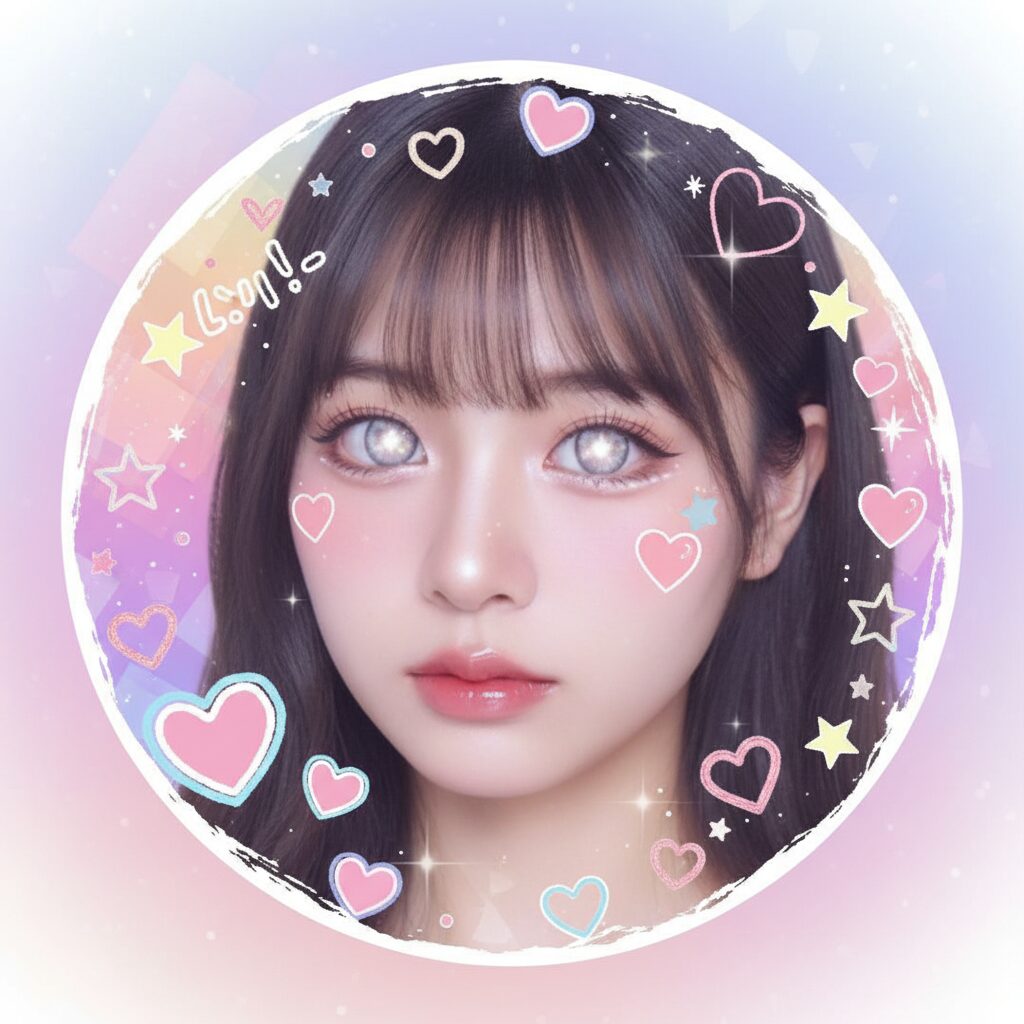
Walk into the neon-drenched chaos of a Japanese arcade, past the thumping dance machines and rows of UFO catchers, and you’ll inevitably find a curtained-off sanctuary glowing from within. This is the world of Purikura, a universe away from the gritty photo booths of Western boardwalks. Inside these machines, reality is not just captured; it is fundamentally rewritten. You emerge minutes later, not with a strip of grainy, unflattering photos, but with a sheet of glossy stickers depicting a version of yourself that is smoother, brighter, and impossibly, flawlessly cute. The eyes are larger, the chin is sharper, the skin is an ethereal porcelain, and the legs seem to stretch for miles. It’s a transformation so extreme it can border on the surreal.
For most outsiders, the first encounter with Purikura is a mix of amusement and bewilderment. Why would anyone want to look so radically different from their actual self? It’s easy to dismiss it as a frivolous teenage pastime or, more cynically, as a glaring symptom of deep-seated societal insecurity. But to do so is to miss the point entirely. Purikura is not merely a photo booth; it’s a cultural ritual. It’s a deeply revealing window into the nuances of Japanese aesthetics, social bonding, and the very concept of selfhood. To understand why these machines warp and sculpt reality with such gleeful abandon is to understand something profound about the pressures and pleasures of navigating beauty standards in modern Japan. It’s less about deceiving others and more about creating a shared, idealized memory—a perfect artifact of a moment in time, rendered in the hyper-cute language of kawaii.
This reimagining of self echoes in broader cultural landscapes, as reflected in the nostalgic allure of 1980s Japanese sound, where innovative aesthetics reshape identity.
The Evolution of a Digital Dreamscape

Purikura, a portmanteau of purinto kurabu (print club), first burst onto the scene in the mid-1990s. The earliest machines, created by companies like Atlus and Sega, were a technological breakthrough, offering something entirely new: the ability to capture a portrait and instantly print it out as a sheet of small, shareable stickers. This was revolutionary in a pre-digital, pre-smartphone age. For Japanese high school girls, the primary audience, it became a beloved after-school pastime. The appeal was immediate. It provided a private space for friends to be playful, pose, and create a tangible memento of their friendship.
Initially, the modifications were simple—decorative frames, cute stamps, and the option to write messages. But as technology progressed, so did the fantasy. The real transformation occurred in the early 2000s when the machines began integrating beautifying features. This is when the aesthetic we recognize today started to emerge. First was skin smoothing, which eliminated blemishes and gave a soft, radiant glow. Then came the game-changer: eye-enlarging effects, known as dekame (デカ目, big eyes). This feature tapped into a deeply rooted aesthetic preference in East Asia, inspired by the expressive, wide-eyed characters of manga and anime. Suddenly, Purikura was no longer just about decorating a photo; it was about transforming the people within it.
From there, the digital alteration race intensified. Kogao (小顔, small face) functions were introduced to slim the jawline and create the sought-after V-shaped face. Leg-lengthening effects stretched bodies to model-like proportions. Makeup functions added digital blush, lipstick, and even colored contact lenses. The technology grew remarkably advanced, with machines providing detailed control over every aspect of the transformation. Users could adjust the intensity of the eye enlargement, the tone of the skin lightening, and the style of the digital makeup. The booth became a digital beauty salon, and the final print was the product of a collaborative creative process.
Deconstructing the Kawaii Code
To an untrained eye, the final outcome of a Purikura session may appear strangely uniform. Everyone seems to transform into a similar wide-eyed, sharp-chinned template. This is no coincidence; it results from the machine applying a very specific and culturally resonant beauty formula. Grasping this formula is essential to understanding the ‘why’ behind the entire phenomenon.
The Holy Trinity: Big Eyes, Small Face, Pale Skin
The three core elements of the Purikura aesthetic are deeply embedded in Japanese beauty ideals. The craving for large, round eyes is paramount. In a culture where expressiveness tends to be subtle, the eyes are regarded as the primary conveyors of emotion and innocence. The dekame function exaggerates this to an almost supernatural extent, producing a look that is captivating and quintessentially kawaii. It’s not about appearing more “Western,” a common but oversimplified misconception. Instead, it aims to achieve an idealized, anime-inspired appearance that feels native to contemporary Japanese visual culture.
The kogao, or small face, ideal is equally widespread. A small, delicate face is viewed as a symbol of beauty and femininity. It evokes youthfulness and makes the eyes seem even larger by contrast. Magazines overflow with tips on how to create the illusion of a smaller face through makeup, massage, and even special face-shaping rollers. Purikura offers a digital shortcut to this ideal.
Lastly, the skin is almost always lightened and smoothed to an unattainable degree. Historically, pale skin has been linked to aristocracy in Japan, symbolizing a life spent indoors, away from manual labor. Today, this ideal continues, intertwined with the aspiration for a pure, clean, and youthful look. The Purikura machine’s relentless airbrushing produces a blemish-free, glowing complexion that perfectly embodies this aesthetic aim.
It’s Not About Reality, It’s About the Ideal
Herein lies the key cultural difference. The aim of Purikura is not to create a “better” version of oneself in a realistic sense, like a subtle retouch in a portrait photo. The aim is to craft a fantasy avatar. It’s a form of play, a moment of inhabiting a shared aesthetic ideal. No one looks at a Purikura sticker and believes the person actually has eyes taking up a third of their face. The artificiality is the point.
This distinguishes it from much of the filtered selfie culture on platforms like Instagram, where there is often an unspoken pressure to present the enhanced image as genuine. In the world of Purikura, everyone is complicit in the game. The extreme, obvious nature of the edits lifts the burden of deception. It’s an open celebration of a constructed ideal, not a covert attempt to pass off a filtered image as reality. The print is not a record of what you truly look like, but a keepsake of how you wanted to appear, together, in that moment, according to the rules of kawaii.
The Social Glue of the Glowing Booth
While the technology and aesthetics are captivating, the true essence of Purikura lies in its social function. It is rarely a solitary activity. Purikura is a ritual engaged in by friends, couples, and sometimes families. The entire process is designed to encourage group interaction and collaboration, establishing it as a powerful means for social bonding.
A Shared Transformation
The experience starts even before entering the booth. Groups gather, choosing a machine—each offering slightly different editing styles, backgrounds, and features. Inside the cramped space, a flurry of activity unfolds as friends squeeze into the frame, laughing and shouting pose suggestions while a cheerful digital voice counts down. The limited time fosters a playful sense of urgency and teamwork.
However, the most collaborative part happens after the photos are captured. The group moves to an external decorating station, where a large touchscreen displays their selected shots. Here, a timer begins, sparking a frantic, creative chaos. Everyone grabs a digital stylus to add stamps, draw hearts, write inside jokes, and carefully apply digital makeup. It’s a collective act of curation, where the group jointly decides how to embellish and perfect their shared memory. This shared creative process is just as meaningful, if not more so, than the photos themselves.
The Tangible Artifact
In today’s overwhelmingly digital world, the physical output of Purikura plays a significant role in its lasting appeal. You don’t just receive a file; you get a sheet of glossy stickers. The final step of the ritual involves cutting up the sheet with supplied scissors and distributing the photos among the group. These small, idealized portraits are then slipped into phone cases, pasted onto notebooks, or carefully preserved in special Purikura albums. They become tangible tokens of friendship and a specific moment in time.
Exchanging these stickers strengthens social bonds. Giving a friend a Purikura picture of the two of you is a small yet meaningful gesture of affection. It conveys, “I cherish this memory we made together.” In a culture that often favors indirect communication, these little artifacts serve as a visible and treasured symbol of connection.
Purikura in a World of Pocket Filters
One might expect that the rise of smartphones and powerful selfie apps like Snow and BeautyPlus would have made Purikura obsolete. After all, why pay 500 yen to enter a booth when you can achieve similar effects for free on your phone? And indeed, the industry has contracted since its peak in the late 90s. Yet, Purikura persists.
Its continued existence highlights the power of ritual and dedicated spaces. Using a Purikura machine is an event. It requires visiting a specific location—an arcade—with friends. It transforms the ordinary act of taking a photo into a special occasion. The booth itself is a liminal space, a private world shielded by a curtain where you are free to perform and play without outside judgment. This experience is fundamentally different from quickly snapping a selfie on a busy street.
The dedicated space and process enhance the act of memory-making. It’s a conscious decision to step away from the everyday and enter a fantasy world for ten minutes. The phone in your pocket offers convenience, but Purikura delivers an experience. It provides the high-quality lighting, specific backdrops, and collaborative decorating station that an app cannot match. It’s the difference between listening to music on your headphones and attending a live concert. Both are enjoyable, but only one is a true event.
Ultimately, Purikura isn’t about deceiving anyone. It’s a playful, collaborative art form. It’s about embracing the dominant aesthetic ideals of kawaii culture and pushing them to their most extreme, fantastical conclusions. It’s a celebration of friendship, a ritual of transformation, and a way to create a perfect, polished memory you can hold in your hand. The girl on the sticker with the impossibly large eyes and flawless skin isn’t a lie; she’s an avatar, a character co-created with friends in a glowing booth, a perfect memento from a shared journey into a digital dream.