
When you picture Japan’s landscapes, your mind probably jumps to one of two extremes. On one end, you have the glittering, hyper-dense sprawl of Tokyo, a neon-laced testament to human ingenuity and our ability to stack ourselves into the sky. On the other, you have the serene, almost untouchable wilderness: moss-covered forests of ancient cedars, volcanic peaks shrouded in mist, and dramatic coastlines carved by the Pacific. It’s a clean binary—the city and the wild. But this picture is missing its most important, and perhaps most instructive, part: the space in between. This is the realm of the satoyama.
The word itself is a beautiful piece of Japanese simplicity. Sato (里) means a village or a place where people live. Yama (山) means mountain or hill. Put them together, and you get “village-mountain,” a term that describes the mosaic of landscapes bordering rural communities: the managed woodlands, the terraced rice paddies, the bamboo groves, the irrigation ponds, and the grasslands. This isn’t the deep, untamed wilderness. Nor is it a manicured park. Satoyama is something else entirely—a semi-natural landscape shaped over centuries by human hands, where the line between culture and nature dissolves. It’s a living testament to a time when sustainability wasn’t a buzzword, but the only way to survive. And understanding it reveals a core philosophy about Japan’s relationship with the natural world that is profoundly different from the Western ideal of preserving nature by locking it away from people.
This delicate interlace of nature and nurture invites us to further explore the subtle interplay of Japanese traditions, as seen in the nuanced art of omiyage practices.
The Landscape as a Living System
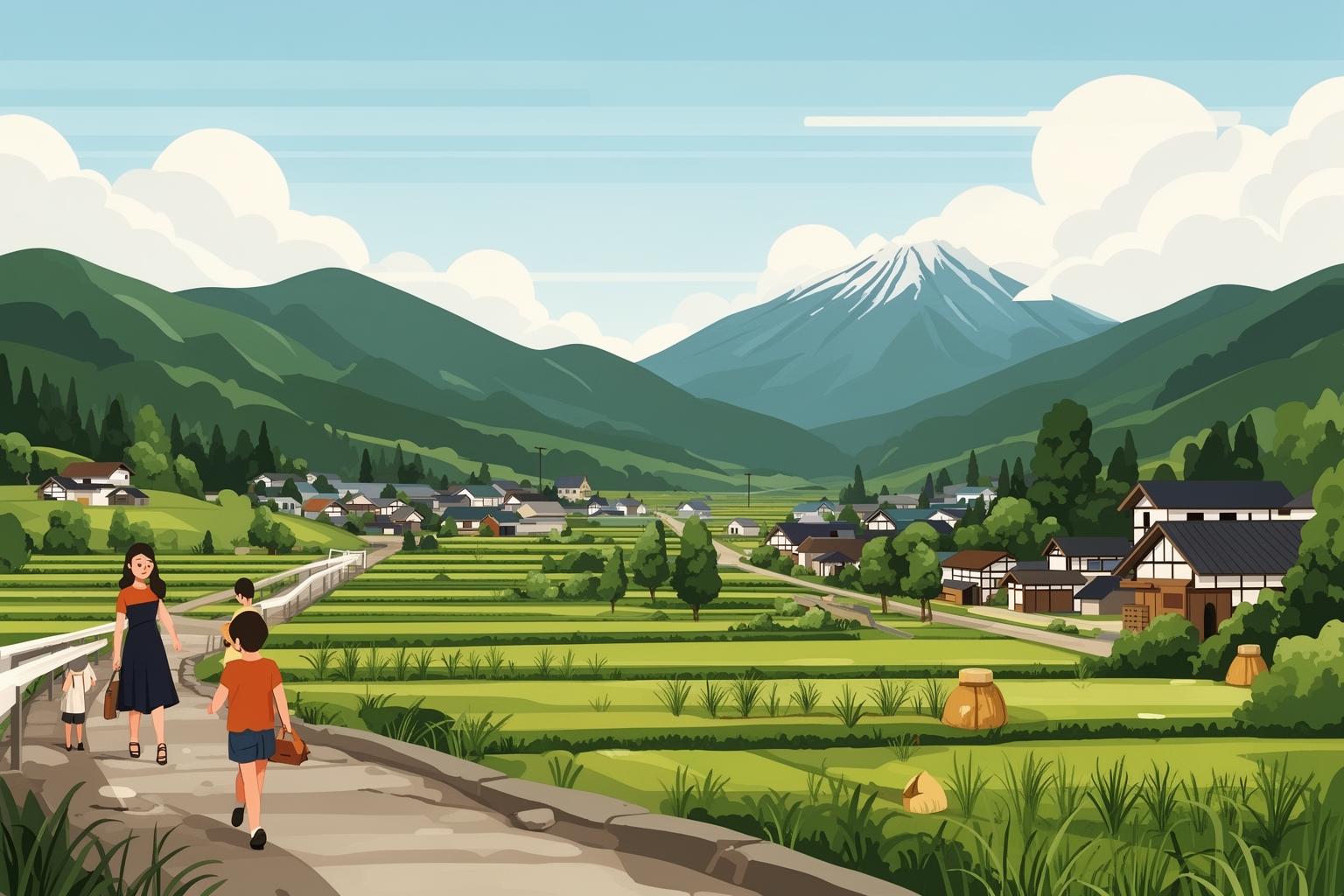
To truly understand satoyama, you must stop viewing the landscape as a collection of separate elements. It isn’t a forest next to a farm next to a village. Rather, it is a single interconnected, living organism—a system where each part supports the others, with humans serving as vital catalysts.
Central to this system are the community woodlands, known as kompayashi. For generations, these forests have been the lifeblood of the village. Villagers didn’t clear-cut them; instead, they managed the woodlands through regular coppicing—cutting back trees to encourage new growth—and thinning. This approach did more than provide a sustainable supply of firewood for cooking and heating or charcoal for smithing. It shaped a unique type of forest: one with a bright, open floor. This sunlit environment allowed a diverse range of grasses, wildflowers, and shrubs to thrive, which in turn supported a vast array of insects, birds, and other wildlife. Paradoxically, a managed forest was a more biodiverse forest.
The forest’s benefits extended further. Every autumn, villagers gathered fallen leaves to create a thick layer of leaf litter known as ochiba. This wasn’t waste—it was valuable. They transported it to rice paddies and vegetable plots to serve as a rich, natural fertilizer, nourishing the soil for the upcoming planting season. Nutrients flowed from the mountains to the village, forming a perfect, closed-loop cycle of renewal.
Water, another essential element, was managed with equal precision. A system of canals and irrigation ponds channeled water from mountain streams to flood the rice paddies. These paddies, or tanbo, were more than just rice fields. When flooded, they became temporary wetlands, vital breeding grounds for frogs, dragonflies, and killifish. The waterways themselves thrived as micro-ecosystems. This entire system was human-built yet fostered habitats crucial for countless species. It wasn’t about dominating nature but skillfully guiding its processes to create a landscape productive for people and abundant with life.
A Philosophy of Reciprocity
Beneath the practical aspects of forestry and farming lies a deeply rooted cultural mindset: one of reciprocity. Satoyama was not viewed as a resource to be exploited, but as a partner in a relationship based on mutual dependence and respect. The mountain bestowed its gifts—its megumi (恵み)—and in return, the community provided care.
This is not a romantic idea; it was a pragmatic truth. The megumi were tangible and vital. In spring, people gathered wild edible plants known as sansai—tender bamboo shoots, nutty fiddlehead ferns, and bitter butterbur buds—which supplied essential nutrients after a long winter. In autumn, they collected mushrooms, chestnuts, and acorns. The forest served as the village pantry, its pharmacy, and its hardware store. Every act of taking was balanced by an act of giving back.
This “giving back” was not a burden; it was simply part of the rhythm of life. Maintaining forest paths was not only for convenience; it ensured sunlight reached the forest floor. Weeding the grasslands prevented them from being overtaken by dense scrub, preserving habitats for flowers and insects. Regular dredging of irrigation ponds maintained water quality and provided nutrient-rich mud for the fields. These activities, which might today be called “conservation work,” were simply what one did to keep the system healthy. It was understood that if the mountain suffered, the village would soon follow.
This perspective fundamentally challenges the Western divide between humanity and nature. The ideal of “pristine wilderness” imagines nature at its best when humans are absent. Satoyama proposes the opposite: that human involvement, when carried out with care and deep ecological understanding, can actually enhance and sustain environmental health. People are not intruders in this landscape; they are its custodians, its keystone species.
The Rhythms of Satoyama Life
The lives of people in satoyama communities were woven directly into the fabric of the seasons, in sharp contrast to the abstract, clock-driven routines of modern urban life. The calendar was not marked by months and dates, but by the tangible changes in the landscape and the tasks they demanded. Each season brought its own work, its own foods, and its own quiet celebrations.
Spring began with the melting snow and the first emergence of sansai. It was a time of awakening, both for the land and the people. The most intense task was preparing the rice paddies—repairing the mud levees and tilling the soil—before the important, communal event of rice planting (taue). This was often done cooperatively, with entire families and neighbors working in unison, their movements synchronized as they pushed young green shoots into the flooded earth.
Summer was a season of upkeep. The primary job was managing the water flowing through the paddies and the continual, back-breaking work of weeding under the hot sun. The soundscape was filled with the chorus of frogs and cicadas. It was a time of steady, patient effort, tending the growing rice that symbolized the community’s future.
Autumn was the reward. The golden heads of rice were harvested, dried, and threshed, marking the culmination of the year’s labor and filling the village with relief and pride. This was also prime time for foraging in the mountains, harvesting a bounty of mushrooms like shiitake and matsutake, along with chestnuts and persimmons. Festivals were held to thank local deities for a successful harvest, reinforcing the spiritual bond between people, the land, and the divine.
Winter, when the fields lay fallow, was far from a period of rest. Focus shifted back to the mountains. Men would enter the kompayashi to fell trees for firewood and charcoal, a process demanding great skill and forest knowledge. Women would mend tools and clothes, prepare pickles and preserves from the autumn harvest, and engage in household crafts. Winter was a season of preparation, stocking up, and ensuring the community was ready for the cycle to begin again.
The Community as Custodian
The importance of community in the satoyama model cannot be overstated. A single family, no matter how diligent, could never manage this complex landscape alone. The system depended on collective action and shared responsibility. Forests and grasslands were often governed as commons, known as iriaichi, where villagers had shared rights to resources and a shared duty of care.
Decisions about when to clear firebreaks, how to maintain irrigation systems, or how much wood could be harvested were made collectively. This required complex social rules, cooperation, and deep mutual trust. Your neighbor’s diligence in maintaining their part of the waterway directly affected your rice paddy downstream. The well-being of the individual was inseparable from that of the group, which in turn was inseparable from the health of the land. This social fabric was as essential to the satoyama ecosystem as rain and sun. It fostered a culture of interdependence that sharply contrasts with the hyper-individualism of modern society.
The Modern Challenge and Revival
The satoyama system, which had operated for centuries, encountered an existential crisis in the post-war period. Japan’s swift industrialization and economic miracle fundamentally altered the nation’s connection with the land. The principles of satoyama began to unravel.
Fossil fuels such as propane gas and kerosene replaced firewood and charcoal for heating and cooking, rendering the labor-intensive management of the kompayashi unnecessary. Chemical fertilizers became inexpensive and widely accessible, breaking the crucial connection between the forest floor and the rice paddies. Young people flocked to cities in large numbers for work and education, causing severe rural depopulation, a phenomenon known as kaso (過疎). The traditional knowledge, passed through generations, began to disappear as the elders aged with no one to pass it on to.
The impact on the landscape was significant. Without ongoing human care, the satoyama system deteriorated. The once-bright, open woodlands grew dark and became choked with dense, impenetrable thickets of bamboo and scrub. This overshadowed the wildflowers and grasses on the forest floor, causing the biodiversity that depended on them to sharply decline. Abandoned rice paddies dried out, silencing the frogs and dragonflies. The delicate balance was lost. For a time, it seemed that satoyama was destined to fade into a forgotten relic of a past age.
Yet, starting in the late 20th century, a renewed appreciation for satoyama began to arise. Environmental scientists examining these neglected landscapes made a surprising discovery: these human-shaped environments were biodiversity hotspots, supporting an impressive variety of species, many of which were becoming rare elsewhere in Japan. It became clear that traditional, low-impact human activities had created a unique patchwork of habitats that sustained far more life than either monoculture commercial forests or abandoned, overgrown thickets.
This scientific recognition coincided with a growing cultural shift. As Japan faced the social and spiritual void of its urban, consumerist lifestyle, many sought a more rooted, meaningful way of living in the countryside. A satoyama revival movement emerged, led by non-profit organizations, volunteer groups, and even corporations aiming to meet their social responsibility goals. City residents began spending weekends volunteering on satoyama restoration projects, clearing overgrown forests and replanting neglected rice paddies. It was a deliberate effort to reclaim not only a landscape but also a philosophy—a way of relating to the world that felt more complete.
What Satoyama Teaches Us
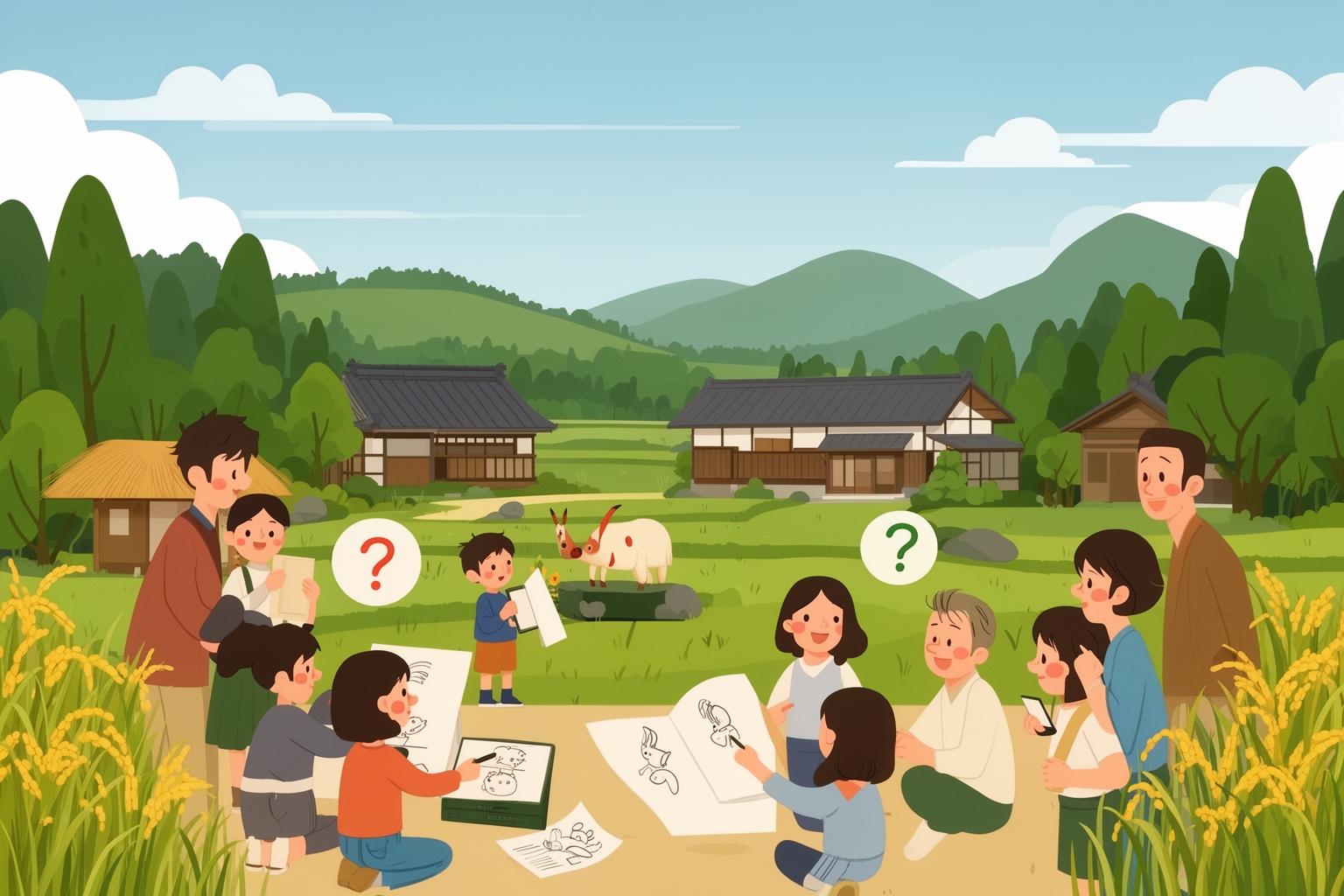
For those of us outside Japan, the story of satoyama offers more than a charming glimpse into the country’s rural history. It presents a powerful and timely alternative to our often-destructive relationship with the environment. It challenges the strict division we’ve created between “nature” and “civilization,” a mindset that forces us to choose between complete exploitation or total separation.
Satoyama advocates for a third option. It shows that humans can play a positive role within an ecosystem, and that our activities can support life and enhance biodiversity rather than reduce it. It is a model of active, responsible stewardship, not passive preservation. The wisdom of satoyama lies in its understanding of systems, cycles, and limits. It represents a world of small, local solutions, deep familiarity with a single place, and a community united by a shared dependence on the health of its environment.
It’s not about reverting to the past and abandoning modern life. Instead, it’s about reclaiming a mindset. It reminds us that sustainability is not a new concept, but a practice refined over centuries. It offers a quiet but persistent argument that true harmony is found not by leaving nature untouched, but by learning to work alongside it with respect, humility, and a profound awareness of our place within the larger whole.