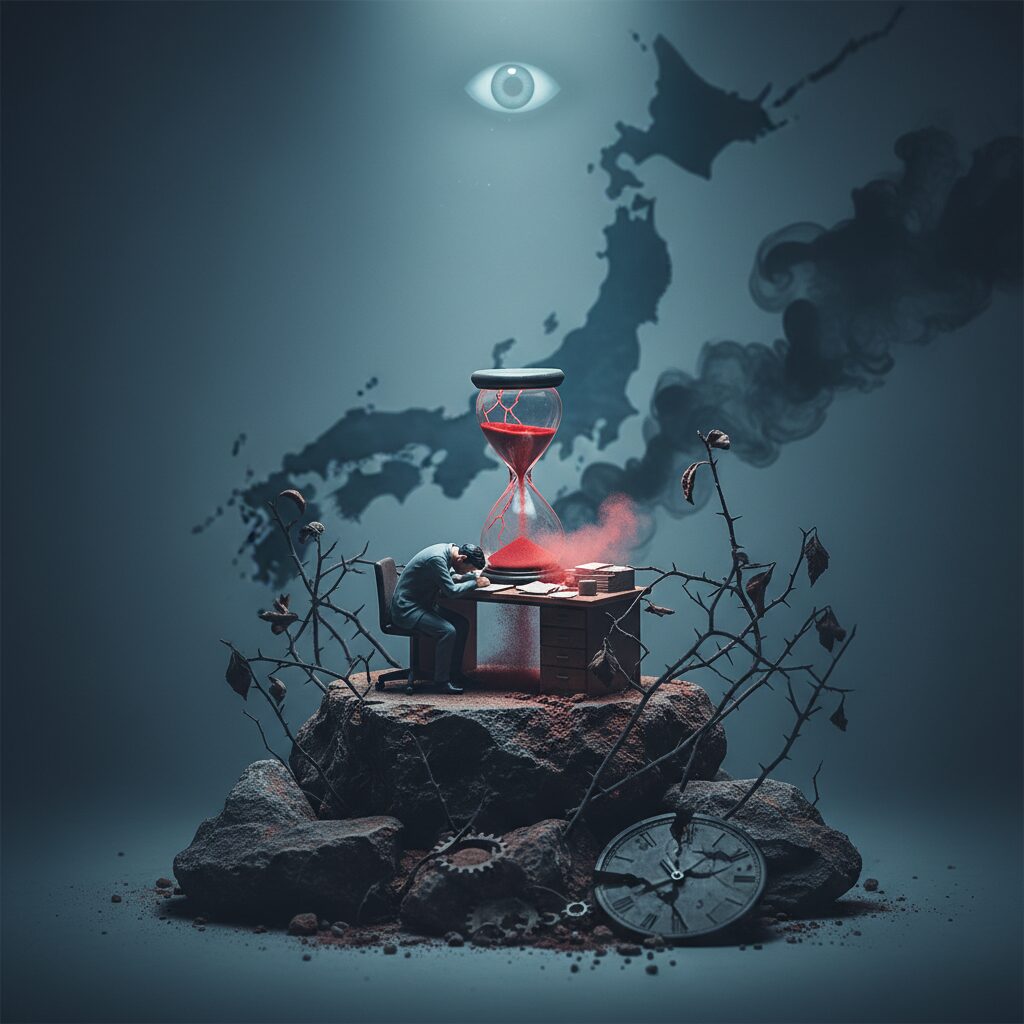
You’ve probably heard the term. Karoshi. It’s one of those Japanese words, like kamikaze or otaku, that has leaked into the global consciousness, carrying with it a heavy, almost mythic weight. It translates literally to “death from overwork.” It’s not a figure of speech. In Japan, it’s a legally recognized cause of death, a category on a coroner’s report. People have strokes, heart attacks, or are driven to suicide by the sheer, crushing weight of their jobs. And the first question that always comes up is a simple, staggering one: why?
It’s easy to fall back on stereotypes. The diligent, ant-like Japanese worker, endlessly loyal to the company hive. A nation of workaholics. But that’s a lazy, two-dimensional explanation for a problem with deep, tangled roots. This isn’t just about working hard. Lots of people work hard. This is about a culture where the lines between the self and the corporation, between duty and self-preservation, can dissolve completely. To understand karoshi, you have to look past the punch clock and into the very soul of modern Japanese society. You have to understand the invisible pressures, the historical promises, and the unspoken social contracts that can make leaving your desk feel like an act of betrayal. This is the story of how fatal loyalty is forged.
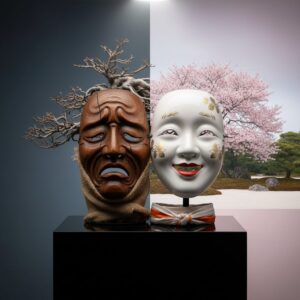
The pressures of modern Japanese work culture can be seen echoed in the understated beauty of wabi-sabi pottery’s reflective essence, which offers a subtle counterpoint to the relentless grind of corporate life.
The Birth of the Corporate Samurai
To understand why a 21st-century office worker might die at their desk, you need to look back to the ruins of 1945. Post-war Japan was a devastated, humiliated nation, completely stripped of its imperial identity. The country required a new purpose, a new arena for battle. It found this in the global economy.
The national mission became economic reconstruction. The aim was not only to rebuild but to dominate. Factories, not armies, would serve as the instruments of national pride. And these new factories and corporations required a new type of soldier: the sararīman, or salaryman.
This was more than just a job. It was a vocation. Joining a major company like Sony, Toyota, or Mitsubishi in the 1950s or 60s meant pledging your life to the cause. In exchange for unwavering loyalty, the company made a promise—a social contract known as the “three sacred treasures” of Japanese employment.
The first was lifetime employment (shūshin koyō). Once hired, you were employed for life; the company would not dismiss you. You were family. Second was seniority-based wages (nenkō joretsu). Your salary and rank rose with tenure, regardless of merit. You simply had to persevere, keep showing up. Third were enterprise unions, which collaborated with management rather than opposing it, ensuring stability. This system was the foundation of Japan’s post-war economic miracle. It provided absolute security. Your identity became your company ID card. Your social life centered on your coworkers. The company might help you find a spouse, obtain a mortgage, and even arrange for your ashes after death. It was a cradle-to-grave commitment.
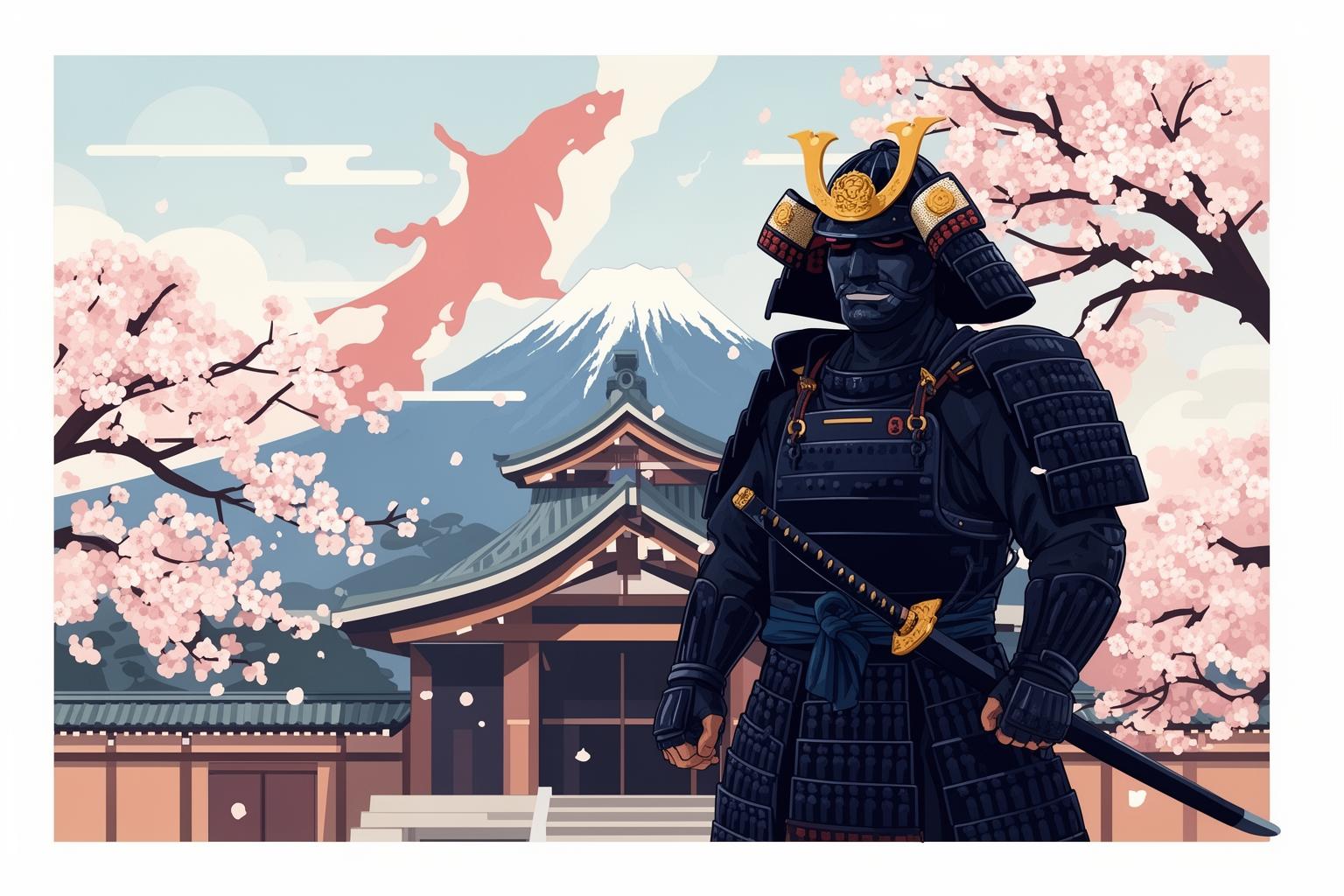
The salaryman was a hero, the driving force behind Japan’s revival. He was a corporate samurai, trading his sword for a briefcase, his feudal lord for a CEO. His sacrifice involved his time, family life, and personal desires. The reward was the clan’s security and the honor of a rising nation. This mentality—that the company is a family deserving of sacrifice—became deeply ingrained in the cultural fabric. It was the price of stability.
The Tyranny of Harmony
If the post-war economy constructed the hardware for overwork, the underlying culture supplied the software. A key concept crucial to grasping nearly everything about Japanese social interaction is wa (和), which roughly means group harmony. It embodies the belief that the smooth, peaceful operation of the group is the highest social value.
In the West, individualism is often prized. The squeaky wheel gets the grease. In Japan, the opposite holds: deru kui wa utareru, “the nail that sticks out gets hammered down.” Disrupting the group’s harmony by prioritizing your own needs or opinions is a serious social offense. This manifests in the workplace in countless subtle, powerful ways.
Picture an office where everyone is working late. The clock moves past 6 PM, then 7 PM. You’ve finished your tasks. You want to go home to your family. But you glance around. Your boss remains at his desk, hunched over. Your entire team is still typing away. If you stand up, pack your bag, and say, “Well, see you tomorrow,” you become the nail that sticks out.
You’re not just leaving work; you’re implicitly signaling that your personal time outweighs the team’s collective effort. You’re abandoning your comrades on the battlefield. You might not lose your job, but you will be seen as someone who isn’t a team player—someone selfish. The social pressure to stay, to merely be present, is overwhelming. It’s not about productivity; it’s about performance. You are performing your loyalty.
This extends to everything. Japan is known for its generous paid vacation days, yet infamous for how few people use them fully. Taking your entire holiday can be viewed as a burden on colleagues who must cover for you. It disrupts the wa. So people “voluntarily” surrender their time off. The same applies to sick days. Unless you are physically incapable of crawling to the office, you go in. You display your fighting spirit, your gaman (endurance). This is not dictated by any rulebook. It is enforced by a collective, unspoken understanding. It is the tyranny of harmony.
The Promise Shatters, The Habits Remain
For decades, this system, though demanding, was at least stable. Personal time was sacrificed in exchange for the ironclad promise of lifelong security. Then, in the early 1990s, the music stopped.
Japan’s “bubble economy”—a period of extreme asset price inflation—burst spectacularly. The stock market crashed, real estate values sank, and the country entered a prolonged era of economic stagnation known as the “Lost Decade.” The companies once revered as unshakable economic pillars suddenly found themselves struggling to survive.
The sacred treasure of lifetime employment was the first casualty. To reduce costs, companies began to “restructure.” For the first time in generations, corporate samurai were laid off. Early retirement packages were introduced, and more non-regular workers (hiseiki shain)—such as part-timers, temps, and contract employees—with few benefits and no job security were hired.
This created a toxic paradox. The promise that had justified the culture of extreme sacrifice was broken. Loyalty was no longer a two-way street. Yet, the expectation of loyalty remained—and in fact, intensified.
The full-time employees who survived the layoffs were now expected to do more with less. They had to cover the extra work, put in longer hours, and demonstrate even greater dedication to prove their worth and avoid being next on the chopping block. The psychological burden became immense. The old salarymen sacrificed for a guaranteed future; the new generation sacrificed out of fear.
This period fundamentally changed the nature of work in Japan. The pressure persisted, but the security that once made it bearable disappeared. The cultural habits of overwork, forged during an era of high growth and collective purpose, became unmoored, spreading into a pervasive anxiety that gripped the entire corporate world.
The Modern Face of Karoshi: More Than Just Long Hours
Today, karoshi is no longer just an issue affecting the aging salarymen of the post-war generation; it is now claiming the lives of young men and women in new and insidious ways. The discussion has evolved from focusing solely on physical exhaustion to encompassing unbearable psychological stress.
This is where the term karōjisatsu (過労自殺), or suicide from overwork, comes into play. It acknowledges that the mental toll of a job can be as deadly as the physical demands. This is a world marked by bullying and harassment from superiors, known as pawahara (power harassment). It includes impossible sales targets, public humiliation for failure, and an unrelenting, 24/7 digital tether keeping employees connected to work emails and messaging apps.
One of the most well-known and tragic examples is Matsuri Takahashi, a 24-year-old graduate from the prestigious University of Tokyo. In 2015, she secured a dream job at Dentsu, Japan’s leading advertising agency. Within months, she was working over 100 hours of overtime, suffering from sleep deprivation and depression, and enduring harassment from her superiors. On Christmas Day, she took her own life by jumping from her company dormitory, leaving notes that said, “My mind and body are broken,” and asking her mother, “Why do things have to be so hard?”
Her case sent shockwaves across Japan, highlighting that karoshi was affecting the nation’s brightest young talent, including women at the start of their careers. It was no longer confined to old-school factory foremen but was happening in sleek, modern, white-collar industries.
The Silent Language of Unpaid Work
While official overtime figures can be alarming, they often fail to capture the full picture. A significant part of the issue is the culture of sābisu zangyō, or “service overtime.” This refers to unpaid, unrecorded work that employees undertake out of a sense of duty or pressure. They stay late to finish tasks, come in on weekends, or take work home, all without logging the hours.
Why do employees do this? Because officially recording overtime could reflect badly on their efficiency, implying they can’t complete their workload within regular hours. It may also exceed the company’s internal (often illegal) overtime limits. To maintain team harmony and avoid appearing incompetent, employees choose not to report these hours, offering them as a “service” to the company.
This culture of presenteeism—where being visibly present at your desk matters more than actual productivity—is a major factor. Employees who leave promptly at 5 PM, even if their work is finished, are viewed with suspicion. Conversely, those who stay until 10 PM, even if appearing busy without productive output, are seen as dedicated. It’s a silent, toxic language of commitment that is wearing people down.
Can the System Be Fixed?
Japan recognizes the issue. Matsuri Takahashi’s death prompted a government investigation, a raid on Dentsu’s offices, and the CEO’s resignation. Since then, the government has enacted work-style reform legislation aimed at limiting overtime hours and ensuring employees take their paid leave.
Some companies are sincerely attempting to change. Certain firms enforce strict lights-out policies, requiring everyone to leave at a designated time. Others are experimenting with remote work and increased flexibility. The term “work-life balance” (wāku raifu baransu) has entered the vocabulary, even though its implementation remains inconsistent.
However, changing a law is much easier than reshaping a culture. The roots of karoshi run deep in Japanese history and social norms. The equation of self-worth with corporate dedication, the pressure to maintain group harmony, and the fear of being perceived as selfish cannot be erased by legislation alone. For many managers, who climbed the ranks through decades of personal sacrifice, the younger generation’s desire for life outside the office can appear as a lack of commitment.
Karoshi continues to be a harsh, extreme symptom of a challenge faced by all developed nations: What is our relationship with work? In a world where our jobs are so tightly connected to our identities, how do we establish boundaries that protect our health and humanity? Japan’s struggle serves as a sobering warning. It illustrates what can happen when the unspoken contract between employer and employee turns deadly, when loyalty demands the ultimate sacrifice, and when the nail that sticks out is not just hammered down, but broken.