
So, you’ve spent some time in Japan, and you’ve started to notice something. A subtle disconnect. You had a meeting where everyone nodded and agreed, only to hear later that the project was met with serious private concerns. You received a glowing compliment that felt a little too rehearsed, or an enthusiastic invitation to “get drinks sometime!” that never materialized. You’re left wondering: do people here ever say what they actually mean? It’s a fair question, and the answer is complicated. You’ve stumbled upon one of the most fundamental, and often misunderstood, pillars of Japanese social interaction: the dual concepts of honne and tatemae.
This isn’t about dishonesty. At least, not in the way a Western mindset might frame it. It’s about a deeply ingrained cultural practice of separating one’s private, true feelings (honne, 本音) from the public face one presents to the world (tatemae, 建前). Think of honne as the “true sound”—the raw, unfiltered thoughts and desires you’d share with your closest family or a trusted friend. Tatemae, on the other hand, is the “built face”—the carefully constructed facade of opinions and behaviors that aligns with social expectations, professional duties, and the feelings of others. Every culture has some version of this; we don’t tell our boss their new haircut is terrible, nor do we tell a host their dinner was bland. But in Japan, this dynamic is elevated to a social art form, a crucial lubricant that keeps the complex machinery of a high-context, group-oriented society running smoothly. Understanding this isn’t just a key to Japan; in many ways, it is the key.
Moreover, many who seek to understand the deeper layers of Japanese culture find that engaging in forest bathing offers a reflective experience that complements the duality of honne and tatemae.
The Logic of the Public Face
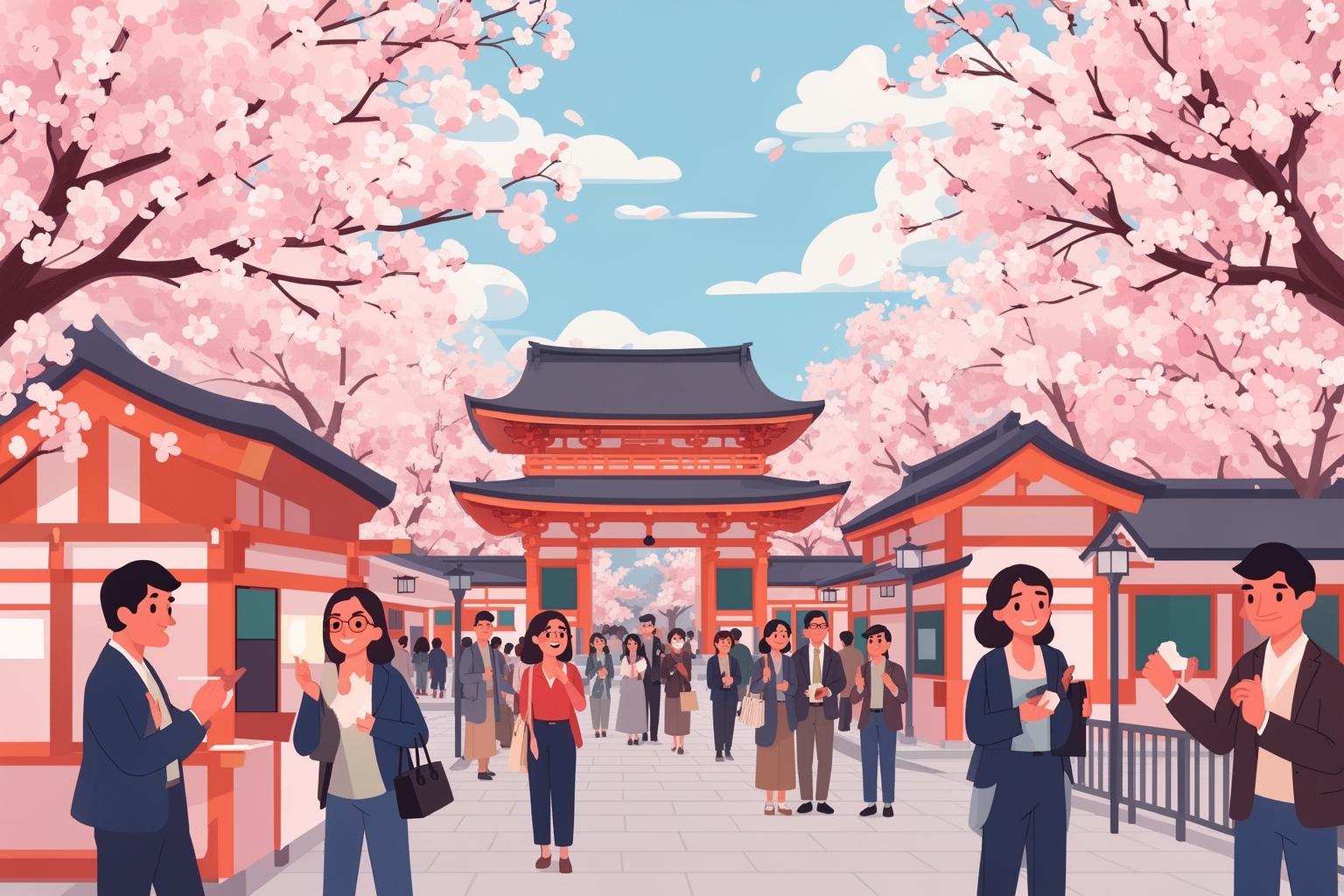
Why does this deep divide persist? The main reason lies in the supreme value placed on wa (和), or social harmony. In a society historically characterized by close living conditions and collective interdependence—from ancient rice-farming villages to today’s large corporations—preserving group unity has always been essential for survival. Open conflict, direct confrontation, and the uninhibited expression of individual opinions are viewed as threats to this fragile balance. They cause tension, make others lose face, and disturb the group’s stability.
Tatemae serves as the mechanism to avoid this. It is a shared social agreement that states, “I will present a version of myself that is agreeable and non-disruptive, and I trust that you will do the same.” It functions like a performance, yet one where everyone knows the script. When a colleague says, “I’ll consider your proposal” (kentou shimasu, 検討します), a non-Japanese listener might interpret this as a genuine promise to consider it. However, a Japanese person often perceives it as a polite, face-saving rejection. The honne is “No, this won’t work,” but the tatemae softens the refusal, allowing both parties to part ways without confrontation.
This practice is not about deceit for personal advantage. It’s about prioritizing the group’s comfort over individual expression. The purpose of a conversation often isn’t to exchange raw, unfiltered truths but to reinforce social bonds and ensure the interaction goes smoothly. By employing tatemae, you show respect for the other person’s position and feelings, signaling that you are a cooperative member of the social group.
Reading the Air: The Art of Unspoken Communication
If people don’t explicitly express their true feelings, how can anyone truly understand what’s happening? This is where the vital skill of kuuki wo yomu (空気を読む), or “reading the air,” becomes essential. Since honne is seldom spoken aloud in public or professional environments, communication relies heavily on nuance, context, and non-verbal signals.
Japanese is classified as a high-context language, meaning that what goes unsaid often holds more significance than what is spoken. Listeners are expected to be sensitive and attuned to subtle cues—a brief hesitation, a shift in tone, a vague remark, or specific body language—in order to grasp the speaker’s real intentions. The responsibility of understanding lies with the receiver, not the sender. For this reason, a straightforward, low-context style of communication can come across as aggressive, immature, or socially awkward in Japan. It’s like declaring the answer to a puzzle that everyone else is enjoying solving together.
For instance, if you propose an idea and your boss falls silent, tilts their head, and exhales through their teeth with a thoughtful “Saa…” (“Well…”), they’re not merely contemplating; they’re likely signaling a negative response. They rely on you to read the air and grasp their honne without having to articulate the disruptive tatemae of “That’s a bad idea.” Someone who fails to navigate this subtle exchange is called kuuki yomenai (KY)—they “can’t read the air.” This label is a sharp social critique, suggesting a lack of the situational awareness necessary to function well within the group.
The Deep Roots of a Divided Self
This social dynamic did not emerge spontaneously; it is the result of centuries of history and philosophy that have shaped the Japanese mindset. Its roots trace back to the agricultural communities of feudal Japan, where families lived and worked the same land for generations. In such villages, open conflict with neighbors threatened not only one’s own harvest but the survival of the entire community. Conformity and cooperation were not merely virtues—they were vital. Expressing a dissenting honne risked ostracism (murahachibu), a fate that could bring ruin to an entire household.
This was further reinforced by the introduction of Confucianism, which emphasizes a hierarchical social order, filial piety, and the importance of fulfilling one’s role within the group. One’s identity was defined less by individuality and more by one’s position—as a son, a subordinate, or a craftsman. Each role carried a specific set of expected behaviors and expressions, a pre-established tatemae.
In addition, the traditional concept of uchi-soto (内 Soto), or inside/outside, holds critical significance. Uchi refers to the “inside” group—family, close colleagues, trusted friends—with whom one can relax, be authentic, and express one’s honne. Soto represents everyone else, the “outside” world. In interactions with soto individuals, one adopts a more formal, reserved tatemae to maintain polite and appropriate distance. This continual code-switching forms a fundamental part of daily life, facilitating a seamless shift between the private self and the public role.
Navigating Honne and Tatemae in the Modern World
In modern Japan, these concepts remain vibrant, though their implementation can be intricate.
In the workplace, tatemae dominates. The well-known Japanese meeting (kaigi) is often less a space for brainstorming or open discussion and more a ceremony to publicly endorse decisions previously arranged behind the scenes through informal consensus-building (nemawashi). A junior employee would rarely contradict their manager openly. Instead, they might raise concerns privately beforehand or use ambiguous, non-committal language during the meeting, relying on their superiors to understand subtle signals.
In social contexts, it appears as enthusiastic and often formulaic politeness. The continuous apologies for minor inconveniences, automatic compliments, and vague, non-binding invitations are all examples of tatemae. An acquaintance suggesting drinks “next time” (kondo 今度) is frequently just a courteous way to close a conversation. A genuine invitation usually includes specific dates and times. Outsiders face the challenge of discerning between a ritual gesture and a sincere expression of intention.
Even in business, customer service exemplifies tatemae. Staff members’ consistent politeness and commitment to customer comfort—despite their own honne (they might be tired, irritated, or handling a difficult customer)—is a performance aimed at preserving the harmony of the commercial interaction.
Is the Mask Beginning to Slip?
It’s tempting to wonder if this is changing. Are younger generations, raised on globalized media and the unfiltered expression of social networks, moving away from this tradition? To some degree, yes. The rise of individualism has certainly challenged the old ways. Many young Japanese people express exhaustion with the constant pressure to read the air and uphold a public facade. The internet offers a space for anonymous honne, where individuals can share opinions they would never dare voice publicly.
However, the core structure remains mostly intact. The values of group harmony and non-confrontation continue to be implicitly taught from a young age in both schools and homes. Although the boundaries may be shifting, a full abandonment of tatemae in favor of radical honesty seems unlikely. Doing so would mean dismantling the very foundations of Japanese social etiquette.
Ultimately, seeing honne and tatemae as simply “truth” versus “lies” is a fundamental misconception. It’s not about a lack of authenticity, but rather a different understanding of what it means to be a good, considerate member of society. It acknowledges that one’s raw, inner world doesn’t always need to be imposed on the outer one. Tatemae is the shared language of social grace—a complex and nuanced performance that, once grasped, reveals a deep cultural logic devoted to the elegant avoidance of friction. It is the invisible framework that allows millions of people to coexist in dense spaces with a remarkable level of surface-level peace and order.