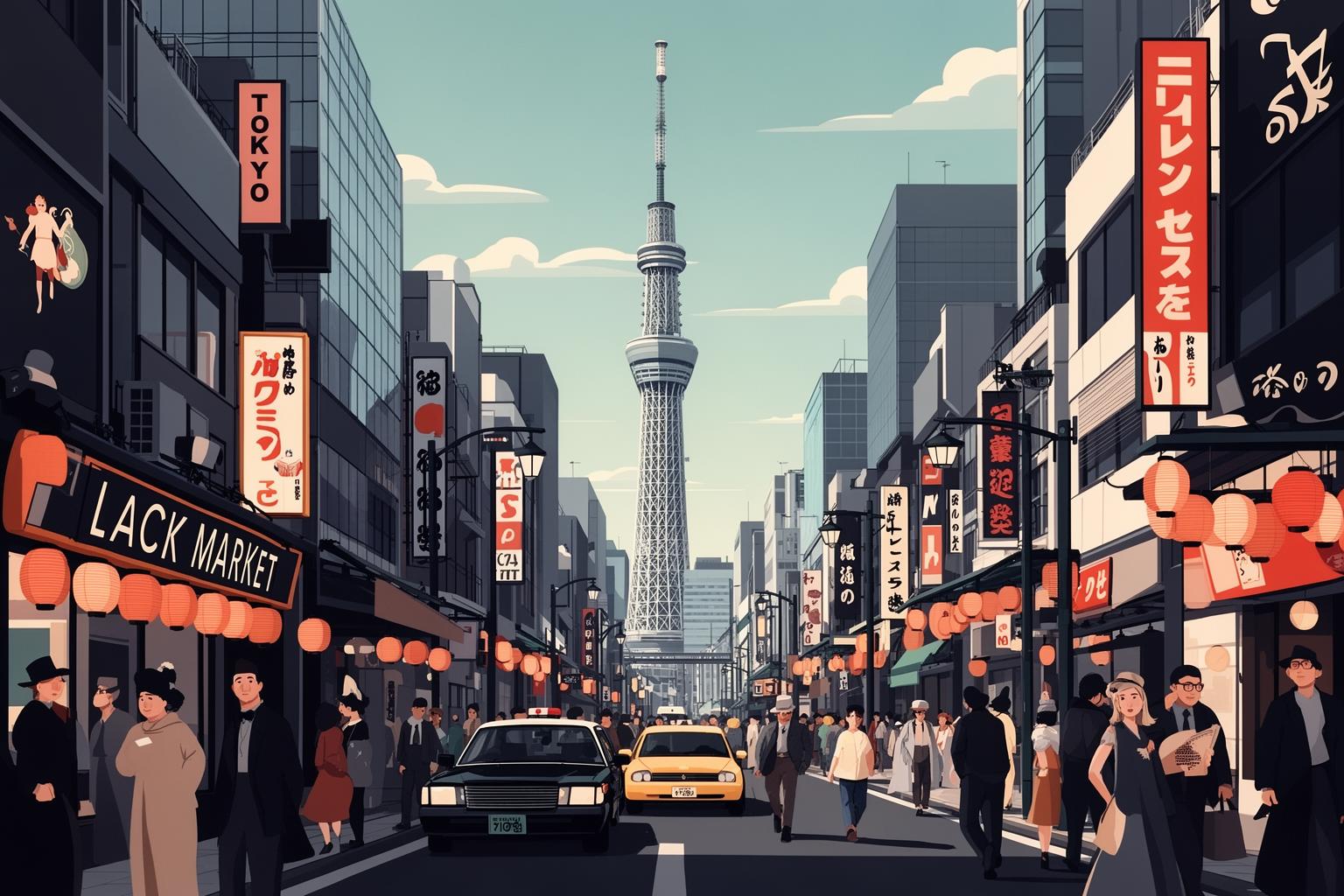
Step out of a major Tokyo train station—Shinjuku, Shibuya, Ueno—and you are immediately immersed in a city of the future. Gleaming towers of glass and steel pierce the sky, giant screens broadcast kaleidoscopic advertisements, and impeccably clean sidewalks channel rivers of people with quiet efficiency. This is the Tokyo of postcards and pop culture, a metropolis defined by its relentless pursuit of progress and perfection. But duck into an unmarked opening between two modern buildings, and you can find yourself in another world entirely. The air grows thick with the smell of grilled meat and old wood. The roar of the city softens into a low hum of laughter and clinking glasses. You are in a yokocho.
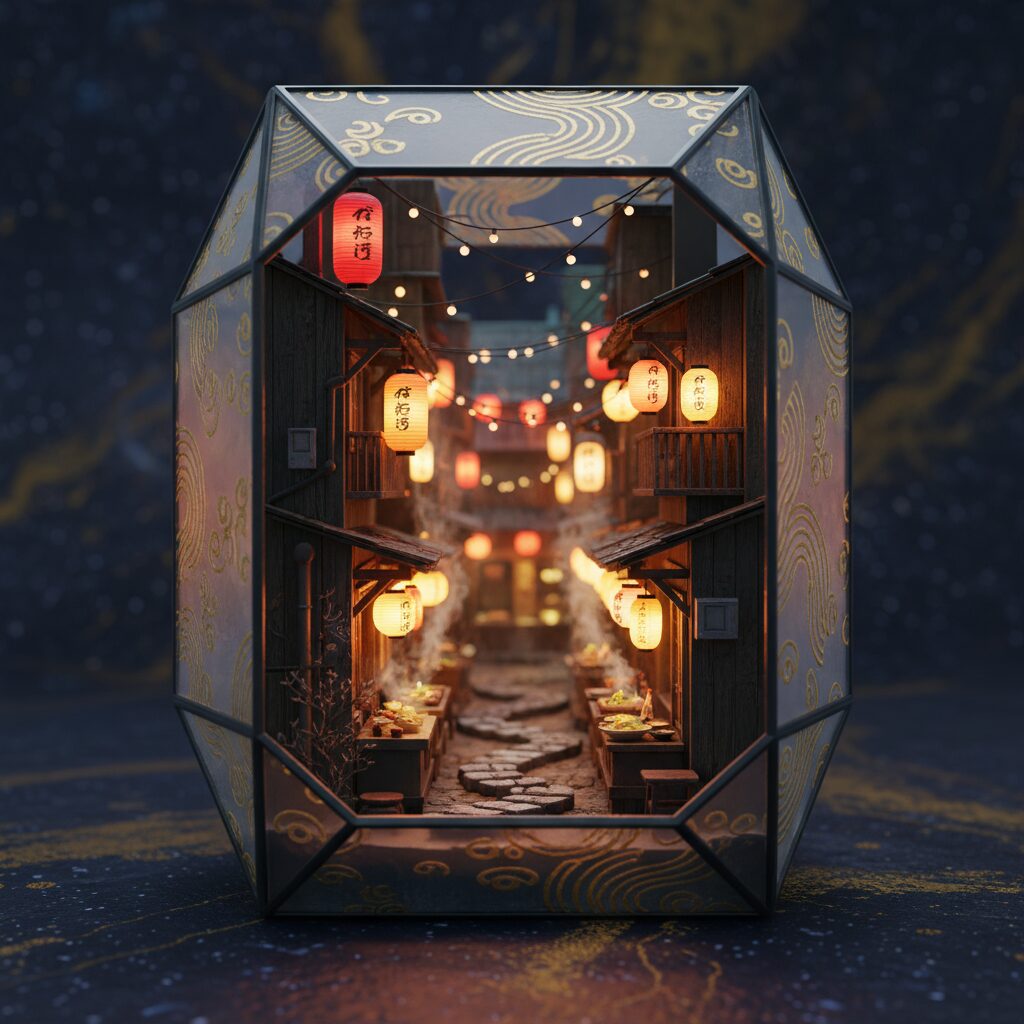
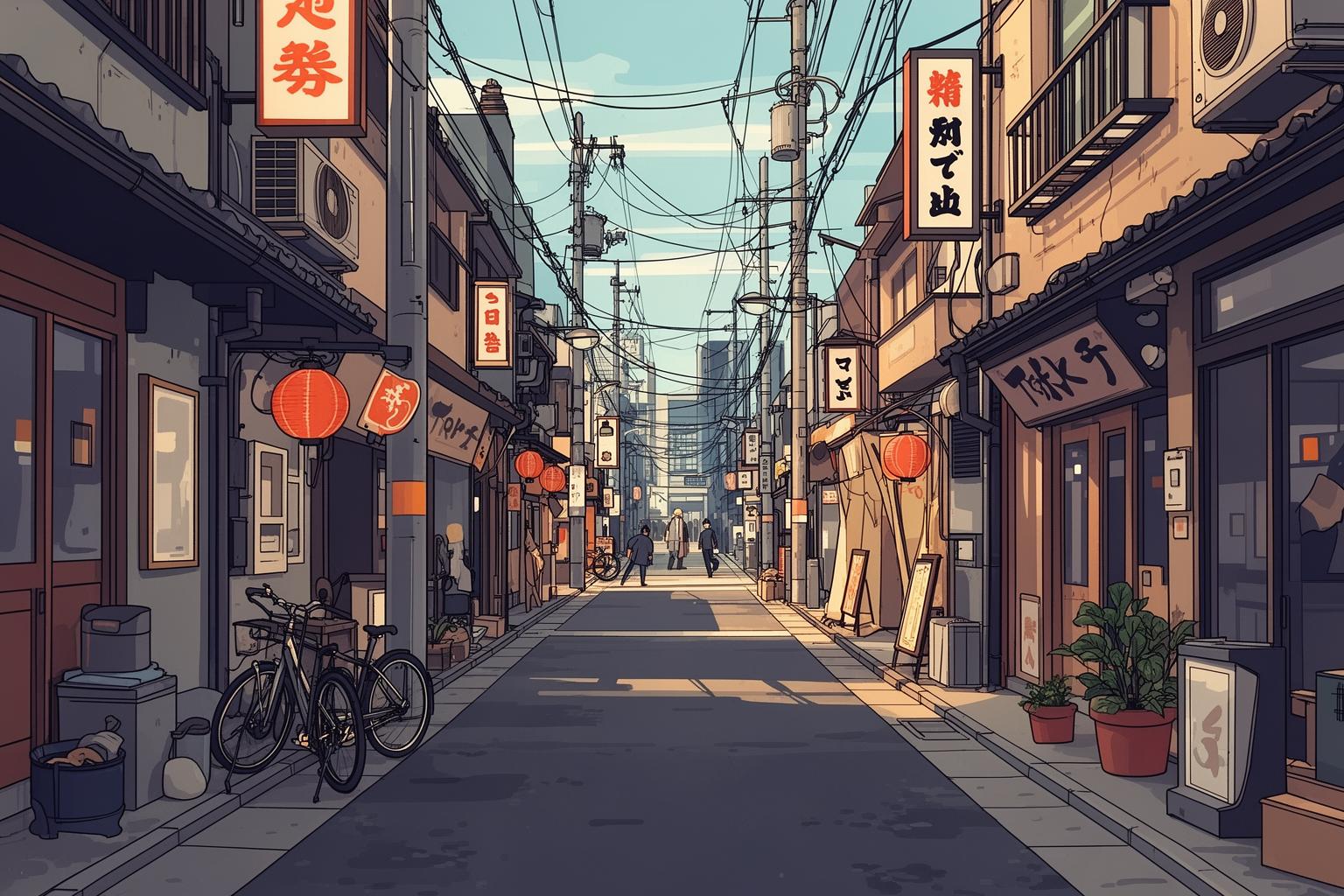
Literally translating to “side alley,” a yokocho is a labyrinth of tiny, shoulder-width lanes packed with miniature bars and eateries, some barely large enough to seat half a dozen people. Lanterns cast a warm, hazy glow on weathered wooden facades and tangled electrical wires that droop overhead like jungle vines. It feels less like a part of a modern capital and more like a film set for a post-war noir drama. In a city obsessed with personal space, cleanliness, and order, these cramped, smoky, and chaotic alleys should be an anachronism. They are, by every modern metric of urban design, inefficient and uncomfortable. And yet, they are not just surviving; in many ways, they are thriving, drawing in everyone from weary salarymen to curious young Tokyoites and international visitors.
This raises a fascinating question. Why, in one of the most advanced urban landscapes on earth, do these relics of a bygone era remain so culturally vital? The answer goes far beyond simple nostalgia for a romanticized past. The enduring power of the yokocho lies in its accidental genius. Born from the desperation and chaos of post-war Japan, their very architecture—a product of scarcity and necessity—inadvertently created the perfect environment for a kind of raw, unfiltered social connection that is increasingly difficult to find in the polished, atomized world outside their narrow confines. These alleys are not just places to drink; they are essential social incubators, living museums where the physical constraints of the past continue to shape and enrich human interaction in the present.
The spontaneous social encounters found in these intimate alleys mirror the unexpected charm of reading manga on the train, where everyday commutes transform into culturally rich experiences.
Born from Ash and Necessity: The Black Market Origins
To truly grasp the yokocho, one must start not with design or culture, but with destruction. Tokyo in 1945 was a shadow of its former self. Allied firebombing had razed vast parts of the city, turning wooden neighborhoods into ash and rubble. The formal economy had collapsed, food was scarce, infrastructure demolished, and the government in chaos. For the millions of shell-shocked survivors, official channels offered little hope.
Yamiichi: The Rise of the Black Markets
From this desperation, the yamiichi, or black markets, sprang up. They were spontaneous, chaotic, and technically illegal, yet vital to the city’s survival. Centered around major transportation hubs like Shinjuku and Ueno—the lifelines for people and scarce goods—these markets offered anything for a price. A returning soldier might sell a military uniform, a farmer bring vegetables from the countryside, and entrepreneurs scrounge alcohol and other rationed items.
These markets were far from pleasant. They were sprawling, unsanitary clusters of makeshift stalls and lean-tos crafted from salvaged wood and corrugated metal. Still, they buzzed with raw, survivalist energy. Here the foundations of yokocho were formed. Small shacks began serving cheap food—grilled chicken and pork offal (yakitori and motsuyaki), utilizing every part of the animal—and strong, often low-quality liquor to comfort the weary souls of a traumatized population. These were not places for fine dining but to fill your stomach, drink, and momentarily escape the harshness of post-war life.
From Illegality to Legitimacy
As Japan slowly began its recovery in the 1950s, authorities cracked down on the yamiichi, aiming to restore order and formal commerce. Yet, the spirit of these markets endured. Rather than vanish, many vendors and stall owners moved into the narrow backstreets and alleys close to main thoroughfares. They operated in a grey area, often without official permits, on plots with unclear ownership dating back to before the war.
This history is essential to understanding the yokocho’s physical form. They occupy prime real estate near major stations precisely because that’s where the black markets once thrived. They are cramped and maze-like because they developed organically, without city planning, squeezing into whatever forgotten land was left. Their ramshackle, patchwork appearance is not a stylistic choice but a genuine legacy of their make-do-and-mend origins. Famous alleys like Shinjuku’s Omoide Yokocho (literally “Memory Lane,” but colloquially “Piss Alley” for its historical lack of facilities) or the Golden Gai are direct descendants of these post-war black markets. They are not mere replicas of history; they are the history, stubbornly enduring into the future.
The Architecture of Forced Connection
The most distinctive feature of the yokocho is not its cuisine or its history, but its space. The physical setting of these alleys functions as a social catalyst, actively dissolving the barriers that usually separate strangers in Japanese society. This was not a deliberate design choice; rather, it was an unintended, brilliant outcome of severe spatial limitations.
Designed for Closeness, Not Comfort
Step into a typical yokocho bar, and the first thing that strikes you is its compact size. Many venues resemble little more than a narrow hallway with a counter and a few stools. Six or seven patrons may fill the entire space. There are no private tables, no secluded booths. Your personal space disappears the moment you sit down. Your elbows might touch those of your neighbor. By necessity, you immediately become part of a group.
This imposed closeness contrasts sharply with the modern restaurant experience, which often aims to provide privacy and separation. In a yokocho, anonymity is impossible. This physical proximity generates an instant, subtle intimacy. It acts as a quiet but effective social lubricant. When you’re sitting inches from someone, ignoring them feels more awkward than engaging. A simple nod, a remark about the food, or a shared laugh with the chef becomes a natural, almost unavoidable interaction.
The Counter as the Stage
The counter-only arrangement is central to this dynamic. It serves as both a communal table and a stage. Everyone faces forward, watching the master of the establishment—the taisho or mama-san—as they prepare food and pour drinks. This shared focal point brings customers together. Unlike a restaurant with separate tables where each party remains isolated, the counter transforms a group of individuals into an audience, all involved in the same small performance.
This setup encourages what sociologists refer to as “triadic conversation.” Instead of a simple one-on-one exchange, discussions can easily extend to three or more people. The person on your left might start talking to the chef, and you and the person on your right naturally get drawn into the conversation. Barriers melt away not through forced introductions, but through the organic, shared experience of sitting together at the counter. For a short time, you are all members of the same temporary club.
A Collective Sensory Experience
The intimacy of the yokocho engages multiple senses. The sizzle of meat on the hot grill, the rhythmic chop of a knife on a cutting board, the fragrant smoke that fills the small space—these aren’t mere background noises. They are immediate and tangible. You’re not just eating food; you’re immersed in its creation. This shared sensory environment further unites the customers. Everyone breathes the same smoky air, hears the same sounds, and feels the same warmth. It fosters a powerful sense of shared presence, sharply contrasting with the often sterile and disconnected nature of contemporary urban life.
The Unspoken Rules of the Alleyway
Successfully navigating a yokocho requires understanding a set of unspoken social rules that define these distinctive spaces. These guidelines transform what might otherwise be an awkward, cramped setting into one of comfort and genuine connection, offering a brief escape from the rigid social structures of the outside world.
Uchi-Soto in Miniature
Japanese society is well known for the concept of uchi-soto, which differentiates between one’s “inside” group (family, close colleagues) and “outside” groups (strangers, acquaintances). Interactions with soto individuals are usually formal and reserved. The charm of the yokocho lies in how quickly it dissolves this distinction. The moment you push aside the fabric curtain (noren) and take a seat, you are welcomed into a temporary uchi group. The shared vulnerability of being in such a confined space creates an unspoken bond of camaraderie.
This setting encourages a type of conversation that is uncommon in everyday Japanese life. People feel more comfortable expressing their thoughts, sharing personal stories, or even airing grievances about their boss to the stranger beside them. There is a mutual understanding that this community is temporary. The connections are genuine, yet typically limited to the time and space of that bar on that particular evening. This relieves people from social obligations, enabling a more open and sincere form of communication.
The Role of the Master
At the center of every great yokocho establishment is the master. The taisho (male owner) or mama-san (female owner) is much more than just a cook and bartender. They act as the social conductor, the memory-keeper, and the soul of the venue. A skilled master reads the mood of the room, gently steering conversations, introducing patrons who might connect well, and making sure everyone feels welcomed.
They often recall the names and stories of regular customers, fostering a sense of belonging similar to a neighborhood pub in the West, but on a far more intimate scale. For many lonely urban dwellers, the master of their favorite yokocho bar serves as a confidant and steady presence in an ever-changing world. Their role includes not just curating a menu, but also shaping a social atmosphere that transforms a simple exchange of food and drink into a profoundly human experience.
Fleeting but Real Connections
The beauty of yokocho society lies in its ephemeral nature. You might spend two hours engrossed in conversation with an architect, a student, and a retired fishmonger, sharing drinks, stories, and laughter. Then, you will all settle your tabs, bow, and vanish into the night, likely never to meet again. There is no exchange of contact details and no pressure to maintain the relationship.
While this may seem poignant, it is in fact liberating. It creates a space for low-pressure social interaction, free from the complications and expectations of long-term friendships or professional networking. It allows people to step away from their prescribed social roles—as employee, spouse, or parent—and simply be individuals among others for a brief time. This serves as an essential outlet in a society that highly values conformity and clearly defined social roles.
Yokocho in the 21st Century: Nostalgia, Threat, and Resilience
Today, the yokocho stands at a crossroads, caught between a resurgence in popularity and the constant threat of disappearance. Its role in the modern Japanese city is more complex than ever, as it navigates the tensions of nostalgia, gentrification, and urban redevelopment.
The Pull of Showa Nostalgia
In recent years, yokocho have experienced a surprising revival, especially among younger Japanese generations with no firsthand memory of the post-war era. For them, these alleys represent not hardship but an escape into a world that feels more genuine and textured than their own. This phenomenon is often described as “Showa retro” nostalgia—a longing for the Showa Period (1926-1989), now viewed as a grittier, more passionate, and more “human” era.
This new wave of patrons is not merely after cheap beer and skewers. They seek an experience. They are weary of the predictable, sanitized chains and polished cocktail bars dominating the urban scene. In the yokocho, they discover an unpredictable, slightly rough-around-the-edges environment that is deeply immersive. It offers a tangible connection to a past they only know through stories and media, serving as a strong counterpoint to the digital alienation of modern life.
The Specter of Redevelopment
Despite their cultural significance, many yokocho face precarious futures. Located on some of the world’s most valuable real estate, their complex ownership and non-compliant structures make them prime targets for developers eager to replace them with gleaming office towers or shopping malls. The story of beloved yokocho threatened by redevelopment is a common narrative in Tokyo’s urban evolution.
Fires, whether accidental or suspicious, have often served as triggers to clear these old buildings. The renowned Golden Gai in Shinjuku, with its hundreds of tiny, historically significant bars, has resisted redevelopment and arson attempts for decades, thanks to the steadfast dedication of its owners and patrons. This ongoing struggle attests to their cultural importance. Their fight aims not only to preserve old structures but to protect a unique form of urban social life that, once lost, can never be recreated.
Neo-Yokocho: The Polished Imitation
Recognizing the allure of the yokocho aesthetic, developers have started creating “neo-yokocho.” These modern, planned food halls, often situated in basements of new commercial buildings, are designed to replicate the look and feel of traditional alleyways. They feature multiple small food stalls, red lanterns, and a lively, communal vibe.
While these spaces can be enjoyable, offering a clean, safe, and accessible version of the yokocho experience, they often lack a crucial element. They are curated, not organic. They are the product of design rather than history. The grit, the inconvenience, and the thrill of discovering something hidden—these qualities are hard to fabricate. The accidental intimacy of a true yokocho emerged from genuine constraints and decades of lived experience. Neo-yokocho capture the aesthetics but rarely the soul.
Ultimately, the yokocho endures because it fulfills a fundamental human need. In a world becoming increasingly smooth, frictionless, and digitally mediated, these cramped, chaotic alleys demand our presence. They bring us together, urging us to engage directly and unfiltered with the people and spaces around us. Their greatest flaws—the limited space, the smoke, the noise—are precisely what make them strong. They stand as living monuments to times of hardship but, more importantly, as powerful reminders that the most meaningful connections often form not in spaces of perfect comfort, but in the imperfect, intimate, and beautifully human places we share.