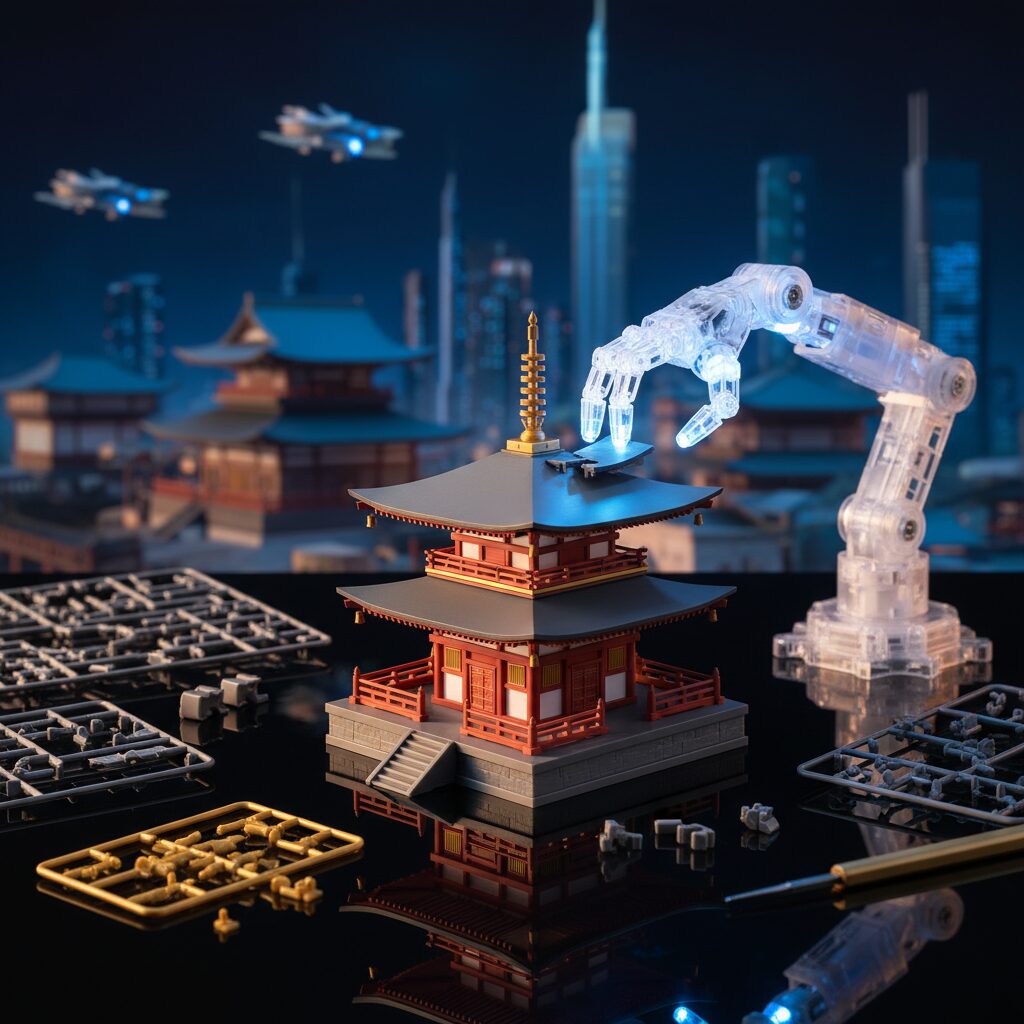
If you walk into a Japanese department store, past the designer clothes and the immaculate food hall, you’ll eventually find the toy section. And in that toy section, you’ll find something that, at first glance, looks familiar but feels entirely different. It’s an entire wall—sometimes an entire floor—dedicated to plastic models. Not the clunky airplane kits you might remember gluing together on a rainy afternoon as a kid, the ones that ended up with fingerprint smudges and cloudy canopies. This is something else.
This is the world of plamo (a contraction of “plastic model”). Here, you’ll see salarymen in suits seriously contemplating which World War II-era German tank has the most accurate track detailing. You’ll see young women picking out pastel-colored, bear-themed robot kits. You’ll see fathers and sons debating the merits of different versions of the same giant anime robot, the RX-78-2 Gundam. The boxes themselves are works of art, covered in dynamic, beautifully rendered illustrations. Inside, the plastic parts are engineered with a precision that would make a Swiss watchmaker nod in approval.
This isn’t just a children’s pastime in Japan. It’s a serious, multi-billion yen industry and a deeply ingrained, multi-generational hobby. Plamo is a cultural touchstone that sits at a fascinating intersection: it is a discipline of meticulous craftsmanship, a form of meditative practice, and a core pillar of otaku (geek or enthusiast) culture. It’s a hobby that asks for patience and rewards you with a tangible piece of art that you, and you alone, brought to life. Forget the sticky, frustrating model kits of your youth. In Japan, plamo is a craft, and it’s time to understand why it commands so much respect.
The interplay of precision and personal passion in plamo mirrors the vibrant energy found in Tokyo’s intimate yokocho alleys, where a similar blend of tradition and urban dynamism unfolds.
From Post-War Toys to Pop Culture Icons

The reverence for plamo didn’t arise spontaneously. Its origins are deeply intertwined with Japan’s post-war industrial development and a landmark moment in animation history that redefined what a toy could be.
The Birth of a Hobby
During the 1950s and 60s, as Japan rapidly rebuilt and re-industrialized, an enthusiasm for technology and engineering took root. The first plastic models in Japan were actually imports from American and British companies like Revell and Airfix. Japanese firms, including the now-iconic Tamiya, initially imported these foreign kits before realizing they possessed the expertise to create their own. And they succeeded, focusing on quality and precision.
Early models were mostly military: battleships such as the Yamato, Zero fighter planes, and tanks. These were more than mere toys; they were miniature tributes to engineering, captivating a generation of men and boys fascinated by the mechanics of power. This emphasis on realism and historical accuracy gave the hobby a serious character from the start. Building a Tamiya kit was not just snapping plastic parts together; it involved recreating a piece of history, requiring research, patience, and steady hands. The hobby emerged from respect for engineering rather than simple child’s play.
The Gundam Revolution
For about twenty years, plamo was primarily the realm of military and vehicle modelers. Then, in 1979, a TV anime called Mobile Suit Gundam was broadcast. It initially flopped commercially, considered too complex and dark for its intended audience. However, its realistic portrayal of giant robots as mass-produced weapons of war, rather than invincible superheroes, struck a chord with a slightly older, more discerning audience. When it was rerun, its popularity soared.
Bandai, the toy company holding merchandising rights, made a choice that permanently changed Japanese subculture. Instead of selling pre-assembled toys, they launched a line of plastic model kits based on the show’s robots, calling it “Gunpla” (Gundam Plastic Model).
This was groundbreaking. Suddenly, the detailed, meticulous world of military modeling intersected with the vibrant, imaginative realm of anime. Gunpla kits were unlike static display models. Thanks to innovative engineering that used poly-caps in the joints, they were fully poseable. You could assemble your favorite mobile suit and pose it in iconic scenes from the show. This building process created a deeper connection to the original work than watching it alone ever could. Plamo evolved from merely replicating the past to bringing a beloved fictional universe to life right on your desk. This cemented the bond between plamo and otaku culture, a connection that remains strong to this day.
The Zen of the Runner: More Than Just Plastic
To appreciate the charm of plamo, you need to grasp the process. The magic lies not only in the finished product but also in the quiet, focused hours spent assembling it. It’s a ritual that feels both technical and profoundly meditative.
The Ritual of the Build
It all begins with the box. You slide off the lid and find not a tangled mess of parts, but neatly sealed bags containing “runners”—flat plastic frames holding the individual pieces. The air carries the faint, distinctive scent of polystyrene. The instruction manual is a masterpiece of minimalist design, using diagrams and numbers to convey a complex assembly process without a single word of text.
The first step is to carefully snip a part from the runner using specialized nippers. Then, you trim the tiny leftover attachment point, the “nub,” with a hobby knife. You might then sand the area with progressively finer grits of sandpaper until the surface is flawlessly smooth, indistinguishable from the rest of the part. This small, focused act, repeated hundreds of times, forms the fundamental language of plamo.
Bandai perfected the art of “snap-fit” engineering, meaning most modern kits, especially Gunpla, don’t require any glue. The parts are designed with such precision that they click together with a satisfying firmness. This lowered the barrier to entry for beginners but did not diminish the hobby’s depth. The basic build is just the starting point on a long journey toward mastery.
The process is methodical. You follow the steps, building a leg, an arm, a torso, a head. Gradually, a complex mechanical object takes shape under your hands. The outside world fades away. It’s just you, the instructions, and the parts. There is a quiet satisfaction in this, a sense of order and creation amidst chaos. It’s a practice of active mindfulness.
A Canvas for Creativity
A “straight build,” where you simply assemble the kit out of the box with maybe a few decals, is completely respectable. The result is already an impressive feat of miniature engineering. But for many modelers, this is merely the blank canvas. The true artistry begins where the instructions end.
Advanced techniques turn a mass-produced kit into a unique work of art. Panel lining, for example, involves tracing the molded lines on the armor with a fine-tipped pen or liquid wash to enhance the details. Custom painting lets a builder alter the color scheme entirely, creating their own signature version of a famous robot. Then there’s weathering, the skill of making the model look used, battered, and realistic. This can include applying paint chips, rust effects, mud streaks, and even simulated blast marks to narrate the story of a machine that has seen battle.
The most dedicated builders engage in kitbashing, combining parts from several different kits to craft a completely original design. They might add custom-made photo-etched metal parts for finer detail or install tiny LED lights to make the model’s eyes or sensors glow. The pinnacle of the craft involves creating dioramas, placing the finished model in a detailed, scratch-built scene that tells a complete story. International competitions like the Gunpla Builders World Cup display astonishing levels of skill and creativity, where models are judged on technique, painting, and originality. This is what elevates plamo from a simple pastime to a true art form.
The Social Life of a Solitary Hobby
While building is an intensely personal and solitary activity, the culture around plamo is surprisingly social. It’s a community founded on shared passion, mutual respect for skill, and a common language expressed through plastic.
Community and Shared Passion
Hobby shops in Japan are more than just retail spaces; they serve as community hubs. In places like Tokyo’s Akihabara or Nakano Broadway, as well as in smaller local stores, you’ll find glass cases showcasing models built by staff and local customers. These displays inspire—a gallery of what’s possible. It’s common to see builders gathered, discussing techniques, exchanging tips on new painting methods, or recommending specific tools. The Gundam Base, Bandai’s flagship store, is a pilgrimage site for fans, offering exclusive kits and a place for builders to come together.
Online, the community is even larger. Social media platforms overflow with builders sharing works-in-progress and completed projects. Forums and blogs are treasure troves of tutorials and reviews. Magazines like Hobby Japan and Model Graphix have long been essential pillars of the community, setting trends and showcasing the work of master modelers, known as meisters. This interconnected ecosystem ensures that even if you build alone in your room, you are never truly isolated. There’s always a place to share your triumphs and seek advice for your next challenge.
A Multi-Generational Bridge
One of plamo’s most remarkable qualities is its ability to bridge generational divides. It’s a hobby a grandfather, father, and son can all enjoy, despite starting from very different points.
A man in his 60s might have grown up meticulously assembling models of the battleship Musashi, his passion rooted in historical accuracy. His son, now in his 40s, belongs to the first Gunpla generation, captivated by the drama of the original Mobile Suit Gundam. His grandson, a teenager today, might be a fan of the latest Gundam series, The Witch from Mercury, building sleek, modern kits from that show.
They can all sit together at the same table, working on their respective projects. The tools are the same. The fundamental skills are the same. They share sanding techniques, admire each other’s panel lining, and discuss the clever engineering of new joint systems. The franchises themselves, especially enduring ones like Gundam and Macross, provide a shared cultural context spanning decades. A new kit of a classic design brings nostalgic fans back, while a new anime draws in a fresh generation. This ongoing cycle of renewal and reverence for legacy keeps the hobby vibrant and relevant, passing the torch—or rather, the hobby knife—from one generation to the next.
The Soul of the Machine: Plamo as Cultural Expression

Ultimately, the lasting appeal of plamo in Japan stems from how deeply it embodies fundamental aspects of the national culture. It serves as a miniature representation of the country’s industrial spirit and acts as an ideal medium for expressing modern subcultural identity.
Monozukuri in Miniature
There is a Japanese concept called monozukuri, which roughly means “the art, science, and craft of making things.” This term captures the essence of Japanese manufacturing—a tireless quest for perfection, innovation, and quality. It is the philosophy that inspires Japanese automakers to engineer doors that close with a satisfying thud and electronics companies to produce products that are both aesthetically pleasing and flawlessly functional.
A high-quality plamo kit is monozukuri encapsulated. The astonishing precision of the molds, the ingenuity of the part separation, and how pieces fit together perfectly without glue—all reflect this spirit. When you assemble a kit, you are more than just a consumer; you become the final step in the manufacturing process. You are actively involved in monozukuri, embracing that same dedication to precision and care, and the finished model stands as a tribute to this ethos.
Otaku Identity and Personal Space
For the otaku, plamo represents the ultimate way to engage with a beloved franchise. Watching an anime or reading a manga is a passive experience, but building a model of a character or machine from that world is active and creative. It requires studying the design, understanding its construction, and investing your own time and skills to bring it to life. The finished product is more than just merchandise; it becomes a personal relic, a trophy imbued with the memories of hours spent crafting it.
These completed models become essential elements of an individual’s private space. They line bookshelves, stand vigil on office desks, and fill dedicated display cases. This collection physically embodies one’s passions and identity. It acts as a curated gallery of your personal fandom and showcases your skill as a builder. In a culture where outspoken self-expression is often subdued, these models stand as a proud, tangible statement of who you are and what you cherish.
Plamo endures because it fulfills a variety of desires simultaneously. It is a technical challenge for the engineer, a creative outlet for the artist, a meditative ritual for the overworked, and a sacred symbol for the devoted fan. This hobby requires patience, precision, and passion, and in return, it offers a deep sense of achievement. It represents the perfect blend of Japan’s industrial soul and its pop-cultural spirit.