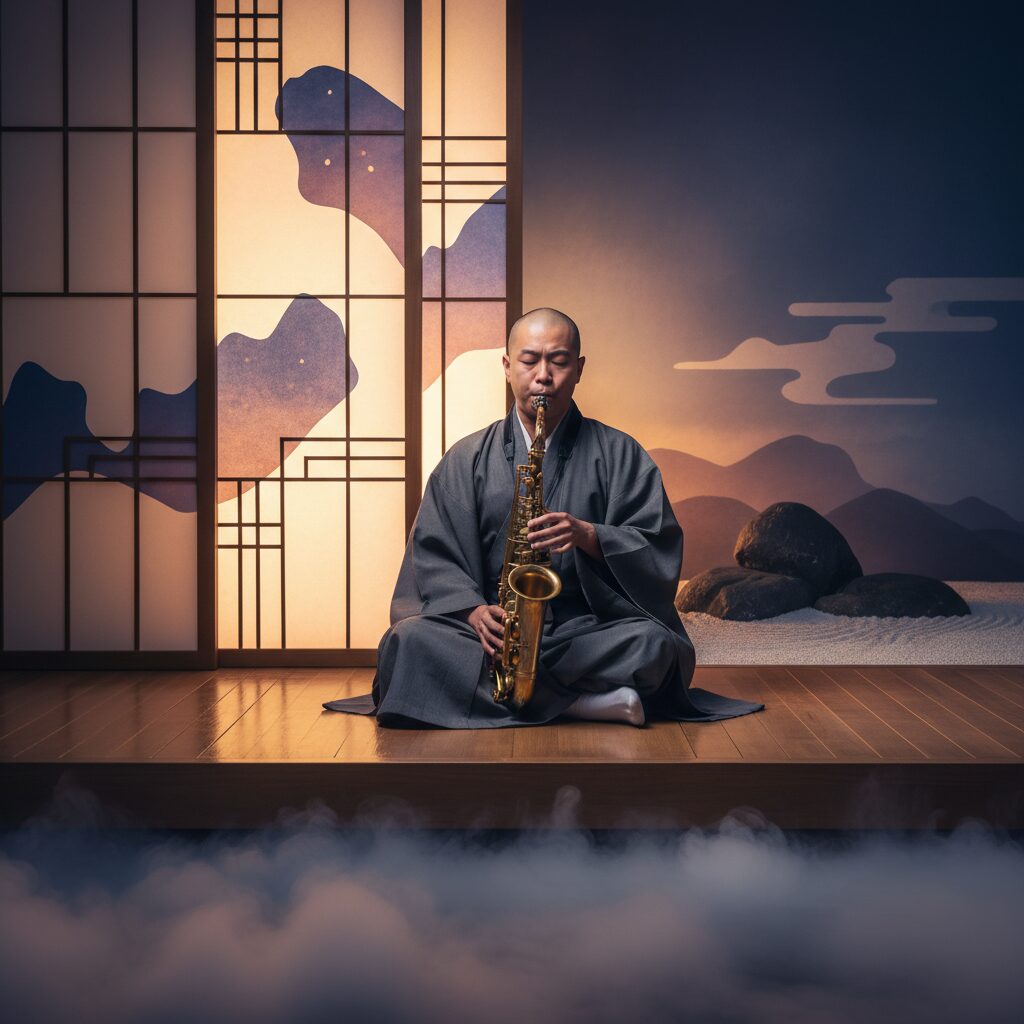
Imagine walking into a café. You’d expect the gentle clatter of ceramic on saucer, the hiss of an espresso machine, the low hum of conversation. Now, erase all of that. Replace the chatter with an almost monastic silence, broken only by the warm, expansive sound of John Coltrane’s saxophone pouring from a pair of towering vintage speakers. The air is thick with the smell of dark-roast coffee, old paper, and maybe a hint of whiskey. The room is dimly lit, every surface seemingly covered in the spines of thousands of vinyl records. This isn’t a café, not really. And it isn’t quite a bar. You’ve just stepped into a jazu kissa—a jazz kissaten—one of Japan’s most unique and misunderstood cultural institutions. This is not a place for socializing. It’s a sanctuary for listening.
To the uninitiated, the rules can feel intimidating. No talking, or at least, keep it to a whisper. No loud noises. Don’t even think about taking a phone call. Your focus is meant to be directed entirely toward the music being played, which has been carefully selected and curated by the establishment’s owner, known as the “master.” This is a space dedicated to the deep, immersive, and uninterrupted appreciation of jazz. It’s a secular cathedral for sound, where vinyl records are the sacred texts and the turntable is the altar. For decades, these small, often hidden establishments have served as havens for audiophiles, intellectuals, and anyone seeking refuge from the clamor of urban life. But to truly understand the jazz kissa, you have to look beyond the strict etiquette and see it for what it is: a subculture born from post-war scarcity, a testament to a uniquely Japanese approach to connoisseurship, and a quiet rebellion against the noise of the modern world.
The jazz kissa’s hushed wonder mirrors the meticulous charm found in gachapon collecting, where small treasures convey profound echoes of Japan’s innovative spirit.
The Unspoken Rules of Reverence
Entering a classic jazz kissa for the first time is an exercise in sensory adjustment. Your first impulse might be to greet your friend, remark on the decor, or ask the person behind the counter for a recommendation. You must resist these impulses. The most essential rule, the very foundation of the entire experience, is the preservation of the sound environment. Silence is the default condition.
The Sanctity of Sound
The ban on conversation is not intended to be unfriendly. It is a form of mutual respect. Everyone in the room is there for the same reason: to listen deeply and without distraction. Even the quietest conversation disrupts that shared focus. It is considered disrespectful not only to other patrons but also to the music itself—to the artists who poured their souls into the recording and to the master who has chosen to present it. In this setting, speaking is noise pollution. Your role is to receive, not to broadcast.
This reverence extends beyond speech. The scrape of a chair, the clink of a spoon against a cup—you become suddenly aware of every small noise you make. The experience encourages mindfulness, a deliberate physicality where you move with intention. It’s an environment that reshapes your relationship with your surroundings, demanding a level of presence rarely required outside.
The Master: Curator and Conductor
At the center of every jazz kissa is the master (マスター, masutā). This person is far more than a proprietor or bartender. The master is the high priest of the establishment, the sole arbiter of the atmosphere, and the curator of the sonic journey. Often stoic and intensely focused, they spend hours behind a counter surrounded by walls of vinyl, selecting records, cleaning them with practiced care, and gently placing the needle in the groove. Their collection, often amassed over a lifetime, is the soul of the kissa.
Their role is to shape the mood of the room. They read the energy, the time of day, the weather outside, and choose music accordingly. One session might feature the melancholic piano of Bill Evans, followed by the fiery avant-garde improvisations of Ornette Coleman. They might play an entire album side without interruption, allowing the musicians’ original intent to unfold. Patrons can sometimes make requests, but this is often a delicate matter. It’s not a jukebox. A request is a suggestion offered to the master, who considers it and, if it fits the evening’s flow, may comply. Having a request accepted is a sign of respect and recognition of the kissa’s unique sensibility.
The Altar of Audio
The final element of this trinity of reverence is the equipment. A true jazz kissa is an audiophile’s dream. The sound system is not an afterthought; it is the centerpiece. You will usually find a pair of enormous, beautifully crafted vintage speakers—brands like JBL, Altec Lansing, or Tannoy are common. These are often paired with esoteric tube amplifiers that cast a warm glow in the dim light, chosen for their rich, analog sound.
The turntable is, naturally, paramount. The entire ritual deliberately celebrates the physical medium of the vinyl record. Watching a master handle a record is like observing a tea ceremony master with their utensils. There is a precision and economy of motion that reveals decades of practice. This focus on high-fidelity, analog sound is central to the philosophy. It’s about experiencing music as purely and powerfully as possible, with a depth and texture that digital streaming rarely replicates. The system isn’t just playing music; it’s performing it.
A Sanctuary Born from Scarcity and Passion
The jazz kissa feels like a relic from another era, and in many respects, it is. To understand how this unique subculture of silent, focused listening developed in Japan, you need to look back to the years following World War II. The jazz kissa was not born from pretension or snobbery; it arose out of genuine economic necessity and an insatiable cultural desire.
The Impossible Luxury of a Record
During the 1950s and 60s, Japan was undergoing intense reconstruction and rapid economic growth, yet the average person still had limited disposable income. For the growing generation captivated by American culture, jazz symbolized freedom, sophistication, and modernity. It was cool, intricate, and utterly enthralling. However, there was one major obstacle: imported jazz records were prohibitively expensive. A single LP could cost nearly half a month’s wage for an average worker. Amassing a personal collection was a luxury only the very wealthy could afford.
Moreover, access to live jazz performances was limited. Although clubs existed, they were costly and mainly located in major urban areas. For most, hearing the latest releases from Blue Note or Impulse! Records was simply out of reach. The jazz kissa emerged as a clever, communal answer to this challenge. For the price of a single cup of coffee, you could sit for hours listening to an extensive collection of records you could never hope to own. The proprietor invested their savings into building the record library and acquiring premium audio equipment, in effect creating a public listening space for a passionate community.
Hubs of Counter-Culture
As the phenomenon expanded through the 1960s and 70s, jazz kissa transformed into more than just listening rooms. They became essential intellectual and cultural hubs, especially for students, artists, writers, and political activists. In a time of widespread social unrest and student protests, these dimly lit, smoky spaces offered a discreet environment for deep discussions and debates—either when music wasn’t playing or in hushed exchanges between album sides.
They served as sanctuaries where alternative thinking was nurtured. The practice of sitting quietly and fully absorbing complex, improvisational music appeared to encourage a similar mindset among patrons. Renowned writers like Haruki Murakami, who himself operated a jazz kissa called Peter Cat before turning to novel writing, have captured this ambiance in their works. The kissa was a refuge from the strict conformities of mainstream Japanese society—a place to think freely, read, write, and simply exist. The music became a soundtrack for a subtle, internal form of rebellion and self-discovery.
The strict rule of silence became even more firmly established during this era. As the focus shifted toward pure appreciation, the kissa turned into a space to lose oneself in the music—a meditative experience nurturing creative and intellectual pursuits. It wasn’t about silencing people; it was about opening a mental space for reflection, guided by the sonic journeys of Miles Davis or Thelonious Monk.
The Psychology of the Listening Room
While the historical background explains the origin of the jazz kissa, its continued existence and lasting appeal are grounded in deeper elements of Japanese culture and urban psychology. These venues cater to specific cultural tendencies, providing an ideal refuge from the stresses of modern life in Japan.
A Space for the Solitary Individual
The jazz kissa can be seen as the ultimate embodiment of ohitorisama culture—the practice of doing things alone. Whereas many Western cultures might regard dining or drinking solo with a hint of pity, in Japan it is a common and respected practice. There is a profound appreciation for personal time and space, even in public settings. The jazz kissa is created with the individual in mind. You can enter alone, take a seat at the counter or a small table, and remain completely self-contained without feeling lonely. While you share the experience with others in the room, it is a parallel connection rather than an interactive one. The shared bond is the music. This creates a comfortable and inviting atmosphere for those seeking solitude without isolation.
This solitude fulfills a vital role as a “third place”—a setting that is neither home nor work—where one can unwind. For many urban Japanese residents living in small apartments and working in crowded offices, the kissa provides a temporary private world, a space to retreat into one’s own thoughts, accompanied by a carefully curated soundtrack.
Embracing the Power of ‘Ma’ (間)
The silence in a jazz kissa is far from empty. It is rich with meaning and expectation. This aligns with the Japanese aesthetic concept of ma (間), which refers to the space or interval between things—the pause in a conversation, the unpainted section in a scroll painting, the silence between musical notes. Ma is not a void; it is an active, essential element that shapes and gives meaning to what surrounds it. The deep quiet of a jazz kissa allows one to fully engage with the ma. You hear not just the notes, but the fading shimmer of a cymbal, the breath of the saxophonist, the subtle resonance of the room itself. The silence hones the senses, compelling you to listen with an intensity that cannot be achieved in a noisy environment. This profound listening experience becomes a form of active meditation, a practice in appreciating subtlety and discovering beauty in the spaces between.
An Antidote to Sensory Overload
Japanese cities, especially Tokyo, are vibrant symphonies of sensory stimuli. They present an endless flood of lights, sounds, and crowds. The jazz kissa offers a striking counterbalance to this. Entering one is a deliberate act of disconnection. You close a heavy wooden door, and the city’s chaos—the jingles from the pachinko parlor, the announcements from the train station, the roar of traffic—is immediately silenced. Instead, it is replaced by a controlled, curated, and singular sensory focus: the music. In a world that relentlessly demands our attention be divided in numerous directions, the kissa requests the opposite. It calls for your undivided attention on one thing. This act of single-tasking, of surrendering to a passive experience, can be deeply restorative. It is a place to recalibrate your nervous system and find a moment of profound calm in the heart of a bustling metropolis.
Navigating the Modern Jazz Kissa
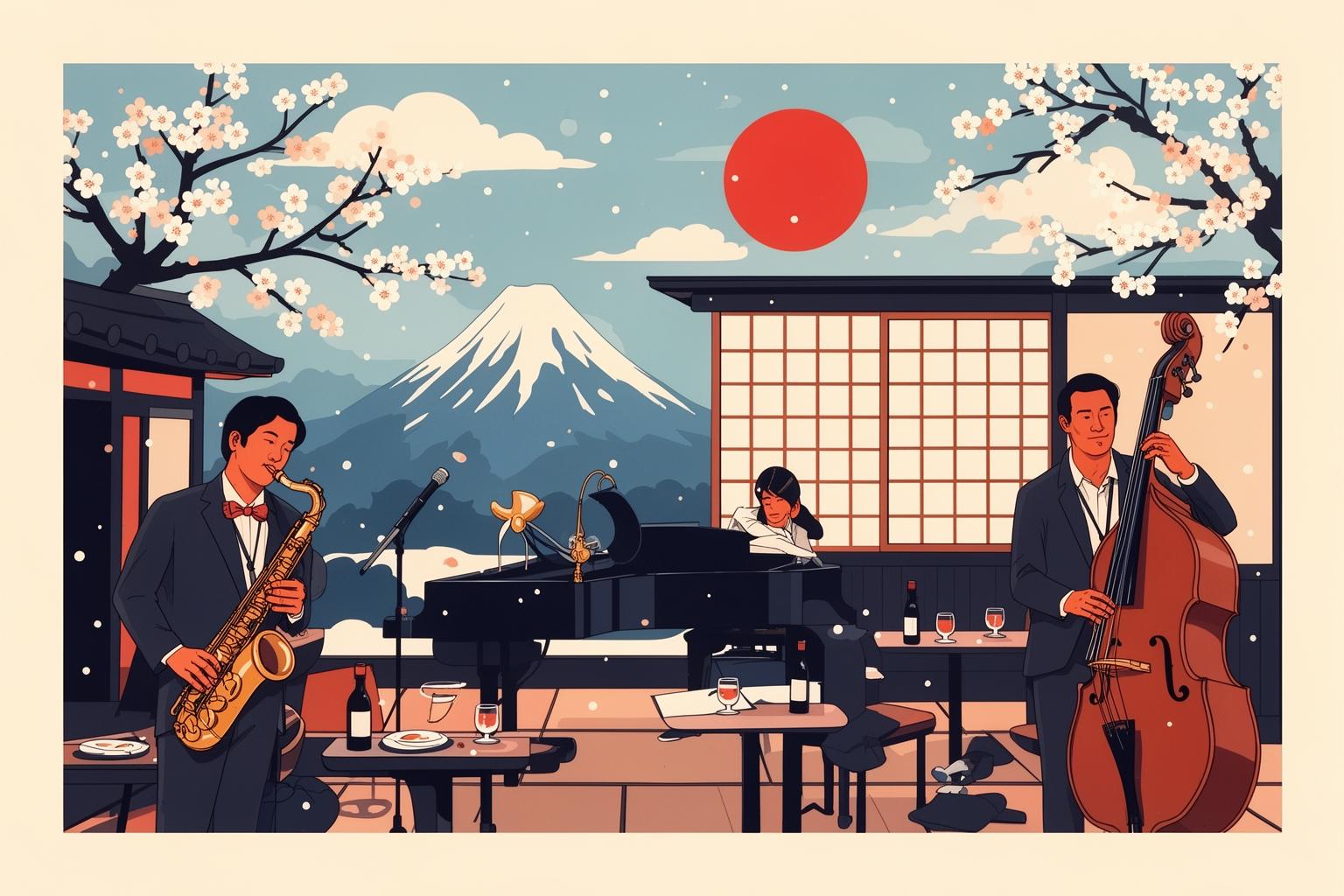
In the era of Spotify and noise-canceling headphones, the concept of a place dedicated to playing records for a silent audience might feel outdated. Indeed, hundreds of jazz kissa have closed over the decades as their masters have aged and the ways people consume music have evolved. Yet, many iconic establishments still endure, and a renewed wave of interest, both domestic and international, is helping to preserve their spirit.
The Old Guard and the New Wave
The surviving kissa from the golden age serve as living museums. Venues like Dug in Shinjuku, Chigusa in Yokohama (Japan’s oldest), or Eagle in Yotsuya stand as institutions, often run by their original, now elderly, owners or their devoted successors. Visiting one feels like stepping back in time. The interiors bear the marks of decades of cigarette smoke (as many older kissa still allow smoking), the chairs are well-worn, and the vinyl collections are vast. The atmosphere is rich with history, and regular patrons fiercely uphold the traditional etiquette.
Alongside these historic pillars, a new generation of owners has begun opening modern takes on the jazz kissa. These newer spots may have a somewhat more relaxed approach to quiet conversation, feature contemporary interior designs, or focus on specific jazz sub-genres. Some may even blend elements of record stores or conventional bars. While purists might dismiss them, these new ventures are vital in introducing the concept to younger audiences and ensuring its evolution rather than decline.
A First-Timer’s Guide
For newcomers, the idea of stepping into a jazz kissa can be intimidating. The discreet entrances, often down narrow staircases or along quiet alleys, may feel unwelcoming. However, approaching the experience with respect and understanding is key. Here are a few tips:
- Find Your Spot: Look for a sign featuring a musical note or the characters「ジャズ喫茶」. Once inside, quietly find a seat. The master will likely acknowledge you with a nod; don’t expect warm greetings.
- Order Simply: The menu tends to be minimal. Coffee (often a dark, siphon-brewed style), tea, or a simple highball or whiskey is standard. Your drink is your ticket to stay and listen. Order it, then settle in.
- Embrace the Silence: Put your phone away. Avoid starting conversations. Just listen, letting your ears adjust and the music wash over you. If you are with someone, any necessary communication should be spoken in a barely audible whisper.
- Stay a While: The experience isn’t meant to be rushed. Plan to stay for at least one full side of an album, roughly 20–30 minutes, to fully absorb the atmosphere. Pay quietly when you’re ready to leave.
Don’t be daunted. The seriousness isn’t personal; it’s a shared dedication to the experience. By respecting the space, you become part of it.
Beyond the Music: The Kissa as a Time Capsule
To dismiss the jazz kissa as merely a café that plays jazz overlooks its true significance. It is a complex cultural artifact, a physical embodiment of a uniquely Japanese philosophy of appreciation. It embodies a devotion to a single pursuit taken to its highest extreme—the spirit of the shokunin (artisan) applied not to crafting swords or sushi, but to the art of listening.
These establishments serve as time capsules, preserving not just the music but the manner in which it was once experienced: with undivided attention, reverence, and a communal bond formed in shared silence. In today’s era of endless options and fleeting focus, the jazz kissa stands in quiet resistance. It values depth over breadth, concentration over distraction, and the tangible beauty of an analog world. It reminds us that sometimes, the deepest connections arise not from conversation, but from the simple, shared act of hearing a needle drop into a groove, waiting for the music to begin.