Walk through Shibuya on any given day, and you’ll see a living catalog of Japanese style tribes. There are the quietly chic minimalists, the avant-garde disciples of Harajuku, and the meticulous vintage hunters of Koenji. But for a few decades, one subculture outshone them all, quite literally. This was the world of the gyaru, a movement built on bleached hair, deep artificial tans, and a rebellious spirit that sent shockwaves through Japan’s famously conformist society. To the uninitiated, gyaru can look like a caricature—a loud, frivolous, and perhaps slightly baffling performance of femininity. But to dismiss it as just a trend is to miss the point entirely. Gyaru wasn’t just about fashion; it was a declaration of independence. It was a full-throated, glitter-dusted, platform-stomping rejection of everything a “good” Japanese girl was supposed to be. In a culture that has long prized subtlety, paleness, and demure collective harmony, the gyaru aesthetic was a deliberately constructed, unapologetically individualistic scream. This is a subculture born from economic anxiety and social constraint, a vibrant counter-movement that gave a generation of young women the tools to build their own identity, one false eyelash and expertly decorated acrylic nail at a time. To understand gyaru is to understand a crucial chapter in modern Japanese youth culture—a story of who it was for, and why it had to exist.
This era of self-determined style is but one thread in Japan’s rich tapestry of pop cultural revolutions, where even the charm of quirky mascot culture demonstrates a vibrant resistance to conformity.
The Birth of a Counter-Culture: Shibuya in the 90s
The gyaru phenomenon did not emerge out of nowhere. It arose from the particular social and economic conditions of 1990s Japan, a period referred to as the “Lost Decade.” The dazzling economic boom of the 1980s had collapsed, leaving behind feelings of disillusionment and uncertainty. The promise of lifetime employment and steady prosperity, which had characterized their parents’ generation, now felt like an empty echo. For young people, especially young women, the expected path—study hard, secure a respectable office job, marry, and become a homemaker—felt less like a sure route to stability and more like a confining trap.
Escaping the Cultural Script
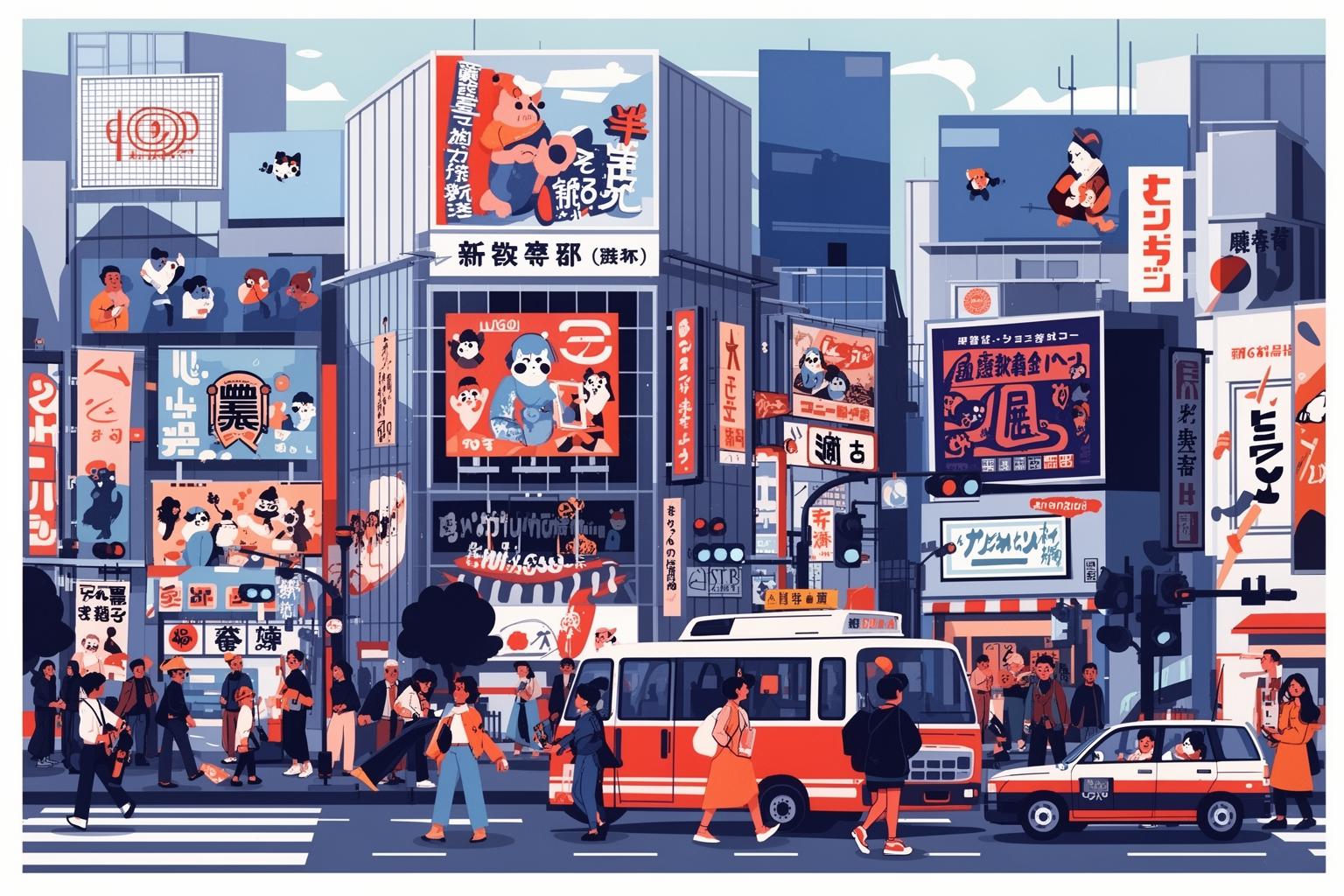
In this context, Tokyo’s Shibuya district turned into a refuge. With its towering video screens, bustling department stores like Shibuya 109, and maze-like streets, it became the undisputed center of youth consumption and culture. It was a space where young people could evade the watchful eyes of parents and teachers, a place to see and be seen. Here, a new form of rebellion began to take shape—one that wasn’t political in the traditional sense. It was a social rebellion expressed through aesthetics. The first sparks were ignited by high school girls—the kogyaru. They took the symbol of conformity—their school uniforms—and twisted it. Skirts were shortened to extremes, crisp white shirts were worn unbuttoned, and standard black loafers were replaced with towering platform boots. Their most distinctive accessory was a pair of “loose socks” (ruusu sokusu), baggy, wrinkled leg warmers that gathered around their ankles, deliberately rejecting neat, orderly school dress codes. Combined with bleached-brown hair and a deep tan achieved in tanning salons, the kogyaru style was a direct affront to the school’s authority and, by extension, the rigid expectations of adult society.
The Rise of Ganguro: A Radical Rejection of Beauty Standards
If the kogyaru represented a challenge, the ganguro embodied a revolution. Emerging in the mid-to-late 1990s, this gyaru style took the aesthetic to its most extreme. The term ganguro means “black face,” referring to their trademark intense, dark, artificial tans. This was not an attempt to imitate another race; rather, it was a bold and shocking rejection of one of Japan’s most deeply rooted beauty ideals: bihaku, the aspiration for pale, translucent skin. For centuries, fair skin symbolized aristocracy, purity, and femininity. By tanning themselves under UV lamps until their skin resembled dark caramel, ganguro girls deliberately made themselves “ugly” by conventional standards. They enhanced the effect with stark white concealer used as lipstick and eyeshadow, bright silver or blonde hair, and tiny metallic or pastel stickers called kao shiru (face seals) arranged on their cheeks. The look was provocative, and that was the intention. It served as visual armor, a way to opt out of a beauty contest they never wished to join. It marked them as part of a tribe that followed its own rules, a tribe that found beauty in what mainstream society considered strange and grotesque. This aesthetic was a fortress, a means for young women to control their image and build a community outside the mainstream.
The Philosophy Behind the Look: More Than Just Makeup
Understanding the gyaru aesthetic means looking beyond the surface. Each aspect of the style, from the exaggerated eye makeup to the unique slang, was part of a deliberately crafted identity. It was about creating a new form of femininity—one that was bold, self-aware, and focused on personal enjoyment and social connection rather than societal expectations. It was a performance where the performers were also the authors and directors of their own lives.
Crafting a New Femininity
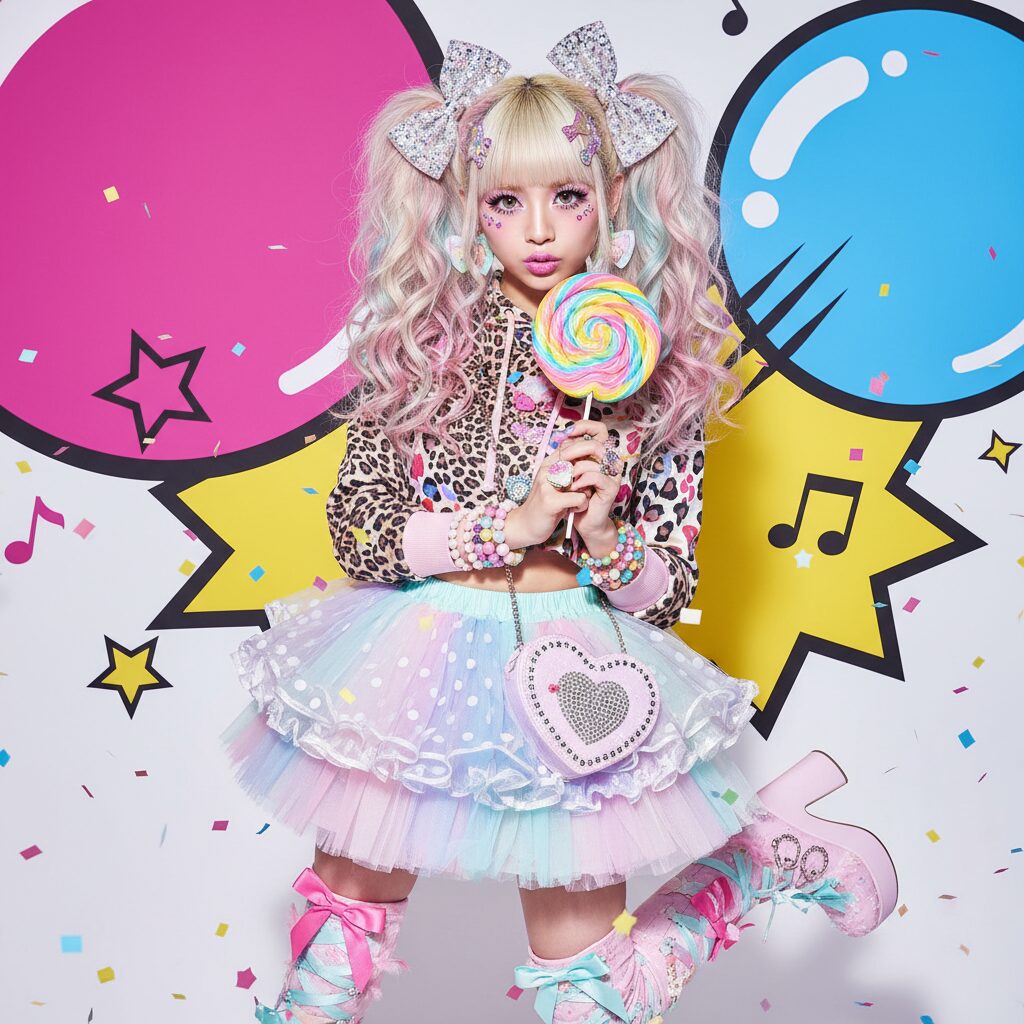
The gyaru subculture reinterpreted the Japanese concept of kawaii (cute) into something entirely different. While traditional kawaii is often soft, passive, and childlike, gyaru kawaii was assertive, glamorous, and often overtly sexualized. It amplified feminine traits to an almost exaggerated, cartoon-like level. The eyes, a central beauty feature, were enlarged with thick black eyeliner, multiple layers of false eyelashes, and colored circle lenses that made the iris appear bigger. Hair styling was an art form, teased into voluminous bouffants (morimori), curled, and frequently adorned with large bows or flowers. Nails turned into miniature art galleries (neiru aato), decorated with rhinestones, pearls, and intricate airbrushed designs. This extreme femininity wasn’t about drawing men in the traditional sense; it was about creating a striking, powerful look for themselves and their peers. It celebrated artifice. In a society that often prized natural, understated beauty, gyaru embraced the idea of identity as something constructed, painted on, and changeable at will. It was a freeing philosophy that put the power of self-definition firmly in the hands of the individual.
The “Gyaru Mind”: A Spirit of Unapologetic Fun
Beyond appearances, being a gyaru meant adopting a particular mindset, known as the gyaru maindo (gyaru mind). This philosophy centered on living in the moment, valuing friendship, and maintaining a consistently positive and lively attitude. It rejected the self-sacrificing, work-driven mindset of the previous generation. Gyaru culture was highly social, revolving around “circles” (saakuru) of friends who shopped together, practiced para para synchronized dancing in clubs, and communicated through a unique slang and a distinct writing style called gyaru-moji. This “gal writing” mixed characters, symbols, and Roman letters to create a coded language nearly impossible for outsiders to understand, strengthening their sense of group unity. This social connection was the foundation of the subculture. The circle offered support and validation away from mainstream judgment. The gyaru mind was about finding joy and building a world with your chosen family (nakama), a world where fun was the highest priority and conformity was the only true transgression.
The Evolution and Fragmentation of Gyaru
By the early 2000s, the gyaru subculture had reached its peak, becoming a major influence in Japanese youth fashion. However, it was never a single entity. As its popularity grew, it began to fragment and diversify, evolving into a wide variety of sub-styles, each with distinct rules, icons, and aesthetic principles. This fragmentation highlighted the remarkable creativity within the movement and its capacity to adapt to diverse tastes and lifestyles.
The Many Faces of a Subculture
The original ganguro look evolved into even more extreme variants like manba and banba, which maintained the dark tans but added more dramatic “panda” makeup—white circles painted around the eyes—and wild, multi-colored hair resembling a lion’s mane. On the opposite end, hime gyaru (princess gal) emerged, embodying a fantasy of hyper-femininity inspired by Rococo royalty. Hime gyaru featured pastel pinks, lace, ribbons, and enormous, perfectly styled hair. Brands such as Liz Lisa and Jesus Diamante catered to this princess-like aesthetic. Another notable style was agejo, popularized by the magazine Koakuma Ageha. This represented a sexier, more glamorous, and mature version of gyaru, often linked to women working as hostesses in the nightlife scene. The agejo look emphasized sultry, smoky eye makeup, voluminous updos, and expensive, figure-hugging clothing. These were just a few among dozens of styles, ranging from the tough, B-girl inspired banba to the rugged, Americana-influenced ora ora kei. This variety meant that nearly any young woman could find a niche within the larger gyaru identity that fit her personal taste.
The Decline and Digital Rebirth
By the early 2010s, the gyaru trend began to wane. The shutdown of landmark magazines like egg and Koakuma Ageha created a gap in the community. The cultural focus shifted toward more natural, understated looks, heavily influenced by the rise of Korean pop culture with its emphasis on flawless skin and subtle makeup. The bold, high-maintenance gyaru style started to seem outdated to a new generation. For a time, it appeared that gyaru might fade into mere history. Nevertheless, the subculture never truly vanished. Instead, it retreated underground and eventually migrated online. From the late 2010s into the current Reiwa era, gyaru has experienced a notable revival, driven by a powerful blend of nostalgia and social media influence. Platforms like TikTok and Instagram have become the modern magazines, enabling a new generation to rediscover and reinterpret the styles of the 90s and 2000s. This “Reiwa gyaru” differs significantly. The rigid sub-style categories have mostly disappeared, replaced by a more fluid approach where individuals select elements of classic gyaru fashion—makeup, nails, attitude—and blend them into modern looks. The Heisei-era nostalgia wave has elevated icons like Namie Amuro to legendary status, and the unreserved confidence of the gyaru spirit strongly appeals to a generation seeking authentic self-expression.
Why Gyaru Matters: A Legacy of Defiance
It is easy to view the artifice and extravagance of gyaru as superficial, but doing so would significantly misinterpret its cultural importance. At its heart, the gyaru movement was, and still is, a powerful form of social protest. It gave young women a voice in a society that often expected their silence and provided a space for them to define beauty and femininity on their own terms.
A Challenge to Conformity
The gyaru subculture stands as one of the most visible and enduring challenges to Japanese conformity in the postwar period. This rebellion was waged not on picket lines, but through tanning beds, hair bleach, and carefully applied makeup. By deliberately cultivating a look that directly opposed the traditional yamato nadeshiko (the idealized Japanese woman: modest, graceful, and pale), gyaru practitioners challenged the very foundations of those ideals. They showed that there is more than one way to be a Japanese woman. Their bold fashion, outspoken behavior, and distinctive slang were all tools to carve out an independent identity in a world demanding conformity. They created a parallel culture with its own value system—one that prized individuality, friendship, and self-confidence above all else.
An Enduring Influence on Pop Culture
Although the gyaru movement’s peak has passed, its influence remains embedded in the fabric of contemporary Japanese pop culture. Many aesthetic innovations introduced by gyaru have been integrated into the mainstream. Decorative nail art, the use of circle lenses to enhance eyes, and specific makeup techniques for creating a glamorous, doll-like appearance all originated from gyaru magazines and salons. More importantly, gyaru culture demonstrated the immense economic and social power of a subculture driven by young women. They established a multi-billion yen market in fashion, cosmetics, and media, proving they were not just passive consumers but active cultural creators. The legacy of gyaru stands as a testament to the enduring desire for self-expression—a reminder that sometimes the most radical act is to be unapologetically, vibrantly, and glitteringly yourself.