You’ve been there. You step through the gate, and the noise of the city just… stops. Before you is a world of moss-covered stones, meticulously shaped pines, and water so still it holds a perfect mirror of the sky. You feel a sense of peace, of profound order. You take pictures. You admire the carp. But as you walk the winding path, a thought might surface: this is beautiful, but what is it for? It’s clearly not a garden in the Western sense. There are no riotous beds of colorful annuals, no grand, symmetrical avenues leading to a triumphant fountain. It’s subtle, quiet, and feels laden with a meaning that hovers just out of reach.
This is the experience most people have, even those who have visited dozens of Japanese gardens. We appreciate the aesthetics, but we often miss the conversation the garden is trying to have with us. We see a collection of beautiful objects—rocks, plants, lanterns—when we should be seeing a complete, philosophical world in miniature. A Japanese garden is not a display of horticulture; it is an argument about the nature of existence, rendered in stone, water, and time. It’s designed less for your feet and more for your mind. So, let’s peel back the curtain of quiet beauty and look at the intricate machinery of meaning that makes these spaces some of the most profound artistic expressions on earth. This isn’t just about identifying plants; it’s about learning a new way to see.
Discover how the interplay of nature and design is reimagined through the concept of borrowed scenery, inviting a deeper contemplation of the garden’s hidden dialogue.
A Universe in a Courtyard
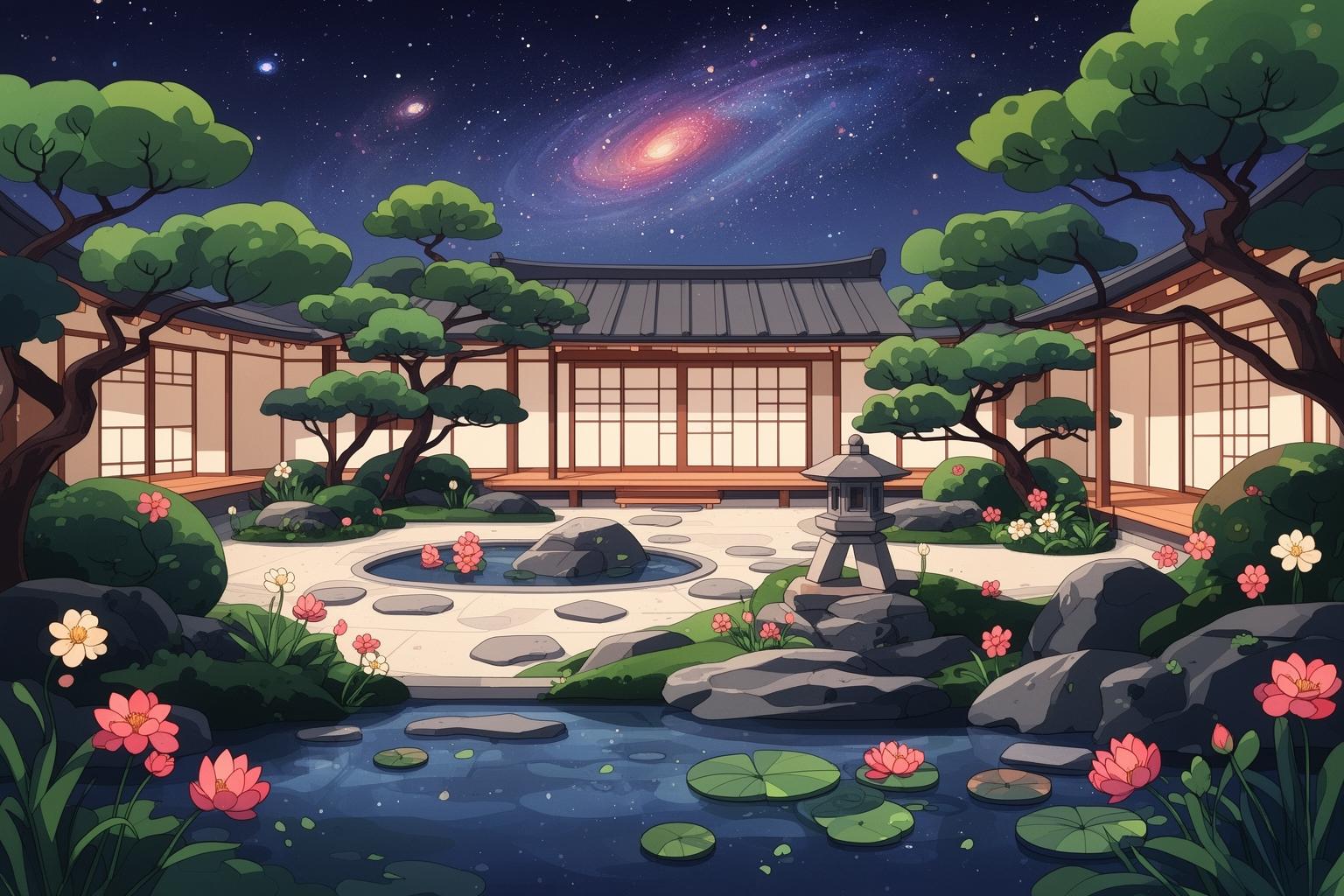
The most essential idea to understand is that a Japanese garden is rarely just a garden. It serves as a microcosm of the natural world or, at times, a depiction of a mythical realm. Designers don’t merely arrange plants; they create a three-dimensional landscape painting, using a language of powerful symbols to evoke vast, untamed scenery within a confined space. The true artistry lies in abstraction and suggestion, rather than literal representation.
Stones, or ishi, form the fundamental base, the ‘bones’ of the landscape. They are never selected at random. A garden designer may spend months or even years searching for stones with the appropriate character. A tall, upright stone doesn’t just symbolize a rock; it transforms into Mount Hōrai, the mythical island of the Taoist Immortals, or Mount Shumi, the sacred center of the Buddhist cosmos. A cluster of smaller rocks isn’t a simple pile; it represents a mountain range in the distance. A flat, blue-green stone isn’t just an attractive slab; it symbolizes a calm bay reflecting the moonlight. Their placement creates tension, harmony, and a sense of deep geological time. They anchor the entire composition, suggesting a permanence that contrasts with the fleeting life of the plants.
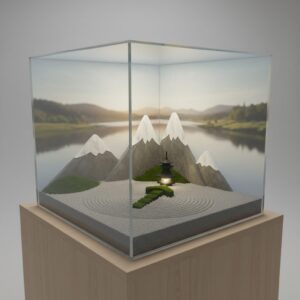
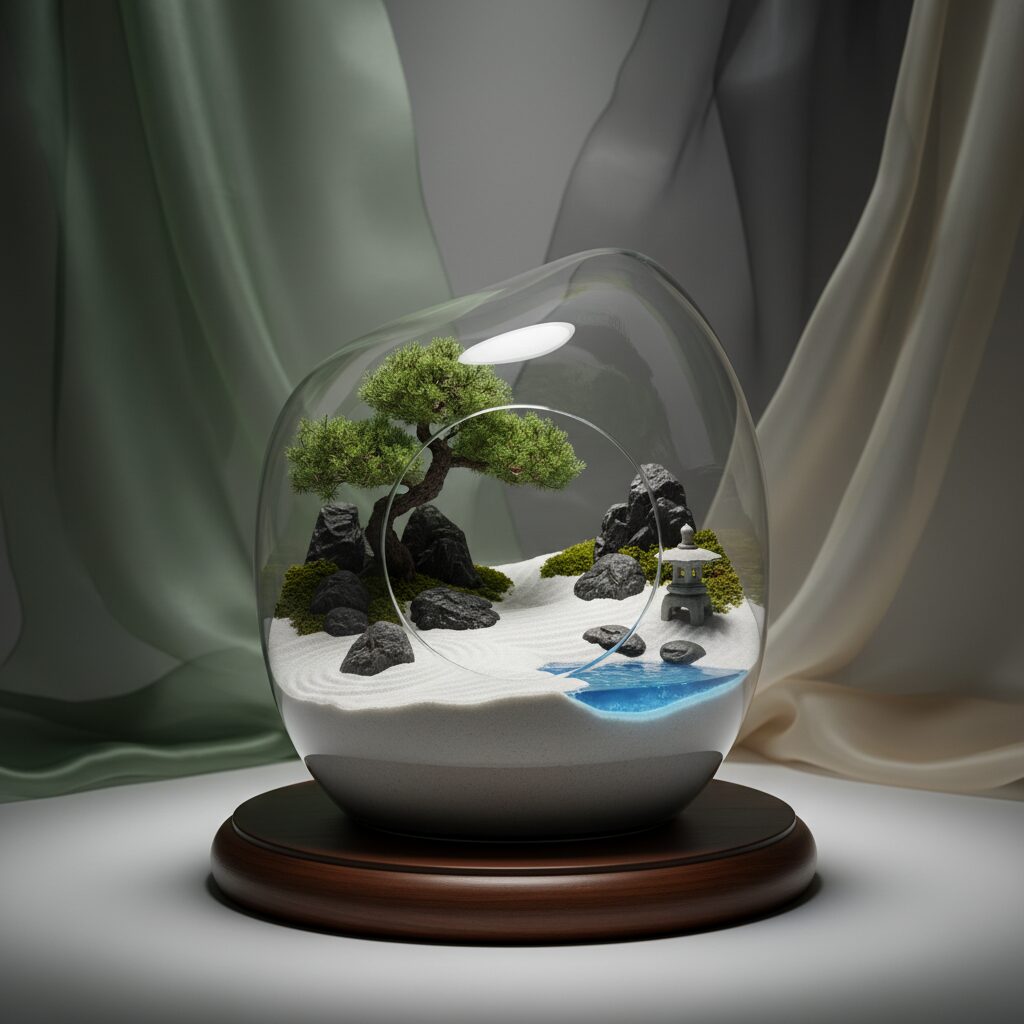
Water, or mizu, complements stone, embodying the fluid and ever-changing essence of life. It can be a literal pond (ike), inhabited by vibrant koi that shimmer like jewels beneath the surface. It might be a winding stream (yarimizu), its gentle gurgle adding a subtle, living soundtrack. Yet its most striking and well-known form is symbolic. In a dry landscape garden (karesansui), no actual water exists. Instead, carefully raked sand or fine gravel represents the ocean, with patterns suggesting ripples, waves, or the tranquil expanse of the sea. The stones become islands emerging from this symbolic water. Viewing it requires a mental leap, engaging the observer’s participation. You don’t just see sand; your mind is encouraged to perceive water. This marks a profound shift from passive observation to active contemplation.
Plants, shokubutsu, are the final layer, the ‘clothing’ of the landscape. Unlike Western gardens, where the main focus is often a spectacular floral display, here plants are chosen for their form, texture, and symbolic meaning throughout the seasons. The steadfast pine symbolizes longevity and endurance, its gnarled branches carefully shaped over decades to appear ancient and weathered. The maple, with its fiery autumn hues, serves as a poignant reminder of the brilliant but fleeting nature of beauty. Moss, painstakingly nurtured, speaks of age, tranquility, and the quiet resilience of nature. The emphasis is on the four seasons, each bringing a distinct mood to the garden. It is designed to be beautiful not only in spring’s full bloom but also in the stark silence of a snowy winter day.
Borrowing the World Beyond
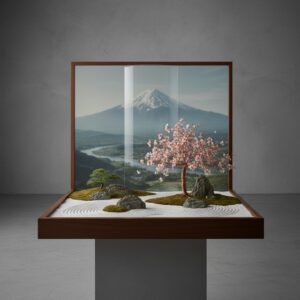
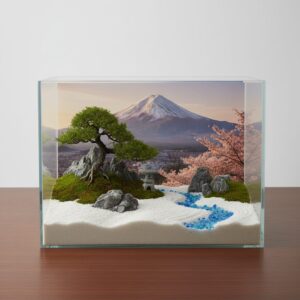
One of the most ingenious principles in Japanese garden design is one that intentionally seeks to dissolve its own boundaries. This is shakkei, or “borrowed scenery.” It’s a technique where the garden incorporates elements of the landscape beyond its walls—a distant mountain, a neighboring temple roof, a cluster of trees—into its own composition. This visual appropriation makes the garden feel larger and more deeply connected to the surrounding world.
This is no accident; it’s a deliberate and highly sophisticated design choice. A path may be aligned precisely, ending at a gap in a hedge that perfectly frames a distant mountaintop, making that mountain the garden’s striking focal point. A pond may be shaped to echo the outline of a real lake visible from the same vantage point. A low stone wall might be used instead of a tall one, allowing the viewer’s gaze to move effortlessly from the manicured foreground to the wild forest beyond. This act of framing transforms the outside world into a piece of art within the garden itself.
Philosophically, shakkei reflects a deep-rooted cultural and religious understanding of interconnectedness. It implies that the garden is not an isolated, man-made paradise sealed off from reality. Rather, it is part of a larger, continuous whole. It recognizes that human creation exists within a greater natural context. By borrowing scenery, the garden modestly acknowledges its place in the wider world, fostering a powerful sense of harmony between the artificial and the natural, the near and the distant, the controlled and the untamed. It’s a masterful illusion that expands a small space into a vast panorama and connects the viewer to the landscape in a far more profound way.
The Power of What Isn’t There
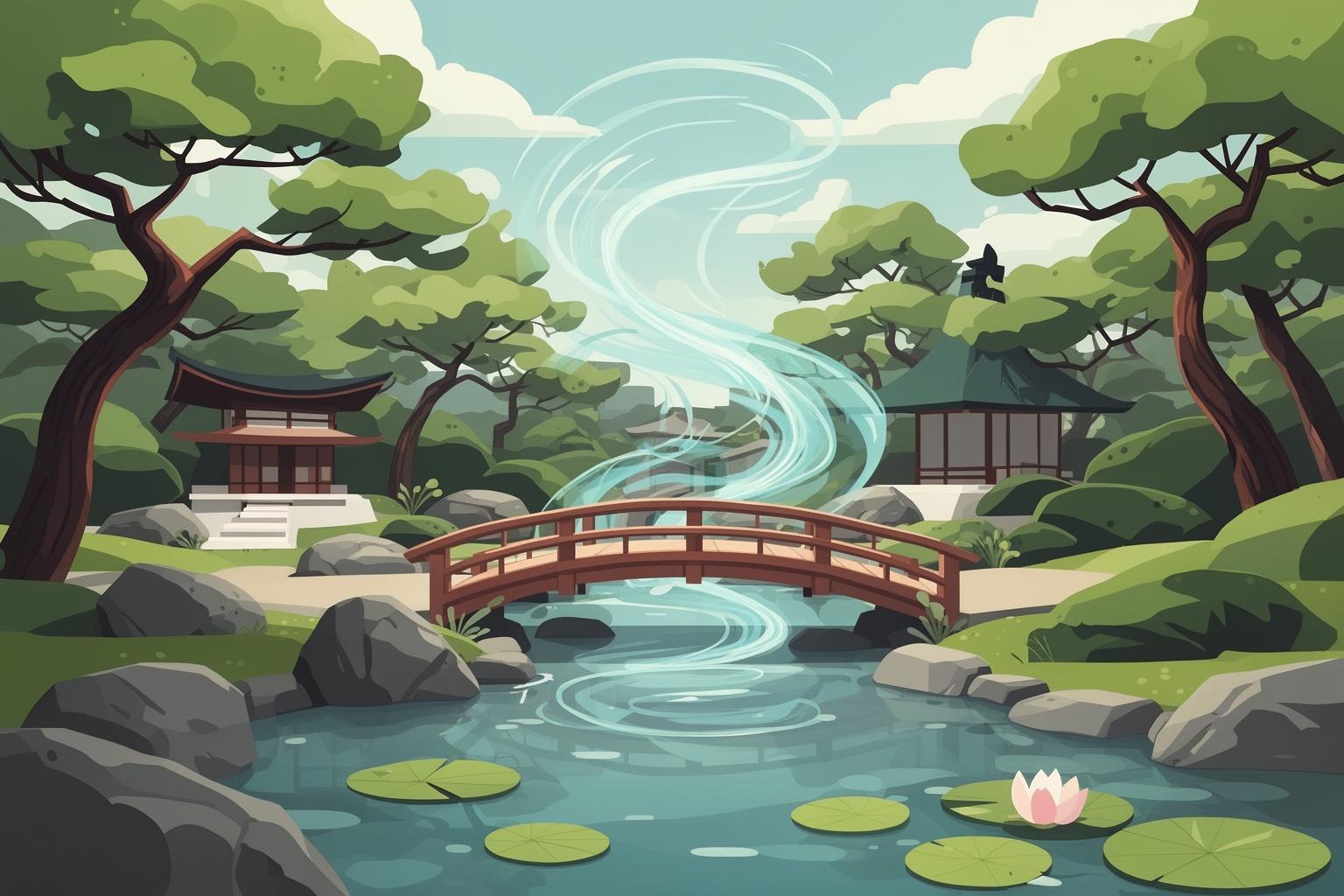
If there is one concept that encapsulates the entire aesthetic of Japan, it would be Ma (間). Often translated as “negative space,” Ma conveys more than just emptiness. It is not a void but a deliberate, meaningful pause or interval. It is the silence between musical notes that empowers the melody, the untouched silk in a scroll painting that defines the subject. In a garden, Ma is the space that allows the composition to breathe.
This is most clearly seen in the wide stretches of raked sand in a karesansui garden, the calm surface of a pond, or a simple, plain patch of moss. A Western impulse might be to fill these spaces—with statues, flowerbeds, or additional rocks. The Japanese perspective recognizes that these “empty” areas give weight and significance to the existing elements. This space invites the viewer’s imagination to engage and take part in the creative process. It serves as a canvas for the mind.
This concept is closely connected to asymmetry (fukinsei). Perfect, symmetrical balance is perceived as static, artificial, and lifeless. Since nature is dynamic and imperfectly balanced, Japanese gardens emulate this quality as well. A grouping of three rocks will almost always form a scalene triangle, never an equilateral one. A path bends and curves rather than following a straight line. This imbalance generates a sense of movement and naturalness. It also hints at incompletion, implying the scene is part of a broader, unseen world. This art form does not demand attention through perfect geometry but instead gently invites you to discover its subtle, dynamic harmony. The preference for imperfection and asymmetry is a fundamental principle influencing everything from garden design to flower arranging and pottery.
A Journey for the Mind
It is essential to recognize that different types of Japanese gardens are created for distinctly different ways of experiencing them. Not all are intended to be explored by wandering. The garden’s design shapes how you engage with it, transforming it into a unique form of meditative practice.
The Stroll Garden, or kaiyū-shiki teien, gained popularity among feudal lords during the Edo period. These expansive gardens center around a pond or lake, with a path that circles it. The vital concept here is miegakure, or “hide and reveal.” The garden is never fully visible at once. The winding path uses hills, clusters of trees, and bamboo fences to obscure and then suddenly unveil new views. As you walk, a series of carefully composed scenes emerge one after another: a waterfall peeks from behind a rock, a tea house appears across the water, a stone bridge is framed by maple leaves. This design encourages you to remain present, experiencing the garden as a sequence of intentional moments rather than a single, static image. It is a narrative journey, showcasing a story through the landscape.
In sharp contrast, the Dry Landscape Garden, or karesansui, often referred to as a “Zen garden,” is not designed to be entered. It is meant to be viewed from a single, fixed vantage point, usually the veranda of a temple’s main hall. Essentially, it functions as a three-dimensional painting to support Zen meditation (zazen). By eliminating movement, color, and conventional life, the garden distills the landscape to its purest elements: form, texture, and emptiness. Its stillness and abstraction serve as a powerful stimulant for contemplation, freeing the mind to wander where the body cannot, to discover meaning in the arrangement of stone and sand, and to look inward.
Lastly, the Tea Garden, or roji, fulfills a very specific ritual function. It is the “dewy path” leading from the outside world to the secluded tea house. The walk along the roji is an essential part of the tea ceremony itself, designed to be a spiritual and mental transition, shedding ego and everyday worries. The path is intentionally rustic and simple, with uneven stepping stones (tobi-ishi) that require you to look down and mind your steps, encouraging mindfulness. Along the way is a stone water basin (tsukubai) placed low to the ground, prompting you to crouch in humility to cleanse your hands and mouth. By the time you reach the tea house, you have been physically and mentally prepared for the ceremony’s harmony, respect, and tranquility.
The Beauty of Time’s Passage
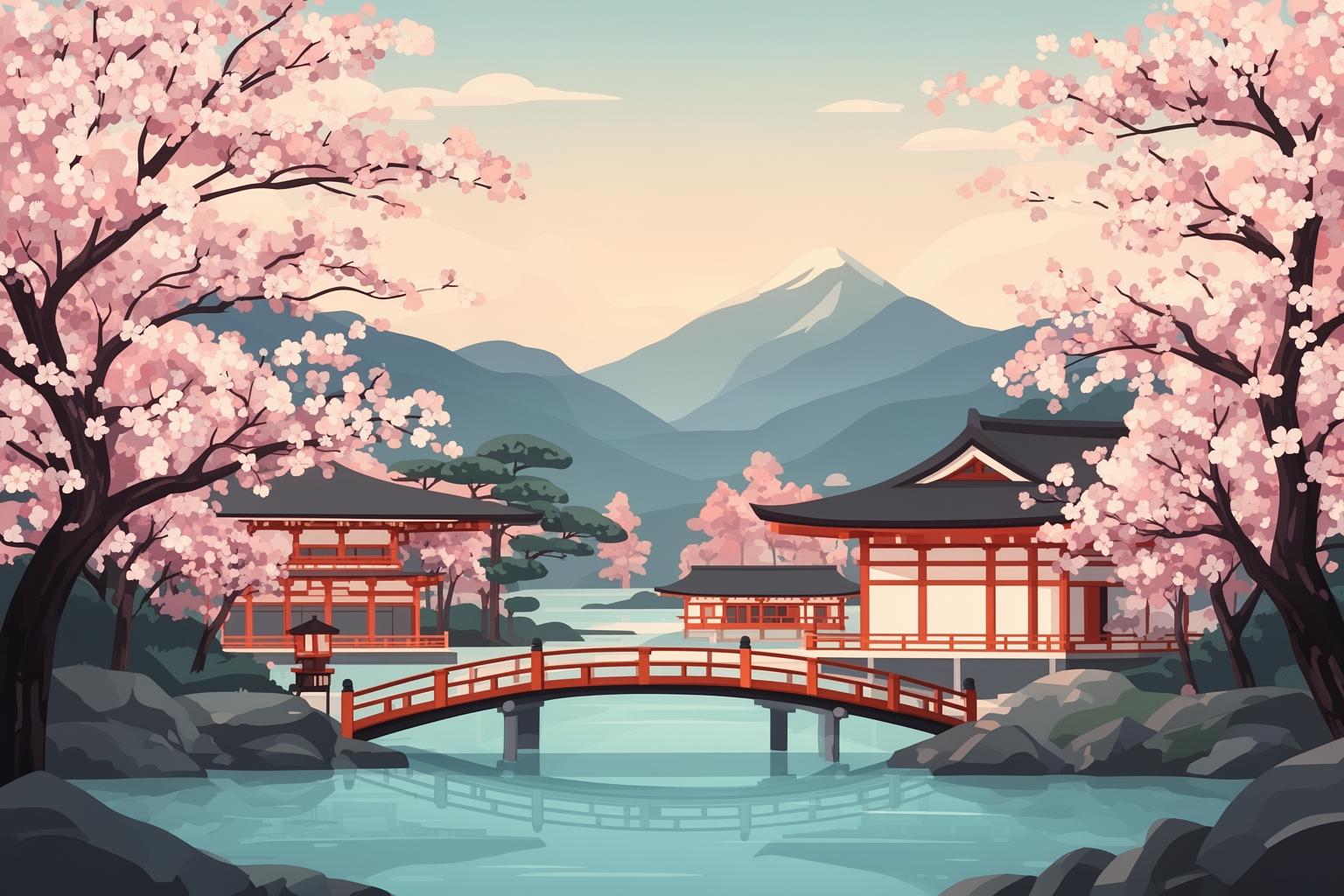
Perhaps the most elusive and profound aesthetic foundation of Japanese gardens is wabi-sabi (侘寂). It embodies a worldview centered on embracing transience and imperfection. It represents a beauty that is imperfect, impermanent, and incomplete. Wabi denotes a rustic simplicity and the tranquility of living harmoniously with nature, while sabi conveys the beauty that emerges with age—the patina and wear that time bestows upon an object.
In a garden, wabi-sabi is evident once you learn how to observe it. It appears in the intentional selection of a moss-covered, weathered stone instead of a new, flawlessly cut one. It is found in the appreciation of a cracked ceramic water basin or a leaning stone lantern. It is the allure of a gnarled, ancient pine shaped by wind and time, its form telling the story of its endurance. It is the acceptance of autumn’s fallen leaves, not as messy debris to be removed, but as a beautiful and essential part of nature’s cycle.
This contrasts sharply with the classical Western ideal of beauty, which often values the monumental, symmetrical, and pristine. Wabi-sabi discovers a poignant, melancholic beauty in signs of decay and wear because they testify to life. They remind us of the relentless passage of time and the impermanence of all things. A garden designed with this principle does not seek to dominate nature or freeze it in eternal perfection. Instead, it strives to harmonize with nature’s processes, including growth, decay, and renewal. It encourages an appreciation for the subtle, the modest, and the authentic, finding elegance in the humble and overlooked details.
So, the next time you find yourself in the tranquil embrace of a Japanese garden, try to see beyond the immediate beauty. View the rocks not simply as stones, but as mountains and islands. See the raked sand not just as gravel, but as a vast ocean. Notice how a distant hill is incorporated into the scene, becoming part of the composition. Pay attention to the empty spaces and sense their resonance. Follow the path and let it narrate its story, scene by scene. It is a place designed to quiet the noise, engage the mind, and gently lead you toward a more contemplative state. You are not merely observing a garden; you are being invited into a dialogue about time, nature, and the universe itself. And once you understand its language, you’ll find it has much to express.