The night is winding down. The last train has long since rattled away into the silence, leaving the city streets to taxis and those of us still navigating the warm, pleasant haze of a few drinks with good company. We’ve spent hours in a crowded, smoke-filled izakaya, navigating a flotilla of small plates—perfectly crisp karaage, delicate sashimi, salty edamame—and an ever-refreshing cycle of beer and highballs. We are, by any logical measure, full. The conversation has reached a natural conclusion, the bill has been settled, and we’ve all bowed our goodbyes to the staff. And yet, the night is not quite over. Someone, in a moment of collective, unspoken agreement, will voice the thought we’re all having: “Ramen?”
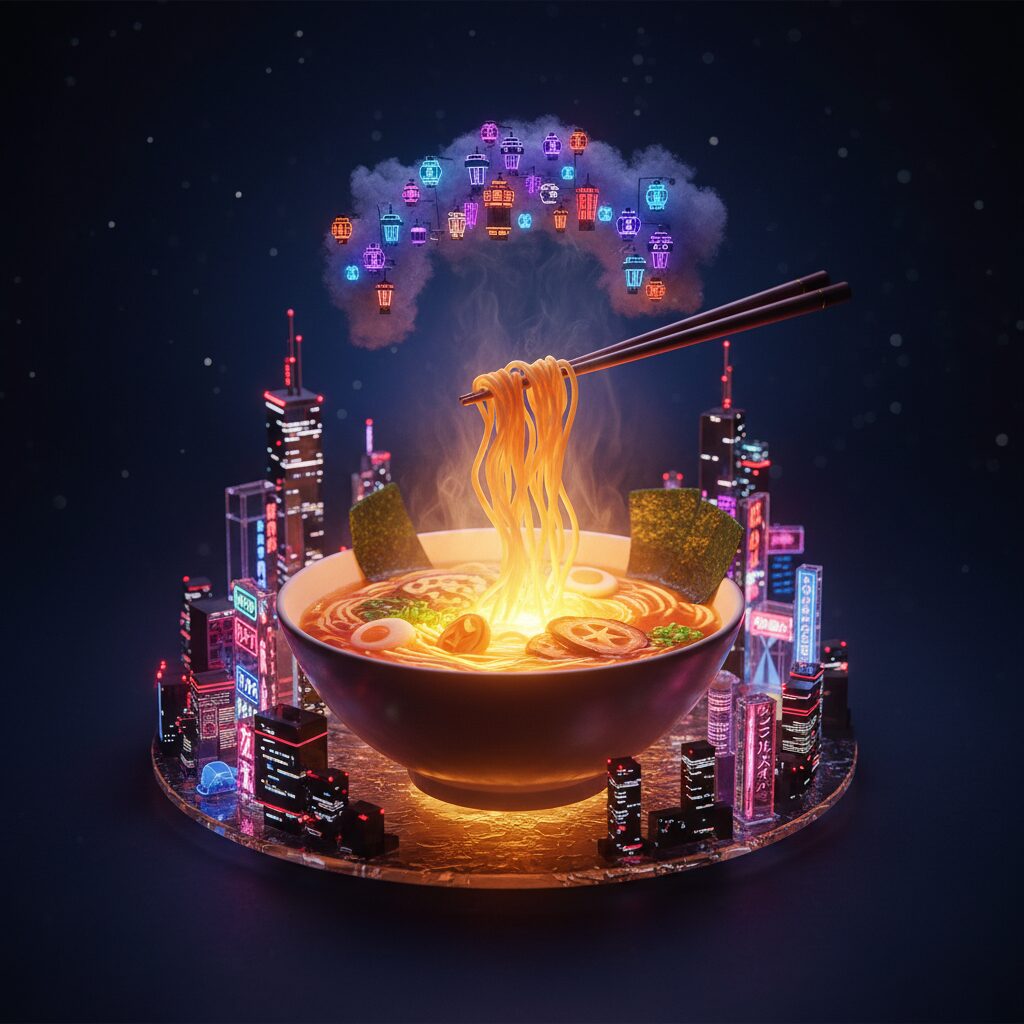
This is the moment of shime. The word itself, 締め, means “to tie up,” “to close,” or “to conclude.” And in the context of a Japanese night out, shime no ramen is the final, essential ritual. It’s the act of seeking out a steaming, fragrant, and profoundly satisfying bowl of noodle soup to serve as the definitive full stop on the evening’s festivities. To an outsider, it might seem utterly insane. Why, after a perfectly good meal and several rounds of drinks, would anyone cap it all off with a heavy, salt-laden bowl of carbs and fat? But to understand the shime ramen is to understand a fundamental piece of Japan’s social and culinary fabric. It is not merely a late-night snack; it is a ceremony of closure, a social adhesive, and a moment of pure, unadulterated indulgence.
This isn’t about grabbing a greasy slice of pizza or a questionable kebab on the way home. The pilgrimage to the ramen shop is a deliberate act, a shared journey to a final, sacred space before everyone disperses into the quiet of the night. It’s a tradition steeped in a logic that transcends nutrition, a comforting ritual that satisfies a craving that is as much psychological as it is physical. So let’s pull up a stool, breathe in the pork-scented steam, and unravel the delicious mystery behind Japan’s favorite way to end the night.
Embracing the night’s culinary ritual opens the door to other facets of Japanese dining culture, as seen in the intriguing world of plastic food models, where art and authenticity intriguingly converge.
The Anatomy of a Perfect Ending

Stroll through any major entertainment district in a Japanese city after midnight, and you’re bound to notice them: glowing red lanterns, steamy windows, and short cloth noren curtains hanging above the entrance of a ramen-ya. Inside, it feels worlds apart from the lively izakaya you just left. The space tends to be cramped and functional, with a long wooden counter separating a few patrons from the chef’s focused, almost monastic craft. The air is thick with the aromas of simmering pork bones, soy sauce, and garlic. The only sounds are the rhythmic slurping of noodles and the sharp, percussive noises—the draining of noodles, the clatter of a ladle against a bowl.
This atmosphere is essential to the shime experience. It’s a place for quiet reflection and singular focus. And that focus, of course, is on the ramen itself. While Western late-night food often feels like a chaotic mix of flavors intended to overwhelm drunken taste buds, shime ramen is a surprisingly subtle affair, precisely crafted for its purpose.
The Soul of the Bowl: The Broth
The backbone of any great ramen is the broth, and for a shime bowl, its importance is paramount. After an evening of drinking, the body craves two things most: salt and liquid. Alcohol acts as a diuretic, flushing water and essential electrolytes from your system. The intensely savory, umami-rich broth of a quality ramen is the perfect remedy. It feels deeply hydrating and restorative. The most popular choice for shime is often tonkotsu, a rich, opaque broth made by simmering pork bones for hours until they break down into a creamy, collagen-rich elixir. Its pronounced fatty richness coats the stomach and feels incredibly satisfying. Another favorite is hearty miso ramen, where fermented soybean paste brings a complex, earthy saltiness. Lighter options like shio (salt-based) or shoyu (soy sauce-based) broths are also common, offering a clean, sharp savoriness that cuts through the haze of alcohol.
The Substance: Noodles and Toppings
The noodles provide the essential carbohydrate boost the body naturally seeks. The sensation of lifting a thick, chewy strand of ramen, cooked perfectly to an al dente texture, is deeply gratifying. It’s a textural pleasure demanding full attention. Slurping—the act not just accepted but encouraged in Japan—airyates the noodles and broth, enhancing flavor and aiding in cooling the piping-hot soup. It’s a meditative, fully absorbing ritual.
Toppings on a shime bowl are usually kept simple. This isn’t the moment for the overloaded, everything-and-the-kitchen-sink bowls popular on social media. Classic accompaniments are enough: a single, meltingly tender slice of chashu (braised pork belly), crunchy menma (fermented bamboo shoots), and a bright sprinkle of finely chopped negi (scallions). These elements add texture and complementary flavor without distracting from the main event: the perfect harmony of broth and noodles. It’s a composition designed for maximum comfort and minimum cognitive effort.
The Social Glue of the Final Bowl
To truly understand the significance of shime no ramen, one must first grasp the structure of a Japanese drinking party, or nomikai. These gatherings are not merely casual get-togethers; they often serve a formal purpose, especially when work colleagues are involved. A typical evening might start with an ichijikai (first party) at a proper restaurant or izakaya, followed by a nijikai (second party) at a karaoke box or a small bar. Occasionally, a sanjikai (third party) might also take place.
Throughout these stages, social hierarchies, though relaxed, remain evident. Unspoken rules govern pouring drinks for superiors (oshaku), paying attention to conversation, and upholding a level of professional decorum. The shime ramen exists outside this framework. It is the unofficial final act, and its setting entirely changes the social dynamic.
Once gathered around a ramen counter, the formal roles of the evening fade away. You are no longer a manager and a subordinate; you are simply two people united in the shared, primal pursuit of a delicious bowl of noodles. The small, intimate space of the ramen shop encourages a different kind of conversation—quieter, more personal, and more sincere. The focus shifts from group performance to individual comfort, yet it is a comfort shared together. This final, shared meal cements the bonds formed during the evening. It serves as a non-verbal agreement that says, “We have successfully navigated the social obligations of the night, and now we can enjoy this simple, honest pleasure together before parting ways.” It provides a clear, definitive end point. After the ramen is finished, everyone heads home. There are no lingering questions about “one more drink?” The ramen is the final word.
The Dubious Science and Delicious Logic

Ask any Japanese person why they eat ramen after drinking, and they’ll likely give a simple, practical-sounding explanation: it helps prevent a hangover. The belief is that the heavy meal “soaks up” the remaining alcohol in the stomach, reducing its effects the next morning. While the science behind this is shaky at best—the alcohol is already well into your bloodstream by then—the reasoning is rooted in a certain physiological truth.
The intense craving for something salty, fatty, and carb-heavy is your body’s SOS signal. As mentioned, alcohol depletes your salt and water reserves. The salty ramen broth offers an efficient and delicious way to start replenishing them. Additionally, your liver, working overtime to process the alcohol, has a diminished ability to regulate blood sugar levels. This can cause a drop in blood sugar, triggering a strong hunger for carbohydrates—like a big bowl of noodles—to restore those levels.
There’s even a hint of more specific science involved. Pork, a key ingredient in many ramen broths and a primary topping in the form of chashu, is rich in B vitamins and an amino acid called cysteine. Cysteine is known to help break down acetaldehyde, the toxic byproduct of alcohol metabolism responsible for many hangover symptoms. Is a bowl of tonkotsu ramen a scientifically proven hangover cure? Probably not. But does it deliver exactly what your depleted, alcohol-weary body is craving? Absolutely. It’s a folk remedy where the cure is also the craving—a perfect storm of physiological need and culinary satisfaction. The fact that it feels so right is all the justification needed.
Beyond Ramen: The Variations of Shime
While ramen remains the unquestioned king of the shime ritual, it is far from being the only option. The idea of a finishing dish is flexible, with different tastes and circumstances calling for different choices. The selection of a shime often reflects the person, the mood, or even the region.
A more refined and lighter alternative is ochazuke. This simple, elegant dish features a bowl of cooked rice topped with various ingredients—such as pickled plum (umeboshi), grilled salmon flakes (sha-ke), or seaweed (nori)—over which hot green tea or a light dashi broth is poured. It’s warm, savory, and hydrating, offering the same comforting qualities as ramen but in a much gentler form. It’s the choice for those seeking closure without the caloric load.
In other regions of Japan, especially the Kansai area around Osaka, shime no udon is often favored. Thick, chewy udon noodles are served in a lighter, more delicate broth, typically a clear dashi flavored with light soy sauce. It delivers a satisfying carbohydrate boost with a cleaner flavor profile. Likewise, if the meal has been a nabe (hot pot), the ultimate shime is making zosui, a savory rice porridge, from the flavorful leftover broth. It’s a wonderfully resourceful and delicious way to ensure no umami-rich drop is wasted.
More recently, a playful and subversive new contender has emerged: the shime parfait. Popularized in Sapporo but now appearing in other cities, this trend involves groups of friends, especially younger women, ending their night not with a salty soup but with an elaborate, towering ice cream parfait. It completely reverses the savory tradition, yet it serves the same ritual function: a final, indulgent treat that officially closes the evening. It shows that the spirit of shime—the need for a concluding ceremony—is more important than the exact dish itself.
A Ritual of Closure and Comfort

Ultimately, shime no ramen is much more than just a late-night craving after drinking. It is a deeply rooted cultural ritual that brings a sense of order and closure to the enjoyable chaos of an evening out. In a society that values structure and proper etiquette, the shime provides a clear and satisfying conclusion. It marks the shift from the public, social persona to the private self ready to head home and rest.
The act itself is a practice of mindfulness. In the quiet ramen shop, you are compelled to focus on the bowl before you: the warmth, the aroma, the intricate flavors, and the texture of the noodles. This sensory experience grounds you, reconnecting you with your own body after hours of outward social engagement. It’s a moment of personal indulgence that feels both well-deserved and necessary.
It is a comforting ritual, offering warmth and nourishment when you feel most vulnerable. It is a communal ritual, a final peaceful moment shared before parting ways. And it is a ritual of closure, the last savory, satisfying note that allows the night to end on a perfect note. The next time you find yourself in Japan after a long and joyful evening, when conversation slows and sleep beckons, listen for that magical question. And when someone asks, “Ramen?” the only fitting answer is yes.