If you spend enough time in Japan, you will eventually hear the word mottainai. It might come from an elderly woman watching a shopkeeper throw away unsold vegetables at the end of the day. It could be a gentle chiding from a mother to a child who has left a single grain of rice in their bowl. Or you might even feel it yourself, a quiet pang of regret when you realize you bought a book you’ll never read. The common translation is “What a waste!” but that phrase, with its almost casual sense of dismissal, doesn’t come close to capturing the depth of the concept. Mottainai is not just an observation; it’s a feeling, a philosophy, and an ethical framework woven into the fabric of Japanese culture.
At its core, mottainai is a deep-seated sense of regret concerning the squandering of any resource. This isn’t limited to physical objects like food or water. It extends to time, potential, energy, talent, and opportunity. It’s the feeling that something of value—be it tangible or intangible—is not being used to its fullest potential. To understand mottainai is to understand a fundamental aspect of the Japanese worldview, one that finds its roots in the Buddhist reverence for resources and the native Shinto belief that all things, even inanimate objects, possess a spirit or essence.
This single word explains so much that can seem contradictory to an outsider. It’s the logic behind the meticulous repair of a broken bowl, the reason for giving thanks before a meal, and even, paradoxically, a key to understanding Japan’s complex relationship with packaging. It’s a cultural compass that orients people toward gratitude, mindfulness, and a profound respect for the interconnectedness of things. To truly unpack mottainai is to move beyond a simple definition and explore how this feeling shapes actions, aesthetics, and personal values on a daily basis.
Understanding the interplay of personal authenticity and societal expectation can further illuminate Japan’s cultural ethos, as seen in the nuanced practice of honne and tatemae, which complements the all-encompassing spirit of mottainai.
More Than Just a Word: The Feeling of Mottainai

To truly grasp mottainai, you must recognize that it functions on an emotional and almost spiritual level, rather than a purely practical one. A Westerner might see an apple core and think, “I should compost this to reduce landfill waste and help the environment.” This is a logical, forward-thinking, and commendable mindset. However, the Japanese concept of mottainai is more immediate and reflective. It evokes sadness for the apple itself—for the tree that grew it, the sun and rain that nourished it, the farmer who harvested it, and the journey it took to reach the kitchen. Wasting any part of it is to show disrespect to that entire chain of existence.
This feeling isn’t about calculating monetary loss. It’s an inherent discomfort with the notion of negating something’s purpose. Imagine a beautifully crafted wooden chair that no one ever sits on, collecting dust in an attic. That is mottainai. The wood’s potential for comfort and function is being wasted. Or consider a talented musician who abandons their instrument to pursue a more “practical” career. Their talent, a resource in itself, is being squandered. This is the heart of mottainai—a sorrow for potential left unfulfilled.
This viewpoint fosters a profound appreciation for the lifecycle of things. It encourages seeing an object not only for its current use but also for the history and resources it embodies. This is why mending and repairing hold such cultural significance. It’s not merely about saving money; it’s about honoring the object’s continued existence and prolonging its purpose. Throwing something away is not a neutral act of disposal—it is the final, irrevocable acknowledgment that an object’s potential has been completely exhausted, a decision not made lightly.
The Material World: Mottainai in Plain Sight
The philosophy of mottainai is not merely an abstract concept; it is expressed through tangible, everyday practices deeply embedded in Japanese life. From ancient crafts to contemporary habits, this principle is evident, shaping how people engage with the material world around them.
The Paradox of Packaging
One of the first things that surprises many visitors to Japan is the abundance of packaging. Fruits are individually wrapped, cookies come sealed in their own small plastic pouches inside a larger bag, and gifts are wrapped in multiple layers of paper and plastic. The typical reaction is often, “How can a culture that values avoiding waste produce so much trash?”
This is where mottainai shows its complexity. The packaging is not viewed as waste because it fulfills an essential function: protecting the value of the item inside. From this viewpoint, real waste would be allowing a perfect strawberry to become bruised, a delicate cracker to go stale, or a beautifully wrapped gift to be damaged in transit. The packaging acts as a vessel of respect. It maintains hygiene, preserves freshness (thus preventing the ultimate waste of spoiled food), and demonstrates care for both the product and the recipient. While the environmental impact of plastic is an increasing concern and subject of national discussion, the fundamental cultural rationale centers on avoiding the mottainai of ruined or spoiled goods.
Kintsugi: The Art of Golden Repair
Few practices illustrate mottainai as elegantly as kintsugi. This traditional art involves repairing broken pottery by joining the pieces with lacquer mixed or dusted with powdered gold, silver, or platinum. Rather than concealing the cracks, kintsugi emphasizes them, celebrating the object’s unique history.
This is mottainai brought to life through art. A Western instinct might be to discard a broken cup or to repair it as inconspicuously as possible. Kintsugi takes a different path. It declares that the object is not destroyed; it has merely entered a new chapter in its life. The break is something to be recognized, not hidden. The philosophy is that through breaking and repair, the object becomes more beautiful, resilient, and valuable than before. It represents the ultimate respect for an object, refusing to let its story end just because it is no longer “perfect.” True waste would be to throw away the piece along with all the history it embodies.
Furoshiki and the Reusable Mindset
Long before tote bags became an environmental symbol, Japan had furoshiki. These traditional wrapping cloths come in various sizes and intricate designs and have been used for centuries to carry everything from lunch boxes and gifts to groceries and bottles. A single cloth can be folded and tied in numerous ways to fit the item it holds.
Furoshiki exemplify mottainai’s practical elegance. One cloth replaces countless disposable bags. It is versatile, durable, and beautiful. When not in use, it folds away neatly, occupying minimal space. Presenting a gift wrapped in a furoshiki is like giving two gifts at once, as the recipient can reuse the cloth for their own needs. This practice reflects a mindset that views resources as flexible and adaptable, not limited to single use. The wastefulness of a plastic bag—used for minutes and discarded for centuries—is the opposite of the furoshiki’s lasting, multifunctional utility.
Beyond Objects: Wasting Time, Talent, and Opportunity
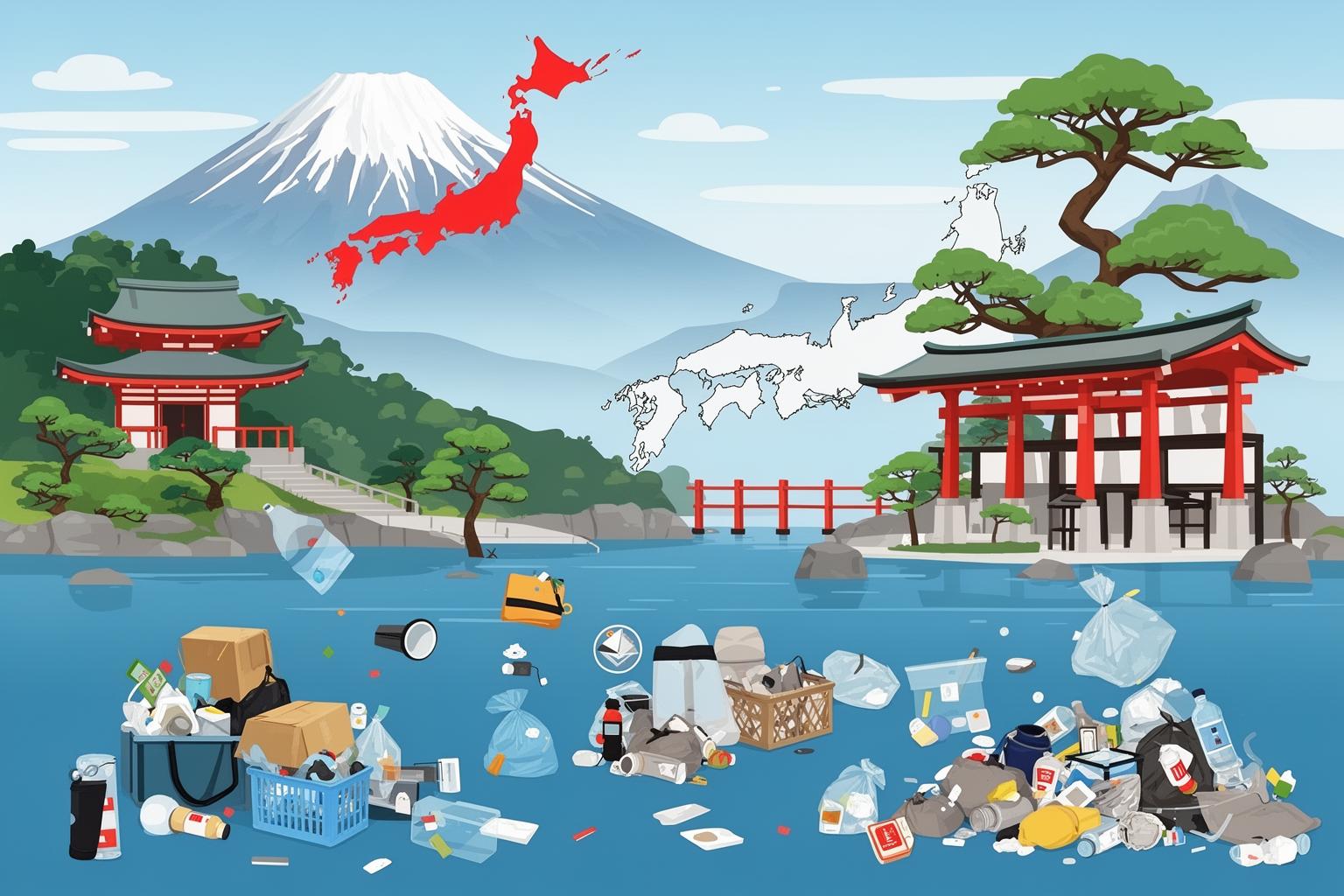
While its most noticeable examples are found in the material world, the real power of mottainai lies in its application to the intangible. The concept goes far beyond merely preventing physical waste, encompassing a deep regret over the misuse of non-physical resources, influencing personal goals, social relationships, and even spiritual practices.
The Logic of “Ittadakimasu”
Before every meal in Japan, people put their hands together and say “Ittadakimasu.” This phrase is often translated as “Let’s eat” or a simple “bon appétit,” but its meaning is much more profound. A closer literal translation is, “I humbly receive.” It is a moment of gratitude and a fundamental expression of mottainai.
By saying it, a person acknowledges the entire network of life and labor that brought the food to their plate. It is a thank you to the farmers who grew the vegetables, the fishermen who caught the fish, the lives of the plants and animals themselves, and the person who cooked and served the meal. It is an appreciation of the sacrifice involved in every bite. With this understanding, leaving food on your plate is more than just wasteful; it is a profound disrespect to all the lives and energy you have just honored. Finishing every last grain of rice is not about being stingy; it is about respecting the chain of existence. To do otherwise is the ultimate mottainai.
The Unused Skill and the Missed Connection
The philosophy also directly applies to human potential. A person who has a great talent—for art, music, language—but never develops it is considered a source of mottainai. That innate ability is a resource, a gift, and to leave it unused is to waste it. This is not about societal pressure to be productive in a capitalist sense; it is about the regret of unrealized potential. An empty seat on a packed train, an unused room in a house—these can evoke a similar sentiment. A resource exists, but it goes unutilized.
This perspective extends to social opportunities and relationships. Hesitating to speak to someone you are drawn to, failing to take a trip you have always dreamed of, or postponing learning something new can all be understood through the lens of mottainai. It is the sorrow of wasted opportunity, a road not traveled. The regret arises from knowing that a moment of potential connection or growth was available but was allowed to pass by, unused. It encourages a mindful engagement with life, urging one to seize opportunities not only for personal benefit but out of respect for the chance itself.
Mottainai in Modern Japan: A Complicated Relationship
Portraying contemporary Japan as a perfectly waste-free society guided solely by the ancient wisdom of mottainai would be a romantic oversimplification. The reality is much more nuanced. Japan is a hyper-modern, consumer-driven economy that, like many other developed nations, faces significant challenges related to waste, especially with plastics and food loss.
The convenience stores, or konbini, that are an essential part of daily life epitomize this tension. They provide an impressive selection of fresh, individually packaged meals and snacks, available around the clock. This convenience, however, comes at a cost. Strict food safety regulations and high standards for freshness result in vast amounts of perfectly edible food being discarded daily. This is a clear and painful contradiction of the mottainai principle, sparking considerable national debate and concern.
Similarly, the pressures of fast fashion and the relentless cycle of new electronic gadgets challenge the traditional ethos of mending and long-term use. The ease of purchasing something new and inexpensive often outweighs the time and effort needed to repair older items. This generates cultural friction—a cognitive dissonance between the deeply ingrained value of mottainai and the strong forces of modern consumerism.
Yet, the spirit of mottainai is far from extinct. It is actively resisting. This can be seen in the thriving market for secondhand goods, from vintage clothing stores in Shimokitazawa to extensive “recycle shops” selling everything from used furniture to electronics. It is evident in government campaigns and corporate initiatives aimed at reducing food loss, as well as in the popularity of apps that connect consumers with restaurants and shops selling surplus food at a discount. There is growing awareness that modern lifestyles have generated a level of waste that is, in a word, mottainai. The cultural conversation now revolves around how to reconcile this cherished, centuries-old philosophy with the realities of the 21st century.
Mottainai, then, is not a quaint, forgotten relic. It remains a living, breathing concept that continues to shape Japan’s conscience. It is a quiet but persistent voice encouraging people to consider the full value of the world around them—not just its price tag. It is a call to be mindful, grateful, and to recognize that the greatest waste of all is a lack of appreciation. It is a reminder to find worth in the old, purpose in the broken, and potential in every fleeting moment.