You’ve been there before. You’re in a meeting in Tokyo, you pitch an idea, and your Japanese colleague smiles, nods, and says, “That is a very interesting perspective. We will consider it carefully.” You leave the room feeling pretty good, thinking you’ve made a breakthrough. A week later, you find out they went in a completely different direction, and your idea was never mentioned again. What happened? You didn’t get lied to. You just failed to see the mask.
To navigate the intricate landscape of Japanese society, you have to understand one of its most fundamental, and often most baffling, social dynamics: the constant interplay between Honne (本音) and Tatemae (建前). Think of it as the social equivalent of a ninja’s toolkit. The ninja, a master of stealth and social navigation, doesn’t just wear a mask to hide their identity. The mask is a functional tool, chosen for a specific mission. It allows them to move through hostile territory, gather intelligence, and achieve objectives without causing unnecessary conflict. In Japan, daily life is that territory, and social harmony is the objective.
Honne is the face behind the mask. It’s your true, unfiltered feelings, your raw opinions, your private desires. It’s what you think but don’t always say. Tatemae, on the other hand, is the mask itself. It’s the public façade, the carefully constructed words and actions you present to the world to maintain order and smooth relationships. This isn’t about being “fake” in the way a Western culture might interpret it. It’s a highly sophisticated social skill, a silent agreement to prioritize the group’s comfort over an individual’s impulse. Understanding this duality is the key to deciphering what’s really being communicated in Japan, from the boardroom to the bar.
For those intrigued by the nuanced layers of Japanese social conduct, exploring forest bathing in Japan can offer a complementary insight into the balancing act of Honne and Tatemae.
The Ninja’s Toolkit: Defining Honne and Tatemae
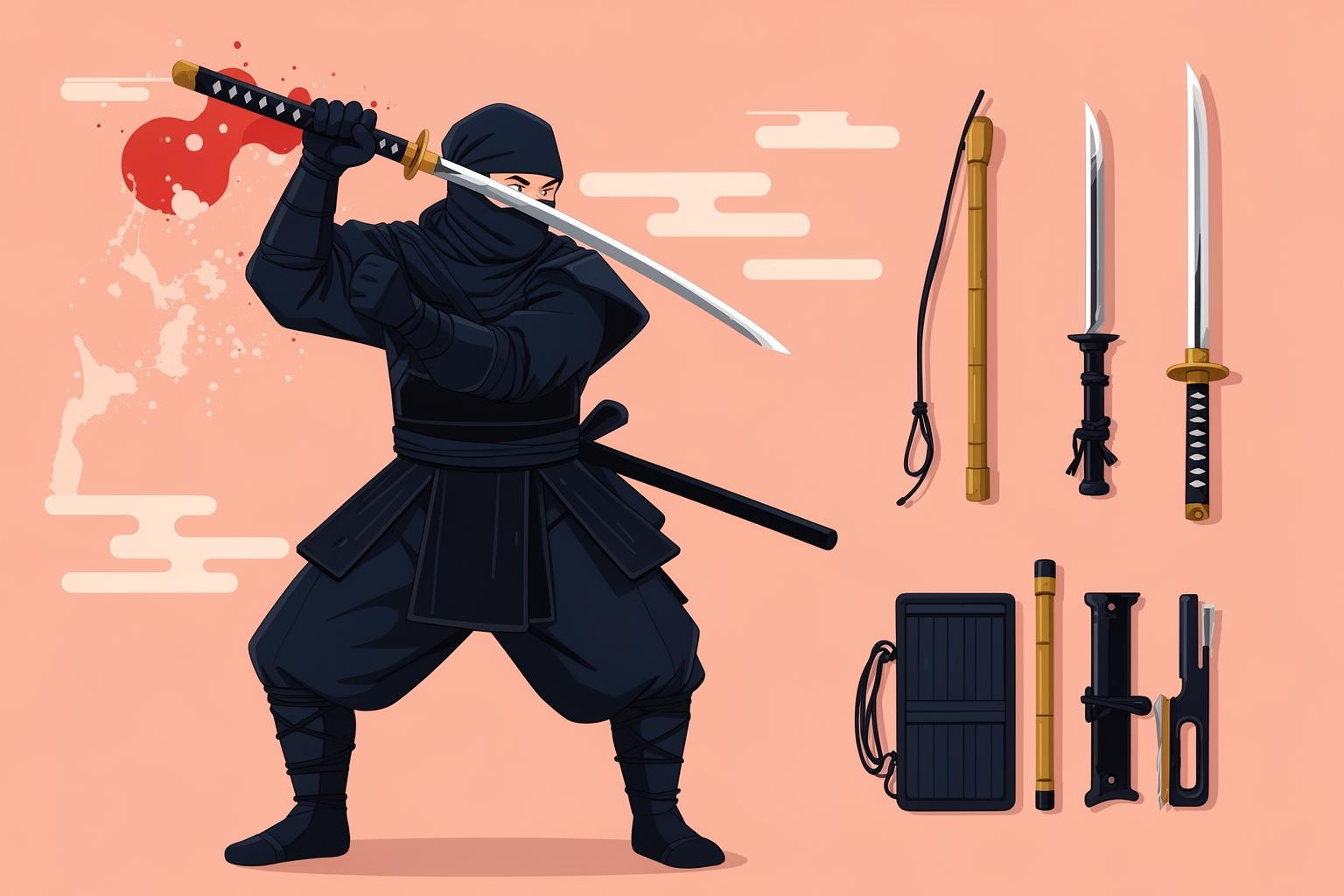
At its essence, the relationship between these two concepts revolves around managing information and emotions within a society that highly values the collective. A ninja’s success depends on knowing when to remain unseen and when to act decisively. Similarly, a socially skilled person in Japan intuitively understands when to use tatemae and with whom it is safe to disclose their honne.
Honne (本音): The Face Behind the Mask
Honne literally means “true sound.” It represents the genuine, unfiltered essence of your thoughts and feelings. It’s the sigh of weariness after a long day, the spark of frustration at an inconvenient request, the honest opinion about a movie or political matter. In many Western cultures, especially in North America, expressing one’s honne is often regarded as a virtue. Authenticity, directness, and “telling it like it is” are highly valued. Being frank, even if blunt, is often preferred over politeness.
In Japan, however, the situation differs. Honne is viewed as private, something to be protected and shared only within a trusted inner circle. Revealing it carelessly is like a ninja removing their mask inside an enemy fortress—it’s reckless, disruptive, and jeopardizes the entire mission. It can be perceived as selfish and immature, demonstrating a lack of consideration for others’ feelings and group harmony (wa, 和).
So, where is one safe to unmask? The sanctuary for honne exists in specific, well-defined settings. It may be with family at home, behind closed doors. Most commonly, it is found among your shinyuu (親友), your closest, truest friends with whom you share a deep history of trust and understanding. Another typical venue for honne is the izakaya after work. The ritual of drinking with colleagues, called nomikai, serves an important social purpose. Under the socially acceptable influence of alcohol, the rigid workplace hierarchies can ease, allowing grievances or true opinions to be more openly expressed. It acts as a controlled release valve, a space where masks can be temporarily lowered, with the unspoken agreement that what is said over drinks will not disturb the tatemae of the following day. These safe havens are where the ninja can finally relax, debrief, and be their authentic selves.
Tatemae (建前): The Mask for the Mission
If honne is the true sound, tatemae is the “built-in front” or facade. It is the version of yourself displayed publicly, designed primarily to avoid conflict. It constitutes a carefully maintained performance—a set of words and actions that conform to social norms, obligations, and hierarchical structures. It is the essential tool for maintaining group harmony.
It is important to recognize that tatemae is not deception. A lie seeks to maliciously deceive for personal benefit. Tatemae, on the other hand, is a form of social finesse, a pro-social behavior intended to benefit the group. It is the lubricant that keeps the intricate machinery of Japanese society operating smoothly. It focuses on protecting others’ feelings and sustaining a positive environment.
Examples of tatemae permeate everyday communication. When declining an invitation, one does not say, “I don’t want to go.” Instead, a vague response like, “That day is a little inconvenient for me,” (chotto tsugou ga warukute) is offered. This allows the other person to save face; the refusal is not personal but practical. When a junior employee disagrees with a manager’s poor idea, they won’t say, “That will never work.” Instead, they might say, “That’s a unique approach. May I suggest we also consider another option to strengthen our position?” This softens the critique while showing respect for hierarchy.
Perhaps the most well-known—or notorious—example for foreigners is the phrase kangaete okimasu (考えておきます), which literally means “I’ll think about it.” To an English speaker, this sounds like a hopeful possibility. In most Japanese contexts, it serves as a polite but firm “no.” The speaker employs tatemae to decline without causing the embarrassment of direct confrontation. Just as a ninja does not loudly refuse entry into a building, instead quietly finding a reason to be elsewhere, tatemae provides that reasoning.
The Dojo of Daily Life: Where the Mask is Worn
The art of balancing honne and tatemae is practiced universally. Different circumstances require different masks, and social adeptness is judged by your ability to select the appropriate one for the task at hand.
The Corporate Battlefield
Nowhere is tatemae more strictly applied than in the Japanese workplace. The company is often regarded as a collective entity that succeeds or fails as one. Open displays of individual ambition can be perceived as threats to group harmony.
Meetings, or kaigi (会議), illustrate this well. Western business meetings often serve as forums for brainstorming and lively debate. In Japan, however, meetings tend to be ceremonies for publicly confirming decisions already made behind closed doors. This pre-meeting consensus-building is known as nemawashi (根回し), which literally means “turning the roots” of a tree before transplanting. Stakeholders are approached individually to secure their agreement and address concerns privately. This prevents anyone from being put on the spot or forced into public disagreement, which would cause loss of face for all involved. The meeting itself becomes a performance of collective agreement—pure tatemae.
Communication moves through layers of politeness and indirectness. Feedback is seldom direct; instead of saying “You made a mistake on this report,” a manager might say, “Could you please double-check these figures one more time?” The message remains the same, but the tone is crafted to preserve the employee’s dignity. The corporate ninja’s role is to pursue the company’s goals while maintaining internal stability and harmony. The mask of unwavering politeness and consensus is the key tool in this mission.
The Social Courtyard: Friendships and Acquaintances
Japanese social relationships are often framed by the concept of uchi-soto (内と外), meaning “inside and outside.” Uchi denotes your in-group: family, close colleagues, trusted friends. Soto signifies everyone else: strangers, acquaintances, clients. The way you speak and act changes dramatically depending on whether you are interacting with someone from your uchi or soto group.
Tatemae is the official language of the soto world. Conversations with acquaintances or those less familiar often feel formulaic. You might discuss the weather, seasonal foods, and other neutral topics. Compliments that seem slightly exaggerated to a Westerner—like praising someone’s hometown or university—are part of maintaining a smooth, pleasant surface.
Moving someone from soto to uchi is a slow, gradual process. It unfolds through shared experiences over time—working late on projects, going out for drinks regularly, taking trips together. As trust grows, the mask of tatemae gradually falls away, and glimpses of honne can appear. You know the boundary’s been crossed when someone starts confiding work complaints, sharing personal problems, or gently teasing you. This act of vulnerability is an invitation, a sign that they feel safe enough to lower their guard. The ninja is signaling that you are now an ally inside the fortress walls.
The Customer is Kami-sama: Service and Hospitality
If you want to witness tatemae elevated to an art form, look no further than Japanese customer service, or omotenashi (おもてなし). The phrase okyakusama wa kamisama desu (お客様は神様です) means “the customer is a god,” and this philosophy dictates that the service provider’s personal feelings are irrelevant. The mission is to deliver a flawless, pleasant experience.
The convenience store clerk greeting you with a booming “Irasshaimase!,” the department store attendant bowing perfectly, the train conductor apologizing profusely for a one-minute delay—all are masters of tatemae. Their true honne—perhaps tired, bored, or having a bad day—is completely hidden behind a mask of professional cheerfulness and deep respect. This is not viewed as insincere; rather, it represents the height of professionalism, demonstrating discipline and dedication to one’s role. The server’s mask is a gift to the customer, ensuring their experience remains free from personal negativity. It is the ninja’s flawless performance of a public duty, in which the self is wholly subordinated to the mission.
Reading the Air: The Ninja’s Sixth Sense

In a world where people don’t always say exactly what they mean, how can anyone truly understand anything? The answer lies in a vital complementary skill: kuuki wo yomu (空気を読む), or “reading the air.” If tatemae is the mask, then reading the air is the ability to perceive the face behind it.
Kuuki wo Yomu: The Art of Non-Verbal Cues
“Reading the air” involves picking up subtle, non-verbal, and contextual signals to grasp the true meaning—the honne—being communicated. It is a form of social intuition that Japanese people develop from a young age. This skill focuses carefully not on what is said, but on what is not said.
Is there a slight pause before someone responds? Did their tone subtly change? Is their smile genuine or merely a facade? Is their language growing vague or evasive? These are all signals. A skilled air-reader knows that the real message often lies in hesitation, diverted eye contact, or a shift in topic. They can sense the “no” behind an “I’ll think about it.”
Someone adept at this is seen as socially intelligent and mature. In contrast, someone who cannot read the air is labeled KY (kuuki yomenai). They are the awkward person who speaks out of turn in meetings, asks blunt questions, or misses obvious cues that a conversation should end. They force others to be direct, breaking the harmony. A true ninja masters their surroundings; they notice every subtle wind shift and every rustle in the leaves. A KY person barrels through the forest, oblivious to all the signals around them.
The Perils of Misinterpretation
For foreigners, this often presents the greatest challenge. Western communication styles, especially those from Anglo-Saxon or Germanic cultures, tend to be low-context and direct. We are taught to say what we mean and mean what we say. We expect clarity and take words at face value. In Japan’s high-context environment, this approach often fails.
This gap leads to common frustrations. You may feel people are being evasive, indecisive, or dishonest. You might wait weeks for a decision on a proposal that was quietly rejected within the first five minutes with a polite “we will consider it.” This clash of styles can create mistrust. It’s vital to reframe your perspective: the Japanese speaker’s goal is not to mislead but to be polite. Their priority is maintaining the relationship and avoiding the discomfort of a direct refusal. They expect socially aware people to read the air and grasp their true intention without blunt wording.
Learning to read the air is like acquiring a new language. It requires shifting focus from just the spoken words to the silence between them. It is the ninja’s most powerful intelligence-gathering skill.
The Unmasking: Is Honne and Tatemae Changing?
It’s tempting to wonder if this system is starting to fade in the 21st century. With globalization, the influence of Western media, and a younger generation raised online, are the masks beginning to slip?
The answer is nuanced. Yes, things are evolving, but perhaps not as radically as one might expect. Younger Japanese people, especially in urban centers like Tokyo, can be more direct than their parents’ generation. Social media and anonymous online forums have certainly opened vast spaces for unfiltered honne, where people can express frustrations and genuine opinions without fear of social consequences. The rise of a “gig economy” and more flexible career paths also means that lifetime loyalty to a single company—a strong enforcer of corporate tatemae—is diminishing.
However, the deep-rooted cultural preference for group harmony remains exceptionally strong. The pressures to conform, be considerate in society, and avoid confrontation are still firmly embedded in the education system and social etiquette. While a young person might be brutally honest on Twitter under anonymity, they are likely to still use polite, indirect language with their professor or boss. The ninja may have acquired a new set of digital tools for covert communication, but they still must wear the mask when stepping into the real world.
Rather than vanishing, the practice of honne and tatemae is evolving. The boundaries may be slightly blurring, but the fundamental need to manage one’s public and private self remains a cornerstone of life in Japan.
The Ninja’s Wisdom
It’s easy to view the dynamic of honne and tatemae from the outside and dismiss it as inefficient or insincere. But that misses the point entirely. It is not a system of deception; it is a sophisticated social technology designed to minimize friction and maintain peace in a dense, group-oriented culture. It testifies to the value placed on empathy—or at least its performance.
The ninja’s mask is not a sign of weakness or cowardice. It symbolizes discipline, strategic thinking, and social responsibility. It shows maturity in putting the group’s needs ahead of the impulse to speak one’s mind. It is a quiet, continuous effort to make daily life more pleasant and predictable for everyone.
To truly understand Japan is to appreciate this delicate dance. It means recognizing the mask of tatemae not as a barrier, but as a gesture of respect. It means learning to listen for the honne whispered in pauses and evasions. When you can do that, you are no longer just an outsider looking in. You have begun to grasp the hidden language of the Japanese heart, finally seeing the subtle, complex, and deeply human reality behind the ninja’s mask.