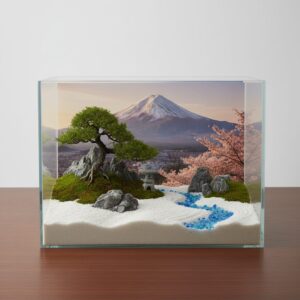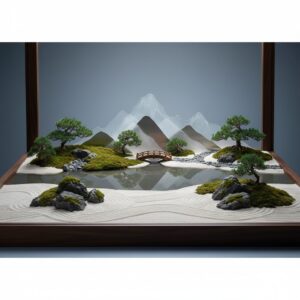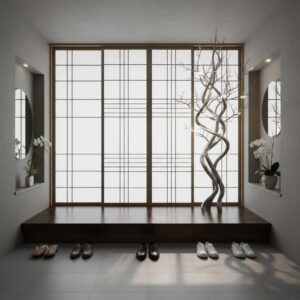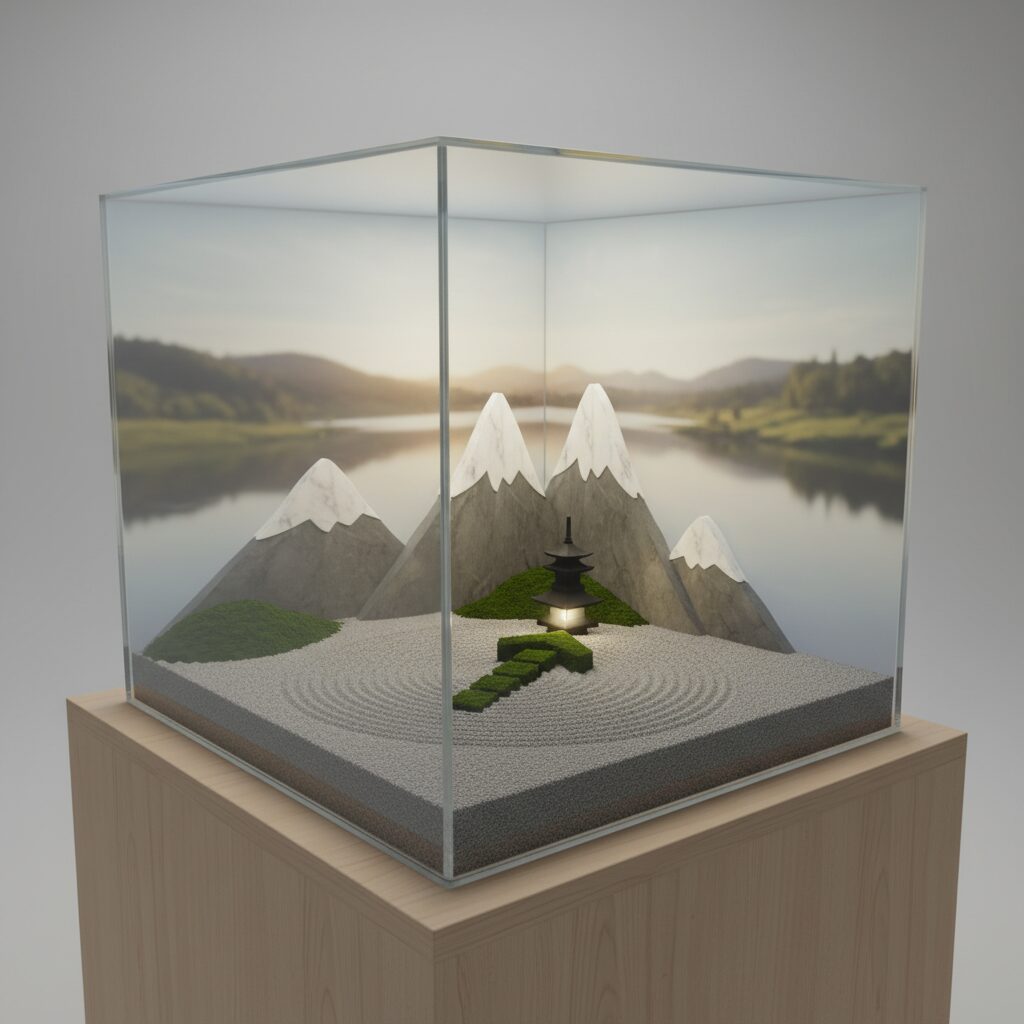
You’ve probably seen the picture. A serene Japanese garden, perhaps with a placid pond reflecting a stone lantern, meticulously raked gravel swirling around mossy rocks, and a perfectly pruned pine tree. It feels complete, a self-contained world of tranquil beauty. But what if I told you that in many of Japan’s most celebrated gardens, the most important element is something that lies completely outside its walls?
This is the essence of shakkei, or “borrowed scenery.” It’s a design principle so fundamental to Japanese spatial aesthetics that once you understand it, you’ll start seeing it everywhere, from ancient temple grounds to modern urban architecture. The concept is simple in theory: a garden intentionally incorporates a view from beyond its physical boundaries—a distant mountain, a neighboring pagoda, even the sky itself—making it a vital part of its own composition. It’s an act of visual borrowing, where the landscape is invited in.
But this raises a fascinating question. Why would a culture known for its precision and masterful control over miniature landscapes deliberately make a feature it cannot own or manage the star of the show? This isn’t just a clever trick of perspective. It’s a profound statement about the Japanese relationship with nature, the fluidity of boundaries, and the beauty found in acknowledging a world far greater than oneself. To understand shakkei is to understand that a Japanese garden isn’t always meant to be an escape from the world, but a perfectly framed window into it.
For those eager to explore how nature beyond garden walls enhances design, a closer look at borrowed scenery reveals the artful integration of the surrounding landscape into these tranquil retreats.
Beyond the Frame: What is Shakkei?

At its essence, shakkei (借景) is an act of expert curation. The term is composed of two kanji characters: 借, meaning to borrow or rent, and 景, meaning scenery or landscape. This goes beyond simply admiring a beautiful view. It involves the deliberate, conscious incorporation of a distant element into the foreground’s design. The garden serves as a frame, and the world beyond becomes the artwork displayed within it.
Consider it this way: a Western garden is often defined by its boundaries. A brick wall or a tall hedge clearly marks the edge of the property and the start of everything else. It signifies ownership and separation. A garden employing shakkei does the opposite. It intentionally softens that boundary, creating a composition that flows seamlessly from the man-made to the natural, from the controlled to the wild. The low wall or carefully placed hedge doesn’t merely enclose the garden; it shapes the view, concealing unattractive elements and unveiling the borrowed scenery at just the right moment.
This technique is classified according to what is borrowed and from where:
Enshaku (遠借): Distant Borrowing
This is the most dramatic and well-known form of shakkei. It involves capturing a prominent landmark in the far distance. The classic example is a mountain, its silhouette providing the ultimate backdrop to the garden’s composition. Temples like Entsu-ji in Kyoto are famous for this, perfectly framing Mount Hiei between two rows of cedar trees. The mountain serves not only as a background but also as the garden’s anchor—its immovable and sacred centerpiece.
Rinshaku (隣借): Neighboring Borrowing
Not all borrowed scenery is far away. Rinshaku is the art of incorporating elements from an adjacent property. This might include the elegant roofline of a nearby temple, a striking cluster of bamboo in the neighboring yard, or even the wall of a building next door. It is a neighborly and resourceful approach, discovering beauty in immediate surroundings and weaving them into a harmonious visual narrative.
Gyōshaku (仰借): Upward Borrowing
Sometimes, the borrowed view is vertical rather than horizontal. Gyōshaku involves looking upward. A garden designer may deliberately create an opening in the tree canopy to frame the passing clouds, the moon, or simply the expansive, shifting blue sky. This reminds the observer that the garden exists beneath a dynamic, living dome, not within a static enclosure.
Fushaku (俯借): Downward Borrowing
In contrast, fushaku directs the gaze downward. This is most often seen in the use of ponds and water features. The still surface of a pond does not just house koi; it acts as a mirror, borrowing the reflections of the sky, surrounding trees, and changing light. The borrowed scenery becomes an inverted, shimmering world contained within the garden itself.
The Philosophy of the Permeable Boundary
To view shakkei simply as an aesthetic choice is to overlook its true meaning. This design philosophy is a tangible expression of deeply rooted cultural and spiritual beliefs about humanity’s role in the universe. It conveys a narrative about what a space is and what it signifies to inhabit it.
In the West, especially since the Enlightenment, nature has often been seen as something to be conquered, controlled, and enhanced through human innovation. The formal gardens of Versailles exemplify this approach: nature is subdued, clipped into submission, and shaped into strict geometric patterns that celebrate human authority. The boundary there is definitive.
Shakkei, in contrast, arises from a fundamentally different perspective. In Shintoism, Japan’s native religion, nature itself is sacred. Mountains, ancient trees, waterfalls, and uniquely shaped rocks are believed to be inhabited by kami, or divine spirits. A distant mountain is not merely a geological feature; it is a potent, living being. By borrowing its view, the garden does not conquer it but honors it. The garden designer recognizes the sacred power of the landscape and harmonizes their small, human-made creation with it. The garden’s permeable boundary expresses humility.
This concept is further enriched by Buddhist philosophy, which took strong root in Japan from the 6th century onward. A central teaching in many Buddhist traditions is interconnectedness (engi)—the notion that nothing exists independently. Everything is part of an extensive, interdependent network of cause and effect. A garden that dissolves its own borders perfectly embodies this idea. It denies its separateness and declares itself part of a greater whole. The garden is not an island; it is a shoreline, continually interacting with the vast ocean of the world beyond.
This produces a distinctive psychological impact on the visitor. Standing in a garden that borrows from its surroundings, you are both in an intimate, human-scaled space and in the presence of something immense and timeless. The carefully positioned rock at your feet is connected to the ancient mountain on the horizon. This duality nurtures a sense of calm and perspective, reminding you of your small yet meaningful place within a much larger context.
The Architect’s Gambit: Embracing the Uncontrollable
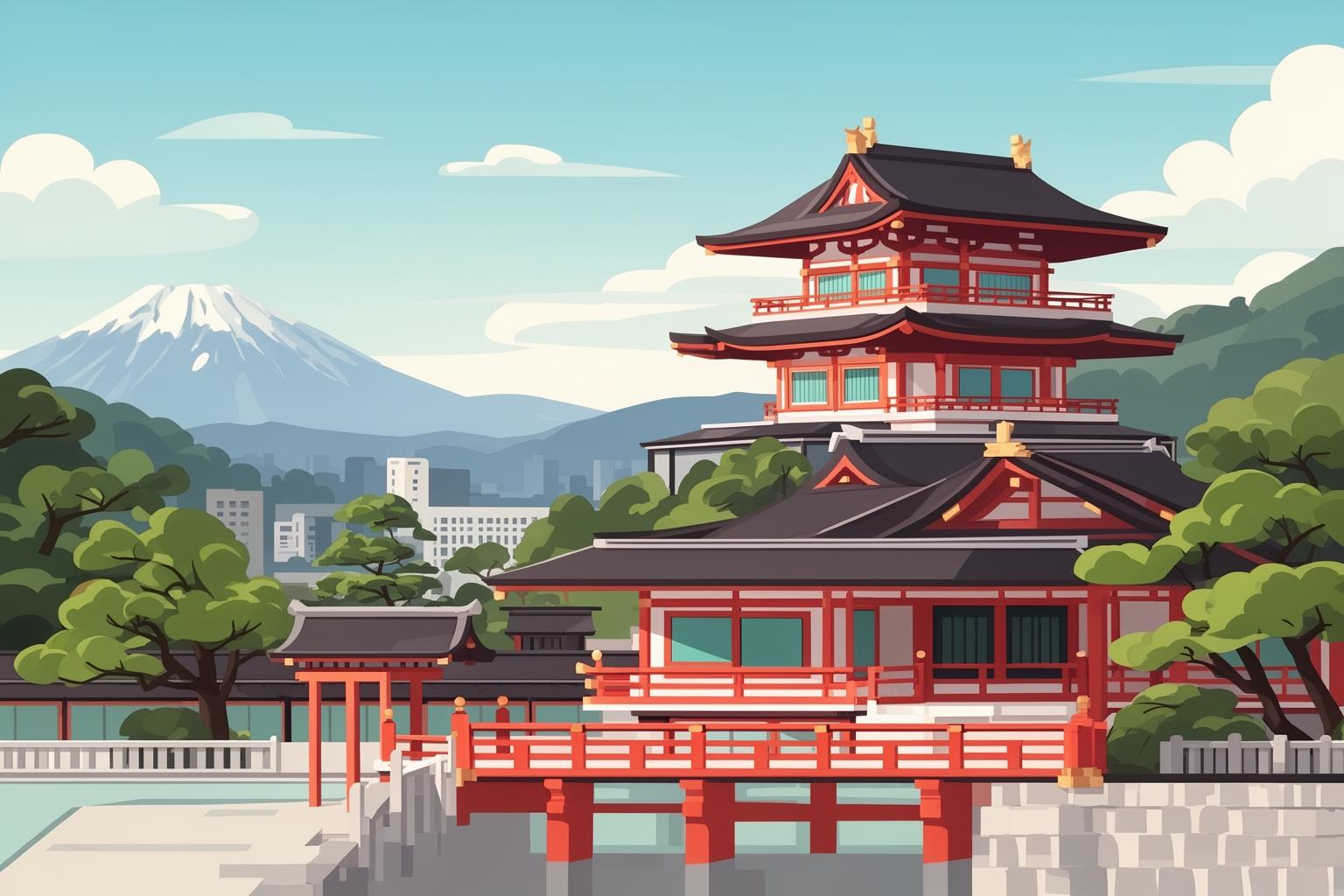
At the core of shakkei lies a fascinating paradox. A Japanese garden is among the most meticulously controlled environments conceivable. Each stone is chosen for its distinct character, every plant is pruned with artistic precision, and paths are designed to guide the visitor’s experience thoughtfully. It is a realm of intense deliberation.
Yet, through the use of shakkei, the designer intentionally introduces an element of pure, uncontrollable chaos. The borrowed mountain cannot be trimmed. The drifting clouds cannot be arranged. The weather sweeping over the distant landscape—mist, rain, snow, or the golden light of sunset—is entirely beyond the gardener’s control. A new skyscraper could one day arise, permanently changing a view that has existed for centuries. Why accept such a risk?
This is the architect’s gamble. Incorporating an uncontrollable element reflects a conscious choice to embrace the Japanese aesthetic of wabi-sabi—the appreciation of beauty that is imperfect, impermanent, and incomplete. The garden becomes a dynamic, living entity precisely because it is subject to the unpredictability of the world beyond its borders. It transforms not only with the seasons but also with the passing hours. A mountain cloaked in morning mist offers a vastly different experience from the same peak outlined against a clear blue sky. The garden is never finished, never static.
To maintain this delicate equilibrium between control and surrender, designers use several essential techniques:
Framing (Ikidori)
This is the most vital technique. The borrowed view is seldom shown in its entirety. Instead, it is carefully framed to direct the viewer’s gaze and amplify its impact. Framing can be architectural—a window in a tea house, the pillars of a veranda, a moon-viewing gate (ensō)—or natural, employing clipped hedges or tree trunks to form a visual aperture. This framing process is sometimes called ikidori (生け捕り), meaning “capturing alive.” The designer does not destroy the view by possessing it but rather captures its living essence within a thoughtfully composed scene.
Miegakure (見え隠れ)
The principle of “hide and reveal.” A great shakkei garden does not reveal its most spectacular view immediately. The borrowed scenery might be entirely hidden from the entrance, only to be revealed dramatically when rounding a corner or stepping onto a specific viewing platform. This fosters a sense of journey and discovery. By concealing and then unveiling the view, the designer builds anticipation, making the final moment of connection with the landscape all the more powerful.
Miniaturization and Scale
Japanese gardens often manipulate scale, using small foreground elements to represent vast landscapes. Raked white gravel becomes the ocean, and a single large rock symbolizes a mountain island. When shakkei is incorporated, this becomes a sophisticated visual interplay. A small, carefully shaped pine tree in the foreground might echo the form of a distant mountain range in the background. This contrast between miniature and immense creates a profound sense of depth and perspective, linking the contained with the infinite.
A Living History: The Evolution of Borrowed Scenery
While the concept feels timeless, the articulated principle of shakkei has a long and rich history. Its origins can be traced back to Chinese garden design, especially during the Song Dynasty (960–1279). Garden manuals from that period already emphasized the importance of “borrowing” views to enhance the sense of space within an enclosed garden. However, when the idea reached Japan, it was adapted and refined through the lens of local aesthetics and philosophies.
During Japan’s Heian period (794–1185), aristocratic gardens tended to be more inward-focused. These large boating gardens, often centered on a pond, were designed as microcosms of a mythical paradise rather than as windows onto the outside world. The aim was to create an idealized, self-contained universe.
It was in the Muromachi period (1336–1573), with the rise of Zen Buddhism and the tea ceremony, that the philosophical foundation for shakkei was truly established. Zen emphasized meditation and enlightenment through direct experience, and the gardens linked to Zen temples served this purpose. They were simpler, more abstract, and deeply connected to nature. The small, rustic tea garden, or roji, was intended as a path to disconnect from the mundane world. Yet even in these gardens, subtle forms of shakkei—such as the sound of a hidden stream or the sight of a neighbor’s tree beyond a bamboo fence—were employed to evoke a sense of being part of a larger, tranquil environment.
The Edo period (1603–1868) marked the golden age of grand shakkei gardens. With a unified and peaceful Japan, powerful feudal lords and the imperial court had the means to create expansive stroll gardens. The imperial villas of Kyoto, like Shugaku-in Rikyu and Katsura Rikyu, represent the pinnacle of this style. Shugaku-in, in particular, stands out as a masterpiece of borrowed scenery. Its upper garden sits on a hillside, using the surrounding forest to conceal the city below while borrowing the sweeping views of northern Kyoto’s rolling hills and mountains. The garden’s ponds and bridges feel less like an enclosed space and more like a carefully arranged platform for appreciating the stunning natural landscape.
The Enduring Principle of the Open Wall
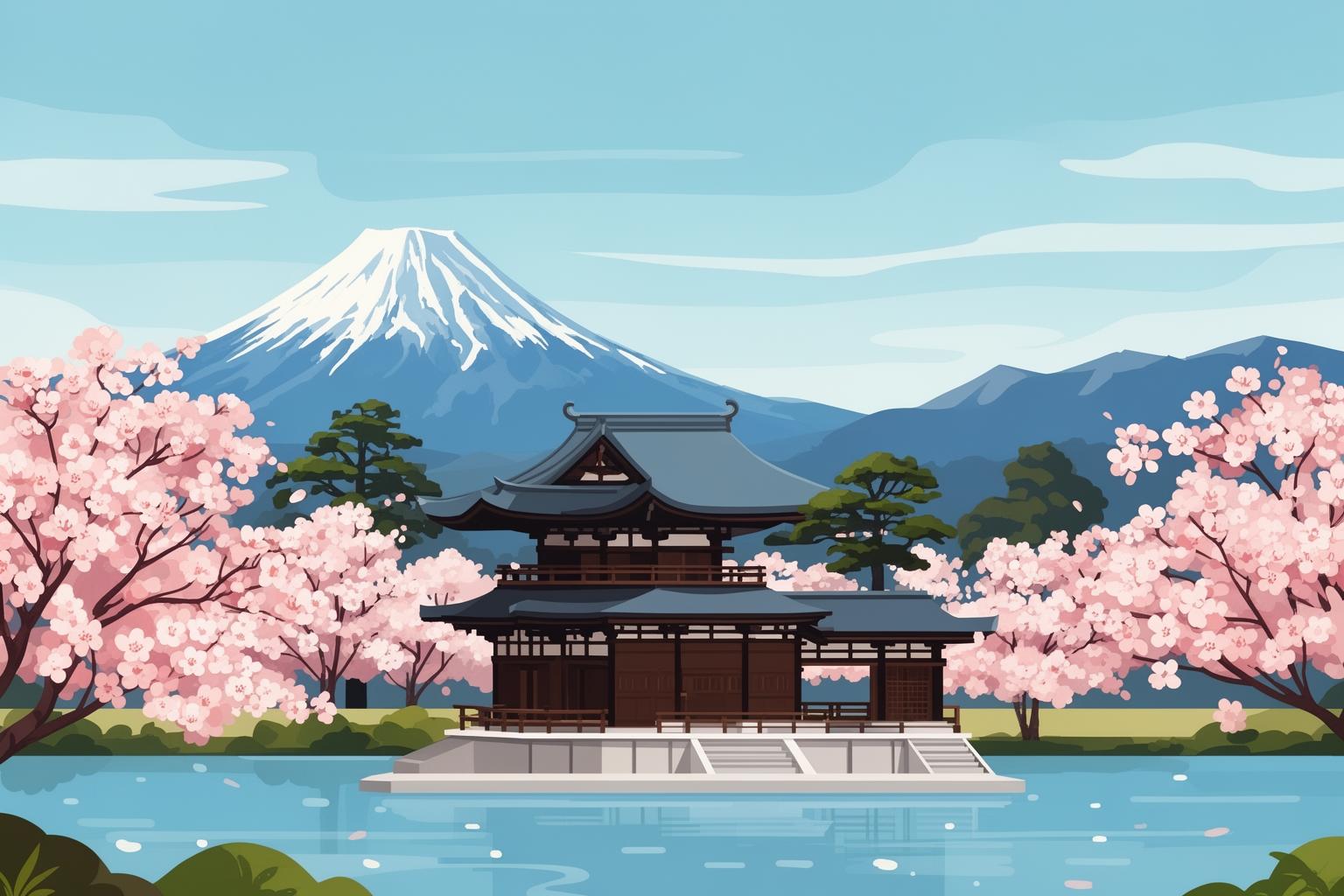
Today, the spirit of shakkei remains a potent influence in Japanese design, extending well beyond the confines of historic gardens. Modern architects continually face the same challenge: how to craft serene, functional spaces within dense and often chaotic settings. The solution, quite often, is to borrow.
Consider the work of architects like Tadao Ando or Kengo Kuma. The principle is evident everywhere. A concrete house might display a single, large pane of glass that perfectly frames a lone tree in the courtyard. An urban office building may feature an inner garden that borrows the sky, creating a pocket of nature within a steel-and-glass environment. Even in a small city apartment, positioning a window to capture a view of a distant park or a striking piece of skyline is a contemporary expression of shakkei.
This is the lasting legacy of the concept: the artful blending of inside and outside. It serves as a reminder that a space is defined not just by its walls, but by its relationship to what lies beyond them.
Shakkei is, ultimately, a worldview expressed through landscape. It suggests that a wall can be a window, that a boundary can be a bridge, and that true beauty lies not in what we can own and control, but in our capacity to appreciate our connection to the vast, untamable world around us. It teaches a perspective, urging us to look up from the carefully raked gravel at our feet and notice the mountain on the horizon. The view, after all, has been there all along, waiting to be borrowed.