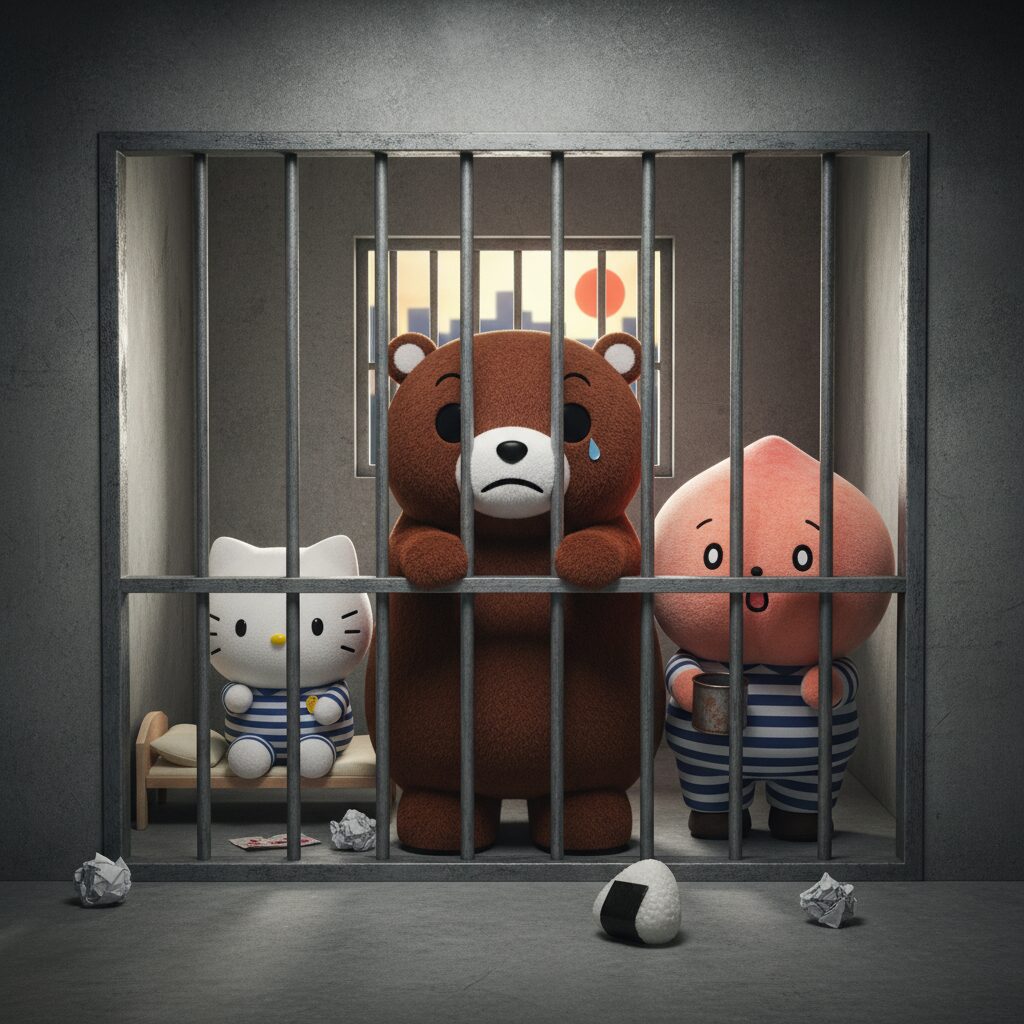
Walk around Japan for more than ten minutes, and you’ll start to notice them. At first, it’s subtle. A cartoon badger in a construction helmet bowing from a sign. A smiling, anthropomorphic vegetable on a packet of pickles. A wide-eyed, slightly dopey-looking creature on the side of a police car. Soon, you realize they are everywhere, a silent, smiling army that has infiltrated every corner of public and private life. These are Japan’s yurukyara, the ubiquitous local mascots that serve as unofficial ambassadors for everything from prefectures and cities to airports, tax offices, and, yes, even prisons. A curious outsider might dismiss this as a simple, perhaps juvenile, obsession with cuteness. But that’s like looking at a Noh mask and only seeing a painted piece of wood. The nationwide embrace of these often-bizarre characters is a window into the machinery of Japanese society itself. It’s a story about ancient beliefs, modern economics, and the quiet power of a friendly face in a culture that prizes harmony above all else. These aren’t just marketing tools; they are social lubricant, identity-builders, and non-confrontational messengers wrapped in felt and foam. To understand the yurukyara, you have to understand the unspoken rules of communication and community in Japan.
This playful iconography mirrors a broader contrast in Japan’s urban landscape, as seen in the intricate history of danchi communities that reveals another side of modern Japanese social life.
The Ancient Roots of a Modern Obsession
Before you can understand a walking, talking pear promoting a city, it’s important to recognize that Japan has a very long history of perceiving spirits in inanimate objects. This isn’t a modern marketing tactic; it’s a deep-seated cultural instinct rooted in Shinto, the country’s indigenous religion. At Shinto’s core is the idea of yaoyorozu no kami, or the eight million gods. This figure isn’t meant literally but poetically conveys the presence of divinity everywhere and in everything. Mountains, rivers, ancient trees, unique rocks, and even everyday items can be inhabited by a kami, or spirit. This animistic perspective means there is no strict division between the human and spiritual worlds, or between the animate and inanimate. Everything holds a potential personality, a life force waiting to be recognized.
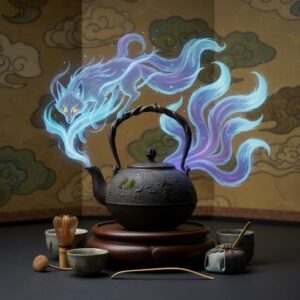
This tendency to personify the world extended beyond shrines. During the Edo period (1603-1868), artists in the ukiyo-e (woodblock print) tradition enjoyed depicting animals and objects acting like humans. Renowned artists like Kawanabe Kyōsai and Utagawa Kuniyoshi illustrated cats running restaurants, frogs engaged in sumo wrestling, and teapots marching in processions. These weren’t merely whimsical sketches; they reflected a culture at ease with blurring boundaries and attributing human traits to the non-human. This artistic heritage established a visual language where anything could become a character.
Moving into the post-war era, this cultural foundation nurtured the rapid growth of manga and anime. Characters like Astro Boy, Doraemon, and Hello Kitty became cultural icons, appealing not only to children but to entire generations. Sanrio, the company behind Hello Kitty, perfected the creation of characters untied to any particular story or media, existing purely as symbols of cuteness (kawaii). This helped normalize the concept that a character could simply be a friendly, appealing presence. By the 21st century, the Japanese public was already well-versed in the language of character culture. The setting was ideal for these characters to move from the page into the public sphere.
The Birth of the “Loose” Character
The actual term yurukyara is a blend of yurui (meaning loose, gentle, or laid-back) and kyarakutā (the Japanese transliteration of “character”). It was coined in the early 2000s by the cultural critic and illustrator Miura Jun, who became the movement’s unofficial godfather. He was not merely naming a trend; he was defining an aesthetic. Miura recognized a new type of mascot emerging, distinct from the polished, professionally designed corporate mascots created by companies like Sanrio or Disney.
According to Miura, a genuine yurukyara must follow three core principles:
First, it must express a deep love for one’s local town or region. The character’s design is almost always a combination of local specialties, historical figures, or famous landmarks. Gunma-chan from Gunma Prefecture is a pony because the area was once known for horse breeding. Funassyi, the hyperactive pear-fairy from Funabashi, represents the city’s renowned pears. This connection to place is essential.
Second, the character’s movements and behavior must be unsteady and distinctive, often charmingly clumsy. This is where the live-action element becomes vital. A yurukyara isn’t merely an illustration; it’s a person in a costume, and the awkwardness of the suit—the waddling walk, the clumsy gestures, the occasional stumble—is part of its appeal. This physical imperfection makes the character feel more real and approachable than a flawless animated figure.
Third, the character must be yurui—unsophisticated and rough around the edges. This is the most critical aspect. Many yurukyara appear as though they were designed by a town hall worker in their free time, and that is exactly the point. Their charm stems from their amateurish quality. A perfectly polished, market-tested character seems corporate and distant. A slightly goofy, hand-drawn-looking character feels authentic, as if it truly belongs to the community. This aesthetic of imperfection distinguishes a true yurukyara from a generic mascot.
This framework gave both a name and a set of ideals to a grassroots movement. As Japan’s central government promoted regional revitalization (chiiki-kōsei) to counter depopulation and economic decline in rural areas, towns and prefectures embraced the yurukyara as an inexpensive and effective means to build a brand and draw tourists. Thus, the boom began.
The Unspoken Social Functions of a Fuzzy Mascot
To view yurukyara merely as tourism promoters overlooks their most crucial function. They represent a uniquely Japanese response to cultural challenges surrounding communication and social cohesion.
A Gentler Voice of Authority
Japanese society highly values harmony and the avoidance of direct confrontation. This is evident in the language, which incorporates various levels of politeness and indirect expressions to soften requests and convey information without creating conflict. Here, a mascot proves to be an invaluable tool. A government notice about tax deadlines or a sign at a construction site warning of danger can feel impersonal and harsh. However, when the same message is delivered by a cute, smiling character, the tone shifts completely. The message remains serious, but the delivery is gentler, making it easier to accept and less confrontational.
The mascot serves as an intermediary, a neutral third party able to communicate with a gentle authority that a human official might find difficult to express. It depersonalizes the request. Instead of feeling commanded by the government, you are being politely asked by Pipo-kun, the mouse-like mascot of the Tokyo Metropolitan Police. This generates a psychological buffer that lowers social tension. In a culture where saying “no” directly is often seen as rude, a character can convey rules and regulations in a way that feels more like a friendly suggestion than a strict order. They are the soft, smiling face of the rulebook.
Creating Identity Amid Uniformity
For much of the 20th century, Japan experienced intense centralization. Economic power, cultural trends, and political influence were concentrated in Tokyo, leaving many regional areas feeling anonymous and neglected. The yurukyara boom was a direct reaction to this. It provided towns and prefectures with a means to reclaim and celebrate their distinct local identity.
By designing a mascot that embodies local pride—such as a famous food, a historical figure, or a piece of folklore—a community creates a highly visible and instantly recognizable symbol. This goes beyond tourism. It boosts internal morale. For residents, the local mascot becomes a shared point of pride, symbolizing what makes their home unique. Schoolchildren collect merchandise featuring their local mascot, and the character appears at numerous civic events, from sports festivals to seasonal celebrations. The mascot becomes embedded in daily life, nurturing a sense of belonging.
Kumamon, the black bear mascot of Kumamoto Prefecture, exemplifies this phenomenon. Introduced in 2010 to attract tourists to the new Shinkansen (bullet train) line, he quickly became a global sensation. A major factor in his success was the prefecture’s bold decision to allow any company promoting Kumamoto products to use his image freely. This led to a widespread proliferation of Kumamon-branded items, ranging from cakes to cars. He generated billions of yen in economic activity for the region, but more importantly, he put Kumamoto on the map. Kumamon is not just a mascot from Kumamoto; to the world, he is Kumamoto. He gave a largely rural prefecture a unique and beloved identity that traditional advertising could never have achieved.
The Psychology of Yurui: Embracing Imperfection
Grasping the aesthetic of yurui is essential to truly understanding the essence of the yurukyara. While the word “loose” serves as a helpful starting point, it represents much more: gentleness, imperfection, effortlessness, and a lack of sharp edges. It contrasts sharply with intensity, high pressure, and slickness. In a society known for its demanding work culture and conformity pressures, the yurui aesthetic provides a form of psychological comfort.
This admiration for imperfection is deeply rooted in Japanese aesthetics, especially the concept of wabi-sabi, which appreciates beauty in things that are flawed, asymmetrical, and transient. A perfectly symmetrical, mass-produced teacup is practical, but a slightly misshapen, handmade one carries character and warmth. Yurukyara embody this same sensibility. Their often awkward designs, clumsy movements, and simple, hand-drawn expressions—these are not design flaws. They are the very essence of their charm.
Take a character like Okazaemon, the unsettlingly minimalist mascot of Okazaki City, as a prime example. He features a pale, ghostly white face with vacant eyes and the characters for “Okazaki” inscribed on his face. He isn’t conventionally cute. He’s peculiar. Yet, it’s this oddness that makes him memorable and cherished. He doesn’t seem like a product of a committee’s decision; instead, he feels like a genuine, quirky representation of a place.
This yurui trait makes the characters appear non-threatening and approachable. They don’t overexert themselves to sell anything. They simply are. This understated presence enables them to blend subtly into everyday life without causing disruption. They ask for very little emotionally, while offering a brief moment of gentle, unpretentious comfort. They are the visual equivalent of a soft sigh of relief.
Mascot Overload and the Inevitable Backlash
Certainly, no trend can explode without eventually reaching a saturation point. The success of early mascots like Hikonyan and Kumamon sparked a gold rush. Every town, every government agency, and every public utility wanted its own yurukyara. This resulted in a flood of thousands of mascots, many of which were uninspired, repetitive, or simply odd. The annual Yurukyara Grand Prix, once a lighthearted celebration, transformed into a fiercely competitive event plagued by allegations of vote-rigging from overly enthusiastic municipalities.
This mascot craze ultimately prompted a government-mandated “cull.” In 2014, the Ministry of Finance started pressuring local governments to consolidate or retire their mascots, citing concerns over wasteful spending of taxpayer money. For instance, the city of Osaka had nearly 100 different mascots representing its various departments and wards. The backlash signaled that the boom had reached its peak as the public grew weary of the endless stream of forgettable characters.
This era also revealed the stranger side of the yurukyara phenomenon. Some mascots crossed the line from cute to eerie or absurd. Sento-kun, a boy with deer antlers designed for Nara’s 1300th anniversary, faced widespread criticism for being unsettling. More famously, Melonguma, the melon-bear from Yubari, Hokkaido, became notorious for its frightening habit of “attacking” other mascots and celebrities with its wide, sharp-toothed mouth. These characters show that the yurukyara world isn’t uniformly gentle and cute; it embraces the bizarre and even the slightly menacing, which arguably adds to its appeal.
Ultimately, what we are witnessing is not the death of the yurukyara, but rather a market correction. The weak and derivative mascots are disappearing, while the truly cherished and effective ones endure. Those that have genuinely connected with their communities and carved out unique identities will persist. No longer a novelty, they have become a permanent and accepted element of Japan’s visual and social landscape. They serve as the goofy, friendly gatekeepers of Japanese civic life, offering a soft smile and a clumsy wave as they navigate you through the complexities of society. They demonstrate that sometimes, the most effective way to convey a serious message is through a character that doesn’t take itself too seriously at all.