If you spend any time in the suburbs of a major Japanese city, you’ll see them. Clusters of uniform, five-story concrete apartment blocks, arranged with an almost mathematical precision. They are the danchi, Japan’s post-war public housing complexes. Today, they often carry a faint air of melancholy—aging structures, quiet playgrounds, a landscape from a bygone era. They can look monolithic, even a little bleak, relics of a time before the sleek high-rises and designer condos of modern Tokyo or Osaka. It’s easy to dismiss them as just old apartments.
But that would be missing the entire point. To see the danchi as merely a housing solution is to misunderstand one of the most ambitious social experiments in modern Japanese history. When these complexes began rising from the ashes of World War II in the mid-1950s, they weren’t just shelter. They were a promise. They represented a gleaming, modern future for the new Japanese nuclear family—a life of Western-style convenience with a gas stove, a flush toilet, and a stainless-steel sink, amenities that were the height of luxury at the time. More than that, they were conceived as self-contained communities, meticulously designed to engineer a new kind of neighborhood life from scratch. The architects and urban planners behind them believed that the very layout of the buildings, the placement of the parks, and the inclusion of shared facilities could foster a vibrant, cohesive social fabric.
And for a time, they were right. For a few decades, these concrete villages buzzed with a unique and now largely forgotten rhythm of community activities. Life wasn’t just lived inside the apartments; it spilled out into the shared spaces in a way that feels almost foreign in today’s more private, individualized Japan. So what happened in those spaces between the buildings? What were the rituals, the festivals, and the daily interactions that defined the golden age of danchi life, and why did they fade away? To understand this is to understand a crucial chapter in Japan’s social history.
Insights into the vanished communal vitality of Japan’s danchi can also lead us to reflect on the country’s enduring connection with its mysterious past, much like the allure of teapot spirits continues to captivate modern imaginations.
The Birth of the ‘Modern’ Neighborhood
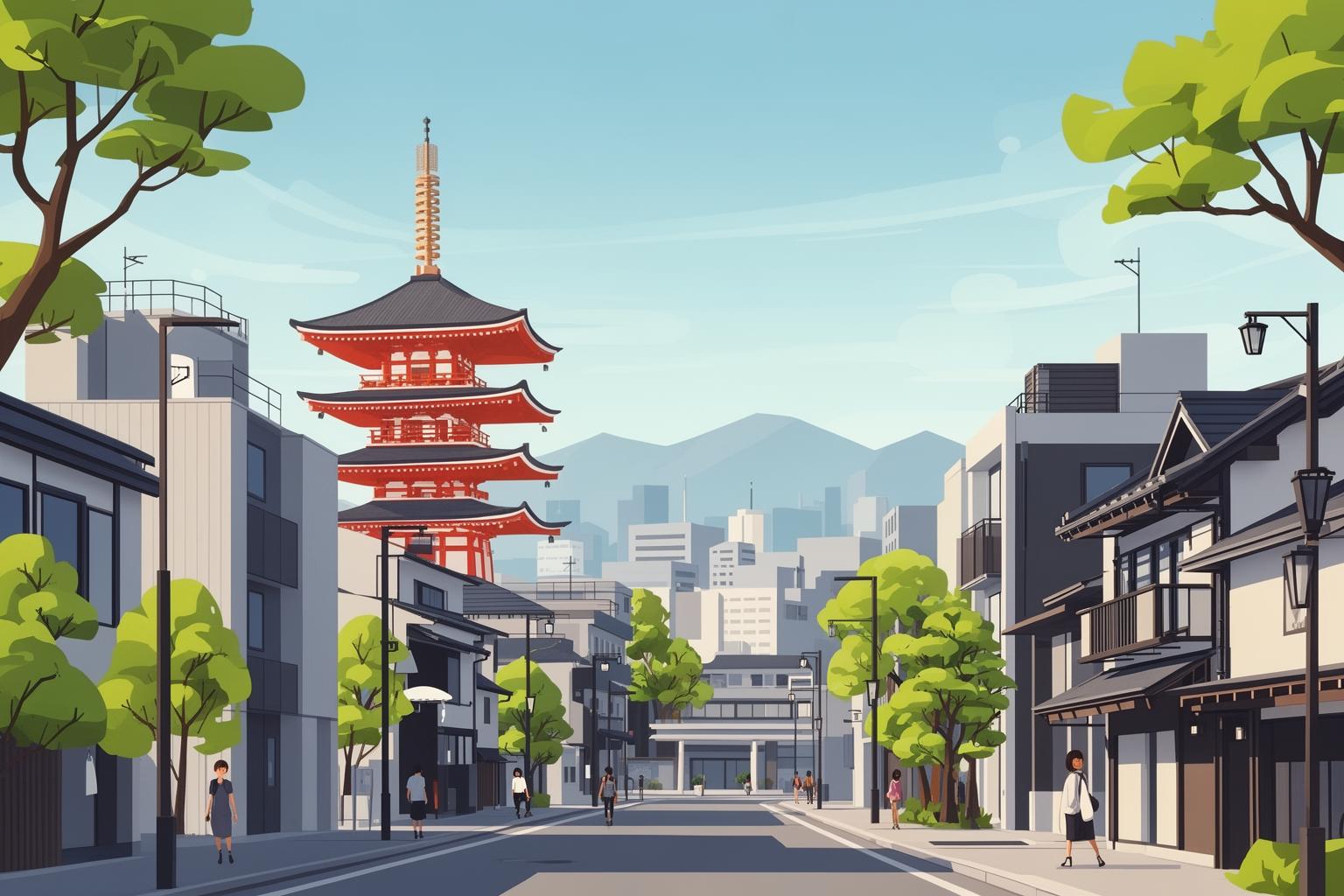
To truly understand the essence of the danchi, one must first comprehend the Japan into which it was born. The 1950s marked a time of intense reconstruction and rapid economic expansion. Millions migrated from rural areas to cities in search of work in the growing industrial sector. This influx led to a severe housing shortage. People were packed into small wooden apartments with shared kitchens and bathrooms, a stark contrast to the bright future the nation aimed to create.
Enter the Japan Housing Corporation (JHC), founded in 1955. Its mission was ambitious: to supply a vast number of clean, safe, and modern homes for the country’s expanding middle class. The danchi was their solution. The designs drew heavily from Western modernist architecture—Le Corbusier’s principles of functionalism and rational urban planning were key influences. The distinctive style differed greatly from traditional Japanese homes: reinforced concrete for fire and earthquake resistance, south-facing balconies to optimize sunlight, and a focus on practical efficiency.
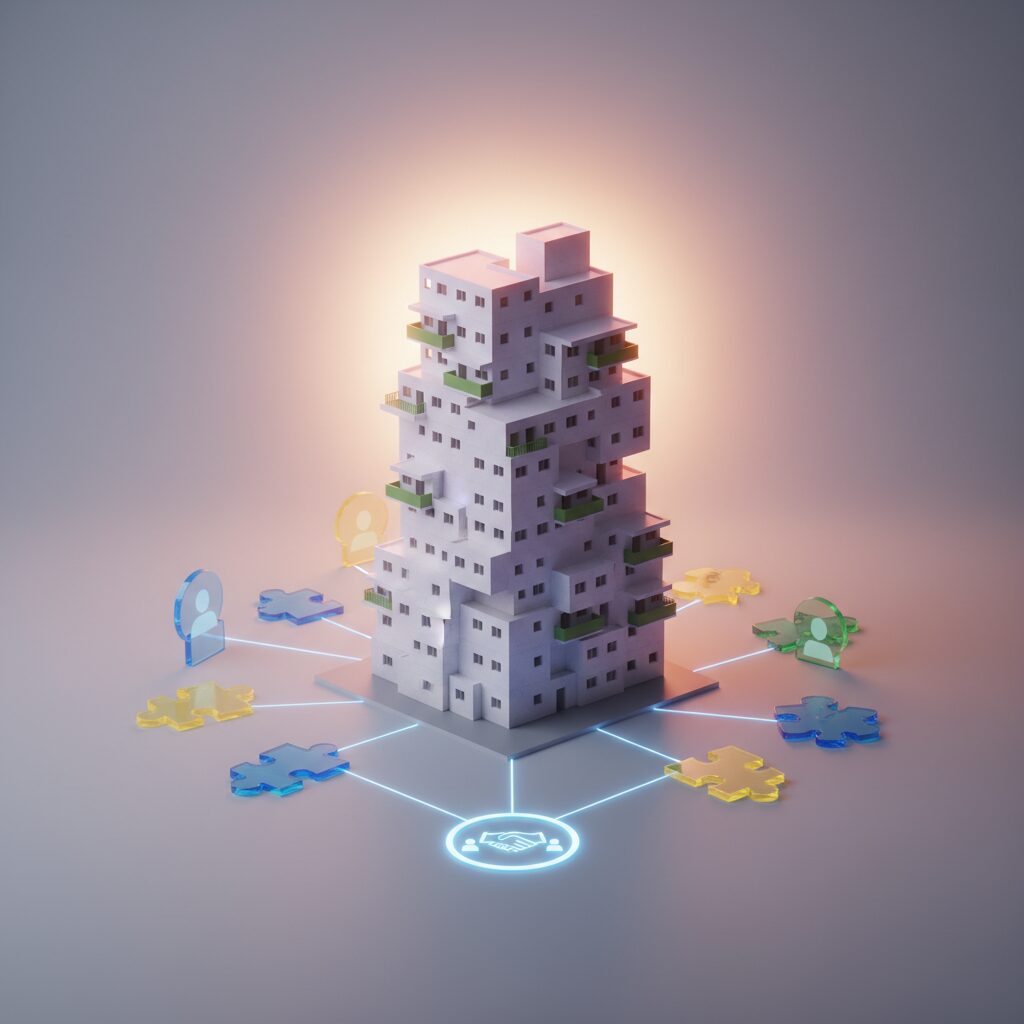
However, the real innovation lay not only in the apartments but also in the master planning. A typical large-scale danchi was more than a cluster of buildings; it was a self-contained micro-city. The planners deliberately positioned the apartment blocks in groups, often angled to form semi-enclosed courtyards and green areas. At the center of the complex was a plaza, or hiroba, designed to serve as a village square. Surrounding it were essential services for daily life: a small shopping arcade with a butcher, fishmonger, and grocer; a post office; a clinic; and occasionally a public bath. Importantly, every danchi featured playgrounds for children and a community hall, the shukaijo, for meetings and social events.
The underlying philosophy was clear: by providing all necessary amenities within the complex and creating shared spaces to foster casual encounters, the JHC wasn’t simply constructing housing. It was deliberately nurturing a community. The physical environment served as a means of social engineering, meant to draw people out of their private apartments and into a collective life. This was a bold effort to create a modern, secular version of the close-knit village lifestyle people were leaving behind in the countryside, adapted for the salaryman and his family.
The Rhythms of Danchi Life: Daily and Weekly Rituals
For the young families who won the housing lottery and moved in during the 1960s and 70s, life in the danchi quickly settled into a distinctive rhythm. This wasn’t a community left to chance; it was shaped by a series of formal and informal activities that marked the days, weeks, and seasons. These routines transformed strangers into familiar neighbors and nurtured a strong sense of belonging.
The ‘Ohayo’ Brigade: Morning Radio Taiso
One of the most emblematic daily rituals was rajio taiso, or radio calisthenics. Each morning at 6:30 AM, a soft piano tune would flow from radios nationwide, signaling the start of a nationally broadcast series of gentle, guided exercises. Throughout danchi complexes all over Japan, this was an open call to gather. Residents—from elderly retirees to young children still in pajamas—would come out of their apartments and assemble in the central plaza or the largest open area.
Led by no one in particular but followed by everyone, they would stretch, bend, and jump together, a quiet group of neighbors moving in harmony. It was a simple yet powerful ritual. On the surface, it was about health and beginning the day with light exercise. But its social role was far more significant. It was a daily attendance check. You noticed who was present and who was absent. You exchanged drowsy greetings—Ohayo gozaimasu!—with those living two floors down. It was a low-pressure, effortless way to maintain connection, a shared moment that bonded the community before daily responsibilities pulled everyone in different directions. It reinforced the sense that everyone was part of the same collective, starting the day as one.
The Playground as the Social Hub
If the men were salarymen who commuted to the city, the danchi during the daytime belonged unquestionably to women and children. The playgrounds, carefully positioned within sight of the apartment blocks, were the social hubs of this world. These were not just spaces for children to play on the now-iconic concrete slides and metal globe jungle gyms; they served as the primary social network for a generation of young, stay-at-home mothers.
Before the era of smartphones and social media, the playground bench was the main channel for information. Women gathered here while watching their children, sharing parenting tips, swapping recipes, venting about their husbands, and spreading local news and gossip. This network, often called danchi-zuma no tachibanashi (the standing-and-chatting of danchi wives), was a crucial support system. For many women who had relocated from their hometowns and felt isolated from extended families, these friendships were a lifeline. They organized informal playgroups, shared childcare responsibilities, and offered emotional support. The danchi’s physical design, clustering dozens of families close together, made this intense, localized form of social networking not just possible but inevitable.
The Communal Cleaning Day: Soji no Hi
Life in the danchi also included shared responsibilities, with one of the most important being the regular community cleaning day. On a designated weekend morning, perhaps monthly, residents were expected to come out and clean the shared spaces. This wasn’t optional; it was a civic obligation, organized by the residents’ association.
People tackled areas beyond their own front doors: sweeping stairwells, weeding flowerbeds, scrubbing railings, and tidying the garbage collection points. Though it might sound like a chore, the soji no hi served a key social function. It was a structured event that brought together residents who might not usually interact—working fathers, elderly couples, and young mothers all working side by side. It visibly showed a collective commitment to their shared environment. Caring for the communal spaces reinforced the belief that the danchi wasn’t just a building where you rented an apartment; it was a home maintained together. It was a physical expression of the community’s dedication to itself.
Celebrations in Concrete: The Seasonal Festivals
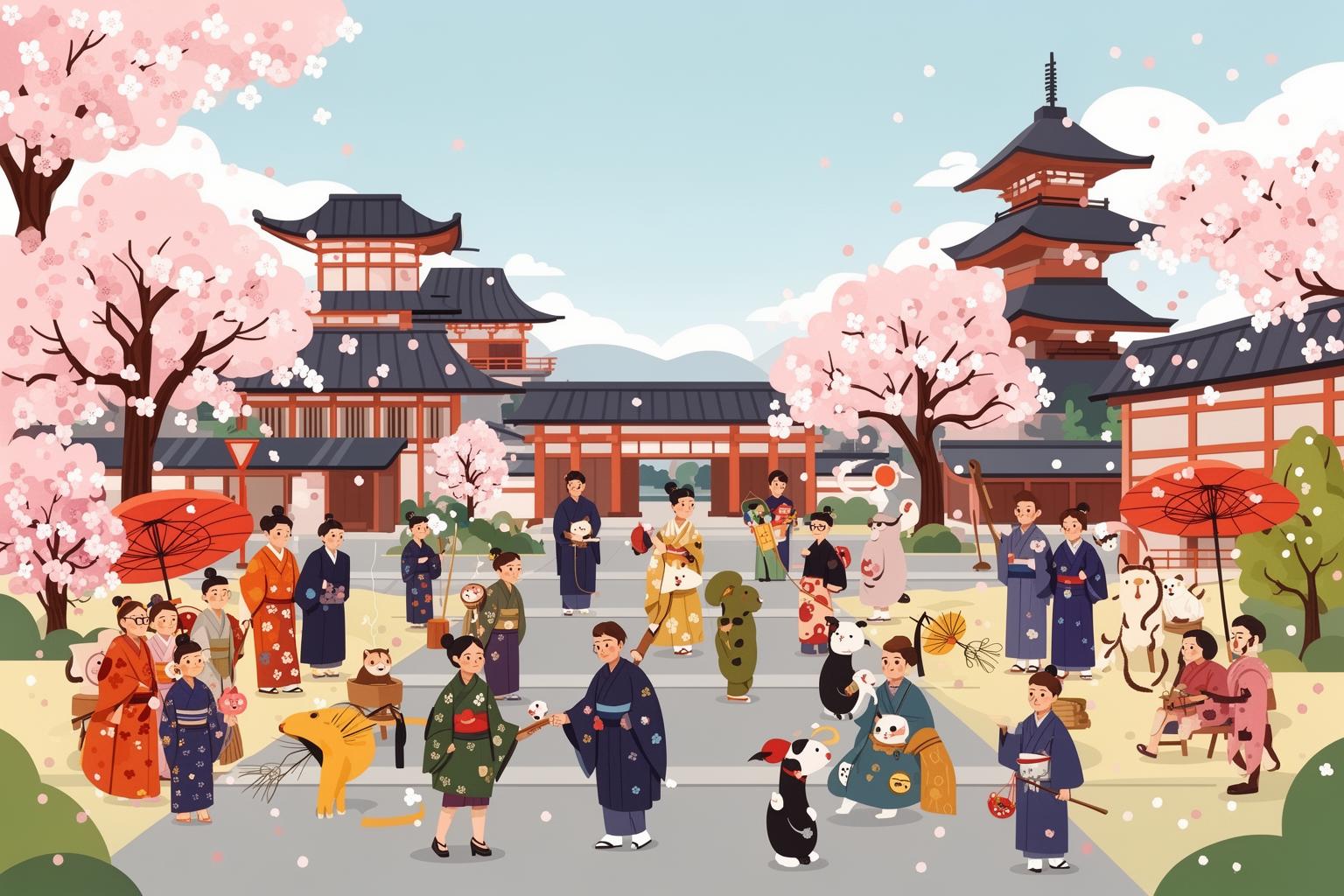
Beyond the daily and weekly routines, the year in the danchi was distinguished by larger, more festive gatherings. These occasions were the highlights of the community calendar, times when the entire complex united in celebration. As an event planner, I’m intrigued by how these festivals were nearly entirely grassroots, organized and carried out by the residents themselves. They represented a powerful expression of community spirit, transplanting the traditions of a rural village onto the modern stage of the concrete housing block.
Summer’s Peak: The Natsumatsuri
The biggest and most eagerly awaited event of the year was the natsumatsuri, or summer festival. Typically held in August during the Obon season, the danchi natsumatsuri was a smaller version of the traditional festivals found at shrines and temples throughout Japan. Here, however, the central plaza became the sacred ground.
In the days leading up to the festival, the community would hum with preparation. Men from the residents’ association would build a yagura, a tall wooden tower, in the plaza’s center. This served as the platform for drummers and musicians. Strings of red and white paper lanterns were hung between the buildings, turning the familiar concrete environment into something enchanting at night. The festival itself was a feast for the senses. Residents ran their own food stalls, selling grilled corn, yakisoba (fried noodles), and shaved ice from folding tables. Children played games like kingyo-sukui (goldfish scooping), trying to win inexpensive toys. As dusk fell, the sound of taiko drums began, and the bon-odori dancing started. Residents of all ages formed circles around the yagura, dancing traditional folk dances well into the warm summer night. It was a moment of pure, collective joy— a time when the entire danchi felt like one large, extended family.
Pounding in the New Year: Mochitsuki Taikai
Another cherished tradition was the mochitsuki taikai, where the community gathered to make mochi (pounded sticky rice cakes) in celebration of the New Year. This labor-intensive activity required teamwork, making it an ideal community-building exercise. A large stone or wooden mortar (usu) and a heavy wooden mallet (kine) were set up in an open area. Steamed, glutinous rice was placed in the mortar, and the pounding began.
Usually, men took turns wielding the heavy mallet, rhythmically striking the rice with powerful thuds. Between each strike, another person—often a skilled woman—would swiftly reach into the mortar to wet and turn the sticky rice mass. This required perfect timing and trust. Children watched in awe, and everyone cheered on the pounders. Once the rice had been pounded into a smooth, elastic dough, it was moved to tables where women and children pinched off pieces and shaped them into round mochi cakes. The freshly made mochi was then shared among all participants, often served with sweet red bean paste or savory soy sauce. The mochitsuki was more than just food preparation; it was a tangible act of creation, a ritual connecting the community to the changing seasons and to one another.
More Than Just Events: The Role of the Jichikai
The organizational backbone behind all these activities was the jichikai, the residents’ association. Every household in the danchi was generally expected to be a member and contribute a small monthly fee. The jichikai was a self-governing body that handled the community’s internal affairs. Its elected members—all resident volunteers—planned festivals, organized cleaning days, managed the community hall, and acted as the official link between residents and the JHC.
Participation in the jichikai was a fundamental aspect of danchi life. Through this structure, the community governed itself and nurtured its shared existence. It wasn’t always smooth—disagreements and personality conflicts occurred, naturally—but the jichikai provided a framework for collective action. It was the driving force behind the danchi’s vibrant social life, ensuring the community was not merely a passive group of tenants, but an active, engaged collective.
The Slow Decline of a Communal Dream
For two or three decades, the danchi community model prospered. However, from the 1980s onward, the vibrant social life that once characterized these concrete villages began to gradually decline. This downturn was not the result of a single event but stemmed from a convergence of profound, irreversible changes in Japanese society. The very forces of progress and prosperity that the danchi was designed to support eventually made its communal lifestyle obsolete for many.
The Changing Family and Workforce
The post-war nuclear family model—a salaryman father, a stay-at-home mother, and two children—formed the foundation of danchi society. The community’s daily rhythm revolved around this structure. Yet, as Japan’s economy advanced, its social fabric evolved. Increasingly, more women entered the workforce, resulting in quiet playgrounds and plazas during the day. The lively world of the danchi-zuma diminished as women found less time and energy for the informal social networking that had once united the community.
At the same time, the children raised in the danchi—the original “danchi kids”—went on to university, secured jobs, and moved away. They sought larger, newer, and more private homes, often in different neighborhoods or cities. This caused a significant demographic shift. The danchi, once alive with young families, began to age. The population leaned heavily toward the original residents, now empty-nesters and retirees. The youthful energy needed to raise a yagura or pound mochi for hours gradually faded.
The Privatization of Life
As Japanese families grew more affluent, their priorities and desires evolved. The danchi’s initial modern conveniences lost their appeal, and its compact size started to feel confining. Aspirations shifted from a small two-room apartment to a detached house with a garden or a larger condominium with superior amenities. Privacy, which had been sacrificed for community in the early danchi model, became increasingly valued.
The concept of mandatory community involvement started to seem more like a burden than a benefit. Taking part in the jichikai and attending cleaning days felt less like acts of civic pride and more like obligations. Moreover, the rise of new technologies accelerated this move toward individualism. The introduction of air conditioning reduced the need to leave windows open or sit outside on warm evenings, cutting down on casual neighborhood interactions. Meanwhile, televisions, VCRs, and video game consoles offered endless entertainment indoors, making the community hall less attractive.
The Aging of Buildings and People
Lastly, there was the unavoidable reality of physical deterioration. The concrete buildings themselves aged. Without extensive and expensive renovations, they began to appear outdated and worn. The once-shining symbols of modernity became relics of the past. As the buildings aged, so did their residents. Elderly inhabitants, often living alone after losing a spouse, faced different needs and capacities. Organizing large-scale summer festivals became an overwhelming challenge for residents’ associations led by people in their seventies and eighties.
New residents moving into vacant apartments frequently had no ties to the danchi’s history and little interest in its traditional communal activities. They were primarily seeking affordable rent. This created a disconnect between the older generation, who recalled the once vibrant community, and newer tenants, who saw the danchi simply as another apartment complex. The shared social bond that had once unified everyone had dissolved.
Echoes in the Present: Is the Danchi Spirit Completely Gone?
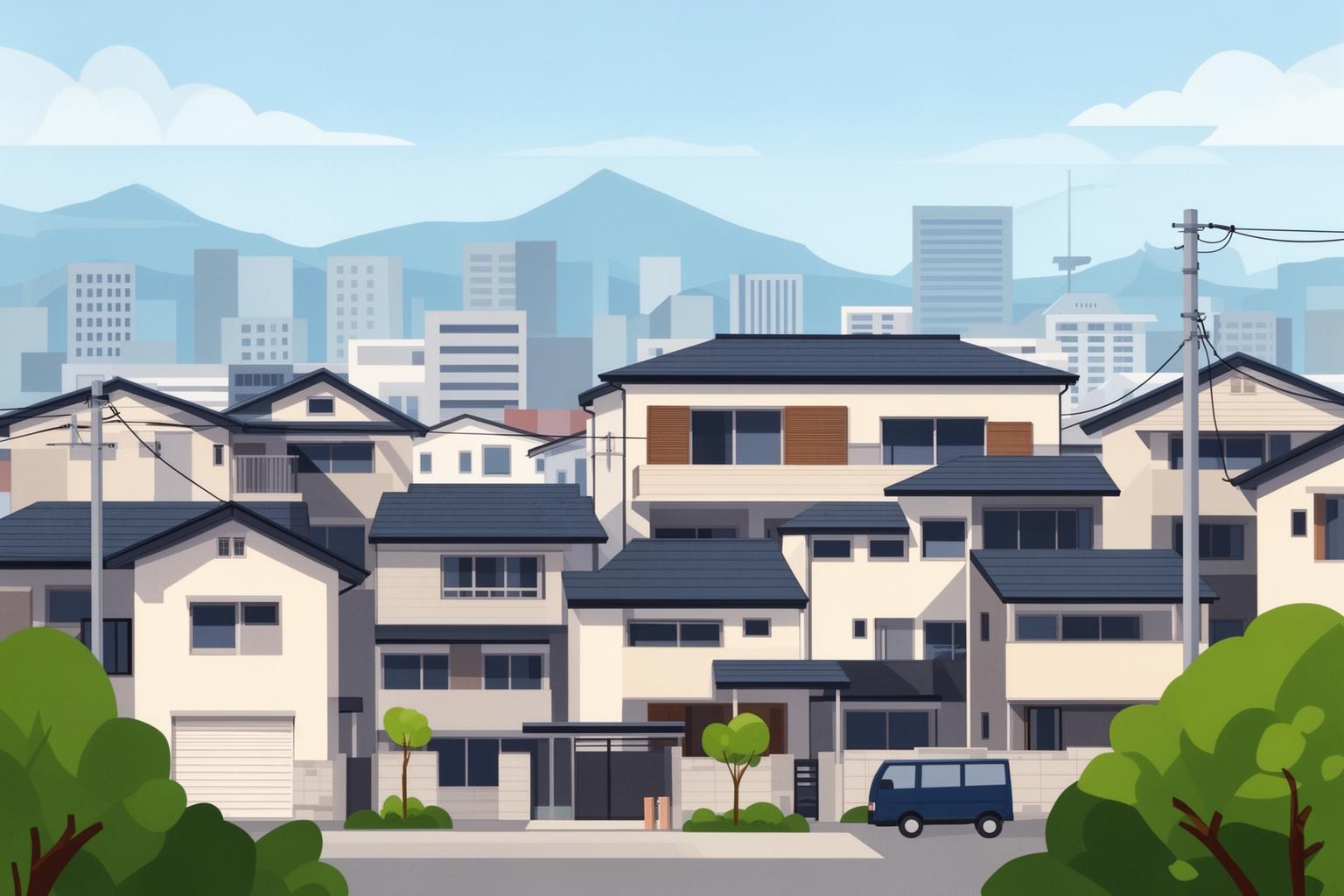
Walking through an old danchi complex today can feel like stepping into a living museum of post-war Japan. The wide-open spaces between the buildings remain, but they are often hauntingly quiet. Playgrounds are sometimes deserted, and the bulletin boards in community halls show faded notices from years past. The lively, highly organized community life of the 1960s has largely become a ghost.
However, the story is not entirely one of decline. In recent years, there has been increasing recognition of the value these spaces hold, along with a new wave of efforts to revitalize them. Urban renewal projects are breathing fresh life into some complexes. The minimalist lifestyle brand MUJI has, for example, partnered with the Urban Renaissance Agency (the successor to the JHC) to renovate and redesign danchi apartments, drawing younger, design-conscious residents with their clean aesthetics and open-plan layouts.
These initiatives also strive to foster new forms of community suited to the 21st century. Instead of mandatory cleaning days and traditional festivals, you might now encounter weekend farmer’s markets, art workshops, or shared libraries emerging in the old community spaces. The aim is no longer to impose a single, uniform community model but to offer a platform for more flexible, opt-in interactions that fit modern lifestyles.
The forgotten community activities of the danchi tell a profound story about the trajectory of modern Japan. They mark a unique period when the nation deliberately sought to build a modern, urban community through architecture and social planning. The eventual fading of that vision reveals the strong currents of individualism, demographic shifts, and economic changes that have transformed the country over the past fifty years. The concrete walls of the danchi bear witness to a distinctive social world—a world of shared rituals, collective celebrations, and interconnected lives that, even in its absence, leaves a powerful resonance.