
Ask anyone who has spent more than a week in Japan what they miss most, and you’ll get a few common answers. The trains that run on time to the second, perhaps. The sheer safety of walking through a major city after midnight. But very high on that list, often uttered with a sigh of genuine longing, will be the convenience store, the konbini.
Now, I know what you’re probably picturing. In many parts of the world, a convenience store is a place of last resort. It’s where you go for a bag of chips, a questionable hot dog sweating under a heat lamp, and overpriced milk when everything else is closed. It’s a liminal space of fluorescent lighting, sticky floors, and transactional anonymity. It serves a purpose, but that purpose is usually rooted in mild desperation.
Forget that image. Erase it completely. The Japanese konbini is a different species altogether. It is not a place of desperation; it is a pillar of daily life. It’s the quiet, reliable, and impeccably clean foundation upon which the complex machinery of modern Japanese society runs. To call it a mere “store” is like calling a library a room full of paper. It misses the entire point. The konbini isn’t just in the neighborhood; it is the neighborhood’s silent, ever-present servant, its civic center, its late-night canteen, and its emergency shelter. It is, without exaggeration, a vital piece of social infrastructure, hiding in plain sight behind a cheerful chime and a wall of gleaming drink refrigerators.
The seamless efficiency of the konbini mirrors the intricate workings of Japan’s bureaucracy, which quietly powers a nation where even the most unexpected industries thrive.
The Ubiquitous Third Place
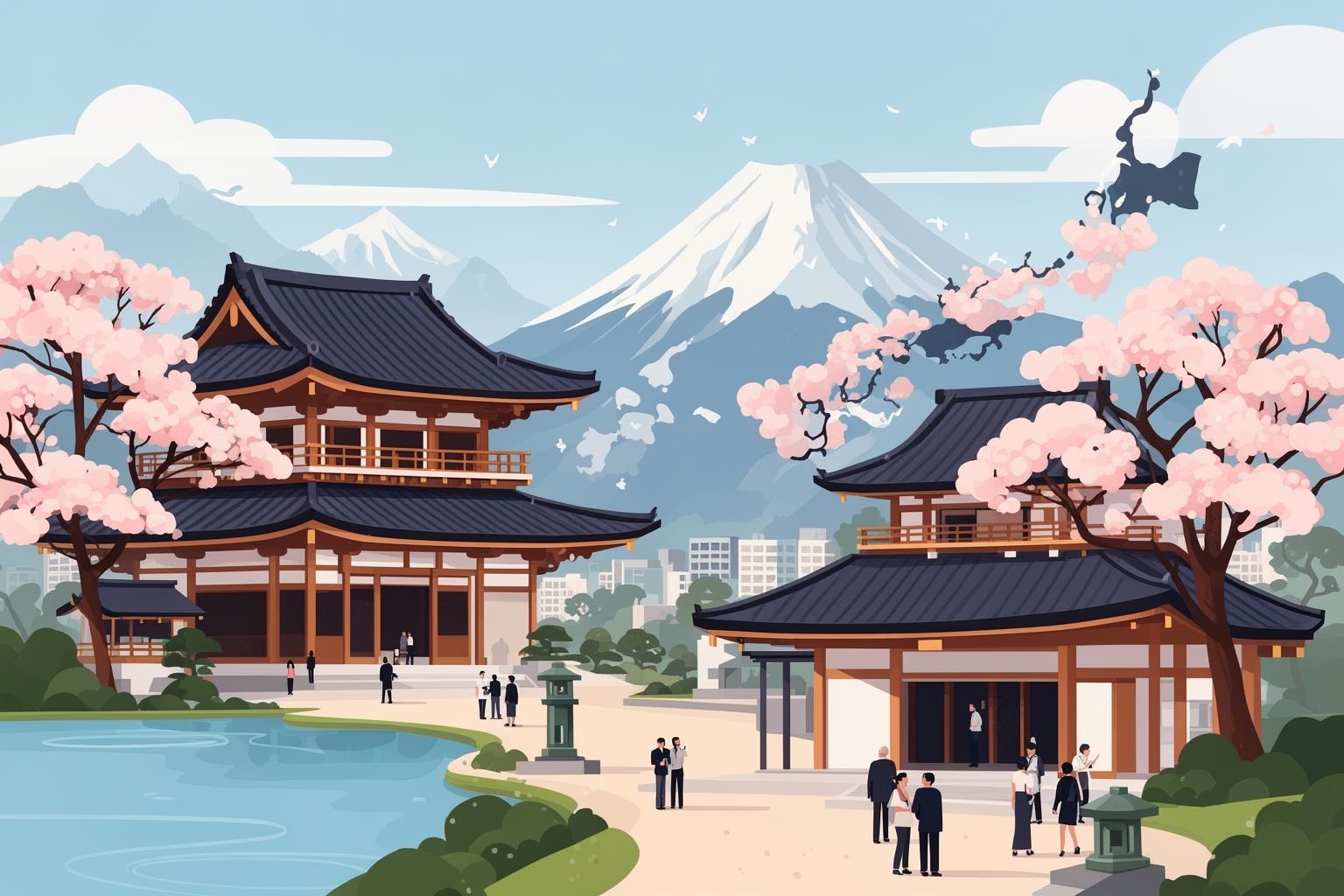
In urban planning, the term “third place” denotes a social setting distinct from the two usual ones: home (the first place) and the workplace (the second). Examples include cafes, parks, or community centers. In Japan, the konbini has become the default third place for millions—a clean, safe, and accessible spot that asks nothing of you.
A Refuge at Any Hour
Unlike a cafe, there’s no social pressure to purchase something pricey and leave within an hour. You can walk into a FamilyMart or Lawson at 3 AM, browse magazines, use the spotless restroom, and leave without buying anything or facing a judgmental look. This shifts the space from a purely commercial venue to something more like a public utility.
Think about who uses this space. It’s the salaryman who missed the last train, spending an hour before the first one starts at dawn, sipping a hot can of coffee. It’s the university student printing out a final paper from a USB stick at the multifunction copier because they don’t own a printer. It’s the elderly person living alone who drops in not only for a bento but also for a brief, polite human interaction that might be their only one that day. It’s the young mother quickly paying a utility bill while her child naps in the stroller. The konbini quietly serves all of them with efficiency.
This function is especially important in a country known for famously small living spaces. An apartment might be too cramped to host friends, and a restaurant too formal or costly for casual conversation. The konbini, often with a small seating area (the ‘eat-in’ corner), offers neutral ground. It’s a place where you can simply be, without the responsibilities of hosting or being a customer on a time limit.
The Silent Community Anchor
The extraordinary density of konbini—over 55,000 nationwide—means you’re almost never more than a five-minute walk from one in any city. They stand as reliable beacons in the urban landscape. Their bright lights pierce the darkness of quiet residential streets, silently promising safety and availability. When moving to a new apartment, one of the first things you do is mentally mark the location of the nearest konbini. It becomes your landmark, emergency pantry, and 24/7 concierge.
This reliability makes it a natural meeting spot. “Let’s meet at the 7-Eleven by the station” is a common phrase because everyone knows exactly which one you mean. It’s always open, always lit, and always there. It serves as an unofficial town square, a hub in the network of daily life connecting home, work, and transit.
A Lifeline Disguised as a Store
If the konbini’s social role represents its soul, then its extensive range of services functions as its central nervous system. This is where the concept of “social infrastructure” becomes unmistakably evident. The Japanese konbini exemplifies logistical integration, streamlining numerous mundane daily tasks into one smooth, cohesive experience.
Banking, Bills, and Bureaucracy
Beyond the snacks and drinks lies the true heart of the konbini: the terminal. This device, a combination of an ATM, ticket machine, and government portal, is where the convenience happens. You can pay your national health insurance, residential tax, gas and electricity bills, and mobile phone plan with cash, often simply by scanning a barcode sent to your home. No need to worry about bank hours or complicated websites—just a straightforward, tangible transaction.
Want to attend a concert, museum, or theme park? You can purchase tickets on the spot. Need to catch a long-distance bus? You can reserve your seat and print your ticket right there. Sending a package across the country? The takkyubin (parcel delivery) service is fully integrated. Just fill out a form, and the clerk takes care of the rest. The store serves as a hub for Japan’s remarkably efficient logistics networks.
This centralization is significant. It separates vital civic and commercial activities from their usual venues—the post office, bank, or ticket office—and places them conveniently within your daily path, accessible at any time. It’s a system designed for a population that works long hours and prioritizes efficiency above all else.
The Pillar in a Crisis
This infrastructure role becomes especially critical during emergencies. Japan’s frequent natural disasters make the konbini a key element of the national response system. Major chains have agreements with local governments to serve as relief centers during earthquakes, tsunamis, or typhoons.
Their resilient supply chains are built to deliver essential items like water, rice balls, and bread to affected areas rapidly. When the power fails, the konbini is often among the first to restore service. Following the 2011 Tohoku earthquake, numerous reports emerged of store managers distributing food and water free of charge, opening restrooms to the public, and turning parking lots into informal information centers. They are trusted, dependable, and ready. They embody societal resilience, wrapped up in the form of a retail chain.
Culinary Excellence in a Humble Package
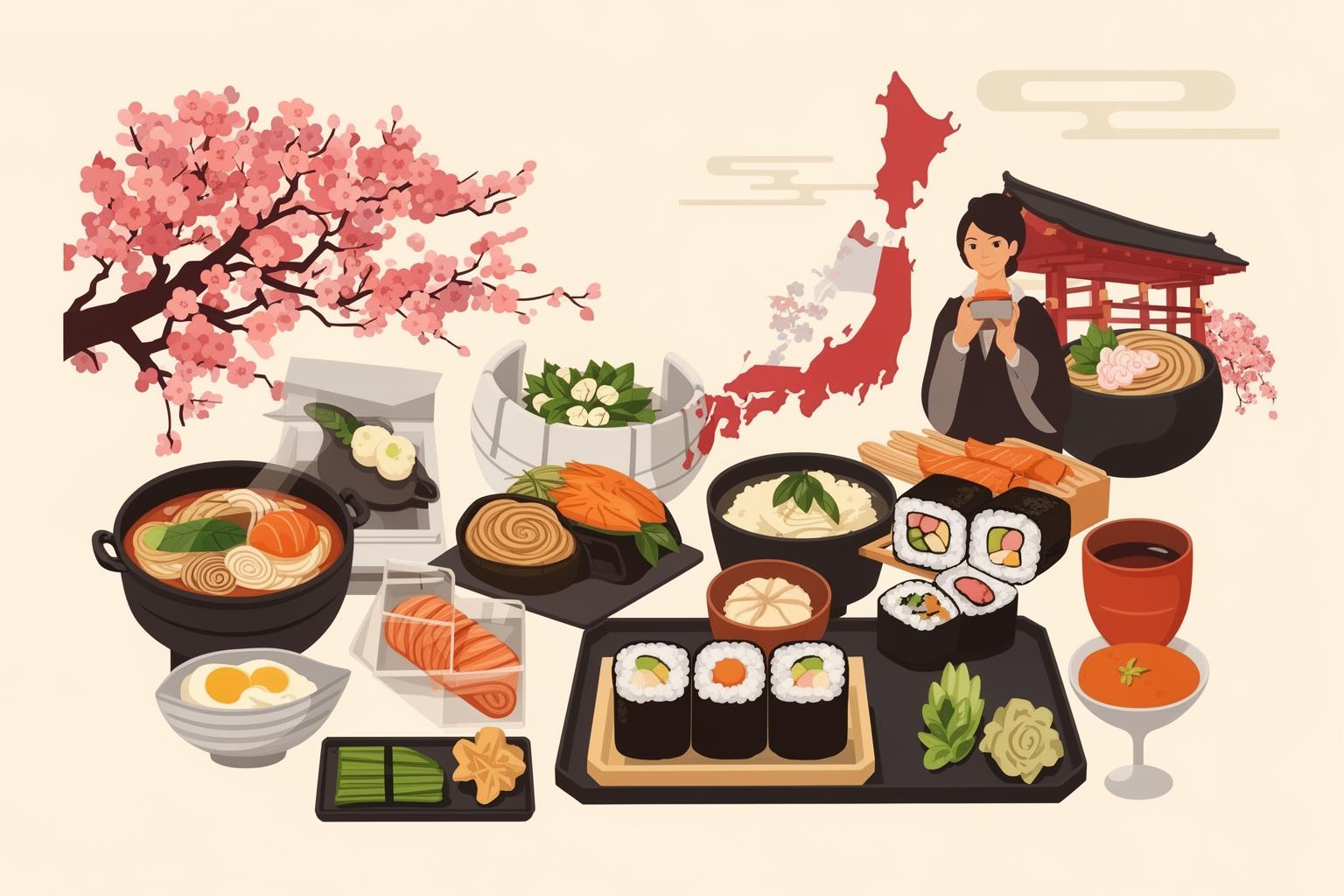
Naturally, a store remains a store, and it must sell products. However, what konbini sell, and the quality with which they sell it, is worlds apart from their international equivalents. The food is not an afterthought; it is the centerpiece, a matter of intense corporate rivalry and genuine culinary pride.
More Than Just a Snack
The variety and quality are truly astonishing. The shelves represent a microcosm of Japanese cuisine, featuring high-quality onigiri (rice balls) with dozens of seasonal fillings, as well as sophisticated bento boxes containing grilled fish, simmered vegetables, and perfectly cooked rice. You can find excellent ramen, udon, and soba that can be heated in-store. The refrigerated sections showcase fresh salads, pasta dishes, and sandwiches that easily outshine typical airport fare.
Consider the humble egg salad sandwich, the tamago sando. It has a devoted following for good reason. The bread is incredibly soft and fluffy, with the crusts carefully removed. The filling is a creamy, perfectly seasoned mixture of egg and high-quality Japanese mayonnaise. It’s a simple creation, crafted with a level of care verging on obsession. This philosophy extends to everything. The coffee is freshly ground from beans for every cup. The fried chicken (Famichiki from FamilyMart is renowned) is crispy and juicy. The winter-only oden—a simmering broth of fish cakes, daikon radish, and other delicacies—is a comforting, savory dish that is very affordable.
Democratizing Good Food
This emphasis on quality fulfills an important social role. It offers a dignified, affordable, and delicious meal to anyone. Whether it’s a student on a budget, a single professional working late, or an elderly person who can no longer cook, the konbini ensures a satisfying meal for less than 1000 yen (around $7-8). It’s not a sad microwave dinner; it’s a carefully composed plate of food.
This has a democratizing impact on food culture. You don’t need much money or time to eat well. The konbini has effectively established a remarkably high national standard for food quality. Companies pour substantial resources into research and development, continuously innovating and perfecting their recipes in a fierce competition for customer loyalty. The true winner of this “konbini war” is the everyday person, who gains access to an ever-improving range of convenient, high-quality meals.
The Unspoken Social Contract
Beneath all of this lies a set of unspoken rules and cultural assumptions—a social contract between the store and the customer. This agreement is founded on trust, respect, and a mutual understanding of civic responsibility.
Service as a Form of Respect
The quality of service is impeccable. You are welcomed with a loud, energetic “Irasshaimase!” (Welcome!) upon entering and a sincere “Arigatou gozaimashita!” (Thank you very much!) when leaving. Clerks carefully handle your items, clearly state the total, and hand you your change and receipt with both hands, often maintaining eye contact. There is a precision and respect in the interaction that elevates it beyond a mere transaction.
This is more than corporate policy; it embodies omotenashi, the Japanese concept of hospitality that anticipates a guest’s needs. The staff keep the store spotless, restock shelves with relentless efficiency, and manage numerous services without ever showing signs of stress. This fosters an atmosphere of calm competence and reliability.
The Clean Restroom Principle
Nowhere is this social contract clearer than in the konbini restroom. It is nearly always unlocked, accessible to anyone (customer or not), and impeccably clean. Consider that for a moment—a private business, located in some of the world’s most densely populated areas, offers a free, public restroom and maintains it at an immaculate level around the clock.
This functions because of social trust. The business trusts that the public will not misuse the facility, while the public respects the space and keeps it clean. This is a small yet powerful symbol of how Japanese society operates—on a foundation of shared responsibility and consideration for the collective good. A konbini allowing its restroom to become dirty would lose face, and consequently, customers.
In the end, the konbini is more than just a store because it mirrors the society it serves. It is a tangible expression of the values that make everyday life in Japan so distinctive: efficiency, safety, social trust, deep respect for quality, and a focus on the common good. It addresses the challenges of modern urban life—loneliness, time scarcity, the need for safe public spaces—with a simple, elegant, and ever-present solution.
It’s a place where you can print a concert ticket, pay your taxes, eat a delicious meal, and use a clean restroom, all at four o’clock in the morning. For these reasons, it earns its place not only on every street corner but also at the very heart of the culture.