To understand modern Japan, you need to understand the famiresu. It’s easy to dismiss them now—those glowing signs for Gusto, Royal Host, or Jonathan’s you see along suburban highways, beckoning you into a world of laminated menus and endless drink bars. They seem so ordinary, so… normal. But that normality is precisely their revolutionary achievement. Before the 1970s, the very idea of a Japanese family casually deciding to hop in the car and go out for a cheap, varied, and satisfying meal was almost unthinkable. Eating out, or gaishoku, was an event. It was for special occasions, business dealings, or grabbing a quick bowl of noodles at a counter. You went to a soba shop for soba, a sushi restaurant for sushi, a tempura place for tempura. Each was a specialized craft, often with a stern-faced master behind the counter and a specific set of expectations for customers. Taking a noisy toddler to a quiet, elegant sushi establishment? Not exactly encouraged.
Then, in the wake of the 1970 Osaka Expo, everything changed. A new kind of restaurant began to appear, first in the sprawling suburbs of Tokyo and then across the entire archipelago. They were bright, spacious, and unapologetically American in their aesthetic, with comfortable booth seating and vast parking lots. Their menus were a revelation: hamburger steaks sizzled next to tempura sets, spaghetti sat alongside pork cutlets, and towering ice cream parfaits promised a sweet finish for everyone. They were called “family restaurants,” and they did more than just serve food. They served a new vision of Japanese life—one that was more mobile, more affluent, more casual, and centered around the nuclear family. The rise of the famiresu is not just a footnote in culinary history; it’s a story about the dawn of modern Japanese consumer culture and the creation of a new kind of social space that fundamentally altered how a nation eats, gathers, and lives.
This broader shift can also be seen in the evolution of train station bento culture, which similarly redefined everyday dining in modern Japan.
The World Before: Dining Out in Pre-Boom Japan
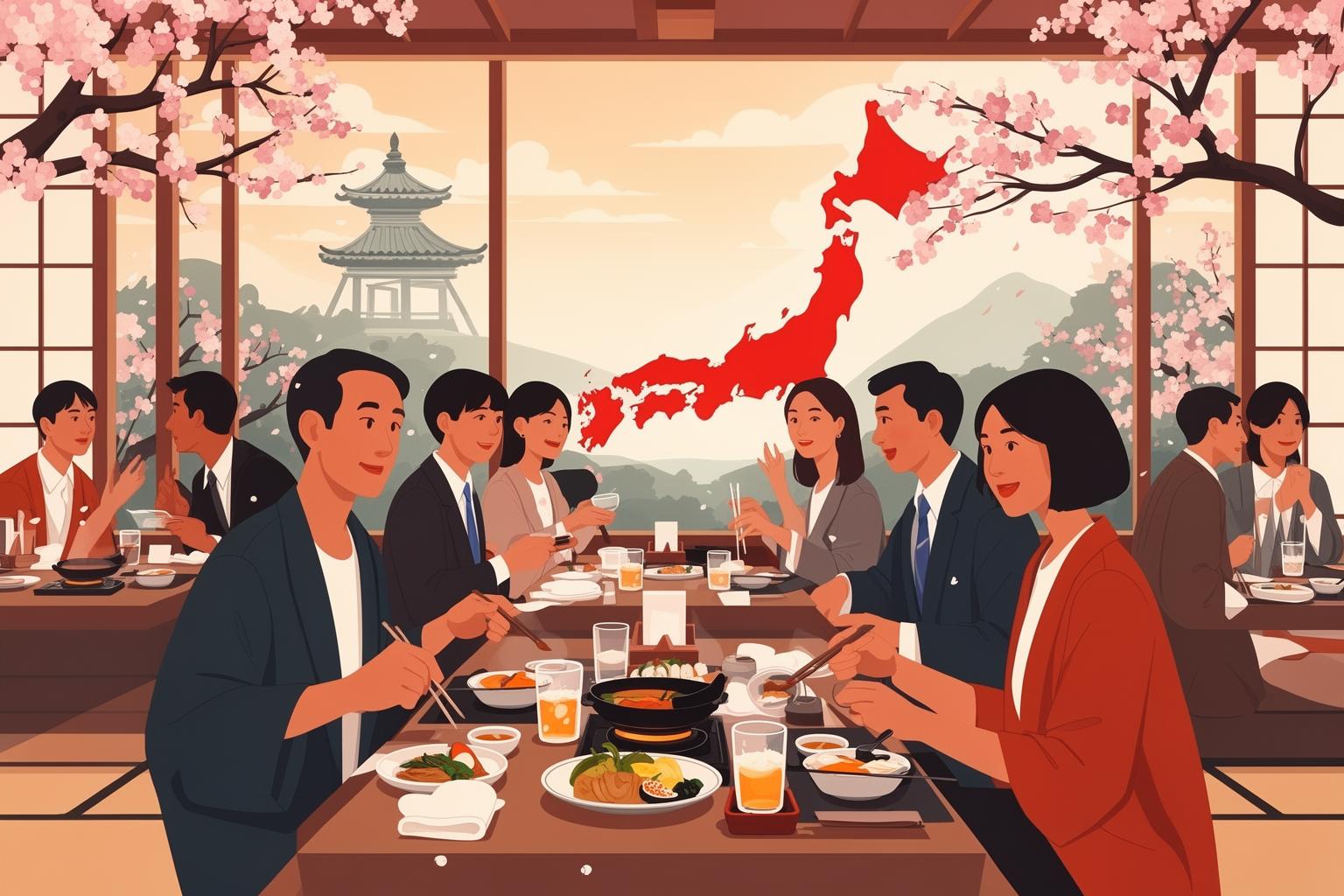
To truly understand the scale of the famiresu revolution, you first need to imagine the dining landscape it replaced. Post-war Japan, even as it rebuilt, had a dining culture firmly rooted in tradition and specialization. The concept of a single restaurant offering a vast menu of diverse cuisines was completely unfamiliar. Your choice of where to eat determined exactly what you would have.
A World of Specialists
If you wanted soba or udon noodles, you went to a soba-ya. These were often centuries-old establishments, cornerstones of their neighborhoods, where the master spent their entire life perfecting the art of noodles. For sushi, you visited a sushi-ya, an intimate setting usually centered around a counter where you shared a direct, almost reverential connection with the chef, or itamae. Tempura was offered at a tempura-ya, ramen at a ramen-ya, and unagi (eel) at an unagi-ya. Each represented its own unique world of flavor, technique, and etiquette.
For more substantial meals, there were shokudō, modest eateries serving set meals (teishoku) of grilled fish, rice, miso soup, and pickles. These were the workhorses of the Japanese dining scene, feeding salarymen and laborers. While welcoming, they were practical rather than aspirational. At the other extreme were ryōtei, exclusive, upscale restaurants where business and politics took place in private tatami rooms, often accompanied by geisha entertainment. These were venues of great cultural importance but inaccessible to most people.
What did these places have in common? They weren’t generally designed for the modern nuclear family with young children. Many were small, aimed at individual diners or adult groups, and operated under an unspoken code of social decorum. Bringing young, restless kids into these specialized, often quiet settings was a recipe for stress.
The Dream of the West: Yōshoku and Department Stores
The desire for Western food didn’t emerge in the 70s—it had been simmering since the Meiji Restoration in the late 19th century. This gave rise to yōshoku, a fascinating category of Western-inspired dishes adapted for Japanese tastes. Think of items like tonkatsu (pork cutlet, influenced by schnitzel), curry rice (a thicker, sweeter version of British naval curry), and omurice (an omelet filled with ketchup-flavored fried rice). These were the tastes of modernity.
Before the famiresu era, families typically experienced this kind of food in the dining halls of grand department stores like Mitsukoshi or Takashimaya. A trip to the city for shopping, culminating in lunch at the department store restaurant, was a classic middle-class family outing. Children could delight in an “お子様ランチ” (okosama ranchi), a kids’ lunch plate often shaped like a train and filled with a mini hamburger steak, fried shrimp, spaghetti, and a small flag stuck in a mound of rice. It was a treasured treat, reserved for special occasions. But it was just that—an occasion, not an everyday choice.
The stage was set. Japan’s economy was booming, families were moving to the suburbs and buying cars, and interest in Western culture and cuisine was growing. Yet a gap remained: a place where a family could go any night of the week, close to home, and find something tasty and affordable for everyone, from grandpa to the youngest child. Japan was ready for the family restaurant.
The Pioneers Light the Way: Skylark and the 1970s Boom
The 1970 World Exposition in Osaka was a national debut. It marked Japan’s triumphant return to the global stage, highlighting its technological achievements and economic strength. For the millions of Japanese who visited the fairgrounds, it also offered a dazzling glimpse into international culture. A major part of that experience was the food. The American pavilion, in particular, became a sensation, introducing many Japanese to fast-food concepts for the first time. Businesses took note. The success of American-style restaurants at the Expo was clear evidence of a vast, untapped market.
The Skylark Blueprint
One company that paid close attention was Kotobuki Foods. In July 1970, just months after the Expo opened, they launched a restaurant in Fuchu, a suburb of Tokyo, called Skylark (すかいらーく). It wasn’t just another restaurant; it was a new kind of establishment, carefully crafted to embody the spirit of the era.
Its location was deliberate. Rather than being situated in a bustling downtown train station area, it was positioned on a major suburban road, Route 20. This targeted the expanding group of car-owning families—the “my car” (マイカー) generation. The restaurant featured a spacious parking lot, a novelty at the time that would soon become an industry norm. The building itself was bright, open, and modern, inspired by American diners and coffee shops. It replaced traditional tatami mats with comfortable booths and tables, offering a relaxed, Western-style ambiance.
The menu was the heart of its brilliance. It combined the familiar with the desirable. While Japanese staples were available, the highlight was the yōshoku dishes that families longed for: juicy hamburger steaks (hambāgu), fried chicken, and spaghetti. What had once been special-occasion fare at department stores was now accessible and affordable even on a Tuesday night.
The Engine Room: Central Kitchens and Standardization
How could Skylark, along with competitors like Royal Host and Denny’s Japan that soon followed, consistently offer such a diverse range of dishes at low cost? The secret was an innovation invisible to customers: the central kitchen. This factory-style food preparation method, borrowed from airline catering, was perfected for restaurant use.
Rather than having chefs at each location cook every item from scratch, a large central facility handled the most labor-intensive tasks. Sauces were produced in huge vats, hamburger patties formed by the thousands, and soups simmered and portioned. These components were then chilled or frozen and shipped out to individual branches. At the restaurant, kitchen staff—who were cooks rather than classically trained chefs—would simply reheat, assemble, and finish the dishes. This system offered major benefits. It ensured uniform taste and quality across all locations, whether in Tokyo or a remote town. It drastically reduced costs through economies of scale. Most importantly, it enabled the creation of the famously extensive menus with something for everyone. Without the central kitchen, the famiresu as we know it could not exist.
This combination—suburban location, ample parking, a bright Western interior, a popular menu, and the efficiency of a central kitchen—was the winning formula. The famiresu was born, and it spread rapidly across the landscape of a transforming Japan.
A New Public Square: The Famiresu as a Social Space
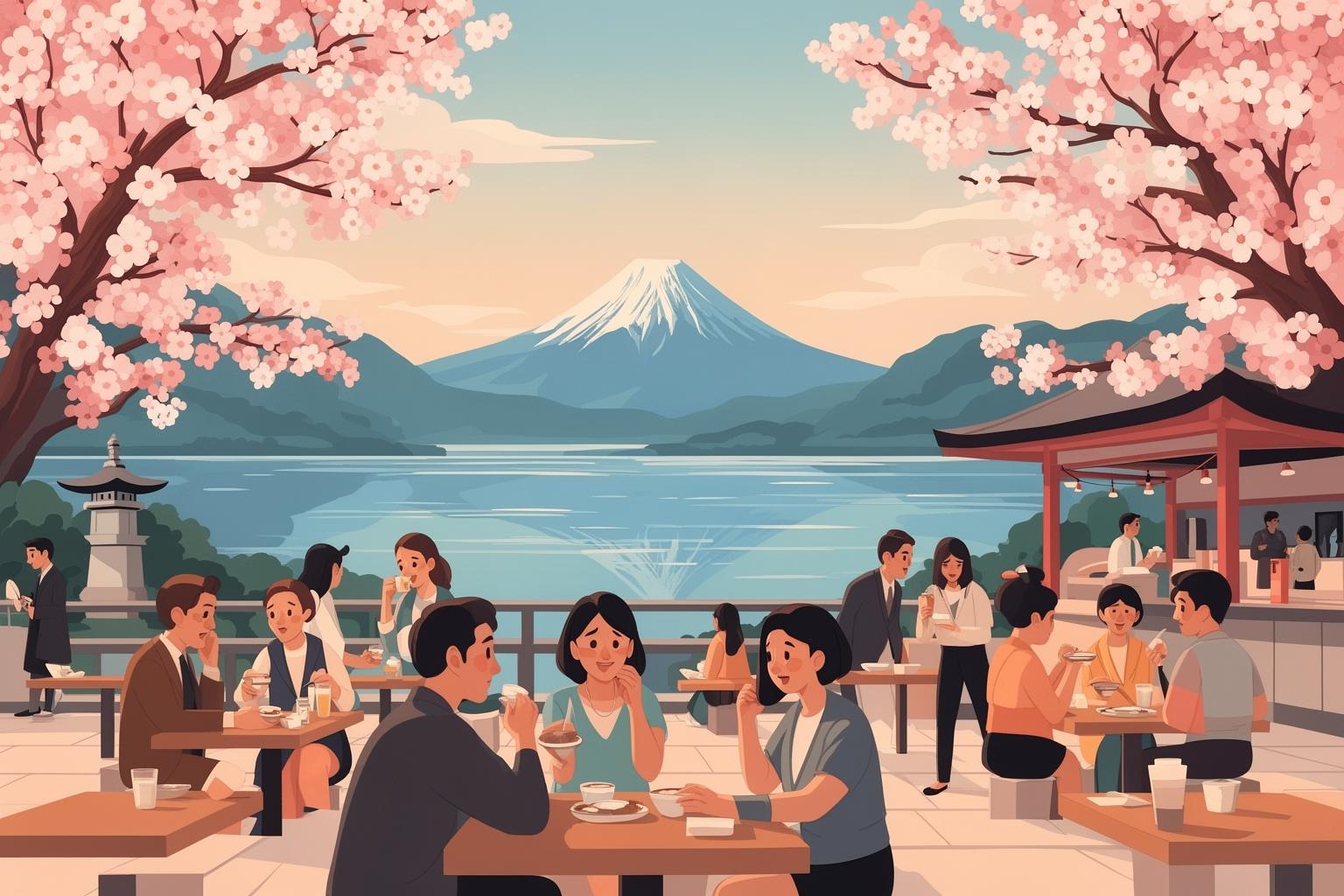
The true influence of the family restaurant extended well beyond the food it offered. It established a new type of social infrastructure, a versatile “third place” that integrated effortlessly into the rhythms of Japanese everyday life. It wasn’t merely a place to eat; it was a place to be.
The Great Unifier
The most groundbreaking aspect of the famiresu was its radical inclusiveness. For the first time, a single venue could satisfy the culinary preferences of an entire multi-generational family. Imagine the scene, repeated millions of times over the years. The father, weary after a long day at the office, could order a hearty steak set and a cold beer. The mother might choose a doria, a creamy baked rice gratin, or a seasonal pasta dish. The children’s eyes would widen for the okosama ranchi, now available any day of the week. And the grandparents, perhaps less adventurous, could find comfort in a traditional grilled fish teishoku or a bowl of tempura udon.
This addressed a fundamental social challenge. No more disputes over where to eat. No one’s preference would feel overshadowed by another’s. The famiresu menu was a brilliant act of social diplomacy, a delicious compromise that made everyone feel accommodated. It leveled culinary hierarchies and created a shared, neutral space where the entire family could gather without conflict.
Freedom from Formality
Just as important was the atmosphere of casual freedom. Traditional Japanese dining often comes with strict etiquette—knowing how to hold chopsticks correctly, the proper way to sip miso soup, how to interact respectfully with the chef. The famiresu discarded all of that. The setting was relaxed and welcoming. Menus featured glossy photos so you could simply point if you couldn’t read the name of a dish.
And then there was the call button. That small plastic button on every table was a subtle but significant innovation. No longer did you have to stretch your neck to catch a server’s eye or feel awkward shouting “Sumimasen!” across a busy room. You just pressed the button, and assistance would arrive. It put the customer in control, democratizing the service experience and easing social anxiety. This low-pressure environment made it ideal for families with unpredictable children. A dropped fork or spilled drink wasn’t a disaster; it was just part of the everyday flow of the place.
The Age of the Drink Bar
Although not part of the earliest famiresu, the introduction of the “drink bar” (ドリンクバー) in the late 1980s and early 90s firmly established the restaurant as a multi-functional social hub. For a few hundred yen, customers gained unlimited access to a self-service station offering sodas, juices, teas, and coffees. This simple addition had a transformative impact. It freed customers from linking the length of their stay to their consumption. Once you paid for the drink bar, you could linger for hours at no extra charge.
Suddenly, the famiresu became the default study hall for high school students cramming for exams, fueled by endless cups of melon soda. It became the unofficial meeting spot for housewives catching up after dropping their kids off at school. Salesmen used it as a mobile office between appointments, and young couples used it for long, affordable dates. The famiresu became a place to pass time, to work, to socialize, to study—a flexible, affordable, and comfortable extension of one’s own living room.
The Famiresu’s Enduring Legacy
Fifty years later, the famiresu has become such a staple of the Japanese landscape that it is often taken for granted. Yet, its influence is woven into almost every facet of modern Japanese food culture. Its innovations and the social changes it sparked have left a lasting and profound mark.
The Nationalization of Yōshoku
Although yōshoku existed prior to the 1970s, it was the famiresu that transformed these Western-style dishes into national comfort food icons. The hambāgu steak, served on a sizzling cast-iron plate with demi-glace sauce, became as distinctly Japanese a meal as ramen or tempura. Spaghetti Napolitan, a simple ketchup-based pasta, grew into a nostalgic classic. The famiresu served as a national culinary curriculum, introducing and standardizing a new genre of food now regarded as quintessentially Japanese. They forged a shared palate—a common language of comfort food that bridged regional divides.
The Blueprint for Casual Dining
The business model developed by Skylark and its contemporaries—with centralized kitchens, standardized service, extensive menus, and data-driven management—became the template for Japan’s entire casual dining sector. Conveyor-belt sushi (kaiten-zushi) chains, massive ramen franchises, and gyūdon (beef bowl) restaurants all owe a conceptual debt to the famiresu. They demonstrated that consistency, scale, and affordability could be successfully integrated into the restaurant industry. This industrial approach to food service is a defining feature of Japan’s modern culinary landscape.
Evolution and Adaptation
The golden era of the classic famiresu may be behind us. With economic stagnation, an aging population, and fiercer competition, the landscape has shifted. Fast food chains provide quicker, cheaper alternatives, while convenience stores now offer restaurant-quality meals for home consumption. In response, the famiresu industry has fractured and specialized. Chains like Saizeriya have embraced extreme affordability, delivering remarkably inexpensive Italian-style dishes and becoming a refuge for students and budget-conscious families. Others, such as Royal Host, have aimed to move upscale, emphasizing higher-quality ingredients and a more premium dining experience. Many have had to reinvent themselves, renovating interiors and revamping menus to stay relevant to evolving tastes.
And still, they persist. The famiresu remain by the roadside, their lights shining through the night. Though no longer the gleaming symbol of a new and prosperous future they once were, they have settled into a steadier role: a dependable, familiar, and essential part of daily life’s fabric. They stand not as monuments of stone or steel, but of sizzling hamburger steaks and endless cups of coffee—a tribute to the moment when Japan’s families got into their cars and drove out to claim their place at the table of modern life.