You asked me why I’m so fascinated by the bento box. It’s a fair question. From the outside, it’s just a packed lunch, right? Something to stop you from getting hungry in the middle of the day. I used to think that, too. My idea of a packed lunch was a hastily made sandwich, maybe a piece of fruit, all thrown into a bag. It was purely functional, something to be eaten quickly before getting back to work. But in Japan, I learned that a bento is something else entirely. It’s not just food in a box; it’s a story, a gesture, a miniature landscape of care crafted with intention. Opening a bento for the first time feels like being let in on a beautiful secret. Suddenly, you understand that lunch doesn’t have to be an afterthought. It can be a quiet moment of delight, a message from one person to another that says, “I thought of you, and I made this.” It’s a complete world of color, texture, and flavor, all perfectly arranged in a space no bigger than a paperback book. Forget the sad desk lunch; this is where you’ll find one of Japan’s most powerful and intimate forms of communication.
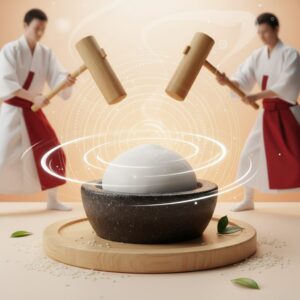
Japan’s culinary heritage is as rich in communal traditions as the artful design of a bento box, a sentiment perfectly captured by the mochi-tsuki celebration, where the ritual of rice cake making transforms simple ingredients into a shared cultural treasure.
The Philosophy in the Box
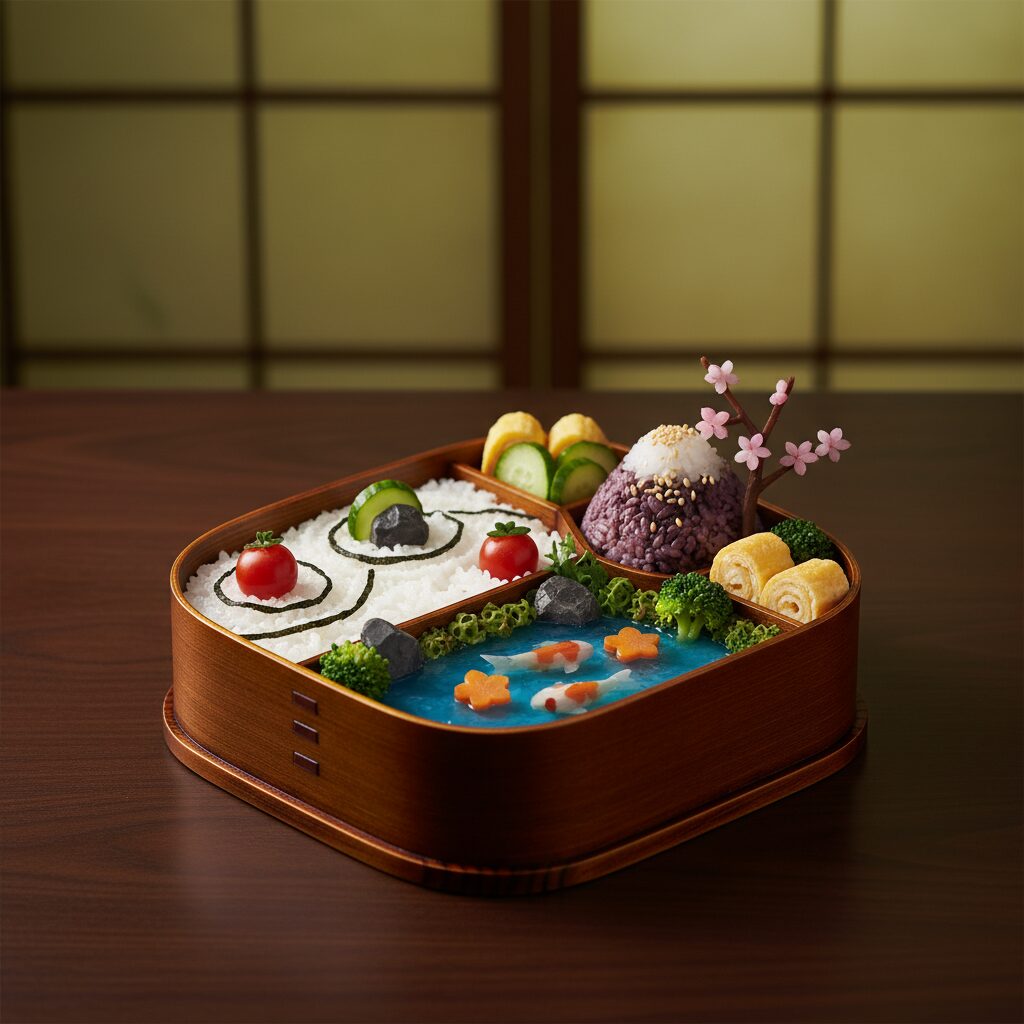
Before you can truly grasp the emotion embodied in a bento, you need to understand the structure behind it. A traditional Japanese meal often follows the principle of ichiju-sansai—one soup and three side dishes served with rice. The bento is essentially a portable, soupless adaptation of this ideal. It’s not merely a random mix of leftovers; it’s a carefully curated selection designed to achieve complete sensory and nutritional harmony. This approach is guided by a deeper philosophy, often summarized as go-shiki, go-mi, go-ho.
A Miniature Universe of Five
The rule of five is the unseen blueprint behind a well-made bento. While it may sound intricate, it serves as an intuitive guide to crafting a meal that is both nutritious and visually appealing.
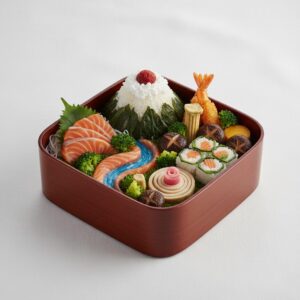
First, there is go-shiki, the five colors. A proper bento should include black, white, red, yellow, and green. Consider black sesame seeds or dark seaweed (nori), white rice, red from a cherry tomato or a pickled plum (umeboshi), yellow from a slice of rolled omelet (tamagoyaki), and green from steamed broccoli or boiled spinach. This isn’t just for visual appeal, although it certainly makes the box beautiful to behold. The five colors also act as a straightforward nutritional checklist, ensuring a broad spectrum of vitamins and minerals. It’s a visual cue to a balanced diet.
Next is go-mi, the five tastes: sweet, sour, salty, bitter, and umami. A bento is composed to incorporate all these flavors, creating a complex and satisfying taste experience in every bite. Sweetness might come from a piece of glazed fish, sourness from pickles, saltiness from a soy-simmered vegetable, a touch of bitterness from a green, and the deep umami richness from mushrooms or dashi-infused ingredients. This variety prevents palate fatigue, keeping the meal interesting from start to finish.
Lastly, there is go-ho, the five cooking methods. A thoughtfully made bento includes foods prepared using different techniques: simmered (nitsuke), grilled (yakimono), fried (agemono), steamed (mushimono), and raw or vinegared (sunomono). This creates a variety of textures—soft, crunchy, chewy, crisp—making the eating experience lively. For example, you might find a tender piece of simmered pumpkin alongside crispy fried chicken, with a firm bite of pickle to refresh the palate.
These principles elevate packing a lunch from a mundane task to a creative endeavor. The bento box itself, the bento-bako, serves as the canvas. Whether it’s a sleek, minimalist wooden box or a charming, partitioned plastic one, the container shapes the arrangement. Each item is placed deliberately, using dividers like lettuce leaves or silicone cups to keep flavors separate and to create a visually harmonious presentation. The goal is that when the lid is lifted, the first impression is one of beauty and order.
An Unspoken Language of Love
If the rule of five governs the grammar of the bento, then its contents are the poetry. This is where the box goes beyond mere nourishment and becomes a powerful means of communication, especially for conveying care and affection. In a culture where explicit verbal expressions of love may be less frequent, the bento speaks volumes.
Aijo Bento: The Love Box
The most striking example of this is the aijo bento, or “love bento.” This is the lunch prepared by a mother for her child, or by one partner for another. It’s a daily, tangible ritual of devotion. For a child heading off to school, the bento offers a comforting piece of home. Opening it at lunchtime feels like receiving a midday hug. It serves as a reminder that someone woke up early, took the time to cook, and carefully arranged each piece of food, all with them in mind.
A silent dialogue unfolds here. A mother might include her child’s favorite karaage chicken after a challenging exam, a small gesture of encouragement. She might shape apple slices into bunnies to make a healthy snack more enticing. These little details are not frivolous; they carry the message. They say, “I see you,” “I’m proud of you,” and “Eat well and be strong.” For many Japanese parents, especially mothers, the quality of the bento they create is a deep source of pride, a public reflection of their commitment to their family’s well-being.
Kyaraben: When Food Becomes Art
This desire to communicate through food has blossomed into an extraordinary art form called kyaraben, or character bento. Here, rice is shaped into pandas, sausages are carved to resemble octopuses, and sheets of nori are meticulously cut to craft the faces of beloved anime characters like Totoro or Pikachu. From afar, it seems almost too adorable to eat.
Kyaraben originally rose to popularity as a clever way to coax picky children into eating their vegetables. What child could resist broccoli when it’s presented as a magical tree in a forest scene? But it has since grown into a full-blown cultural phenomenon, a hobby for creative parents, and a way to bring a spark of joy to the day. It adds another layer of communication. A kyaraben doesn’t just say, “I love you”; it says, “I wanted to make you smile.” It transforms the ordinary lunch break into a moment of playful delight.
The Care in the Details
Even in the simplest bento, the care shows in the details. Food is cut into bite-sized pieces for easy handling with chopsticks. Strong-smelling ingredients are often omitted out of consideration for others nearby. The umeboshi, a pickled plum frequently placed in the center of the rice, isn’t there just for its bright color and tart flavor; its antibacterial properties were traditionally believed to help preserve the rice. Every choice, from ingredients to arrangement, is rooted in thoughtful consideration for the person who will eventually eat it.
The Bento in Modern Japan
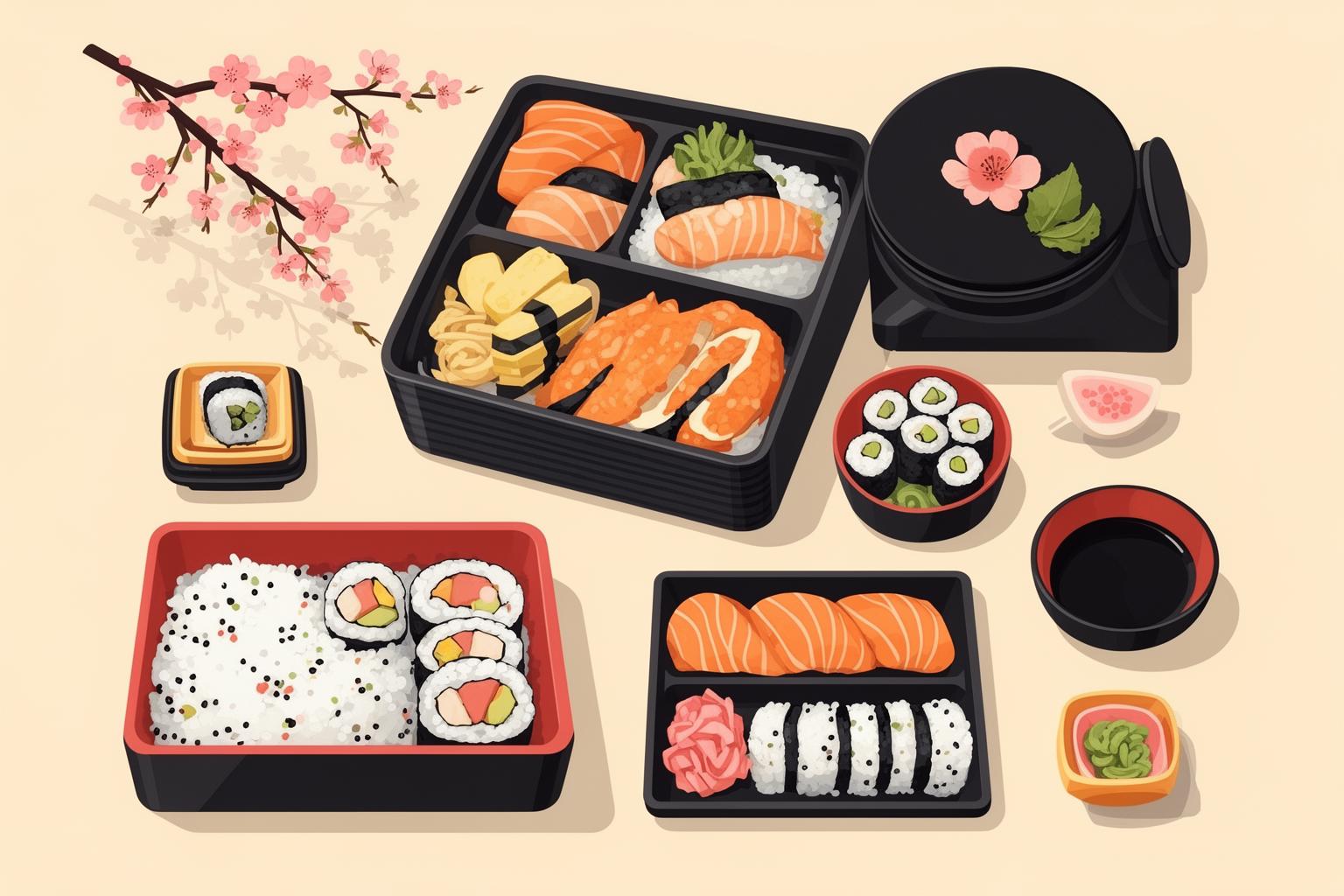
While the homemade aijo bento remains the ultimate standard for lunchtime care, the bento philosophy is so deeply embedded in Japanese culture that it extends far beyond the family kitchen. It has evolved to fit the demands of modern life, demonstrating that the principles of balance, beauty, and convenience can coexist harmoniously.
Ekiben: A Culinary Journey by Rail
One of my favorite discoveries in Japan is the realm of ekiben, a blend of eki (station) and bento. These boxed lunches are sold at train stations, specially designed for passengers on long-distance trips. But these are far from ordinary pre-packaged sandwiches. Ekiben celebrate regional cuisine.
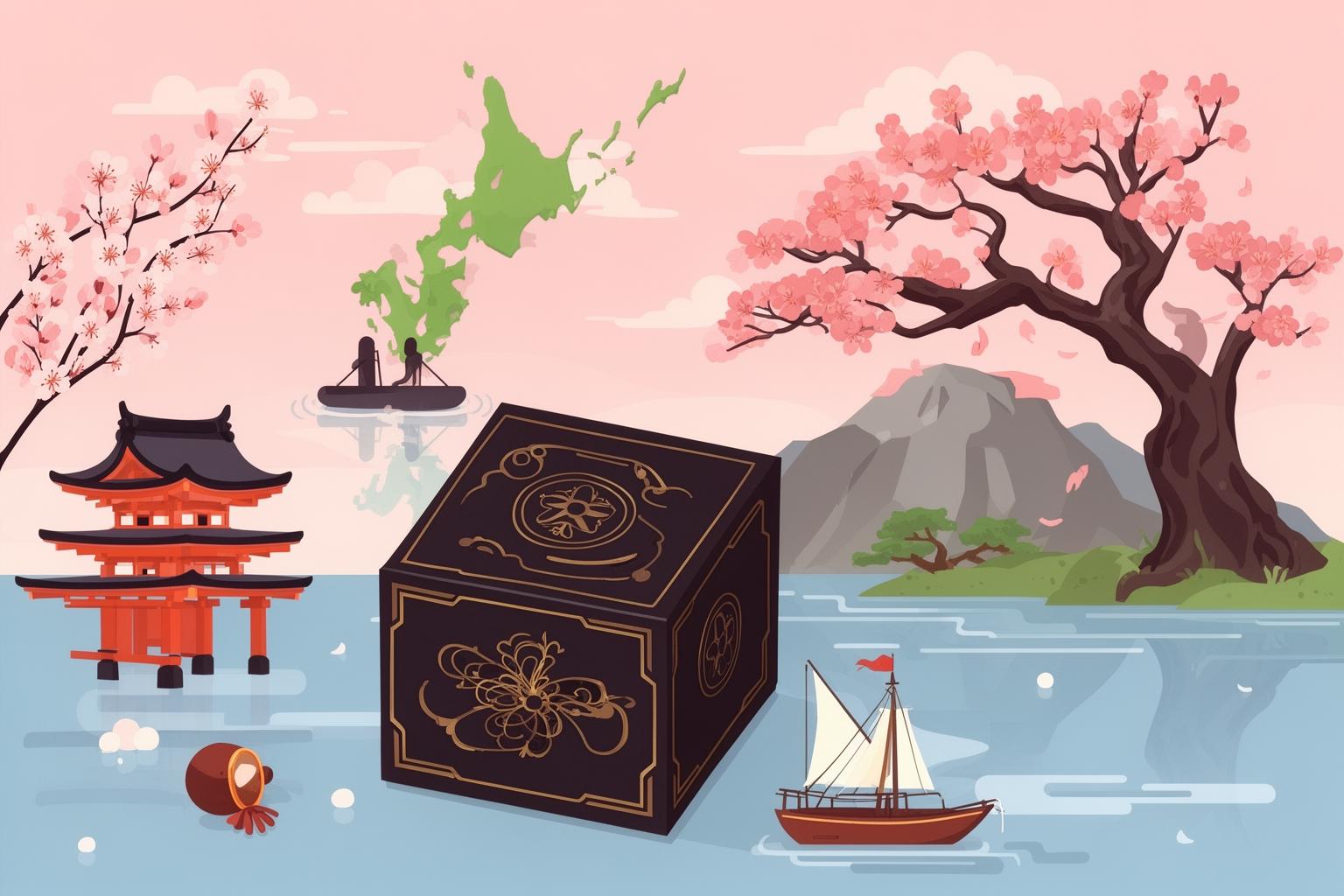
Traveling from Tokyo to Kyoto? You can purchase a bento filled with delicate slices of grilled eel, a specialty of the area you’re passing through. Heading north to Hokkaido? You’ll discover boxes brimming with fresh crab, salmon, and scallops. Each ekiben acts as a culinary postcard, offering travelers an authentic taste of the local landscape. The packaging is often a work of art itself, with beautifully designed boxes that sometimes imitate local crafts or landmarks. Enjoying an ekiben while watching the Japanese countryside whiz past your window is a cherished travel ritual, turning a simple meal into an essential part of the journey.
Konbini Bento: Quality on the Go
For everyday convenience, there is the humble hero of Japanese fast food: the konbini bento. Available in the brightly lit aisles of every 7-Eleven, FamilyMart, and Lawson, these convenience store bentos are a modern marvel. Forget the dubious hot dogs and stale pastries you might expect from convenience stores elsewhere. In Japan, konbini bentos are fresh, tasty, and remarkably varied.
What’s impressive is how they uphold the fundamental principles of a traditional bento. You’ll find a main protein such as hamburger steak or grilled mackerel, a portion of rice, and several small side dishes—a bit of pasta salad, some pickled vegetables, a piece of tamagoyaki. The compartments are neatly separated. The colors are well balanced. It’s a nutritionally complete, thoughtfully arranged meal that can be purchased for just a few hundred yen. The presence of high-quality konbini bentos highlights how deeply the cultural expectation of a proper, balanced lunch is rooted. It’s a democratic ideal: everyone, no matter how busy, deserves a decent meal.
So, when you encounter a bento box, try to look beyond the food. Notice the structure, the balance, and the careful arrangement. It embodies a philosophy that food should not only nourish the body but also please the eye and soothe the soul. It stands as a testament to the idea that great care can be shown in the smallest gestures. It’s a quiet tradition, a portable piece of home, and a daily reminder that someone, somewhere, took the time to create a small, beautiful world just for you. It’s lunch, yes, but it’s also love.