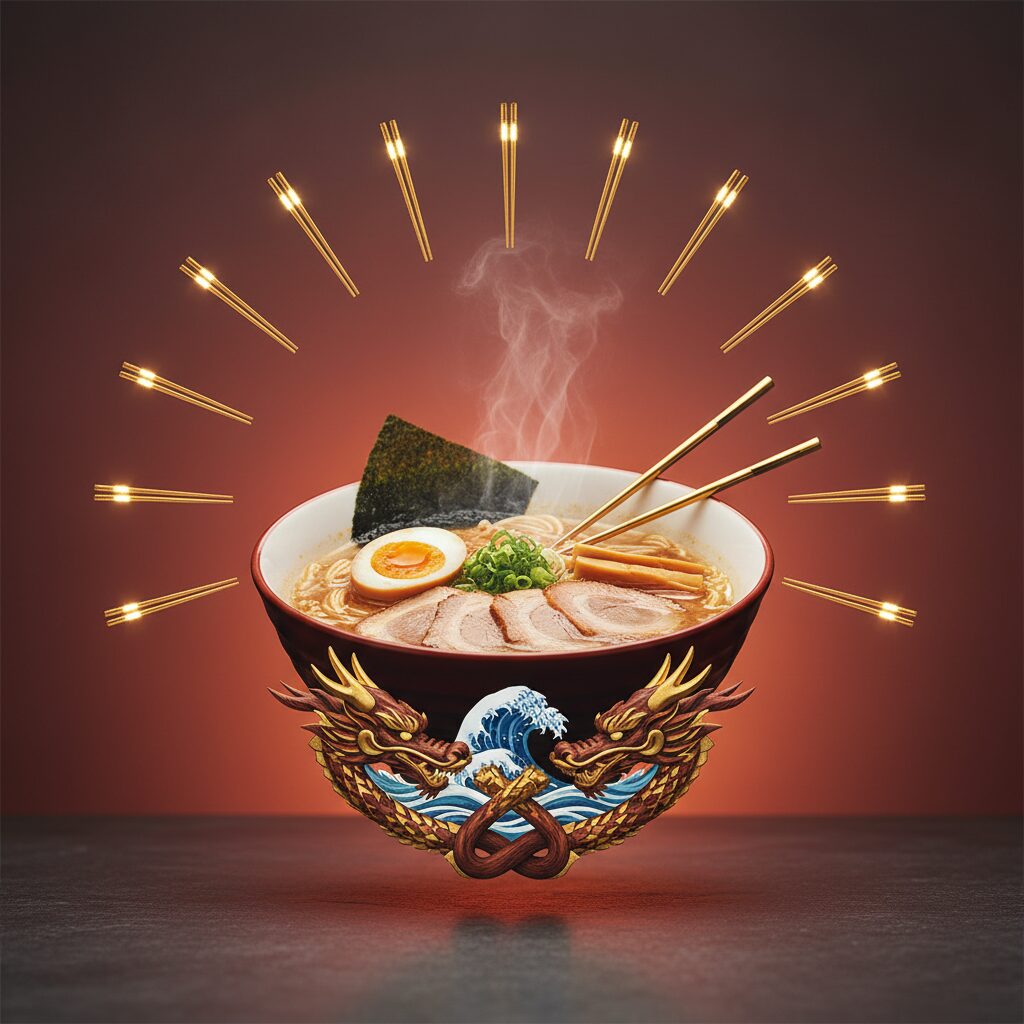
You’ve probably seen him, or at least a version of him. You duck into a tiny, steamy ramen shop, squeezed between a pachinko parlor and a dry cleaner on some nameless Tokyo side street. There are maybe eight seats at a worn wooden counter. The air is thick with the savory, complex aroma of pork bones simmered for what seems like an eternity. And behind that counter, there’s a man. He’s not young. His brow is furrowed in concentration, arms often crossed in a posture that seems to dare you to complain. He’s wearing a simple white jacket and maybe a headband, or hachimaki, knotted tightly around his forehead. He doesn’t smile. He barely speaks. He is the Ganko Oyaji—the stubborn old man.
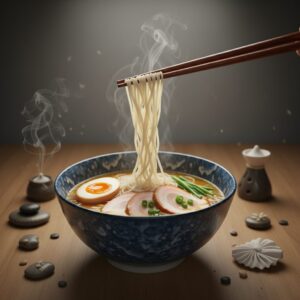
Your interaction is minimal. You buy a ticket from a clunky vending machine near the door, hand it to him with a slight bow, and he gives you a nearly imperceptible nod in return. Then, the performance begins. With movements that are both economical and graceful, honed over decades of repetition, he assembles your bowl. The rhythmic shake of noodles from the strainer, the precise ladle of shimmering broth, the careful placement of toppings—it’s a silent, focused ballet. When the bowl is placed before you, it’s not just lunch; it’s a statement. And as you take that first sip of broth, you understand. This is it. This is the soul of ramen.
For many visitors to Japan, this experience can be jarring. Where’s the famously effusive Japanese customer service? Where’s the smiling chef eager to please? The Ganko Oyaji seems to fly in the face of everything we’re told about Japanese hospitality. But to dismiss him as merely a grumpy cook is to miss the point entirely. This isn’t about rudeness; it’s about a profound, unspoken contract between craftsman and customer. It’s a subculture built on the bedrock of respect—not for the customer’s ego, but for the craft itself. Understanding the Ganko Oyaji is understanding a core pillar of Japanese culinary philosophy, where the food does all the talking, and your only job is to listen.
The precise craft behind every bowl here mirrors the dedication found in Japan’s culinary realm, inviting you to uncover the story behind a humbly crafted ekiben that turns a simple meal into an art form.
Who is the Ganko Oyaji? Deconstructing the Archetype

The Ganko Oyaji is more than merely an individual; he embodies a cultural archetype, a figure as iconic in Japan as the stoic cowboy is in America. He stands for a certain old-school masculinity and an unwavering commitment to a singular pursuit. To truly understand him, you need to break down the elements that define who he is.
The Uniform of a Master
First, observe the appearance. The folded arms, the intense stare, the simple, practical clothing. This isn’t a crafted brand or a marketing ploy. It’s the genuine presentation of a man at work. The hachimaki is not a fashion statement; it serves to keep sweat from falling into the food, symbolizing deep focus and effort. The plain white or black uniform is clean, functional, and free from ego. It says, “Focus on my craft, not on me.” In a world flooded with personal branding and charismatic celebrity chefs, the Ganko Oyaji anchors us to an older tradition. His look indicates that the true star of the experience is, and always will be, the ramen.
The Symphony of Silence
One of the most daunting things for newcomers is the silence. Most Japanese restaurants greet you with a loud chorus of “Irasshaimase!” (Welcome!). In the realm of the Ganko Oyaji, you might receive only a grunt or a nod. Small talk is absent. This isn’t personal; the chef is not upset with you. He is utterly focused. Crafting a perfect bowl of ramen involves a complex balancing act: the broth’s temperature, the noodles’ cooking time (often precise to the second), the balance of tare (seasoning base) and oil, the placement of toppings—every detail must align perfectly. His mind is a constant clock of calculations. Even a brief distraction could spoil the bowl he’s about to serve. His silence reflects respect for his craft and, by extension, respect for you, the one about to enjoy his life’s work. He’s dedicating his absolute best to you, requiring his full attention.
“Stubborn” as a Badge of Honor
The term Ganko Oyaji itself is insightful. Ganko (頑固) means stubborn or obstinate. In many cultures, this is negative. Here, it signifies integrity. He is unwavering in his choice of ingredients, refusing anything but the finest. He may source soy sauce from a particular small brewery, pork from a specific farm, flour from a dedicated region. He is resolute in his methods, simmering broth for an exact number of hours, never taking shortcuts, even unseen. He is determined about his recipe, perfected over a lifetime through daily refinements. This stubbornness is his pledge to you. It ensures that the bowl you enjoy today is the result of relentless dedication and will be just as excellent the next year. He is stubborn for you, not against you.
The Dojo of Deliciousness: The Shop as a Sacred Space
The physical setting of a classic ramen-ya is just as integral to the experience as the chef himself. These establishments are not meant for leisurely meals or extended conversations. They function as temples of efficiency, designed with a single goal: to serve a perfect bowl of noodles at their absolute peak.
The Counter is the Stage
Nearly always, these shops revolve around a counter. This is more than a seating choice; it’s a deliberate design that turns the kitchen into a stage and the customer into an audience member. You’re given a front-row view of the master’s craft, witnessing every flick of the wrist and every practiced motion. This openness creates anticipation and respect. There are no concealed kitchens or secret techniques. The craft is fully on display, showcasing the chef’s confidence in his skills. The space is often compact, fostering a sense of intimacy and shared focus. Everyone is gathered for the same purpose, facing the same direction, all attentive to the same master.
The Unspoken Rules of Engagement
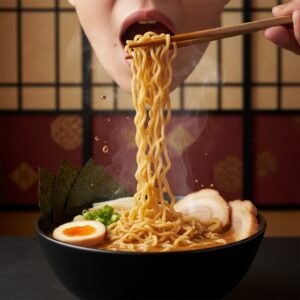
Upon entering, you agree to a set of unspoken rules. The foremost rule is to respect the food, which means eating promptly. A bowl of ramen has a very brief window of perfection. The noodles begin to soften in the hot broth immediately, losing their ideal texture. The broth cools down, and the nori (seaweed) becomes soggy. Letting a bowl sit while scrolling through your phone or chatting is seen as the height of disrespect—akin to telling a sculptor you plan to let their masterpiece melt in the sun. The unspoken expectation is to eat with focus and appreciation, then leave. This is not about rushing customers for quicker turnover; it’s about ensuring each person experiences the ramen exactly as the chef intended. It’s quality control carried through to the final slurp.
The Vending Machine Ritual
Many of the top traditional shops use a ticket vending machine, or kenbaiki (券売機), for ordering. From a Western point of view, this might seem impersonal, but in reality, it’s a stroke of genius. The machine serves several essential purposes. It removes the need for the chef or staff to handle cash, which is both more hygienic and a significant time-saver. It streamlines ordering, preventing confusion or lengthy questions. Most importantly, it requires customers to commit to their choice before sitting down. This smooths the entire process, allowing the master to focus solely on cooking. The kenbaiki acts as a gatekeeper, distilling the process to its simplest elements: order, pay, receive, eat. It’s the first step toward entering the master’s world on his terms.
The Philosophy in the Broth: Shokunin Kishitsu
To truly grasp the essence of the Ganko Oyaji, you must look beyond the counter and into the cultural mindset that shapes him. He embodies a concept deeply embedded in Japanese society: shokunin kishitsu (職人気質), the craftsman’s spirit.
The Soul of the Shokunin
Shokunin means more than simply “artisan” or “craftsman.” It carries a profound spiritual and social commitment to one’s work. A true shokunin devotes their life to mastering their chosen craft. This isn’t merely a job; it’s a vocation. The aim is not wealth or fame, but the pursuit of perfection for its own sake and for the benefit of society. The Ganko Oyaji has devoted his entire life to the art of ramen. He likely spent years as an apprentice, learning every small detail before daring to open his own shop. His life stands as a testament to the belief that excelling at one thing is a noble and meaningful pursuit. His identity is inseparable from his ramen. He is his craft.
Kaizen in a Bowl
This devotion is connected to the philosophy of kaizen (改善), or continuous improvement. The perfect bowl of ramen is not a final goal, but a direction to strive toward. The master is never fully satisfied. Each day, he subtly adjusts his methods. Is the humidity affecting the noodles? Does the latest batch of pork bones require a slightly longer simmer? He constantly tastes the broth, not for enjoyment, but for critical evaluation. This relentless, obsessive refinement goes unnoticed by the average customer, but it’s the secret behind every bowl. That stern expression on his face often reveals intense, critical self-examination. He’s not judging you; he’s judging himself, pushing to make today’s bowl just a little better than yesterday’s.
Communication Through Food
In this silent performance, the food is the language. The Ganko Oyaji doesn’t need to tell you his story because he serves it to you. The richness of the broth reflects the long hours spent tending it. The springy noodles speak to his painstaking attention to detail. The tender, flavorful chashu conveys his mastery of technique. The whole bowl transmits his knowledge, passion, and history. Your role as the customer is to receive that message. And how do you respond? Not with words. Your response is a clean, empty bowl. Setting the finished bowl aside and giving a small, respectful nod is the highest form of praise. It’s a moment of perfect, non-verbal communication: he gave his best, and you appreciated it fully.
Finding Your Own Master: Is This Vibe for Everyone?
Certainly, the Ganko Oyaji experience is not the sole ramen experience in Japan, nor is it suited to everyone. The country abounds with lively, welcoming ramen chains that feature extensive menus, amiable service, and a more casual atmosphere. These establishments thrive for good reason, offering a distinct form of comfort and accessibility.
The Modern Counterpoint
Contemporary ramen culture has ushered in the rise of celebrity chefs, ramen bloggers, and internationally renowned brands. Shops such as Ichiran and Ippudo have transformed ramen into a global sensation by systematizing the process and making it highly user-friendly. They provide customizable bowls and private booths, catering to diners seeking control and convenience. This is not a critique; it simply reflects a different philosophy. These venues focus on the customer experience in a style more familiar and Western-oriented. They possess their own strengths but provide a fundamentally different interaction compared to that of the Ganko Oyaji.
The Reward of Respect
The Ganko Oyaji‘s shop caters to a distinct type of diner—someone who values substance over style, craftsmanship over manufactured ease. It appeals to the traveler eager to engage with a deeper facet of Japanese culture, one that honors dedication, concentration, and quiet mastery. To fully appreciate this experience, one must be willing to engage in the ritual, set their ego aside, and become a respectful observer. The reward is twofold: you receive a bowl of ramen that is often transcendent, embodying a single person’s life pursuit, and you also gain insight into the spirit of shokunin kishitsu. You become part of a tradition that has fueled Japanese excellence for centuries—from sword-making to ceramics to, indeed, a simple bowl of noodle soup.
The Disappearing Act?
It’s worth considering whether this archetype is fading. As the elder generation of masters retires, will their aprons be taken up by a new generation with different priorities? Quite possibly. Younger chefs tend to be more media-savvy, more focused on branding, and perhaps more responsive to the demands of a global audience. The stern, silent master may gradually be replaced by a chef who is eager to chat with customers and share on Instagram. Yet, even if the gruff exterior softens, the core spirit of the shokunin—that relentless drive for perfection—is unlikely to vanish. It is deeply embedded in the culture. The form may evolve, but the soul of the craft will persist.
So next time you find yourself wandering the streets of a Japanese city and spot a shop with a short, steamed-up curtain, no English menu, and a line of locals waiting patiently outside, take a chance. If you glance inside and see a stern-faced master presiding over his domain in focused silence, don’t be intimidated. Take it as the invitation it is—an invitation to step away from the noise of the modern world and enter a space where only one thing matters. Buy your ticket, take your seat, and watch a master at work. Prepare for a conversation without words, a story told through broth and noodles. It might just be the best bowl of ramen you ever taste.