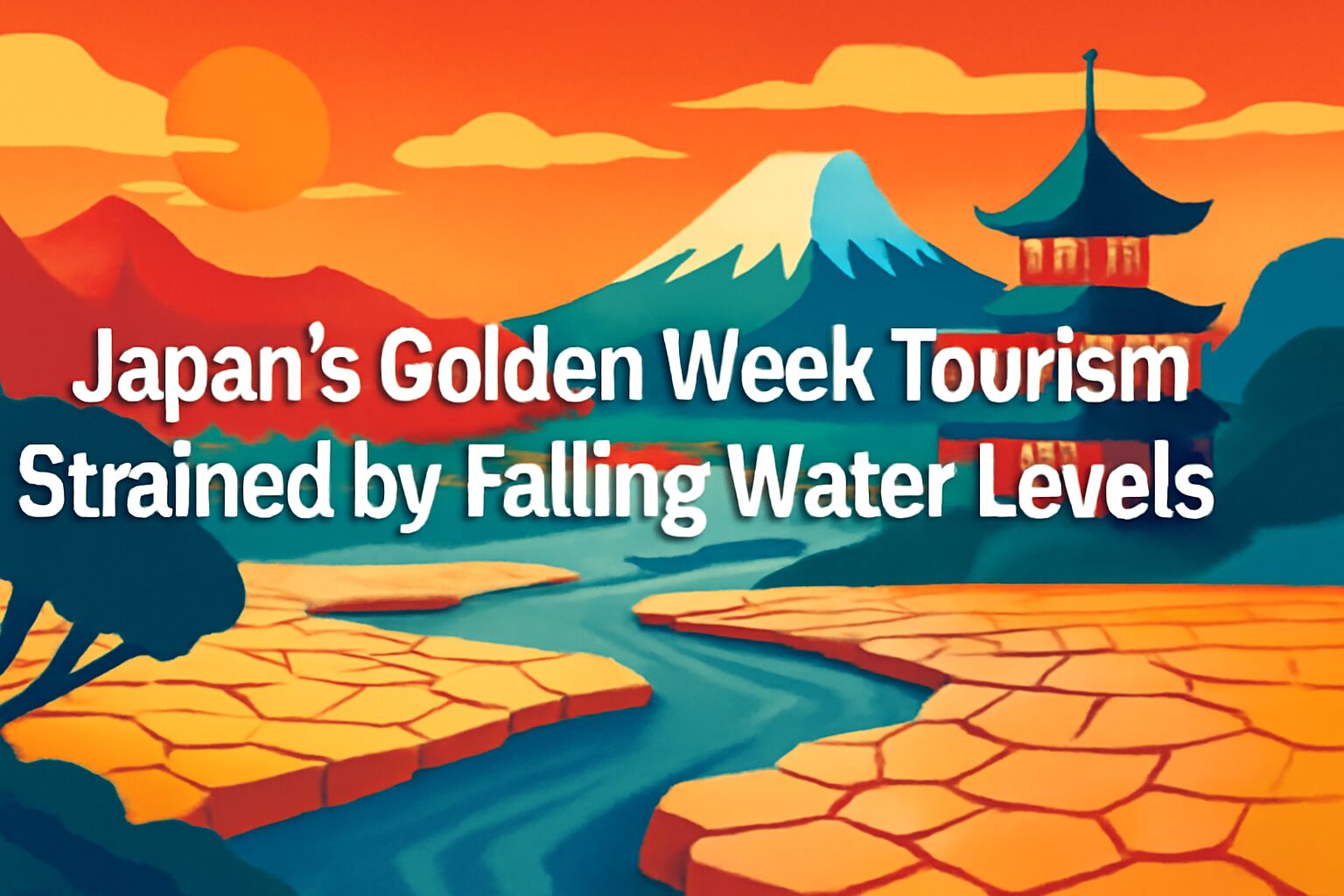
Japan’s Golden Week, one of the country’s longest and busiest holiday periods, is facing an unprecedented challenge this year: a severe water shortage. Popular tourist destinations, including the areas around the iconic Mount Fuji and the historic town of Nikko, are grappling with the effects of low rainfall, forcing businesses to alter or suspend services and casting a shadow over the peak travel season.
The Immediate Impact on Tourist Hotspots
For decades, sightseeing boats gliding across the serene waters of the Fuji Five Lakes with Mount Fuji in the background have been a quintessential image of Japanese tourism. This year, that picture is starkly different.
At Lake Kawaguchi, one of the most famous of the five lakes, water levels have plummeted by more than two meters below the seasonal average, reaching a ten-year low. This dramatic drop has forced several sightseeing boat operators to suspend their services entirely. Others have been compelled to change their routes, navigating carefully through shallower waters and shortening trip durations. The exposed lakebed, now a barren landscape in some areas, presents a stark contrast to the usual picturesque scenery.
The situation is similar in Nikko, a UNESCO World Heritage site renowned for its ornate shrines, lush nature, and the stunning Lake Chuzenji. Boat tour operators on the lake are also facing difficulties due to the receding water levels.
Furthermore, the impact extends to Japan’s beloved onsen (hot spring) culture. Some traditional inns and spa facilities in the region have had to close their outdoor baths (rotenburo), which rely on a steady supply of natural spring water. Others have reduced their operating days, disappointing travelers who had booked their getaways months in advance. For an industry still recovering from the pandemic, this disruption during a key revenue-generating period is a significant blow.
Behind the Shortage: A Confluence of Factors
The current water shortage is not a sudden event but the result of climatic conditions stretching back several months. The primary cause is a prolonged period of low precipitation.
A Dry Winter and Spring
According to the Japan Meteorological Agency, many parts of eastern and central Japan have experienced significantly below-average rainfall since the autumn of 2023. The Kanto region, which includes Tokyo and the surrounding prefectures, received only a fraction of its usual precipitation. This dry spell continued through a warmer-than-average winter, which brought another critical issue: a lack of snow.
In mountainous regions like Mount Fuji and Nikko, winter snowfall is a vital natural reservoir. The gradual melting of snow in the spring is what replenishes rivers, lakes, and groundwater sources. With this year’s scant snowfall, the spring meltwater has been insufficient to offset the lack of rain, leading to the current critically low water levels.
Future Outlook and Broader Implications for Japan’s Tourism
While officials and businesses hope for the arrival of Japan’s annual rainy season (“tsuyu”) in June to alleviate the situation, the long-term outlook remains a concern. This Golden Week water crisis highlights a growing vulnerability for Japan’s tourism industry in the face of a changing climate.
A New Reality for Travel Planning
This event may signal a new reality where water availability can no longer be taken for granted, even in a country known for its abundant rainfall. Travelers planning trips to Japan, particularly to nature-dependent destinations, may need to consider the potential for climate-related disruptions, from water shortages in spring to heatwaves in summer and more intense typhoons in autumn.
A Call for Sustainable Tourism
For the tourism industry, this is a wake-up call. Businesses that rely heavily on water-based attractions may need to diversify their offerings and invest in water conservation technologies. The incident underscores the urgent need for local governments and tourism boards to develop more resilient and sustainable tourism strategies that can adapt to unpredictable weather patterns.
As Japan continues to welcome a record number of international visitors, managing natural resources will become an increasingly critical part of preserving the very beauty and experiences that draw travelers to its shores. The dry lakebeds of Golden Week 2024 serve as a powerful reminder that the future of tourism is inextricably linked to the health of the environment.