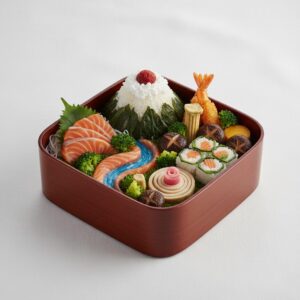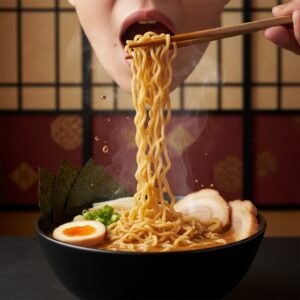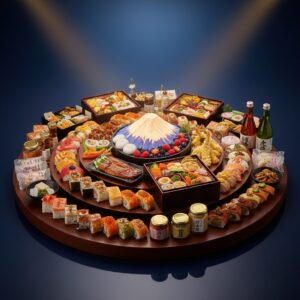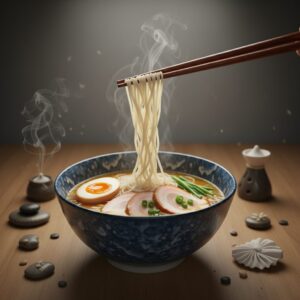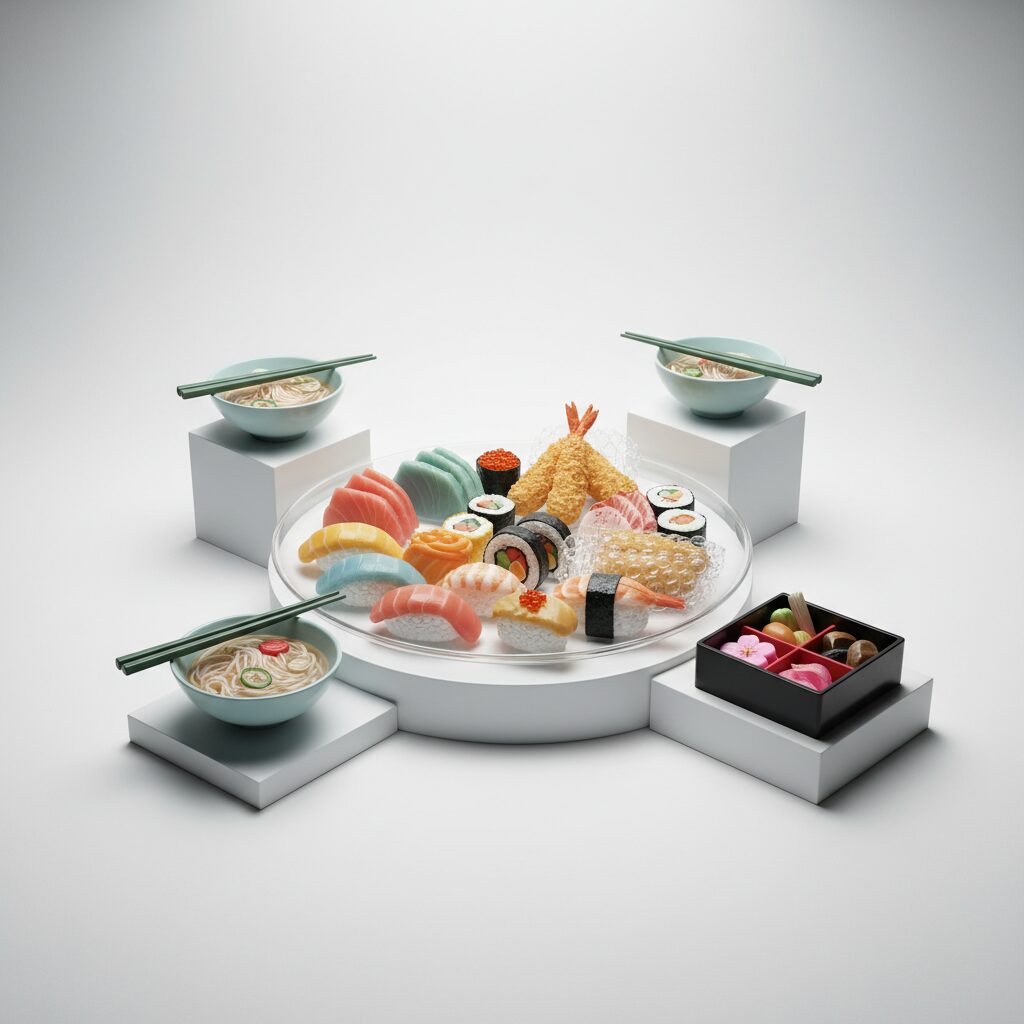
You’ve seen them. Anyone who has spent more than ten minutes walking down a commercial street in Japan has. Behind the glass of a restaurant storefront sits a bowl of ramen, its broth impossibly glossy, its noodles frozen mid-air, lifted by a pair of floating chopsticks. Next to it, a plate of gyoza, each dumpling seared to a perfect, uniform golden-brown. Beside that, a glass of beer, beaded with condensation, its foamy head defying gravity and the warmth of the day. For a fleeting second, your brain short-circuits. Is it real? It looks more perfect than real. This is the world of shokuhin sampuru (食品サンプル), Japan’s famously realistic plastic food samples, and they are far more than just kitschy decorations. They are a multi-million dollar industry, a unique form of commercial art, and a quiet testament to some of the core principles of Japanese culture: precision, hospitality, and the power of a promise, perfectly rendered in polyvinyl chloride.
To the uninitiated, it might seem bizarre. Why invest what can be thousands of dollars in a display of inedible replicas when a simple photograph on a menu would suffice? But that question misses the point entirely. These silent salesmen do a job that a laminated menu never could. They bridge language barriers, eliminate ordering anxiety, and set a crystal-clear expectation of what will arrive at your table. They are a physical manifestation of a restaurant’s promise to its customer, a tangible preview of the meal to come. In a culture that places immense value on minimizing uncertainty and ensuring a smooth social experience, the food sample is a stroke of business genius disguised as a piece of tempura. It’s a story of artistry, commercial pragmatism, and a curious obsession with getting the fake thing to look more authentically delicious than the real thing itself. To understand the sampuru, you have to understand a particular slice of the Japanese mind.
The meticulous precision that brings these plastic masterpieces to life is echoed in Japan’s hidden culinary realms, as seen in underground food halls, where innovation quietly meets tradition beneath the cityscape.
A Solution Born from Hospitality
The story of shokuhin sampuru doesn’t start in a high-tech laboratory, but rather with a simple accident and a moment of inspiration. The industry owes its existence nearly entirely to one man, Takizo Iwasaki, who, in the early 1930s, stumbled upon the idea that would shape his life and create a distinctly Japanese commercial art form. It was a period of transformation in Japan. Western-style department stores with large, open-plan cafeterias were gaining popularity, yet they posed a new challenge. Customers, unfamiliar with the dishes offered, were reluctant to order. How could anyone be encouraged to try a meal they couldn’t picture?
The Origin Story: Takizo Iwasaki’s Wax Omelet
Iwasaki, living in Osaka, was experimenting with wax for medical models when, as the story goes, he observed how spilled wax on the tatami mats at home formed a delicate, fabric-like pattern. Later, while tinkering in his kitchen, he dripped hot wax into a container of water. The wax bloomed, creating a shape that reminded him of a flower. This was the inspiration. He realized he could use wax to replicate the intricate shapes and textures of food. His first masterpiece was a simple rice omelet, or omurice. He crafted it with such painstaking detail—from the gentle folds of the egg to the glistening dollop of ketchup on top—that when he presented it to his wife, she couldn’t distinguish it from a real one. He knew he had discovered something special.
In 1932, he established his company, Iwasaki Mokei, in his hometown of Gujo Hachiman, a small city in Gifu Prefecture that remains the heart of the sampuru industry today. The concept was an instant success. For a department store in Osaka, he created a full menu of wax replicas. Suddenly, customers no longer needed to guess. They could see the portion size, ingredients, and exact presentation of the meal. It was a visual agreement, a form of commercial omotenashi (hospitality) that reassured diners. The uncertainty of the unknown was replaced by the confidence of the visible. Iwasaki’s wax omelet wasn’t merely a clever gimmick; it was a solution to a cultural and commercial puzzle.
From Wax to Vinyl Chloride: The Evolution of an Art Form
For many years, wax remained the preferred medium. Artisans became experts at molding, carving, and painting wax to imitate everything from sushi to spaghetti. But wax had its drawbacks. It was fragile, vulnerable to heat, and its colors faded over time. A display case left in the sun could quickly turn into a sad, melting mess, an unappetizing advertisement.
The next major advance in the industry came after World War II with the introduction of plastics. Polyvinyl chloride (PVC), or vinyl chloride as it is commonly known in Japan, proved to be the ideal replacement. It was much more durable, heat- and light-resistant, and capable of capturing even finer details than wax. This technological shift raised the craft to new heights. The transition enabled more intricate production methods, especially the use of silicone molds that could replicate every tiny pore on a strawberry or the flaky texture of a croissant. The switch to plastic didn’t reduce the artistry; it enhanced it, allowing artisans to achieve a level of hyper-realism that Iwasaki could only have imagined. The core principle stayed the same, but the new materials unlocked a realm of permanent, flawless, and astonishingly perfect culinary illusions.
The Anatomy of a Perfect Fake
Creating a piece of shokuhin sampuru is far from a simple manufacturing task; it is a meticulous craft that combines culinary observation with sculptural artistry. The transformation from a real plate of food to its plastic counterpart exemplifies the Japanese concept of shokunin, the dedicated artisan who perfects a single craft through decades of repetition and refinement. Each fabricated dish stands as a miniature tribute to this philosophy.
The Secret Ingredient is… Real Food
You might think the process starts with a 3D model or an artist’s interpretation. You would be mistaken. The first and most vital step in producing a high-fidelity food sample is beginning with an impeccable specimen of the actual dish. A restaurant commissions a sampuru maker by providing the genuine meal they wish to replicate. The artisans at the factory then embark on a process that resembles a scientific experiment more than an art project.
The dish is arranged exactly as it would be served. Next, a frame is constructed around it, and liquid silicone is poured over, penetrating every nook and cranny. This is where the texture magic occurs. The silicone forms a negative mold that captures every detail with remarkable precision: the rough, craggy texture of fried chicken, the delicate veins of a shiso leaf, the individual grains of rice in sushi. Once the silicone sets, the real food is carefully removed, leaving behind a perfect, flexible impression of the original dish. This mold serves as the foundation for the plastic creation.
Painting with Plastic: The Artisan’s Touch
With the mold prepared, liquid vinyl chloride, tinted to match the base color of the food, is poured into the impression. It is then baked at a high temperature until it solidifies into a durable, semi-flexible plastic replica. However, this initial plastic form is merely a blank canvas. While it holds the correct shape and texture, it lacks the dish’s essence. The true artistry emerges during the finishing stages.
This is where the shokunin come into play. The painting process is painstakingly detailed and layered. Artisans, often specializing in specific foods—one might master grilled fish, another ramen—use a blend of airbrushes and fine paintbrushes to bring the plastic to life. They don’t simply paint a piece of tuna red; instead, they apply multiple shades to mimic the subtle gradient from the dark exterior to the lighter, fatty interior. They carefully render the burn marks on grilled eel, the tiny green specks of parsley in pasta sauce, and the translucent sheen of fat on chashu pork. Glossy resins simulate sauces, oils, and broths, providing a permanent wet look that sparkles under restaurant lighting. Each step is done by hand, aiming not just for realism, but for a form of idealized hyper-realism. The sampuru should not just look like food; it should resemble the most perfect, most appetizing version imaginable.
The Illusion of Life: Tricks of the Trade
Some of the most iconic sampuru creations rely on clever illusions that elevate them beyond simple models into captivating sculptures. The famous floating ramen noodles are a great example. This isn’t a matter of merely gluing chopsticks to plastic strands. The entire piece—chopsticks, suspended noodles, and noodles remaining in the bowl—is designed as a single, interconnected unit. The noodles are carefully arranged and fused before being affixed to the chopsticks, and the entire assembly is then integrated into the resin broth. The result is a moment frozen in time, a dynamic action captured in static plastic.
Other techniques are more subtle. To achieve the frosty appearance of a chilled beer mug, the plastic is often abraded or treated to give a matte finish, onto which clear gel droplets are painstakingly applied to mimic condensation. To showcase the layers within a dish like katsudon (pork cutlet bowl) or a layered cake, a perfect cross-section is crafted. This elevates the food sample from a simple representation to an educational diagram, revealing every component of the meal customers are about to order. It’s this final layer of ingenuity that transforms a plastic replica into a genuine work of commercial art.
The Unspoken Language of Commerce

The lasting popularity of shokuhin sampuru in Japan goes beyond tradition or artistry; it is deeply grounded in practical business reasoning. In a country boasting one of the highest concentrations of restaurants globally, competition is intense. The sampuru display case serves as a powerful tool in the daily competition for customers, communicating through a universal language that surpasses written menus and fashionable logos.
The Three-Second Rule of Restaurant Marketing
Consider how people select a dining spot in a busy urban setting. They are usually walking, scanning, and making rapid decisions. A potential customer might only spare your restaurant a three-second glance as they walk past. In that brief moment, you must convey what you offer, how appealing it looks, and its price. A menu overloaded with text is too slow. While a stylish photo may work, it can also come off as misleadingly airbrushed advertising. A tangible, three-dimensional display of your entire menu, by contrast, is immediate and impactful.
The sampuru display acts as the ultimate elevator pitch. Without reading any text, a passerby—whether a local or a non-Japanese-speaking tourist—can grasp all the essential information. They see the exact portion size, avoiding any post-order disappointment. The ingredients are visible, making it easy to identify dishes they may prefer or avoid. Often, a small price tag beside each dish completes the picture. It’s a seamless communication system that eliminates ambiguity and anxiety from the decision-making process. For restaurants, especially those in high-traffic locations, the sampuru case isn’t just decoration; it is a crucial sales tool.
More Than a Menu, It’s a Promise
In the West, the disclaimer “image for illustrative purposes only” is common. Advertised food is an idealized version that everyone understands may not exactly match the final dish. In Japan, the opposite applies. The shokuhin sampuru is not just an illustration; it’s a promise. There is a strong cultural expectation that the meal served will look precisely like the model displayed. Serving a dish that is noticeably smaller, messier, or different from its plastic representation would be viewed as a serious breach of trust, an act of deception capable of damaging a restaurant’s reputation. This commitment to accuracy is a fundamental part of the business model. The sampuru sets the standard, and the kitchen is expected to meet it every time. It enforces consistency and a what-you-see-is-what-you-get honesty that customers highly value. The plastic food isn’t just promoting a dish; it’s promoting the restaurant’s integrity.
The Economics of Fake Food
This high level of craftsmanship and commercial effectiveness comes at a cost. Shokuhin sampuru are expensive. A single intricate dish like a ramen bowl or an elaborate parfait may cost hundreds of dollars. A complete display case for a restaurant can easily cost thousands, sometimes even tens of thousands of dollars. For a small business owner, this represents a major capital expense.
Yet, it is an investment with a clear payoff. The durability of modern plastic samples allows them to last for years, serving as tireless, round-the-clock advertisements for the restaurant. Many sampuru makers also offer rental or leasing options, enabling restaurants to refresh their displays seasonally without large initial expenses. This business model has helped the industry flourish, adapting to the financial realities of the food service sector. The expense is justified by the fact that the displays are effective. They attract customers, simplify ordering, and begin the customer experience with a straightforward, honest promise.
The Culture of the Copy
Over the decades, shokuhin sampuru have grown beyond their purely commercial beginnings to become a celebrated element of Japan’s visual culture. They have transformed from a practical restaurant window display into a quirky cultural icon, cherished by locals and sought after by tourists as a distinctly Japanese souvenir. This transformation highlights their deep-rooted presence in the country’s everyday life and aesthetic values.
From Restaurant Window to Souvenir Shop
The qualities that make sampuru effective marketing tools—their remarkable detail, vivid colors, and often mouth-watering appearance—also render them captivating objects on their own. Recognizing this charm, manufacturers started producing miniature versions of these creations, not for restaurants, but for the general public. Nowadays, sampuru come in nearly every imaginable form. There are keychains shaped like tiny pieces of sushi, refrigerator magnets resembling gyoza, phone cases decorated with a slice of tempura, and even USB drives disguised as grilled shrimp.
These items have become a staple in souvenir shops throughout the country. They offer a playful, tangible piece of contemporary Japanese culture that tourists can bring home. This shift from mere utility to novelty marks the point when sampuru fully embraced their identity as cultural products. They have ceased to be just food replicas; they are objects of desire, pop art celebrating Japan’s culinary heritage.
Hands-On Artistry: The Rise of the Sampuru Workshop
The allure surrounding the making of food samples has also led to a popular tourist activity: the sampuru-making workshop. In places like Tokyo’s Kappabashi Kitchen Town, the main wholesale district for restaurant supplies, and Gujo Hachiman, where the industry originated, studios invite visitors to try their hand at the craft.
Usually, these workshops emphasize older, wax-based techniques, which are safer and quicker for beginners. Participants create classic items such as a crisp, frilly lettuce leaf by drizzling colored wax into warm water or a piece of tempura by dipping a plastic shrimp into yellow wax and shaping it. It’s an engaging, hands-on experience that demystifies the process and fosters a deeper appreciation for the skill required to make professional-quality plastic models. These workshops have surged in popularity, transforming a specialized industrial craft into an accessible cultural experience and ensuring the art form continues to gain new enthusiasts.
The Enduring Allure of the Inedible

In an era of QR code menus, online ordering apps, and an endless stream of food photos on social media, one might ask if the age of plastic food samples is coming to an end. Is there still a role for these analog advertisements in a digital world? The answer appears to be a clear yes. The shokuhin sampuru offers something that a glowing screen cannot: a tangible presence, genuine three-dimensionality, and a physical connection to the meal itself.
A photograph can be edited, filtered, and styled to appear better than reality. A plastic model, exposed to objective daylight, carries an inherent honesty. It occupies real space, displaying true scale and texture in a way that a flat image struggles to match. It doesn’t need a charged phone or a stable internet connection. It simply rests there, silently and confidently showcasing what the chef inside can create.
Ultimately, the lasting charm of shokuhin sampuru lies in what it symbolizes. It represents a business culture that values clarity over ambiguity and customer comfort over flashy marketing jargon. It is a product of an artistic tradition that finds beauty in meticulous detail and perfection in craftsmanship. It serves as both a practical tool and a playful piece of art, a hospitality-born solution that has become a globally recognized icon of modern Japan. The next time you pass a Japanese restaurant and find yourself captivated by a flawless, glistening, and entirely fake bowl of ramen, pause for a moment. You’re not just viewing a menu. You’re witnessing a promise, molded in plastic.