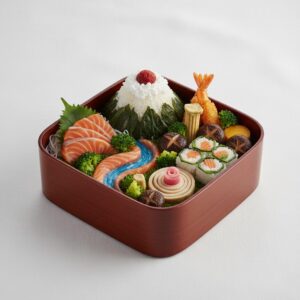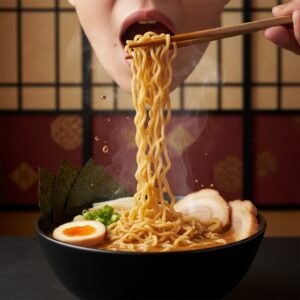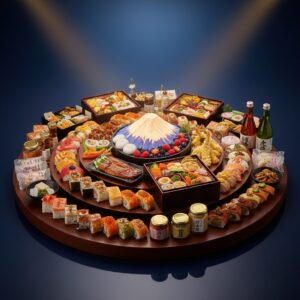
Walk into any major Japanese department store—a Mitsukoshi, an Isetan, a Takashimaya—and you enter a world of serene, almost intimidating, elegance. The ground floor is a hushed cathedral of luxury cosmetics and designer handbags, where impeccably gloved attendants bow with a grace that seems choreographed. As you ascend, you move through floors dedicated to high fashion, sophisticated homewares, and exclusive art galleries. Everything is polished, orderly, and bathed in soft, flattering light. But the building’s true heart, its chaotic, vibrant, and intoxicating soul, lies in the opposite direction. It’s in the basement. This is the realm of the depachika, a sprawling, dazzling food hall that assaults the senses in the most glorious way possible. The name itself is a portmanteau of depāto (department store) and chika (basement), and it is a universe unto itself. Here, the serene quiet of the upper floors is replaced by the energetic calls of vendors, the sizzle of food being cooked fresh, and the hum of a thousand conversations. It’s a labyrinth of jewel-box pastries, gleaming rows of sashimi, artisanal pickles in every imaginable color, and limited-edition sweets that command block-long queues. It is, without exaggeration, one of the most exciting retail experiences on the planet. But it always begs the question: Why here? Why is this culinary paradise, this major attraction that draws more daily traffic than almost any other part of the store, hidden away in the basement? The answer isn’t a simple quirk of design. It’s a fascinating convergence of hardcore practicality, shrewd business psychology, and deep-seated cultural logic that reveals so much about how Japan works.
Amid the allure of underground depachikas, a closer look at the vibrant energy of Japan’s snack bars reveals yet another fascinating dimension of the nation’s dynamic food culture.
The Iron Logic of Infrastructure

Before we delve into the more nuanced cultural reasons, it’s essential to recognize that the placement of the depachika is, above all else, a masterful achievement in engineering and urban planning. Constructing a multi-level commercial palace in the core of a densely populated city like Tokyo or Osaka involves numerous logistical hurdles, and locating the food operations in the basement addresses many of these challenges in one elegant solution.
The Weight of a Food Empire
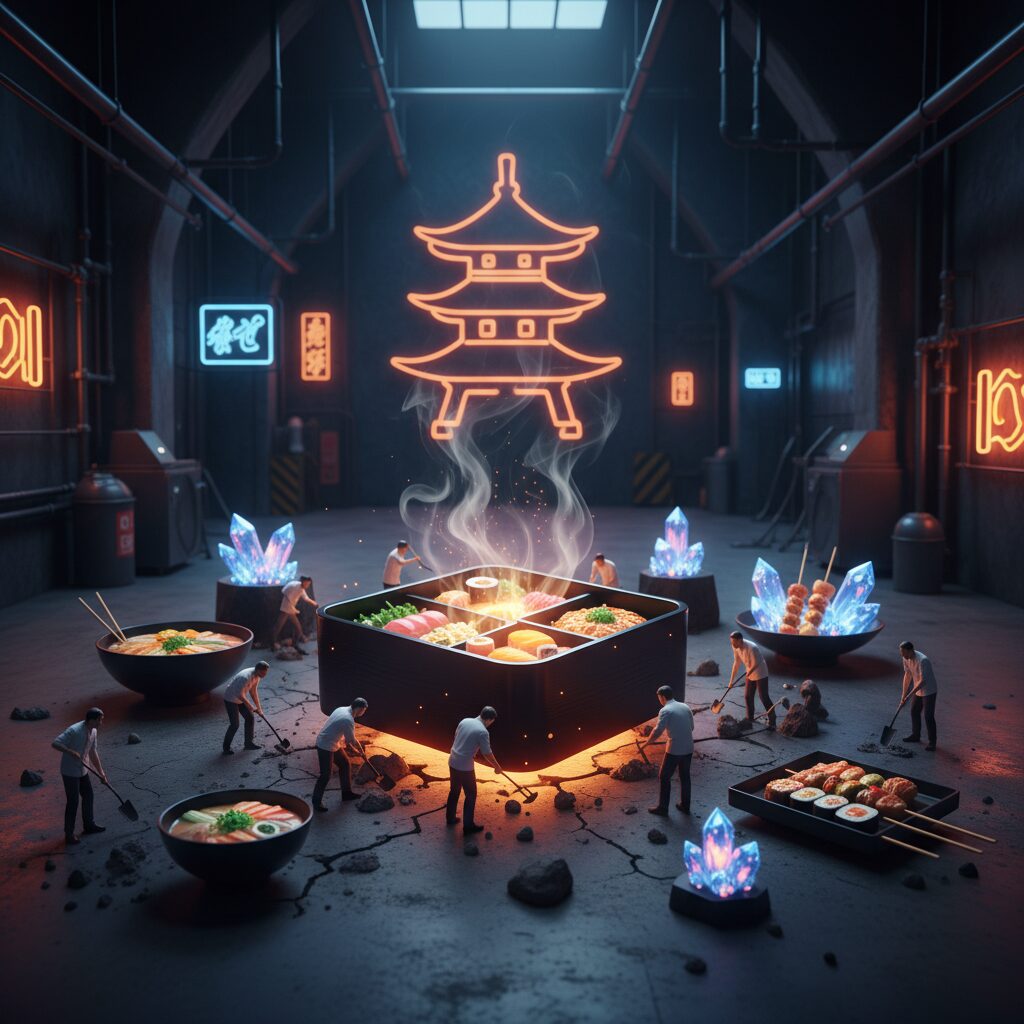
Consider what a depachika actually houses. It’s more than just an array of attractive counters. Behind the scenes, and often visible to customers, are commercial-grade kitchens equipped with massive refrigerators, walk-in freezers, heavy-duty ovens, deep fryers, and grills. Fishmongers have enormous ice beds, and butchers operate industrial slicers and grinders. All this equipment is extremely heavy. Positioning these dense, weighty operations in the basement, directly supported by the building’s foundation, is the safest and most cost-effective structural choice. It safely distributes the load without the need for the complex and costly reinforcements that would be required to support such weight on, for example, the fifth floor. It’s the simplest solution—an engineer’s straightforward answer to a basic physics challenge.
The Unseen Network of Pipes and Vents
Beyond weight considerations, utilities represent an equally critical concern. A food hall consumes vast amounts of water, gas, and electricity, while generating significant waste. Installing the large plumbing systems needed for water supply and drainage, along with extensive gas lines and ventilation ducts, through a ten-story building is a logistical nightmare. This would require sacrificing valuable retail space on every floor for vertical shafts and risers. Even worse, it could cause leaks, odors, and maintenance issues amidst upscale boutiques. By concentrating all food-related functions in the basement, the department store can connect directly to the city’s main utility networks. Water mains, sewer lines, and gas pipes already run underground, making basement access straightforward and efficient. Powerful ventilation systems installed below ground effectively handle smoke, steam, and intense kitchen aromas, channeling them away from the building and preserving the pristine environment above. This arrangement contains the messy, industrial-scale work of food production, isolating it from the polished realm of high-end retail.
The Aromatic Firewall
This brings us to one of the most vital practical concerns: controlling odors. A depachika is a rich blend of scents—the sweet smell of baking bread, the savory smoke of grilled eel, the sharp tang of pickles, the deep aroma of freshly brewed tea, and the occasional pungent funk of fermented soybeans. These aromas are a key part of the experience, but imagine that olfactory complexity spreading upstairs to the second floor, where shoppers are trying on a ¥300,000 silk dress or sampling delicate French perfume. It would be disastrous. The scent of fried chicken hardly complements the latest collection from Comme des Garçons. The basement acts as a natural scent barrier. Along with powerful, dedicated ventilation, its underground location ensures the food world stays olfactorily separate from the fashion world. This preserves the carefully curated sensory environment of each floor, allowing both the depachika and the luxury boutiques above to flourish without interfering with one another.
The Architecture of Desire: Directing the Customer Flow
While the practical reasons are compelling, they only represent part of the picture. The basement location is also a brilliant retail strategy, crafted to seamlessly embed the department store into the city’s daily life and to steer customer behavior in very specific ways.
The Subway Artery
This is perhaps the most crucial strategic reason behind the depachika‘s location. In Japan’s major cities, life centers around the rail network. The vast majority of commuters and shoppers rely on trains and subways. Major department stores are almost always built directly on top of or adjacent to key train stations. And where do you emerge from the subway gates? Underground. The depachika serves as the grand entrance, the initial point of contact between the subterranean transit world and the department store. After passing through the ticket gate, a commuter’s path naturally leads them straight into this food wonderland. Before they see a single piece of clothing or jewelry, they encounter a dazzling selection of options for tonight’s dinner, a beautiful dessert to take home, or a pre-made bento for a late night at the office. This direct link to the transit network transforms the department store from a spot for occasional indulgences into a resource for everyday needs. It captures a vast amount of foot traffic from people who might not have otherwise planned to visit the store. It’s a brilliant strategy to convert the constant flow of the city’s commuters into a steady stream of customers.
The Basement as an Anchor, Not an Afterthought
In Western retail theory, there is a concept known as the “fountain effect.” The idea is to place a major attraction, like a food court or cinema, on the top floor. This compels customers to move upward through the entire store, exposing them to merchandise on every level along the way. Japanese department stores often adopt this too, with fine dining restaurants occupying premium-high floors boasting great views. The depachika, however, operates on a different principle. It’s not a fountain; it’s an anchor. It’s a primary destination in its own right. People come specifically for the depachika. They are on a mission: to buy a famous castella cake from a particular vendor, to pick up fresh, high-quality ingredients for a special meal, or to grab a gift for a client. By placing this powerful anchor in the basement, the store creates a strong gravitational pull at its base. It appeals to a different, more frequent type of visit—the daily shopper, the after-work commuter—while the upper floors serve the less frequent, more leisurely destination shopper. These two functions complement each other perfectly without interfering.
A Labyrinth of Temptation
The physical layout of the depachika is intentionally disorienting. With no windows to the outside world, you lose track of time. The aisles are often narrow and winding, designed to slow you down and encourage exploration. Unlike a grid-like supermarket where you can efficiently find what you need, a depachika is a maze of discovery. You might be heading to the fishmonger but get waylaid by a limited-edition matcha tart fresh from the oven. You go to buy pickles and end up sampling three different kinds of sake from a smiling vendor. This deliberate design creates a treasure-hunt atmosphere. Every turn reveals something new and alluring. It’s a space engineered for impulse purchases, where the journey is as important as the destination. The underground location, detached from the outside world, enhances this immersive, almost hypnotic experience. You are fully immersed in the world of the depachika.
The Cultural Bedrock: Why It Just Feels Right

Beyond the steel, pipes, and marketing strategies lies the most captivating layer of the story: the cultural one. The placement of the depachika underground deeply resonates with longstanding Japanese aesthetics, social structures, and historical traditions. It’s not only practical; it also feels culturally appropriate.
The Echo of the Marketplace
The modern, air-conditioned depachika serves as the spiritual successor to the traditional open-air market (ichi) and the covered shopping arcade (shōtengai). For centuries, these lively, somewhat chaotic, ground-level spaces were hubs of community life and commerce. They were places where you bargained with vendors, found seasonal produce, and socialized with neighbors. The depachika retains the energy of these traditional markets—the vibrant atmosphere, the density of vendors, and the emphasis on fresh, seasonal food—while bringing it into a contemporary, controlled setting. By locating it in the basement, it preserves a conceptual connection to the earth and the ground, where markets have always been held. It creates a space that feels populist, energetic, and accessible, in stark contrast to the refined, almost aristocratic ambiance of the upper floors. It’s the bustling, lively marketplace hidden beneath the polished palace.
The Spatial Logic of Uchi-Soto
Japanese culture is built around a deeply ingrained concept of uchi-soto, which roughly translates to “inside/outside.” This concept distinguishes between one’s inner circle (family, close colleagues) and the external world, and it also applies to physical spaces. The upper floors of a department store represent the soto world— the public face, the sphere of presentation, aspiration, and formality. It’s where luxury goods are purchased to signal status and taste to others. The depachika, located in the basement, represents a more uchi space. It connects to the home, the kitchen, and the practical daily necessities of life. Food is fundamental, intimate, and part of the private sphere. Placing it in the basement establishes a subtle but significant hierarchical separation: you ascend for public display and descend for private nourishment. This spatial arrangement feels intuitive and orderly within the Japanese cultural framework, distinguishing the formal from the familiar.
The Engine of Gift-Giving
The importance of gift-giving in Japanese society cannot be overstated. From seasonal gifts (oseibo and ochūgen) to souvenirs from travels (omiyage) to simple tokens of thanks (temiyage), exchanging beautifully packaged items is a constant social ritual. The depachika is the undisputed center of this culture. It offers an endless variety of impeccably wrapped cookies, cakes, teas, and delicacies, all designed for gifting. Its basement location, connected to the train station, is pure genius for this purpose. A businessperson heading home from a meeting can quickly stop by the depachika, pick out the perfect, prestigious gift, have it elegantly wrapped, and be back on the train platform in minutes. They don’t have to navigate the entire department store. The convenience is unmatched. The depachika functions as a high-end, high-speed pit stop for social obligations, making it an essential part of daily professional and personal life.
The Basement Ascendant
For decades, the prevailing logic was clear: the basement served practical needs, while the upper floors catered to luxury desires. However, in recent years, that dynamic has started to change. As online shopping has eroded the dominance of traditional retail, department stores have ironically found their greatest asset buried deep in their foundations. The depachika has transformed from a high-end grocery store into a full-fledged gastronomic destination. The experience it provides—the sights, sounds, smells, and human interaction with passionate vendors—is something that cannot be duplicated online. Recognizing this, department stores have intensified their efforts, investing huge sums to make their basements even more spectacular. Today, they feature stalls from Michelin-starred chefs, exclusive pop-ups from world-renowned patisseries, and curated sections for artisanal sake and craft beer. Daily events, tastings, and cooking demonstrations have become the norm. For an increasing number of visitors, the depachika is no longer just a convenient entry point or practical anchor; it is the main attraction. People now travel across the city, willing to wait in line for an hour just to purchase a specific dessert or bento box that’s available only in one particular basement. The apparel and furniture floors have, for many, become secondary. The basement, once the humble, hardworking heart of the store, has become its dazzling crown jewel. It’s a fascinating reversal, where the foundation has risen to the top. So, the next time you’re in a Japanese department store, take the escalator down. You’re not merely descending to a basement; you’re entering a space that is a marvel of practical engineering, a masterclass in retail psychology, and a living museum of Japanese culture—all disguised as the greatest food court you’ve ever seen.